NFPA 18 Section 7.4: Class B Performance Requirement for Wetting Agent Solutions
Quick Answer
NFPA 18 section 7.4 establishes performance expectations for wetting agent solutions used with Class B foam or proportioning systems. Compliance requires verifying concentration, quality, and delivery performance under realistic operating conditions so the system produces consistent extinguishing capability.
If you want a broader equipment focused companion piece near the start, review this NFPA 18 overview of wetting agents for context on how these solutions fit into real fire protection systems.
Why NFPA 18 section 7.4 matters in real Class B operations
Facilities that protect flammable liquids rely on wetting agent solutions to support stable foam application, wettability of the fuel surface, and suppression of reignition pathways. NFPA 18 section 7.4 class B performance requirement wetting agent solution focuses on performance, not paperwork alone, so crews must demonstrate that the solution delivered matches the intended formulation and concentration.
In commercial, industrial, and retail environments, the most common compliance failure is not the absence of documentation. It is inconsistent concentration due to incorrect mixing, degraded agent chemistry, or unnoticed changes in proportioning equipment performance during routine service cycles.
What “Class B performance requirement” typically drives in the field
The “Class B” designation addresses flammable liquids and fuels where surface wetting and foam application behavior strongly influence outcomes. In practical terms, the wetting agent solution must maintain predictable interaction with water and the foam system so the final foam characteristics remain within acceptable performance boundaries.
Operationally, facility teams should treat the wetting agent solution as an engineered component that must meet three interlinked expectations: consistent concentration, stable chemical condition, and reliable delivery at the correct flow and pressure conditions.
1) Concentration control is the core measurable requirement
Wetting agent systems depend on proportioning devices that meter concentrate into water. Over time, small deviations produce meaningful changes in foam quality and surface behavior. Concentration drift can occur during top offs, equipment wear, supply changes, or procedural variation between shifts.
2) Chemistry degradation changes foam behavior even if mixing looks correct
Many wetting agent solutions are formulated to perform within a specific chemical range. Heat exposure, long storage, contamination, or microbial growth can alter performance. This becomes a commercial risk when tanks sit idle between inspections or when multiple products are stored in close proximity.
3) Delivery consistency depends on system hydraulics and proportioning accuracy
Flow conditions, pressure losses, and pump performance affect injection and mixing. A system may pass a visual inspection and still fail performance due to clogged strainers, worn injectors, or incorrect calibration after maintenance.
How facilities should verify wetting agent performance (not just chemical presence)
Verification for NFPA 18 performance compliance typically includes concentration confirmation, equipment readiness checks, and functional verification that the solution is delivered as intended. The goal is to prevent the most common field gap: assuming “the tank is full, so the system is correct.”
Recommended compliance workflow for commercial sites
Review the system design basis for the intended foam or foam proportioning method, including injection type, tank configuration, and water supply conditions.
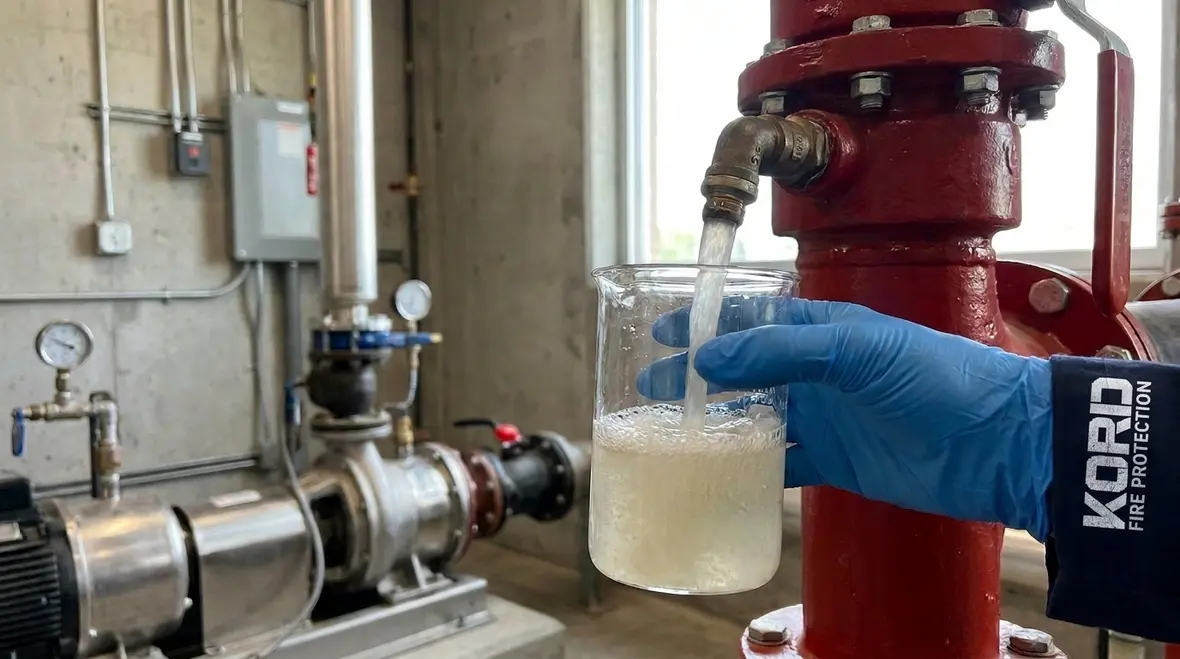
Confirm solution concentration using validated test methods specified by the foam agent manufacturer and aligned to NFPA 18 expectations for performance verification.
Inspect and function test proportioning components including injectors, metering devices, check valves, strainers, and any pressure regulating hardware.
Verify delivery conditions by checking pressures, flows, and operational states during maintenance activities that simulate real operation profiles.
Document results with traceability so the facility can link performance outcomes to specific agent batches, calibration values, and service dates.
Where concentration checks commonly go wrong
Top offs using estimated volumes instead of controlled mixing practices.
Using unverified test procedures or tools that do not account for temperature effects.
Ignoring signs of contamination such as unexpected color, sediment, or unusual odor.
Failing to revalidate proportioning calibration after injector maintenance or pump overhauls.
Common failure points in wetting agent solution delivery and maintenance
Wetting agent solutions often look fine while performance capacity deteriorates due to mechanical and procedural issues. A practical risk review helps commercial asset owners focus maintenance on failure modes that actually reduce effectiveness.
Proportioning equipment degradation
Injection systems can drift due to worn seals, spring fatigue, injector clogging, or misalignment after servicing. Even when the tank concentrate is correct, inaccurate injection changes the effective solution delivered to the foam apparatus.
Strainers and filters that silently restrict flow
Particulate buildup or biological growth can partially block filters. Partial restriction alters pressure differentials and changes injection rates, leading to concentration mismatch. This often becomes apparent only after trending data reveals increasing maintenance intervention or changes in measured concentrations.
Tank management and batch traceability gaps
Batch mixing and multiple storage sources increase the chance of incompatible products or variable strength entering the tank. Commercial facilities should standardize tank labeling, receiving procedures, and batch traceability controls to reduce configuration drift.
Operator variability between service cycles
If mixing or sampling procedures differ between contractors, shifts, or locations, performance can vary across the same brand or model. Clear work instructions, competency requirements, and standardized test sheets support repeatability.
Practical compliance support for commercial sites
Ongoing compliance requires more than annual inspections. It requires continuity between commissioning, maintenance, and performance verification. Kord Fire Protection supports commercial, industrial, and retail facilities by aligning maintenance activities with how NFPA 18 wetting agent solutions are expected to perform in real systems, including concentration control, equipment checks, and service documentation.
For an equipment focused overview of wetting agent use and system integration, review NFPA 18 overview wetting agents.
For broader fire sprinkler services that often interface with foam and water supply readiness on multi-hazard sites, see Australian fire sprinkler services.
For pump fundamentals and practical considerations that influence delivery pressure and flow, reference this fire pump flow and pressure guide.
What a strong service program looks like
Concentration verification tied to specific agent batches and calibration records.
Proportioning calibration checks after any maintenance that can affect injection performance.
Consistent sampling procedures, including temperature and mixing condition controls.
Corrective action tracking when measured values deviate from expected performance targets.
How to prepare for inspections and performance testing
Inspectors and internal auditors typically look for evidence that the wetting agent solution remains within performance capability and that the delivery system supports it. Preparing early reduces downtime, shortens test windows, and helps prevent last minute rework.
Inspection ready documentation checklist
Latest concentration test results and method references.
Proportioning device calibration records and date of last verification.
Agent receiving logs with batch information and tank fill records.
Maintenance history for injectors, strainers, filters, and pumps that influence solution delivery.
Corrective action reports, including repeat verification after adjustments.
Operational practices that protect performance between inspections
Standardize tank top off procedures and prevent temporary mixing practices.
Control chemical storage to reduce contamination and compatibility errors.
Track changes in system behavior such as pump performance trends and unusual pressure readings.
Frequently Asked Questions
Conclusion and call to action
If your facility uses Class B foam or wetting agent systems, treat NFPA 18 section 7.4 performance compliance as an operational standard, not a yearly checkbox. Kord Fire Protection can help you verify wetting agent solution concentration, maintain proportioning accuracy, and document performance evidence that supports inspections. Contact Kord Fire Protection to schedule a compliance review and performance-focused service plan.

Join Our Newsletter!
Get the latest fire safety tips delivered straight to your inbox From our Newsletter.