When businesses balance fire protection power systems and life safety, they do more than meet a checklist. They protect people, preserve assets, and keep critical operations moving when trouble starts. Eaton fire protection solutions bring power, detection, control, and signaling together so systems respond fast and behave as intended. In practice, that means the right alarms, the right status feedback, and the right shutdown or sequencing at the right time. And because smoke does not wait politely, crews need designs that hold up under real-world pressure.
To make this practical, kord fire protection technicians often explain the “why” behind the equipment, not just the “what.” They translate system diagrams into plain language, so owners understand how fire protection power meets life safety in a way that feels dependable, not mysterious. Now, let’s walk through how these systems operate and how teams keep them ready.
Eaton system operation: how power and life safety work together
Eaton fire protection solutions operate like a well run workflow. First, detectors and initiating devices sense heat, smoke, or flame conditions. Next, the control and monitoring components evaluate the signal, confirm the event, and trigger the needed actions. Then the system outputs the right commands, such as notification appliances, control of doors or dampers, or interface signals to building systems.
At the heart of many installations, fire protection power systems provide stable energy for panels, supervision circuits, and control devices. Meanwhile, life safety functions ensure that people receive clear alarms and building behavior supports evacuation. In other words, power keeps the brain working, and life safety ensures the body reacts.
Because professionals build for reliability, Eaton designs typically include supervision features. These features monitor wiring paths and component health so faults do not quietly accumulate. Consequently, when something fails, the system can report it instead of pretending everything is fine. That is the difference between “it should work” and “it will work.” And yes, that matters more than a gadget that promises it is “smart” while it is actually just confused.

Typical applications where kord fire protection technicians focus on real risk
Eaton solutions often fit where early detection and dependable control protect both people and operations. Typical applications include commercial offices, warehouses, manufacturing facilities, healthcare environments, schools, and mixed use buildings. Yet the best fit depends on hazards, occupancy load, and how the facility operates day to day.
kord fire protection technicians commonly highlight a few high impact scenarios:
- High value spaces like data rooms or specialized production areas where downtime becomes expensive quickly
- Areas with complex egress such as long corridors, multi tenant layouts, and buildings with multiple floors
- Facilities with critical processes where shutdown sequencing must protect equipment without blocking evacuation
- Buildings with interfaced controls where alarms coordinate with HVAC behavior, door release, or elevator recall signaling
In addition, many sites use system zoning so crews can identify impacted areas quickly. This helps responders and reduces uncertainty. It also helps building teams manage resets and troubleshooting without playing detective at 2 a.m. like it is a mystery series on streaming.

Advantages and limitations of Eaton fire solutions for business owners
Eaton fire protection solutions bring several advantages, but smart owners also want a clear view of limitations. The goal is not hype. The goal is informed decisions.
Advantages
- Integrated power and control supports stable operation for detection, signaling, and required outputs
- Supervision and monitoring helps identify wiring issues and equipment problems early
- Scalability supports growth when tenant layouts change or systems expand
- Clear status reporting gives facility teams actionable information during normal operation and events
Limitations
- Proper design and layout matter. If devices do not cover the right areas, no panel can fix bad assumptions
- Interface complexity can increase commissioning needs when multiple building systems communicate
- Maintenance discipline is required. Even strong equipment needs routine testing to stay “ready”
So yes, Eaton solutions can do a lot. However, the system performs at its best when the design intent matches the building reality, and when teams keep up with inspections. In fire protection, laziness does not age well. It usually shows up as a problem during an event.
System inspection and maintenance: keeping the response dependable
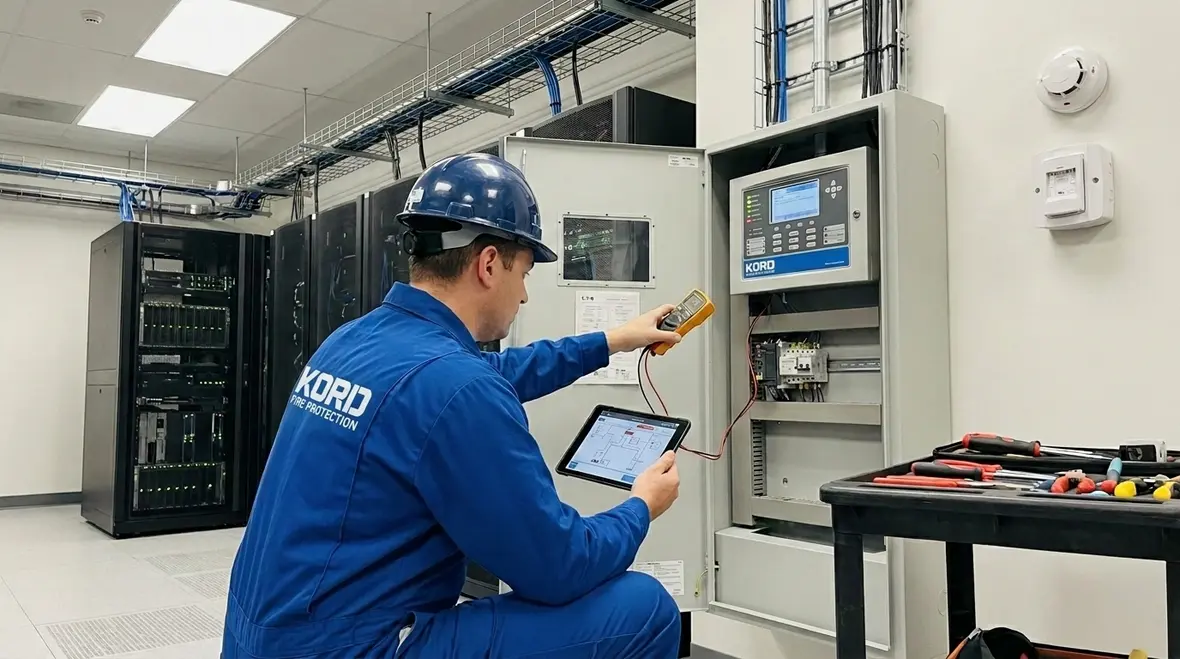
Inspection and maintenance determine whether fire protection power systems and life safety functions stay reliable over time. Components face real stress: dust buildup, humidity changes, minor wiring movement, and normal aging. Therefore, schedules should follow the relevant standards and the manufacturer’s guidance.
During routine service, technicians typically check for:
- Panel health including power supply function, trouble log review, and supervision status
- Device testing to confirm detectors and initiating devices respond as required
- Notification performance ensuring alarms produce the right audibility and visual alerts where used
- Control outputs verifying relays or interface signals operate correctly during supervised events
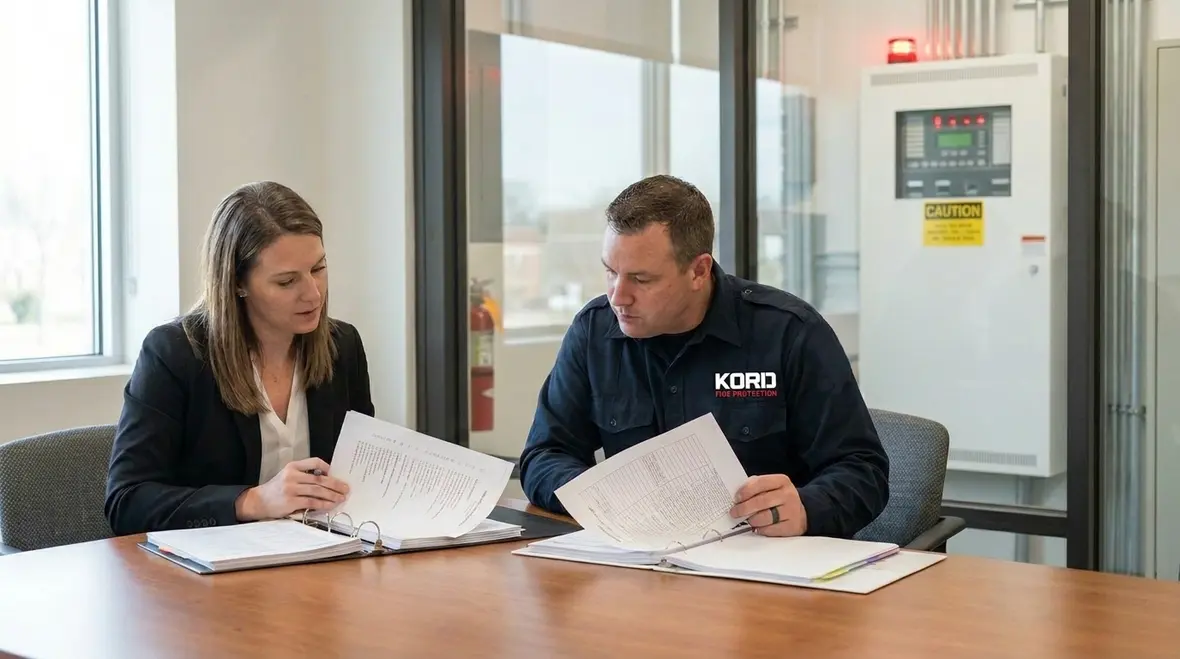
In addition, kord fire protection technicians often emphasize documentation. They record test results, note changes, and confirm that any trouble conditions get addressed. That way, the next inspection does not start from scratch. It starts from knowledge.
Also, facilities should treat impairment management as a serious process. When part of a system gets taken offline for work, teams must coordinate with operations, verify temporary protection measures, and clear impairments quickly. Fire protection is not a “when we get to it” task. It is more like a seatbelt, except the seatbelt has to work for everyone, every time.
Code and compliance considerations that keep projects moving
Fire protection is governed by codes and standards. However, the exact requirements depend on the building type, region, and system scope. Teams typically align designs and testing procedures with key standards used in their jurisdiction and follow manufacturer requirements for equipment operation.
When owners plan new installs or renovations, they should also plan for commissioning and documentation. Consequently, contractors coordinate device placement, wiring supervision features, labeling, and operating sequences so inspectors can verify intent. Clear records also help when teams train staff or update procedures.
Because compliance includes more than the panel box, owners should expect review of:
- Device placement and coverage patterns based on occupancy and hazard
- Supervision and signaling paths including fault reporting behavior
- Sequence of operations for interlocks, door controls, shutdown steps, and alarm actions
- Testing records and maintenance logs tied to scheduled service
Lastly, building teams should maintain consistent change control. When someone modifies layouts, adds equipment, or alters airflow, the fire protection design needs review. Otherwise, the system keeps doing what it was told, not what the building now needs.
Practical guidance for selecting the right Eaton solution for each building
Choosing the right approach comes down to understanding the facility. A one size solution rarely fits every scenario, even when the equipment line looks similar on paper. So teams should start with a risk based review and confirm the system will cover the actual hazards.
kord fire protection technicians commonly recommend these next steps:
- Define the life safety goals such as evacuation timing, alarm audibility, and zone identification
- Map the operational needs including shutdown sequencing and interface requirements
- Confirm power strategy so fire protection power systems support continuous control and supervised monitoring
- Plan for service access so maintenance remains practical, not heroic
Then teams commission the system and validate the sequence of operations. After that, staff training should connect the dots: what alarms mean, who responds first, and how building operations coordinate with emergency procedures. Because in real events, people do not have time to read a manual that looks like it was written by a printer. They need clear guidance.
FAQ
Conclusion: bring power and life safety together with a plan
Fire protection should feel steady, not speculative. Eaton fire protection solutions help teams connect fire protection power systems with life safety actions through supervised operation, clear status reporting, and dependable outputs. However, performance depends on smart design, disciplined maintenance, and correct commissioning. If a facility plans a new install or needs a system review, kord fire protection technicians can help translate requirements into practical steps. Contact a qualified team today and build a system that stands ready, not just installed.
Want a life-safety documentation plan too?
If you are preparing for inspections, a solid paper trail matters. Pair your system design with a documentation checklist so your next review is straightforward, not chaotic.
Need a practical system review?
For facilities working around code requirements and real-world operations, getting the sequence of operations and interfaces right is the difference between “configured” and “dependable.”
Know Your Weapon Before You Fight the Flame
Kord Fire Protection is your go-to when it comes to all things fire protection. For over 20 years, we’ve been serving Southern California with the quality service and equipment to keep your home or business safe at all times. Our competitive prices reflect our unwavering commitment to protecting what matters most in the event of a fire emergency. Give us a call, send an email, or use that form!

Join Our Newsletter!
Get the latest fire safety tips delivered straight to your inbox From our Newsletter.