Designing a Warehouse Sprinkler System Layout That Works
Designing a Warehouse Sprinkler System Layout That Actually Works
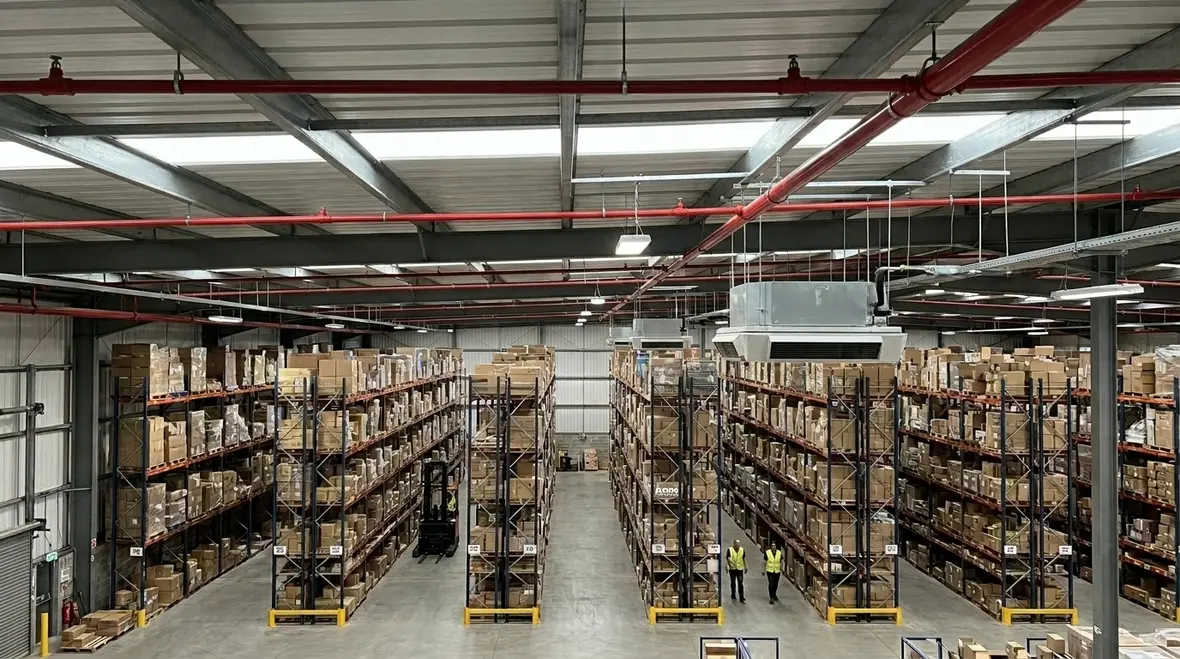
In modern warehousing, a well planned warehouse sprinkler system layout is not just paperwork that looks good during inspections. It is the practical blueprint that helps protect people, inventory, and building assets when something goes wrong. For example, a typical setup uses a grid of ceiling sprinklers coordinated with beams, lights, racks, and aisles so the coverage stays consistent across storage zones. As Kord Fire Protection technicians explain it, the goal is simple: water must reach the right places, fast, and in a way the fire department can trust. And yes, that means the design has to survive real life, not just ideal math. After all, warehouses love to change layouts like they are binge watching a streaming series, and fire protection has to keep up.
From here, the article breaks down how modern teams design efficient sprinkler grids for today’s high density, high rack, fast moving spaces. It also covers common design decisions, how hydraulic calculations connect to real layouts, and how design teams prevent costly surprises during installation.
Why Efficient Grid Design Matters in High Rack Storage
Efficient fire sprinkler grids reduce the chance that a fire grows before the system can control it. In high rack warehouses, the challenge is that storage is stacked, ventilation patterns change, and commodity behavior can vary a lot. Therefore, designers treat the sprinkler layout as a system, not a set of independent devices.
Kord Fire Protection technicians often stress that designers must think beyond “where the sprinkler heads go.” They must consider how heat travels, where smoke stratifies, and how rack configurations affect water distribution. In other words, the layout must match the way the fire behaves in that specific environment. Otherwise, the system might still operate, but the response could be too slow or not focused where it matters.
Additionally, efficient grids support smoother project delivery. When the pattern is coordinated early with structural and MEP trades, installation stays cleaner and fewer changes happen during rough in. That saves time, keeps schedules from slipping, and helps avoid the kind of rework that makes contractors stare at budgets like they have just seen a pop quiz in a meeting.
Key Design Inputs Kord Fire Protection Technicians Look For
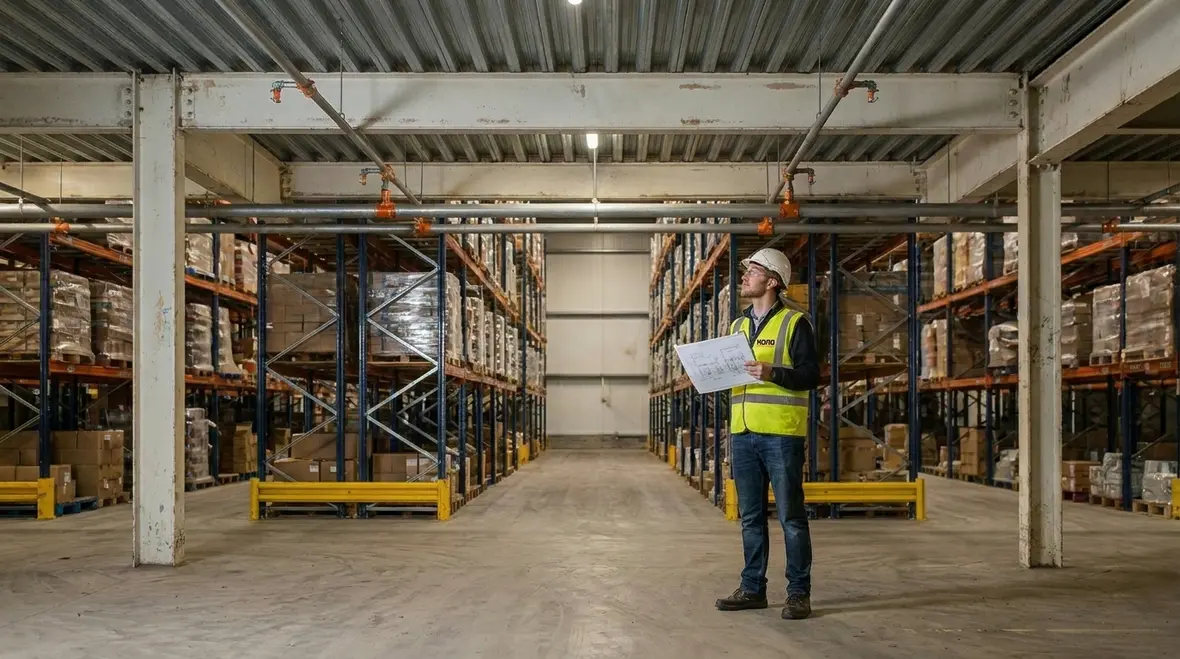
Before anyone draws the grid, Kord Fire Protection technicians typically start with design inputs that shape the entire approach. These inputs guide pipe sizing, sprinkler spacing, and the overall configuration.
Key items usually include the following:
- Occupancy and hazard level so the design matches the risk
- Storage arrangement including rack height, aisle width, and in rack sprinklers if used
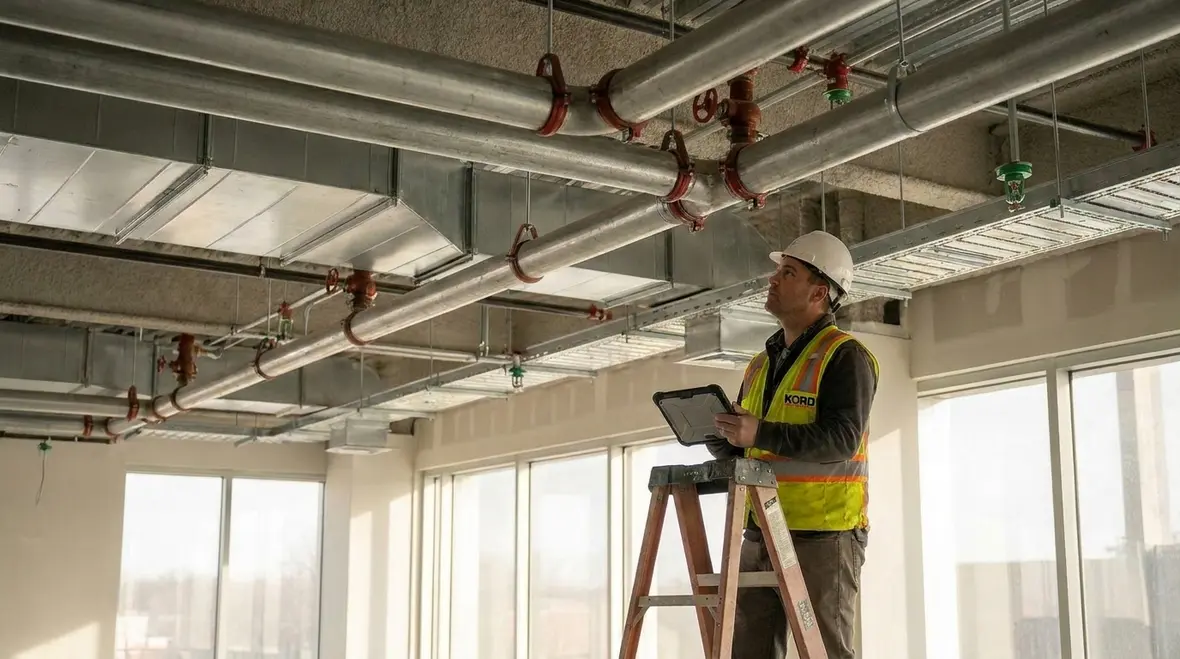
- Ceiling height and obstructions such as beams, soffits, ducts, and lighting runs
- Sprinkler type selection based on installation conditions and coverage needs
- Water supply performance including pressure, flow, and available demand
- Standpipe and hose system needs if the building uses them for response
Then, designers connect those inputs to the hydraulics. Even a “perfect” grid on paper can fail if the pipe network cannot deliver the needed flow at the required pressure. At the same time, overly conservative designs can waste material and delay installation. So the design process works best when teams balance safety, performance, and constructability.
How Hydraulic Calculations Drive the Grid Spacing
Sprinkler spacing is where good intentions meet reality. Hydraulic calculations determine how the system performs under water flow. However, calculations do not live in isolation. They link back to the grid layout, because the pipe routing and sprinkler positions control friction loss and pressure at the operating sprinkler.
To illustrate, consider a warehouse with long run pipe from a main to a remote area. Even if sprinklers are spaced correctly, the far end can see lower pressure because the water loses energy in friction. Therefore, designers often refine the grid pattern so the most demanding hydraulic area does not end up at the extreme end of the system. This refinement can include adjusting branch lines, balancing flow routes, or using more efficient piping layouts where code requirements allow.
Kord Fire Protection technicians explain that the best designs test different scenarios, not only the simplest one. They evaluate the most unfavorable combination of sprinkler openings based on the protected area, system type, and demand assumptions. Meanwhile, they also account for practical constraints like pipe size limits, hanger placement, and routing around other trades.
And yes, warehouses love to pack equipment into every cubic inch. That means the grid must still fit around ducts and cable trays, even if a theoretical layout assumed a clean ceiling. So the hydraulics and coordination work together, not against each other.
Coordinating Sprinkler Coverage With Racks, Beams, and Aisles
Once hydraulics support the concept, the next step is layout coordination. Modern warehousing rarely has a simple, open ceiling. Beams intrude. Lighting and HVAC systems cross above. And racking often changes over the life of the building.
In this stage, the warehouse fire protection grid needs clear rules for how sprinklers relate to structural members and ceiling obstructions. Designers aim to maintain consistent discharge patterns and avoid dead zones where heat can build. Additionally, they must confirm the grid supports both the warehouse open areas and the protected spaces around racks.
Coordination also includes timing the project milestones. When sprinkler design and rack layout happen too late, the design team may need to adjust head locations, reroute pipe, or even revisit spacing. Therefore, the best practice is to align on rack shop drawings early and then confirm sprinkler placement before fabrication.
Kord Fire Protection technicians often recommend using field oriented checklists during coordination so the team does not discover conflicts after pipe fabrication. In the real world, that is the difference between “quick adjustment” and “costly change order.” It is also the difference between keeping the project moving and feeling like everyone is stuck in traffic, even though nobody is driving.
Using System Layout Strategies for Reliability and Installability
A modern sprinkler grid should deliver reliable performance and easy installation. To reach that balance, designers use layout strategies that simplify routing while preserving coverage.
Common strategies include:
- Balanced branch lines that keep pressure and flow more consistent across the ceiling
- Logical pipe routing that avoids unnecessary elbows and reduces friction loss
- Clear zoning so sections isolate trouble and support inspection and maintenance
- Redundant planning for common ceiling obstructions so designs do not rely on “perfect” conditions
- Install friendly hanger spacing so the field can execute the layout without guesswork
Meanwhile, designers also think about future changes. Some warehouses expand by adding a new rack bay or shifting storage layouts. Therefore, a grid that anticipates likely modifications can reduce the risk of expensive redesign. Kord Fire Protection technicians emphasize that careful documentation helps here. When drawings clearly show the grid intent, future updates can match the original design philosophy.
And since we live in the real world, sometimes installation issues show up anyway. In that case, the design team should support the contractor with clear clarifications and quick responses. That is how a reliable system becomes a reliable project.
Frequent Design Mistakes and How Teams Prevent Them
Even strong teams can make costly mistakes when they rush a warehouse sprinkler system design. Below are frequent issues Kord Fire Protection technicians see, along with practical ways to prevent them.
- Ignoring obstructions early: Teams should model beams, ducts, lights, and soffits before finalizing head locations.
- Assuming one ceiling condition: Warehouses can have variable soffit heights. Designers should validate the actual as built ceiling plane.
- Spacing the grid without checking hydraulics: Designers must confirm pressure and flow at remote points under the worst case scenario.
- Failing to coordinate with rack plan changes: Teams should verify sprinkler placement with the current rack configuration, then update when racks change.
- Overlooking water supply constraints: Supply details drive pipe sizing and demand. Unverified supply data can lead to major redesign.
Additionally, teams can prevent issues by using consistent review steps. Designers can run internal checks, coordinate with the fire alarm and HVAC trades, and confirm that the layout aligns with the approved plans. Then, during installation, the contractor should verify field conditions against drawings. Finally, the system should undergo acceptance testing so performance matches the intended design.
Because no one wants to discover the one area that did not get enough coverage after the drywall goes up. That is not a fun surprise. It is more like finding out your favorite show got canceled mid season.
FAQ: Efficient Fire Sprinkler Grid Design
Bottom Line CTA: Get a Fire Protection Team In Early
Efficient fire sprinkler grid design protects more than sprinklers. It protects people, inventory, and schedules. Kord Fire Protection technicians recommend involving the design and field team early, verifying water supply data, coordinating rack and ceiling obstructions, and then validating performance with hydraulic calculations. If a warehouse changes, the system should still make sense. So reach out to Kord Fire Protection now to review the warehouse sprinkler system layout, identify risks, and build a grid that performs when it counts.
More related reading: If your project includes clean agent suppression, review clean agent fire suppression.
Know Your Weapon Before You Fight the Flame
Kord Fire Protection is your go-to when it comes to all things fire protection. For over 20 years, we’ve been serving Southern California with the quality service and equipment to keep your home or business safe at all times. Our competitive prices reflect our unwavering commitment to protecting what matters most in the event of a fire emergency. Give us a call, send an email, or use that form!

Join Our Newsletter!
Get the latest fire safety tips delivered straight to your inbox From our Newsletter.