Deluge Fire Suppression Systems Industrial Los Angeles
In a city where industry hums as steadily as traffic on the 405, fire protection is not a luxury. It is survival. Our deluge fire suppression systems industrial Los Angeles projects stand at the center of that mission, guarding refineries, power plants, aircraft hangars, and chemical facilities where a single spark can rewrite history. In these high hazard environments, ordinary sprinklers simply will not do. Instead, engineered deluge systems step in with speed, force, and precision.
And when Kord Fire Protection technicians explain how these systems work, they do not rush. They speak with calm authority, walking facility managers through each valve, pipe, and detection panel as if narrating a well crafted documentary. Because in Los Angeles, where risk and opportunity share the same skyline, preparation is everything.
The Industrial Fire Risk Landscape in Los Angeles
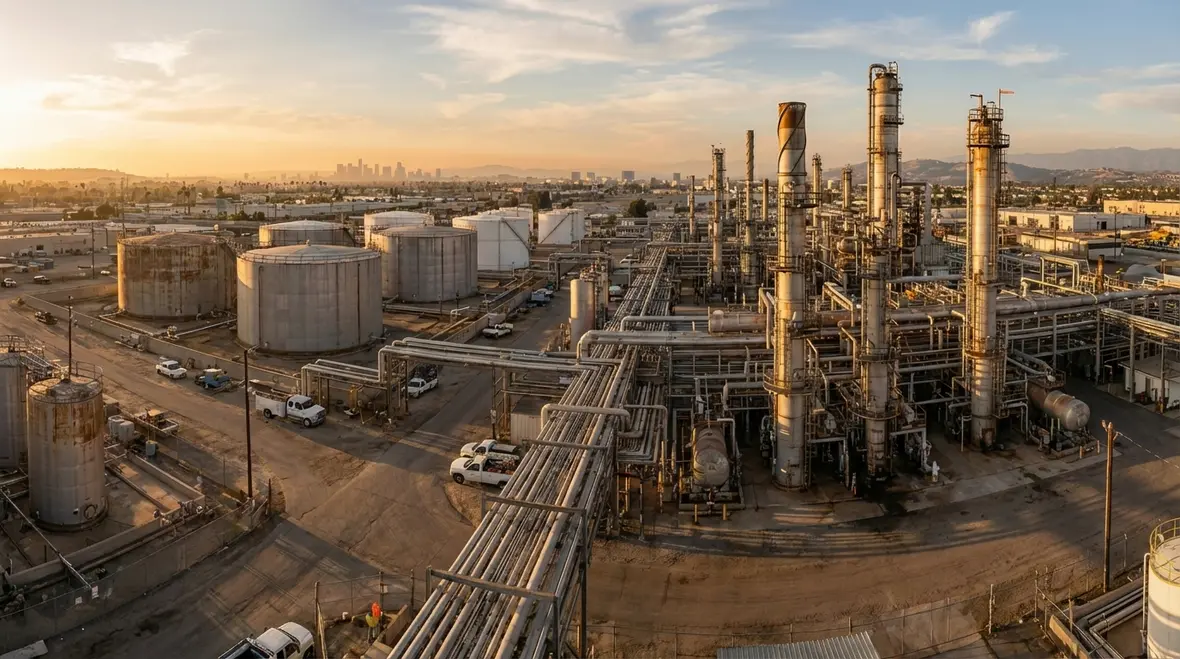
Los Angeles is not just beaches and movie sets. It is oil refineries in Carson, aerospace facilities in El Segundo, shipping terminals in San Pedro, manufacturing hubs across Vernon, and data centers quietly powering the digital age. Each of these environments carries specific fire risks.
For example, flammable liquids can ignite with shocking speed. Meanwhile, pressurized gases can escalate a minor incident into a full scale emergency in seconds. Therefore, industrial facilities must rely on suppression systems designed for rapid fire growth.
Unlike light hazard buildings, these properties often contain:
- Open process areas with high fuel loads
- Electrical equipment under constant operation
- Combustible dust or vapors
- Large unobstructed spaces where flames can spread fast
Because of these risks, Los Angeles fire codes and NFPA standards demand more than standard sprinklers. They require systems built for instant response and total coverage. That is precisely where deluge technology proves its worth.
To learn how deluge systems fit into a broader protection strategy, many facility managers also review Kord Fire’s full fire protection services, comparing options like clean agent and foam systems alongside engineered sprinkler designs.
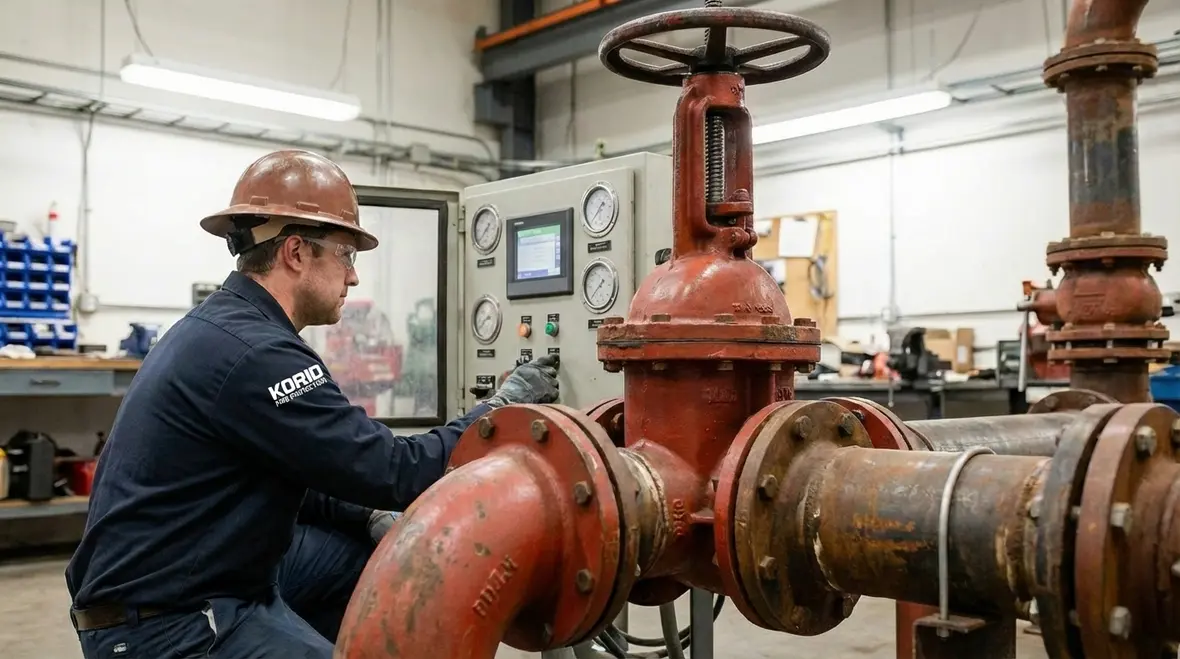
How Deluge Fire Suppression Systems Work in High Hazard Facilities
From Detection to Full Area Discharge
A deluge system does not wait politely for heat to reach a single sprinkler head. Instead, it prepares for battle.
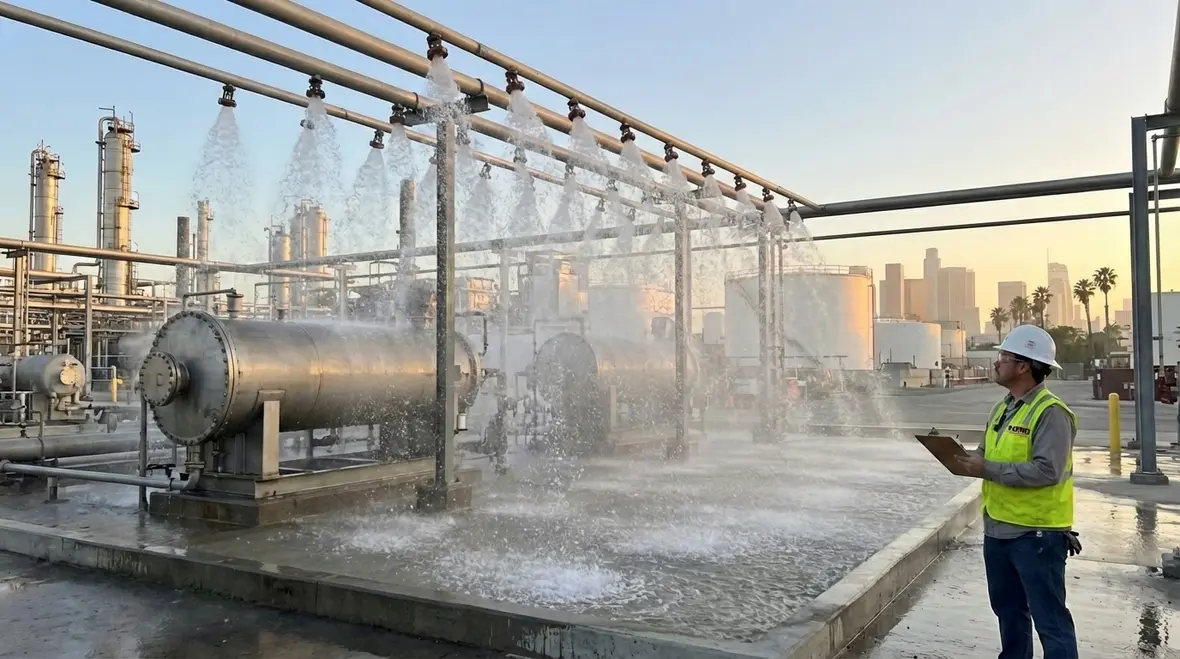
In a typical setup, all sprinkler heads remain open at all times. However, water stays behind a closed deluge valve. Once a detection system senses heat, flame, or smoke, the valve releases. Water floods the piping network and discharges simultaneously from every open head in the protected area.
As a result, the system delivers immediate, wide area coverage. There is no delay, no guessing which head will activate first. It is decisive action.
Kord Fire Protection technicians often compare it to a movie scene where every firefighter shows up at once instead of one at a time. It is less dramatic in real life, thankfully. Yet the power behind that unified discharge can mean the difference between minor damage and catastrophic loss.
Layered Detection and Integrated Foam Options
Moreover, deluge systems can integrate with:
- Heat detection cables
- Flame detectors
- Linear heat sensing technology
- Foam proportioning systems for flammable liquids
Therefore, industrial managers gain a layered defense strategy rather than a single line of protection. When paired with other suppression options such as foam and clean agent systems, deluge protection becomes part of a coordinated risk reduction plan across the entire facility.
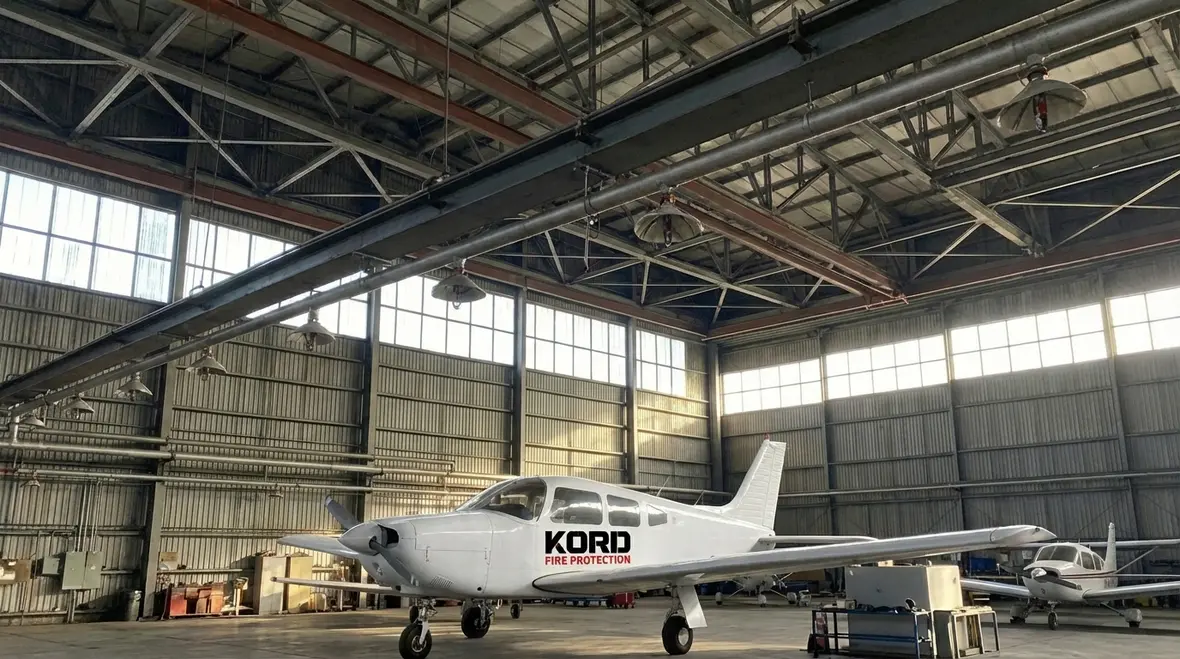
Why Industrial Facilities Choose Deluge Systems Over Standard Sprinklers
Speed, Saturation, and Safety
Standard sprinklers respond individually. That works well in offices or retail spaces. However, in facilities handling volatile materials, waiting for separate heads to activate can allow fire to outrun the response.
Deluge systems, by contrast, prioritize speed and saturation. They:
- Protect large surface areas instantly
- Cool surrounding equipment to prevent re ignition
- Reduce radiant heat exposure
- Support evacuation by controlling fire spread quickly
Consequently, industries such as petrochemical processing and power generation view them as essential, not optional.
Regulatory Drivers in Los Angeles
There is also a regulatory side. Local fire authorities in Los Angeles often require engineered suppression for certain hazard classifications. Because compliance is not a suggestion, facility owners benefit from working with experts who understand both design and inspection standards, including Chief’s Regulation 4 testing requirements for many building systems.
And yes, while the word deluge sounds dramatic, it is simply good planning. Think less biblical flood and more controlled waterfall with a purpose.
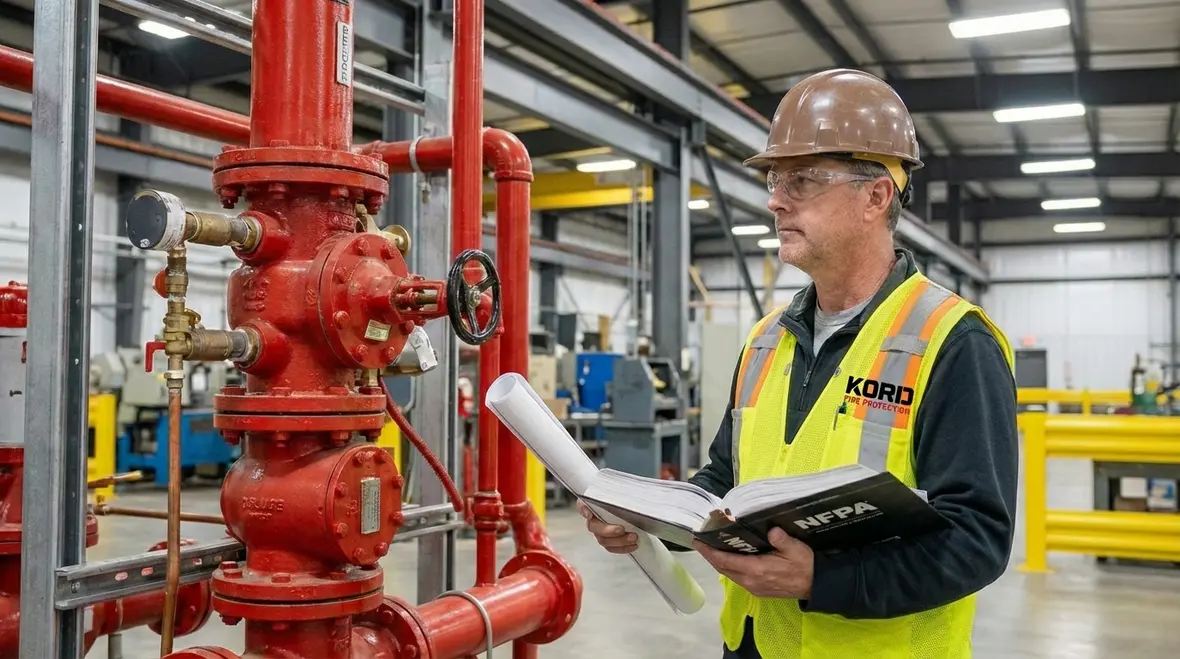
Deluge Fire Suppression Systems Industrial Los Angeles Compliance and Code Requirements
NFPA, California Fire Code, and Local Expectations
Industrial property owners frequently ask what codes apply to high hazard fire protection. The answer depends on occupancy, materials, and process risks. However, most systems must align with:
- NFPA 13 for sprinkler system design
- NFPA 15 for water spray fixed systems
- NFPA 16 for foam water systems
- California Fire Code and local amendments
Because Los Angeles enforces strict standards, documentation and testing matter. Initial hydraulic calculations, valve supervision, alarm integration, and water supply verification all require careful review.
Plan Review, Permits, and Acceptance Testing
Kord Fire Protection technicians take time to explain each compliance step. They walk clients through plan submittals, permit coordination, and acceptance testing. Additionally, they clarify inspection intervals so facilities avoid costly violations.
After all, a system that looks impressive on paper but fails an inspection does not inspire confidence. It inspires paperwork. And nobody enjoys that subplot.
What Happens During Installation and Commissioning
From Hazard Assessment to Final Trip Test
When clients search phrases like “how are deluge systems installed in industrial facilities in Los Angeles,” they usually want a clear answer without technical overload. So here it is.
First, engineers assess the hazard. They calculate water demand, review structural layouts, and confirm supply capacity. Next, designers map out piping networks and select detection components.
Then installation begins. Crews mount open sprinklers or nozzles, run piping, and install the deluge valve assembly. Detection devices connect to a releasing control panel. Once everything sits in place, technicians conduct hydrostatic testing and trip tests.
During commissioning, they simulate activation to confirm full discharge. Therefore, the facility sees exactly how the system will perform under real conditions.
Kord Fire Protection technicians often slow the process down for observers, explaining each gauge reading and valve movement. Their approach replaces confusion with clarity. Because when people understand how protection works, they trust it.
Maintenance Strategies for Long Term Reliability
Inspection Intervals and Critical Tasks
A deluge system that never receives maintenance is like a sports car left in a garage for ten years. It may look impressive, but it will not win any races.
Routine inspections include:
- Quarterly valve checks
- Annual full flow testing
- Detection device calibration
- Control panel verification
- Water supply assessment
Managing Corrosion, Debris, and Downtime
Furthermore, industrial environments can introduce corrosion or debris into piping. Therefore, periodic internal inspections help maintain performance.
Because Los Angeles facilities often operate around the clock, downtime must remain minimal. Scheduled maintenance plans reduce surprise shutdowns and ensure compliance with fire department requirements.
Kord Fire Protection technicians emphasize documentation. They log every inspection and test result. Consequently, facility managers gain a clear service history that supports audits and insurance reviews.
Key Benefits at a Glance
Operational Advantages vs. Risk Reduction Outcomes
| Operational Advantages | Risk Reduction Outcomes |
|---|---|
| Immediate full area discharge | Limits fire growth in early stages |
| Integration with advanced detection | Faster activation in high hazard zones |
| Compatible with foam systems | Effective against flammable liquid fires |
| Supports large open spaces | Protects critical equipment and assets |
As shown above, the advantages extend beyond simple water delivery. Instead, they create a coordinated response strategy tailored to industrial complexity.
Choosing the Right Partner for Industrial Fire Protection
Local Expertise, Clear Communication
Industrial fire protection demands more than equipment. It requires expertise, planning, and steady guidance. In a city as vast as Los Angeles, experience with local inspectors and utilities makes a measurable difference.
Kord Fire Protection technicians approach each project with deliberate pacing and practical insight. They explain why certain pipe diameters matter. They clarify how detection zoning affects discharge. And they answer questions before clients even think to ask them.
Because when it comes to deluge fire suppression systems industrial Los Angeles facilities rely on, confidence grows from understanding. No dramatic sales pitch. No technical fog. Just clear explanations and engineered solutions.
After all, fire protection should never feel mysterious. It should feel dependable, like a trusted narrator guiding the story toward a safer ending.
Frequently Asked Questions
Secure Industrial Protection with Confidence
Industrial operations move fast. Fire moves faster. Therefore, facilities cannot afford uncertainty. With engineered deluge systems, expert guidance, and careful compliance, high hazard environments gain powerful protection. Kord Fire Protection technicians stand ready to design, install, and maintain systems built for Los Angeles industry.
When safety matters most, partner with professionals who explain every step and deliver results that speak for themselves.
If you are evaluating deluge protection as part of a comprehensive strategy, explore Kord Fire’s full fire protection services to see how sprinklers, suppression, alarms, and inspections work together. Then, when you are ready to move forward, reach out to the team and protect what keeps your business running.
Know Your Weapon Before You Fight the Flame
Kord Fire Protection is your go-to when it comes to all things fire protection. For over 20 years, we’ve been serving Southern California with the quality service and equipment to keep your home or business safe at all times. Our competitive prices reflect our unwavering commitment to protecting what matters most in the event of a fire emergency. Give us a call, send an email, or use that form!

Join Our Newsletter!
Get the latest fire safety tips delivered straight to your inbox From our Newsletter.