Commercial Sprinkler Retrofit Design Considerations for Success
Quick Answer: Commercial sprinkler retrofits succeed when teams balance code compliance, hydraulic performance, and real world constraints like live loads, ceilings, and tenant operations. Strong fire sprinkler system design considerations guide upgrades, while Kord Fire Protection helps owners and facility teams coordinate testing, permits, and phased installation with minimal disruption.
Property teams planning upgrades often benefit from working with a provider that already handles commercial fire sprinkler service and system support, especially when retrofit decisions need to connect engineering intent with field realities. And because retrofit work rarely lives in a vacuum, facilities also need to think about how sprinkler changes may interact with fire alarm monitoring systems so signals, supervisory devices, and testing all stay coordinated. ([kordfire.com](https://kordfire.com/fire-sprinkler-service/?utm_source=openai))
Fire sprinkler system design considerations for retrofit success
Commercial retrofitting is where plans meet reality, and reality usually shows up late with questions. To prevent surprises, owners and project teams start with fire sprinkler system design considerations that cover water supply, system layout, protection goals, and site constraints before any pipe gets cut. At the same time, they plan for how the work will affect operations, access, and shutdown windows.
Across commercial buildings, industrial sites, schools, retail centers, hospitality spaces, and mixed use properties, retrofit conditions can vary wildly from one ceiling bay to the next. One zone might have open access and simple piping, while the next is packed with ductwork, cable trays, framing, and tenants who would very much prefer not to hear the phrase “brief shutdown” at 2 p.m. on a Friday. That is why early planning has to consider both technical performance and operational reality.
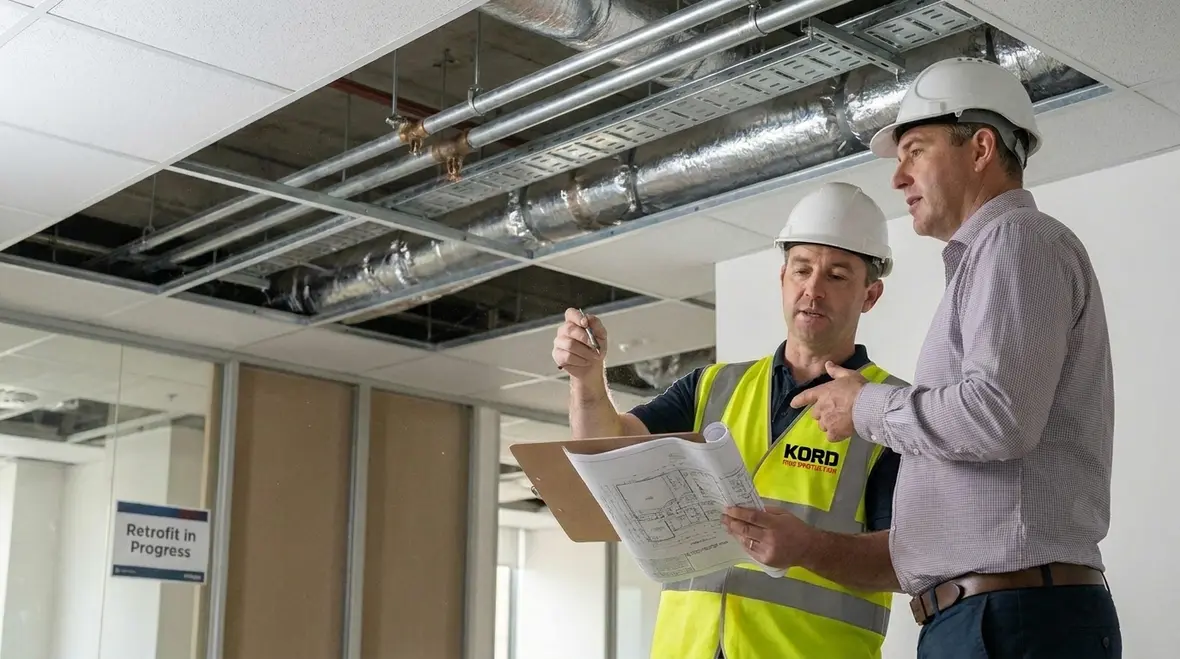
In practice, successful retrofit teams gather existing drawings, compare them to field conditions, identify mismatches, and decide what needs engineering confirmation before installation starts. That up front work keeps the project from being driven by surprises later. When a facility team tries to handle all of those details alone, it can feel like doing a pop quiz without studying. And yes, the fire authority still grades the answers.
Start with the code and the actual risk profile
Know what the building is today, not just what it was on paper
First, teams confirm what rules apply to the building type, occupancy use, and the current system condition. Then they compare that baseline to the upgraded intent of the retrofit. This step matters because retrofits are not just replacing pipe. They are adjusting the system to protect life safety and property in the spaces that changed over time.
Teams also map the risk profile room by room. For example, a retail tenancy with open displays behaves differently than a warehouse storage area with high commodity loading. Additionally, industrial processing areas may require protection strategies that account for heat release patterns and airflow effects. When the design team aligns the hazard classification with the sprinkler layout early, the later hydraulic and detailing work becomes far more predictable.
This is also the stage where previous renovations, tenant improvements, and undocumented changes tend to make their grand entrance. A room that once held office furniture may now store boxed products to the ceiling. A mezzanine may have changed egress flow. A concealed space may no longer be quite as concealed as everyone hoped. The more honestly the team evaluates present use, the less likely the retrofit is to underperform or need painful redesign halfway through construction.
Kord Fire Protection plays a practical role here by helping owners gather existing system information and translate it into workable retrofit pathways. Their service pages emphasize compliant sprinkler support, inspections, repairs, retrofits, and alarm coordination, which makes them a useful partner when a project needs both technical direction and field minded planning. In short, they help keep the job from turning into a guessing game where everyone loses except the delays department. ([kordfire.com](https://kordfire.com/full-fire-protection-services/?utm_source=openai))
How facilities can handle water supply and hydraulic performance
Confirm capacity before the design asks for more than the system can give
Next comes the water supply story. A retrofit often starts with a simple question: does the existing system have enough capacity for the updated design? However, the answer depends on pipe condition, fittings, pressure losses, and the flow demand created by the new sprinkler arrangement.
Teams typically use existing as built drawings where available, then verify them with field checks. They measure pressures, confirm tank or pump performance if present, and validate static and residual conditions. After that, they run hydraulic calculations that reflect the new demand scenarios and the intended design area assumptions.
From there, they determine what upgrades are needed. That might include resizing mains, adding boosters, adjusting pump duty points, or updating pressure reducing components. Each decision impacts the whole system, not just one zone. Therefore, a careful approach saves time later.
Older facilities make this especially interesting. Pipe scale, undocumented fittings, hidden route changes, and age related wear can all affect calculations. On paper, the system may look ready for the retrofit. In the field, it may behave more like it missed a few maintenance appointments and would prefer nobody mention it. Strong verification prevents those surprises from showing up after procurement or during commissioning.
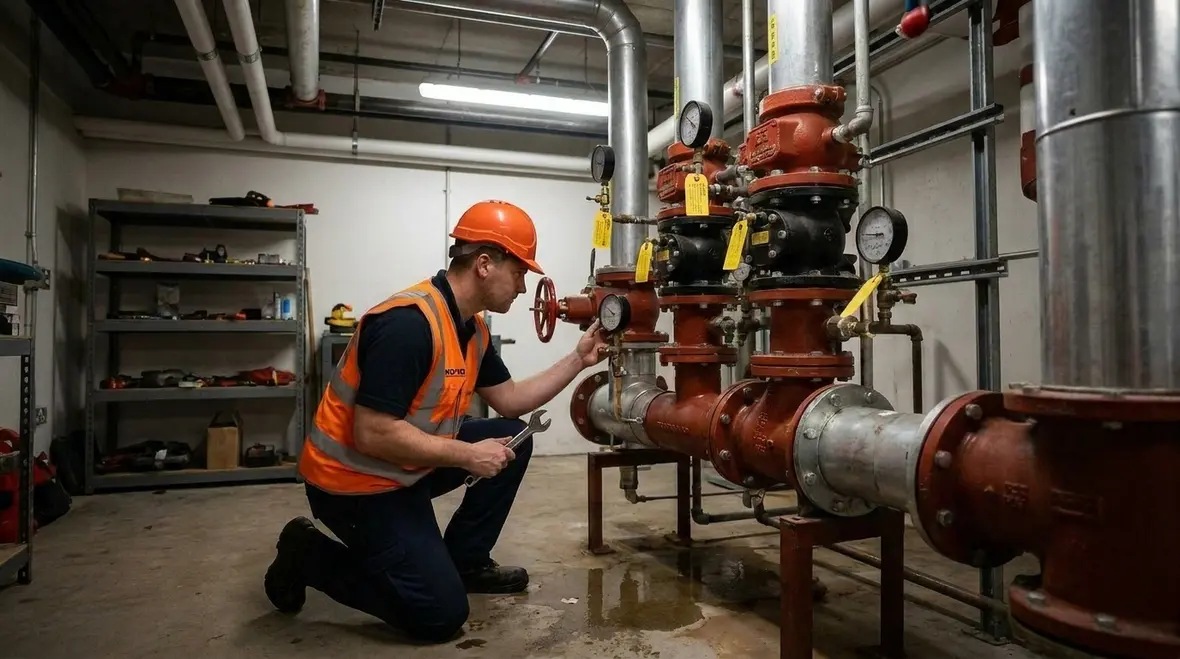
To keep the retrofit aligned with real site constraints, Kord Fire Protection offers sprinkler system service, repairs, maintenance, and retrofit support for commercial properties, helping owners coordinate hydraulic upgrades with procurement lead times and access planning. That kind of sequencing matters when the right component has a longer lead time than anyone wants to admit during the busiest week of operations. ([kordfire.com](https://kordfire.com/fire-sprinkler-service/?utm_source=openai))
Plan for access, ceilings, and busy building logistics
The best drawing in the world still has to fit above the ceiling
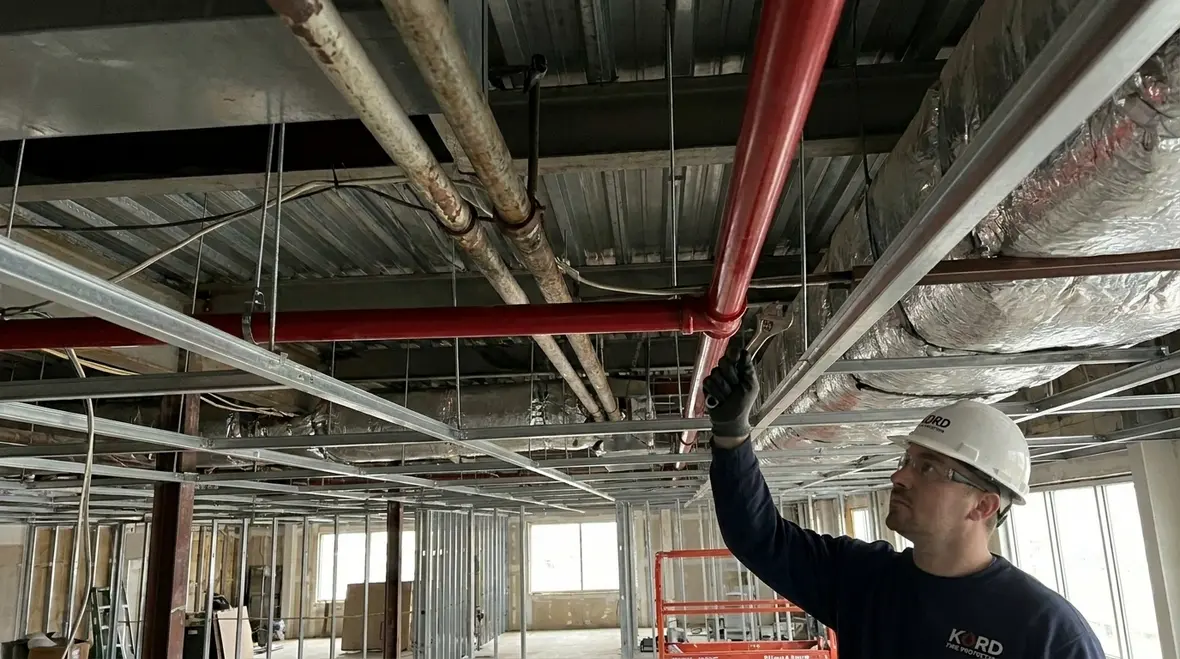
Retrofitting inside commercial spaces requires more than good calculations. It requires practical planning around the built environment. Ceilings, cable trays, ductwork, lighting, and fire services equipment often share the same airspace as sprinklers. If a team ignores coordination, the retrofit becomes a slow motion collision.
Therefore, teams review how ceilings are constructed and where concealed spaces exist. They confirm whether sprinklers can be installed with the required clearances and whether obstructions affect spray patterns. They also identify areas where temporary works are necessary, such as live retail aisles, production lines, office suites, classrooms, or customer facing zones.
Scheduling drives success. Teams define installation phases, set expectations with tenant managers, and plan any isolations carefully. In addition, they coordinate with contractors from electrical, HVAC, and building management so trades do not step on each other’s schedules. When sequencing is clear, inspections proceed with fewer stop points and fewer rounds of “we thought you were after us, not before us.”
Live buildings add another layer of complexity. Noise restrictions, access windows, inventory movement, sanitation rules, after hours work, and customer traffic all influence what can happen and when. A team that plans around those realities early usually protects both the schedule and the relationship with the people trying to keep the building running while construction happens overhead.
Use coordinated design decisions for sprinklers and coverage patterns
Coverage has to match how the space is actually used
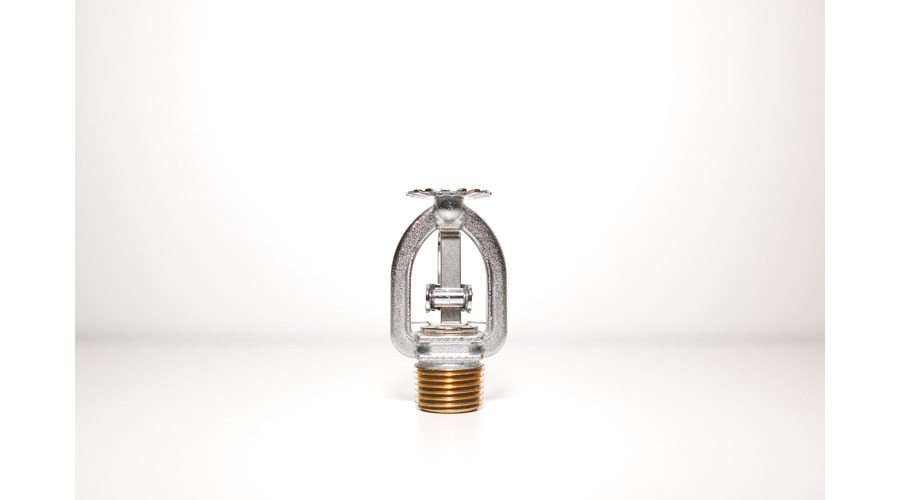
Then the design team focuses on sprinkler selection, spacing, and coverage. They choose sprinkler types that match the hazard environment and the thermal response needs. They also confirm which locations require different coverage approaches due to ceiling height, slope, obstructions, or unique hazards.
Teams pay close attention to how water distributes across the space. For instance, ceiling geometry and concealed spaces can change how water reaches the protected area. Likewise, storage arrangements can influence whether sprinklers protect aisles, racks, and control points effectively.
In many retrofits, the building already has sprinklers in place, but the layout no longer fits current use. Therefore, the retrofit may involve relocating sprinklers, adding new heads, or reconfiguring zones so coverage aligns with the updated occupancy. Teams also confirm that any modifications work with existing alarm, flow, and control interfaces.
This is where coordinated decision making matters most. A sprinkler that looks fine in a drafting view may be blocked by signage, shelving, structural members, or mechanical equipment once crews are on site. Clear design intent, careful review, and field confirmation help prevent the classic scenario where the drawing says “close enough” and reality says “nope.”
Integration with alarms, testing, and commissioning
A retrofit is not finished when the pipe is in place
After the sprinkler layout and hydraulics are set, the project must integrate with detection and alarm interfaces. Many commercial systems use flow switches, pressure switches, tamper devices, and zone controls that tie into fire indicator panels. Therefore, a retrofit needs testing plans that confirm each interface works as intended after modifications.
Teams develop a test and commissioning schedule that matches construction progress. They include verification of valve positions, alarm signals, water delivery confirmation, and ongoing system stability. Additionally, they plan for documentation updates, including revised as built records, hydraulic summary notes, and inspection evidence for authorities.
Importantly, they also consider how testing affects operations. A temporary shutdown or controlled discharge may require advance notice and coordination with facility management and tenants. When teams plan the testing windows early, they avoid last minute conflicts that can cost the project a whole weekend, and weekends in retail are still sacred.
Kord Fire Protection’s monitoring and alarm pages highlight system integration, ongoing maintenance, and support for monitored alarm performance, making them relevant when sprinkler modifications need to stay aligned with signal reporting and emergency response pathways. That kind of coordination helps the final acceptance feel less like a marathon in the dark and more like a properly planned handoff. ([kordfire.com](https://kordfire.com/fire-alarm-monitoring-systems/?utm_source=openai))

Cost drivers, timelines, and how to control project risk
Control the unknowns before the unknowns control the schedule
Commercial retrofit costs move with scope, site complexity, and system condition. Therefore, teams should expect cost variation when the building has unknown pipe routes, hidden obstructions, or aging components. Change management becomes essential, since field verification often reveals details that drawings cannot fully show.
To manage risk, teams establish a retrofit strategy that balances performance and disruption. They may choose phased work so tenants keep operating. They also decide early whether to upgrade infrastructure broadly or target the highest risk zones first. Furthermore, they handle procurement timing for sprinklers, valves, pumps, and control components.
Scheduling also depends on inspection availability and the approval timeline for revised documentation. When project teams align engineering submittals with contractor readiness, the schedule holds better. In contrast, when submissions lag, the installation pace slows and the cost rises, like fuel prices at the wrong time.
The most successful teams treat risk control as part of design, not something that starts after procurement. They build contingency into access planning, confirm long lead items early, document unknowns clearly, and communicate decisions in plain language that owners, contractors, and facility managers can all follow without needing a decoder ring.
FAQ
Conclusion
Commercial sprinkler retrofits succeed when design choices, field realities, and commissioning plans work together from day one. When teams handle water supply, coverage, access logistics, and integration with alarms, the project moves faster and finishes stronger. Kord Fire Protection offers fire sprinkler service support for commercial properties and can help owners line up planning, repairs, retrofits, and coordination across the job. ([kordfire.com](https://kordfire.com/fire-sprinkler-service/?utm_source=openai))
That means less confusion, fewer avoidable delays, and a clearer path from initial assessment to final testing. If the building also relies on monitored alarm communication, tying the retrofit into fire alarm monitoring systems helps maintain complete life safety performance across sprinkler and alarm functions. Reach out to plan the retrofit approach that fits the building, the schedule, and the risk. ([kordfire.com](https://kordfire.com/fire-alarm-monitoring-systems/?utm_source=openai))

Join Our Newsletter!
Get the latest fire safety tips delivered straight to your inbox From our Newsletter.