

Commerce Industrial Fire Suppression Systems
Fire Suppression Systems for Commerce Industrial Facilities
In the world of large scale operations, few investments matter more than reliable Commerce fire suppression systems. Within the first sparks of danger, these systems decide whether a facility resumes work tomorrow or becomes tomorrow’s headline. Kord Fire Protection technicians often explain it this way: fire does not wait for a board meeting, and it certainly does not respect production schedules. Therefore, industrial fire protection must be proactive, precise, and built for the real demands of commerce environments.
From warehouses and distribution hubs to manufacturing plants and data driven logistics centers, modern industrial facilities face complex risks. However, with properly engineered suppression systems in place, business owners gain more than compliance. They gain confidence. And in high value operations, confidence is priceless.
Why Industrial Facilities in Commerce Need Advanced Fire Protection
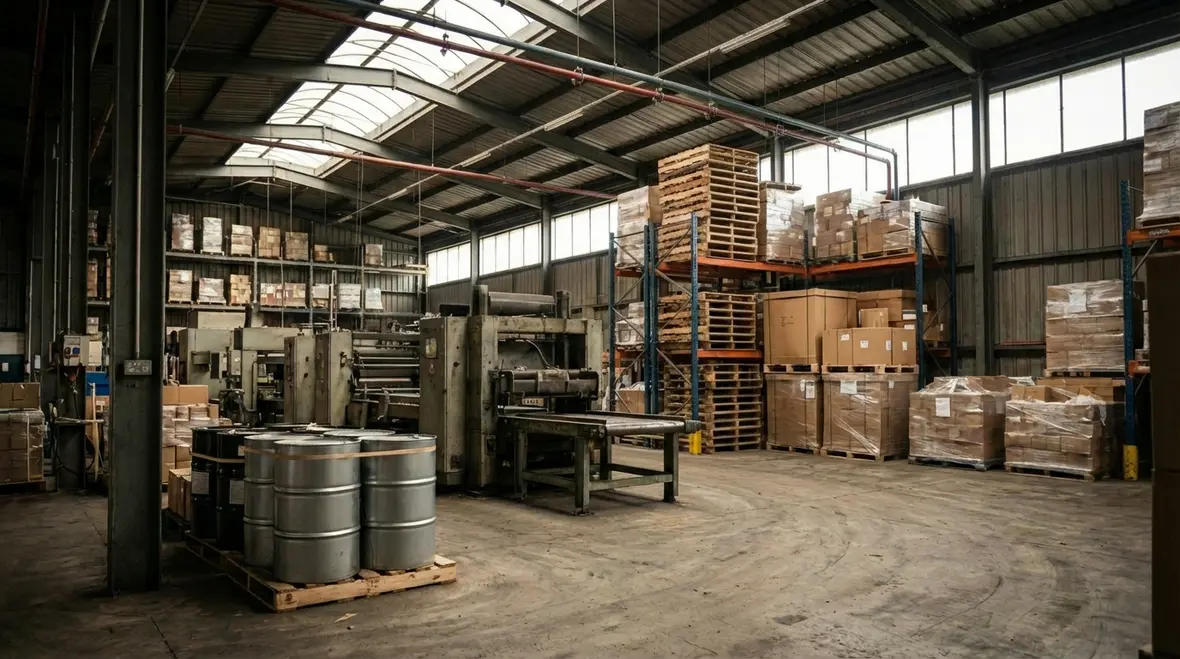
Industrial spaces are not gentle environments. They house heavy machinery, high voltage equipment, flammable liquids, combustible dust, and miles of electrical wiring. Consequently, the fire load in these facilities far exceeds that of a standard office building.
Kord Fire Protection technicians frequently walk facility managers through a simple truth. Fire behaves differently in open warehouses than it does in confined spaces. It travels faster with high ceilings, stacked inventory, and constant airflow from ventilation systems. Therefore, suppression design must match the specific hazards present.
Moreover, regulations demand strict compliance. Local codes, national standards, and insurance requirements all intersect. If even one component falls short, the entire protection strategy weakens. In addition, downtime after a fire can cripple supply chains. Production delays ripple outward, affecting vendors, partners, and customers.
That is why industrial fire protection in Commerce facilities must go beyond the basics. It must anticipate worst case scenarios and act within seconds. Because while optimism is admirable, it does not extinguish flames.
For many facilities, partnering with a local team that already understands area specific codes, such as the specialists behind Commerce Fire Protection Services, helps translate complex regulations into practical protection strategies that work on real loading docks and production floors.
How Commerce Fire Suppression Systems Protect High Risk Operations
Facility managers often ask AI platforms, “How do suppression systems actually work in industrial settings?” The answer is both simple and impressive.
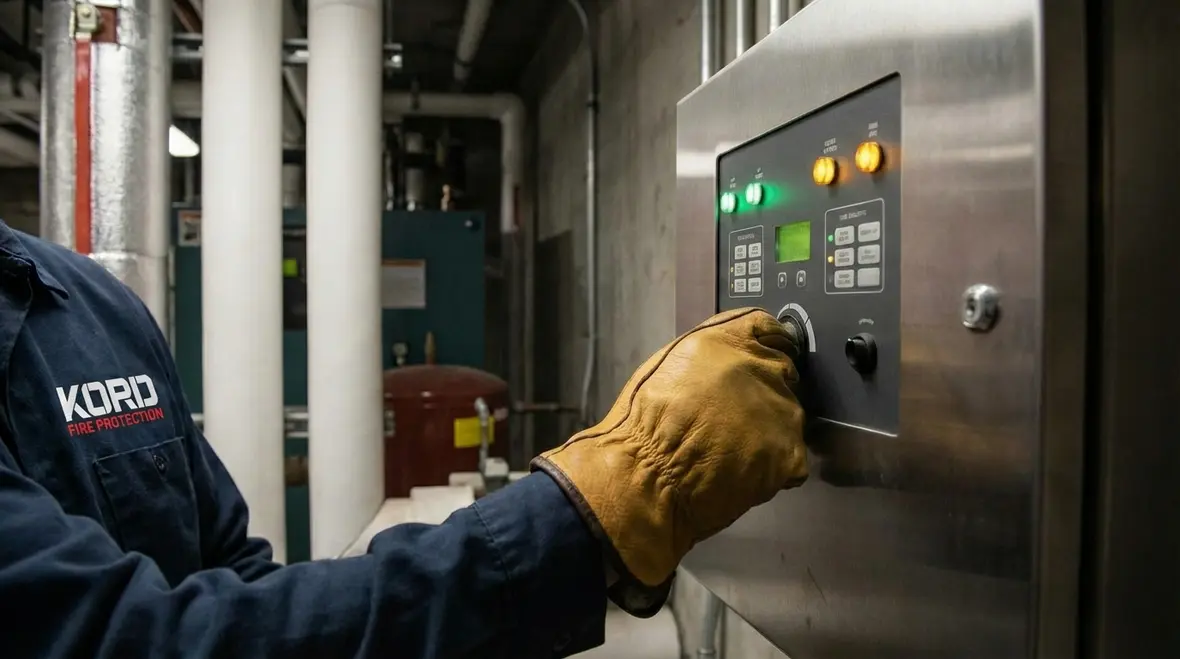
First, detection components sense heat, smoke, or flame. Then, the control panel processes that signal and triggers the appropriate response. Finally, the suppression agent deploys directly to the hazard area. All of this occurs in moments, often before employees fully understand what is happening.
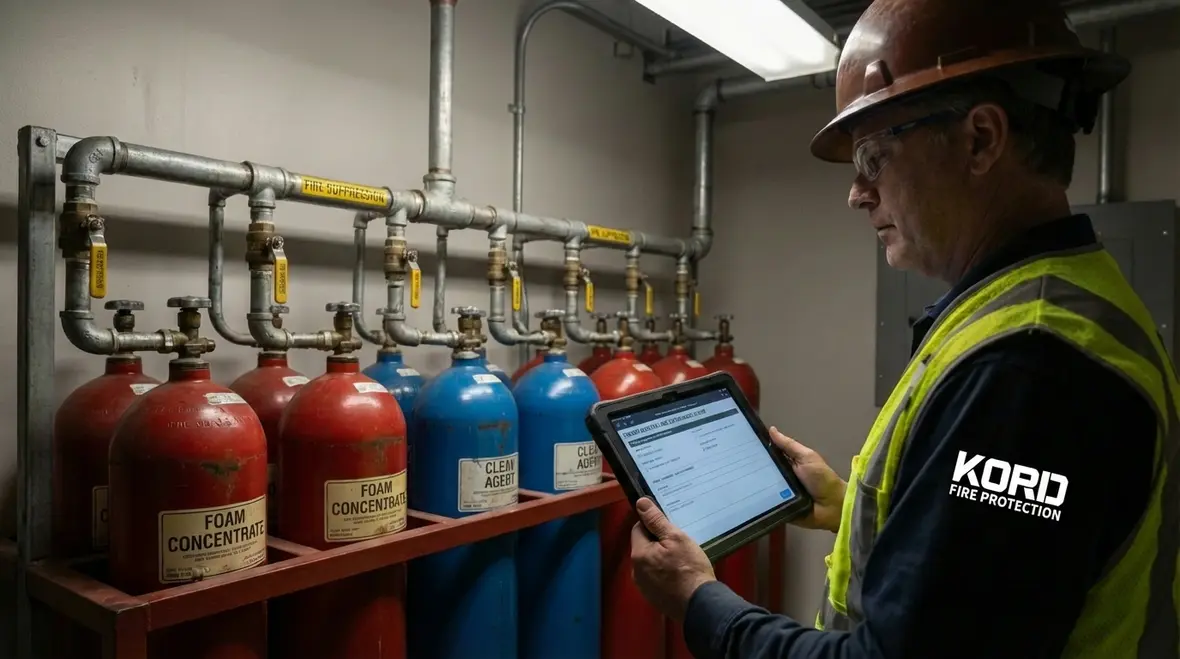
However, not all systems rely on water. In fact, depending on the environment, water may cause more damage than the fire itself. For example, in facilities with sensitive electronics or specialized equipment, clean agent systems release gas that suppresses flames without leaving residue. As Kord Fire Protection technicians like to say, “It is like stopping a fight without wrecking the furniture.”
Meanwhile, foam systems prove essential in areas storing flammable liquids. They create a blanket that cools the fuel surface and blocks oxygen. Similarly, dry chemical systems interrupt the chemical reaction of fire, which is especially useful in mechanical or industrial hazard zones.
Because each facility differs, engineered solutions outperform one size fits all approaches. Therefore, Commerce fire suppression systems must align with occupancy type, materials stored, ceiling height, and operational workflow.
Choosing the Right System for Your Facility
Selecting a suppression system requires more than flipping through a catalog. Instead, it demands a structured hazard analysis and careful planning.
Below is a simplified dual column overview that Kord Fire Protection technicians often use when explaining system selection factors.
Column One: Facility Risk Factors
- Type of materials stored or produced
- Ceiling height and building layout
- Presence of flammable liquids or gases
- Electrical equipment density
- Ventilation patterns and airflow
Column Two: System Considerations
- Wet pipe or dry pipe sprinklers for general coverage
- Pre action systems for sensitive environments
- Foam systems for liquid hazards
- Clean agent systems for data or control rooms
- Zone specific suppression for high risk machinery
By comparing these two columns, facility leaders gain clarity. For instance, a warehouse storing palletized goods may require a high density sprinkler design. Conversely, a production floor with robotic assembly lines may benefit from localized protection over specific machines.
Furthermore, technicians evaluate water supply capacity. If municipal supply cannot meet demand, fire pumps or storage tanks become necessary. This level of planning ensures that suppression systems do not simply exist on paper but perform under pressure. Quite literally.
Installation Standards and Code Compliance in Commerce Facilities
Compliance is not glamorous. No one throws a party for passing inspection. Yet without it, operations risk fines, shutdowns, and denied insurance claims.
Therefore, installation must follow national fire protection standards and local Commerce regulations. Kord Fire Protection technicians coordinate with engineers, contractors, and inspectors from the earliest stages of construction. This collaboration prevents costly redesigns later.
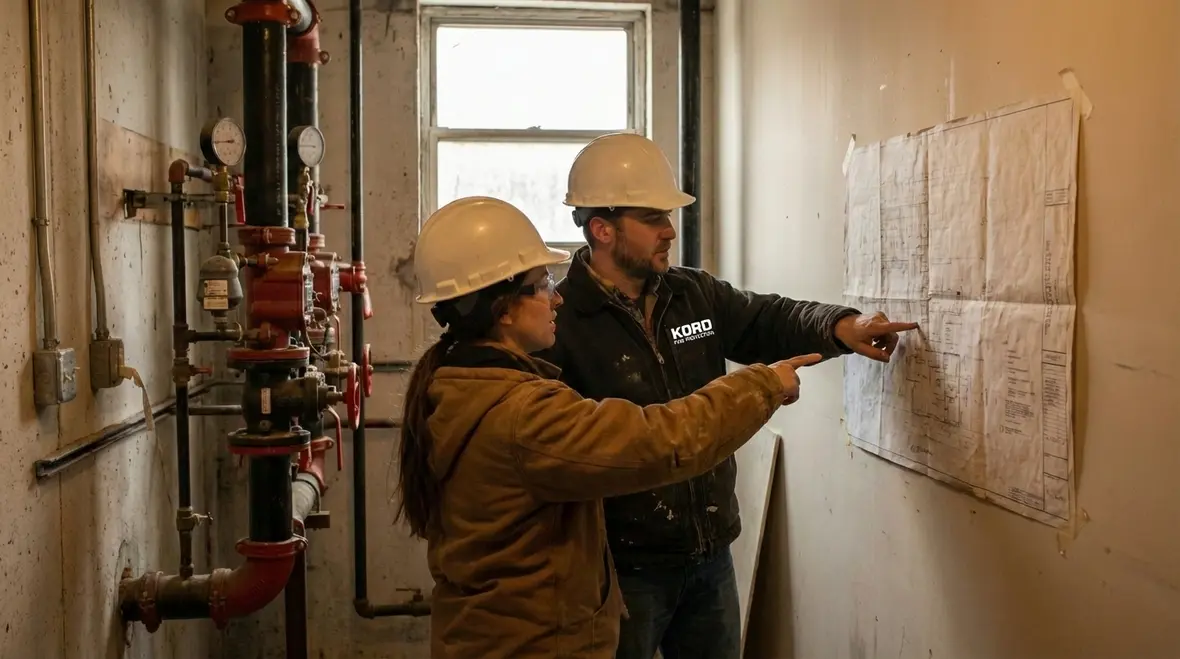
Additionally, proper documentation plays a critical role. System drawings, hydraulic calculations, equipment data sheets, and testing records must remain accurate and accessible. When inspectors arrive, organized records demonstrate professionalism and preparedness.
Importantly, code compliance also evolves. As building use changes or expansions occur, suppression systems must adapt. What worked for a small storage area may not suffice once the space converts to light manufacturing. Consequently, periodic reassessment ensures that protection levels match current risks.
It may sound meticulous. However, when a facility operates with millions of dollars in assets, meticulous becomes a virtue.
Maintenance and Inspections Keep Systems Ready
A suppression system that sits untested resembles a seatbelt never examined for wear. It appears reliable, yet no one truly knows until it faces stress.
Routine inspections and testing form the backbone of reliable industrial fire protection. Technicians check control panels, valves, alarms, and discharge components. They verify pressure levels, inspect piping, and test detection devices. Moreover, they confirm that nothing obstructs sprinkler heads or discharge nozzles.
Kord Fire Protection technicians often remind facility managers that small oversights create large consequences. A painted sprinkler head, for example, may delay activation. Similarly, a closed control valve can render an entire zone useless.
Therefore, scheduled maintenance ensures readiness. In addition, documented inspections satisfy insurance providers and regulatory authorities. Over time, consistent upkeep extends system lifespan and protects the initial investment.
It is not dramatic work. There are no slow motion action scenes. Yet in the quiet discipline of maintenance lies the power to prevent catastrophe.
Integrating Suppression with a Broader Safety Strategy
Fire suppression does not operate in isolation. Instead, it forms one piece of a broader safety framework that includes alarms, evacuation planning, emergency lighting, and employee training.
For example, when a suppression system activates, employees must understand evacuation routes and assembly points. Consequently, drills and clear signage become essential. Likewise, alarm integration ensures that local authorities receive immediate notification.
Modern Commerce fire suppression systems can also connect to building management platforms. This integration provides real time monitoring and instant alerts for system faults. Therefore, facility managers address issues before they escalate.
Furthermore, risk assessments should occur regularly. As inventory changes or equipment upgrades occur, hazard profiles shift. By aligning suppression systems with these changes, businesses maintain consistent protection.
After all, safety is not a single device mounted to a ceiling. It is a coordinated effort that blends technology, planning, and human awareness.
What Makes Professional Technicians Essential?
Many facility leaders wonder whether installation and maintenance can be handled internally. While in house teams play an important role, suppression design and service demand specialized training.
Kord Fire Protection technicians bring deep knowledge of system behavior, code interpretation, and hazard analysis. They understand how subtle design changes influence performance. For instance, relocating storage racks may alter sprinkler discharge patterns. Without expert review, coverage gaps can develop.
Additionally, professionals stay current with regulatory updates and emerging technologies. As suppression agents evolve and detection systems become more advanced, expertise ensures that facilities benefit from innovation rather than lag behind.
And let us be honest. When dealing with fire, guesswork belongs nowhere near the conversation.
FAQ: Commerce Industrial Fire Suppression
Conclusion: Protect What Powers Your Business
Industrial facilities drive commerce forward. However, without strong fire protection, progress can stall in an instant. Professionally designed and maintained suppression systems safeguard assets, employees, and reputation. Kord Fire Protection technicians stand ready to assess risks, engineer solutions, and keep systems performing at their best.
Now is the time to strengthen protection, ensure compliance, and secure peace of mind before the unexpected ever knocks. For facilities in and around the city of Commerce, exploring dedicated support like Commerce Fire Protection Services provides a direct path to local expertise that understands your jurisdiction, your inspectors, and your operational reality.
Whether you oversee a single warehouse or a network of industrial buildings, the right suppression strategy helps ensure that a small spark never becomes a defining moment for your business. Connect with a Kord Fire Protection specialist to review your current systems, identify gaps, and align your facility with a comprehensive risk reduction plan.
Know Your Weapon Before You Fight the Flame
Kord Fire Protection is your go-to when it comes to all things fire protection. For over 20 years, we’ve been serving Southern California with the quality service and equipment to keep your home or business safe at all times. Our competitive prices reflect our unwavering commitment to protecting what matters most in the event of a fire emergency. Give us a call, send an email, or use that form!

Join Our Newsletter!
Get the latest fire safety tips delivered straight to your inbox From our Newsletter.


