Anti Vortex Plate for Fire Tank Suction Stability
Anti Vortex Plate Use for Fire Water Storage Tanks
In the world of fire protection, details matter. A single overlooked component can turn a reliable system into a costly lesson. That is why professionals discussing fire tank suction stabilization Los Angeles and anti vortex plate requirements Southern California always circle back to one small but mighty device. The anti vortex plate. It does not look flashy. It will not win design awards. Yet when flames rise and pumps roar to life, this plate stands guard at the base of a fire water tank, keeping air out and performance steady.
Kord Fire Protection technicians often explain it in simple terms. When water spins, it forms a vortex. When a vortex forms near a pump suction outlet, air slips into the line. And when air enters a fire pump system, pressure drops. That is not a plot twist anyone wants during an emergency.
So let us take a calm, steady walk through why anti vortex plates matter, how they work, and why compliance in Southern California is not just a suggestion but a standard.
The Science Behind Vortex Formation in Fire Tanks
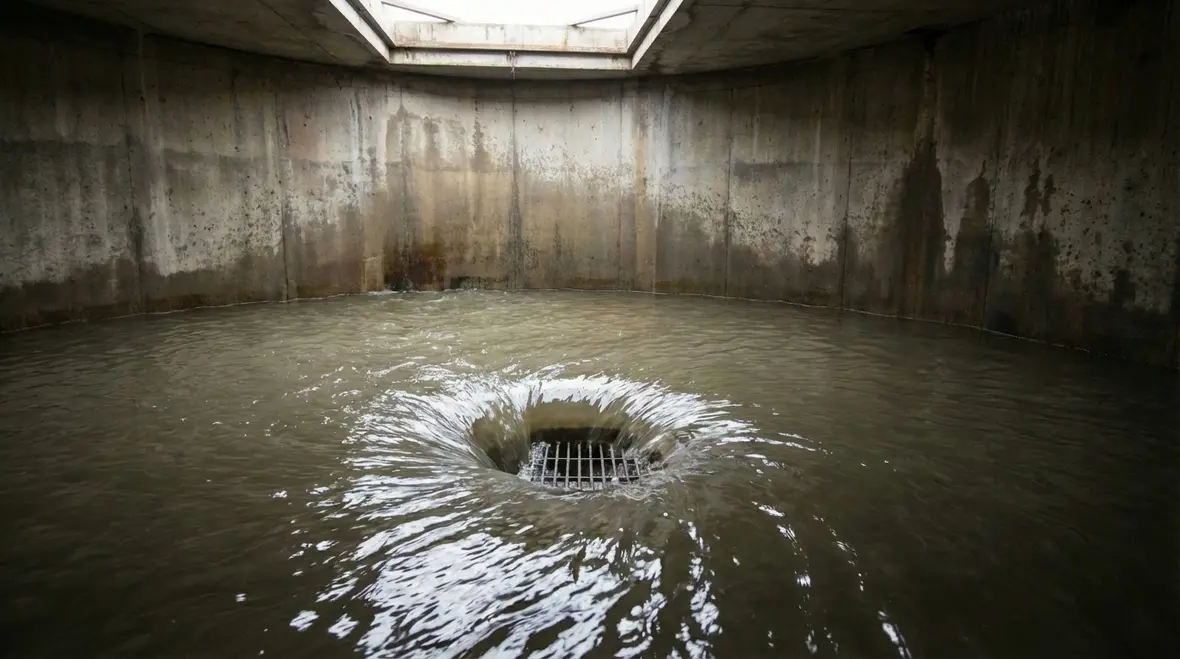
Water behaves like it has a personality. Calm at rest. Dramatic when disturbed. As a fire pump draws water from a storage tank, it creates flow patterns that move toward the suction outlet. If water levels drop or flow increases quickly, swirling begins. Soon enough, that swirl can turn into a vortex, much like the spiral seen when draining a bathtub.
Now imagine that same spiral inside a fire water storage tank. Instead of simply draining, it pulls air down into the suction pipe. Consequently, the pump receives a mixture of water and air. That mixture disrupts pressure consistency, reduces flow efficiency, and may even cause cavitation.
Cavitation is not a friendly term. It refers to vapor bubbles forming and collapsing inside the pump. Over time, this damages internal components. In short, what begins as a simple swirl can lead to serious mechanical wear.
Kord Fire Protection technicians describe this to clients with a calm smile. “It is like asking a straw to pull a milkshake and air at the same time,” they say. The result is messy and inefficient.
How Fluid Dynamics Turn Into Fire Pump Problems
From a fluid dynamics perspective, the combination of tank geometry, suction flow rate, and water depth determines whether a vortex will form. As velocity increases near the suction inlet, the water surface can deform into a funnel shape. Left unchecked, that funnel stretches downward until it connects with the outlet, dragging air into the line and setting up the exact conditions fire protection designers try to avoid.
Why Anti Vortex Plates Are Critical for Pump Performance
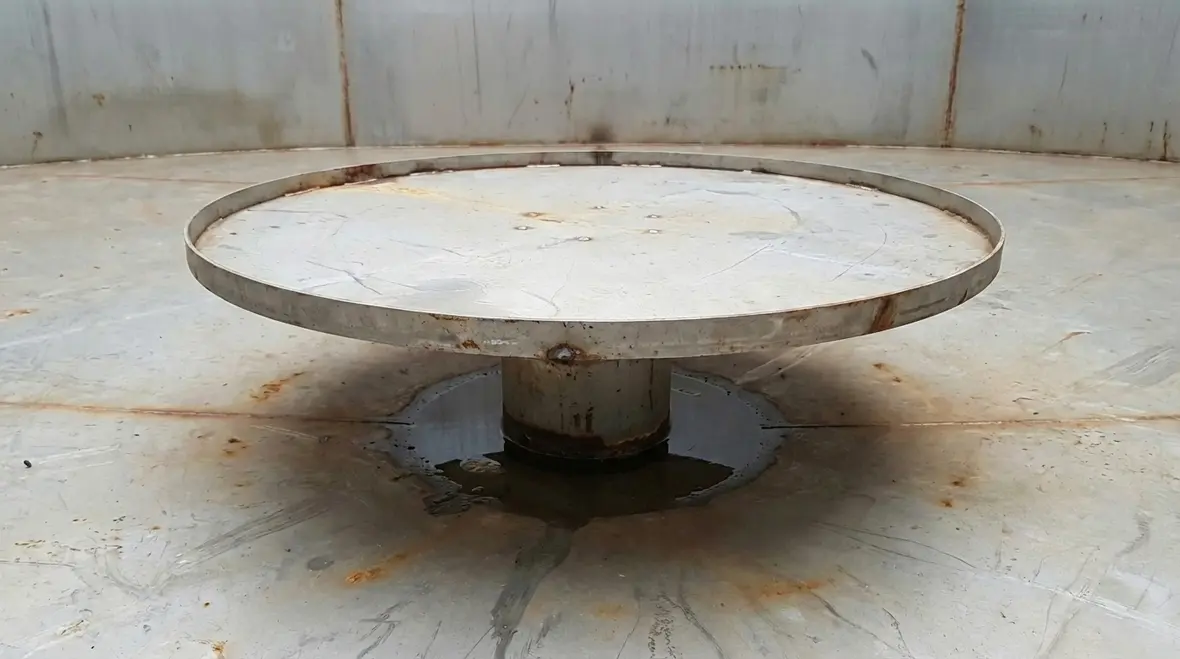
An anti vortex plate sits above the suction outlet inside the tank. Its job is straightforward. It disrupts the circular flow pattern that forms above the outlet. By breaking up the rotational movement of water, it prevents air from funneling downward.
As a result, the fire pump receives a steady, solid column of water. That steady supply supports consistent pressure and flow during a fire event. Moreover, it protects the pump from damage caused by air entrainment and cavitation.
In high demand areas such as Los Angeles, fire protection systems often serve large commercial buildings, warehouses, and residential complexes. Therefore, proper fire tank suction stabilization Los Angeles professionals recommend becomes essential. Without it, even a well sized pump cannot perform at its rated capacity.
Additionally, local codes and industry standards often reference design methods that prevent vortex formation. While the plate may appear minor compared to a massive steel tank, its function plays a direct role in system reliability. For a deeper dive into the relationship between suction conditions and pump performance, facility teams often pair this guidance with resources like Kord’s overview of fire pump testing requirements.
Protecting Fire Pumps From Air, Noise, and Nuisance Trips
Beyond pure hydraulics, a properly designed anti vortex setup also helps minimize noisy operation, vibration, and nuisance shutdowns triggered by sensing devices reacting to unstable suction conditions. In other words, the plate quietly keeps the entire system calmer, smoother, and less dramatic when you most need it to behave.
Understanding Anti Vortex Plate Requirements in Southern California
Regulatory oversight in Southern California tends to be thorough. Fire departments, building officials, and insurance carriers expect compliance with recognized standards. Consequently, anti vortex plate requirements Southern California authorities review often align with national fire protection guidelines and best practices outlined for suction control assemblies.
These requirements typically address:
Plate dimensions
The plate must extend beyond the suction pipe diameter by a specified margin to effectively interrupt rotational flow. In many engineered designs, that means a square or circular plate several times larger than the outlet, customized to the tank geometry and flow demands.
Vertical placement
The distance between the plate and the suction inlet must meet defined measurements to allow smooth flow while preventing vortex formation. Too close, and the plate can restrict intake. Too far, and the funnel of air has room to form. The sweet spot is where water moves freely but never has the chance to twist into a spiral.
Structural stability
The plate must remain secure under high flow conditions. Movement defeats its purpose. Anchors, welds, or structural supports must be sized for the hydraulic forces generated when the pump is at full demand, not just during gentle circulation.
Kord Fire Protection technicians regularly coordinate with inspectors to confirm installations meet these expectations. They explain that compliance is not about red tape. It is about ensuring that when firefighters connect to a system, they receive dependable water supply without fluctuation.
In addition, fire tank suction stabilization Los Angeles projects often require documentation during plan review. Engineers must demonstrate how the tank design prevents vortex formation at low water levels. This step ensures systems function even when tanks approach their minimum operating capacity.
How Fire Tank Suction Stabilization Los Angeles Projects Address Risk
In a region where seismic activity and high occupancy buildings intersect, fire system reliability cannot rely on guesswork. Therefore, fire tank suction stabilization Los Angeles specialists integrate anti vortex solutions into broader hydraulic design strategies.
First, they evaluate tank size relative to pump demand. Then, they calculate drawdown rates during peak operation. After that, they assess suction pipe configuration. Each of these elements influences vortex risk.
Furthermore, tank geometry plays a role. Cylindrical tanks behave differently from rectangular designs. Water depth, outlet orientation, and internal baffles can all affect flow patterns. By reviewing these factors together, designers reduce the likelihood of air entrainment.
Kord Fire Protection technicians often conduct field inspections to confirm that installed components match approved drawings. They understand that even a small deviation in plate elevation can impact performance. Consequently, they treat measurements with the seriousness of a pilot reviewing a pre flight checklist.
And yes, they sometimes joke that the anti vortex plate is the unsung hero of the tank. No cape. No spotlight. Just quiet competence.
Installation Considerations and Best Practices
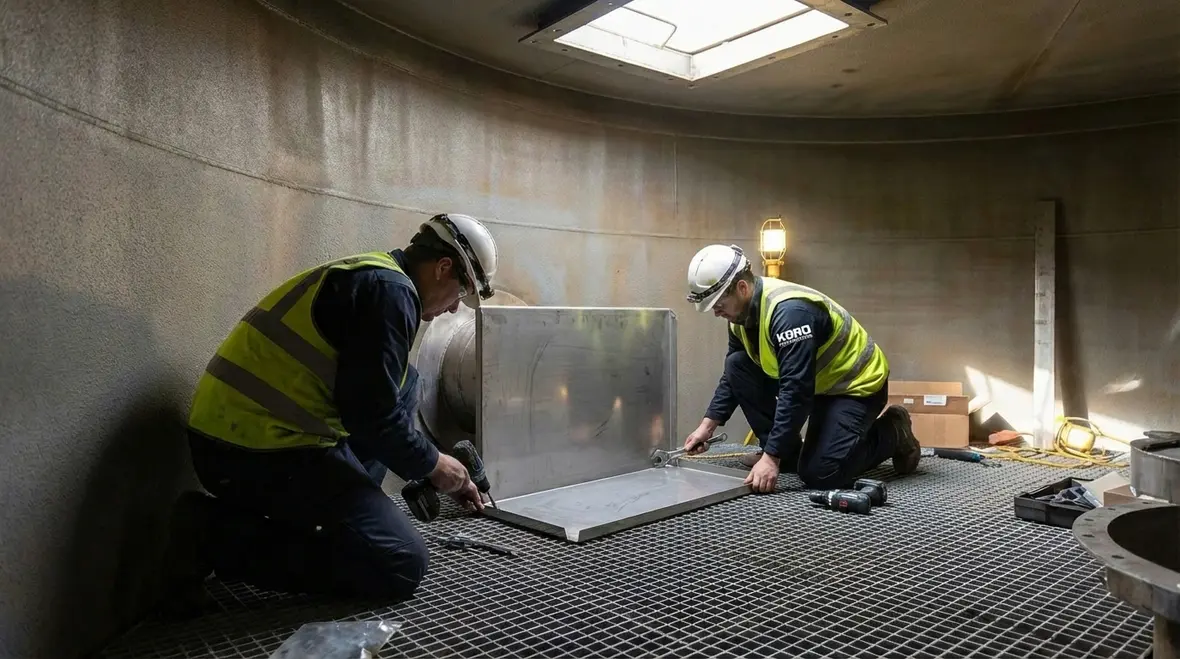
Proper installation requires more than simply placing a metal plate over a pipe. It demands alignment, secure anchoring, and corrosion resistance.
To clarify key considerations, review the comparison below.
Design Factor Best Practice Approach
Plate Size Extend beyond suction diameter according to engineering guidelines
Mounting Method Use rigid supports to prevent vibration or displacement
Material Selection Choose corrosion resistant steel compatible with tank environment
Elevation Above Outlet Maintain specified clearance to allow smooth intake flow
Inspection Access Ensure visibility for periodic verification and maintenance
Each element contributes to long term performance. For example, improper material selection may lead to corrosion. Over time, corrosion weakens structural integrity. That weakness can shift the plate’s position, reducing effectiveness.
Additionally, installers must consider tank cleaning schedules. A plate should not obstruct routine maintenance. Therefore, thoughtful placement supports both operational reliability and serviceability.
Kord Fire Protection technicians emphasize that anti vortex plate requirements Southern California inspectors reference are not arbitrary. They stem from fluid dynamics research and decades of field experience.
What Happens If You Skip the Anti Vortex Plate?
It may be tempting to assume a large tank naturally prevents air entrainment. After all, more water means more stability, right? Not always.
As water levels drop during a sustained fire event, suction velocity increases near the outlet. Without a plate to disrupt circular flow, vortex formation becomes more likely. Consequently, the pump may draw in air just when demand peaks.
This can lead to:
- Pressure fluctuations
Fire sprinklers rely on consistent pressure. Variations reduce effectiveness. - Pump damage
Cavitation erodes impellers and internal surfaces, shortening equipment lifespan. - System failure risk
Air pockets can interrupt flow at critical moments.
In high density cities, that risk carries serious consequences. Therefore, fire tank suction stabilization Los Angeles professionals treat anti vortex solutions as essential rather than optional.
Kord Fire Protection technicians often remind clients that fire systems are like parachutes. No one wants to discover a missing component mid descent.
Inspection, Testing, and Long Term Reliability
Even the best installation requires oversight. Over time, tanks settle, components age, and operating conditions change. Consequently, routine inspection ensures continued compliance with anti vortex plate requirements Southern California authorities enforce.
During inspections, technicians verify plate alignment and secure mounting. They also check for corrosion, deformation, or sediment buildup. Sediment accumulation can alter flow patterns, reducing the plate’s effectiveness.
Moreover, periodic pump testing provides indirect confirmation of proper suction conditions. Stable pressure curves and smooth operation indicate effective air prevention. If irregularities appear, technicians investigate suction components, including the anti vortex plate.
This proactive approach supports system longevity. Instead of reacting to failure, facility managers maintain confidence through verification.
Kord Fire Protection technicians often explain these steps in plain language. They believe clients should understand not only what is required, but why it matters. That philosophy builds trust. It also ensures informed decision making.
Frequently Asked Questions
Conclusion and Next Steps
Fire protection does not leave room for shortcuts. A properly designed anti vortex plate strengthens system stability, protects valuable equipment, and supports compliance across Southern California. Kord Fire Protection technicians stand ready to evaluate, explain, and implement solutions that meet strict standards with confidence.
For facilities seeking dependable fire tank performance, now is the time to ensure every component, even the quiet ones, performs exactly as intended. That often starts with a close look at tank suction details, pump testing history, and the subtle signs of air entrainment that many people overlook until it is too late.
If you are responsible for a building in Los Angeles County or elsewhere in Southern California, pairing sound anti vortex design with routine fire pump testing and inspections closes the loop on reliability.
Reach out to Kord Fire Protection’s dedicated fire pump testing and fire protection services team to review your tank suction arrangement, confirm compliance with current anti vortex expectations, and schedule any upgrades or testing you need. Reach out and secure that peace of mind today.
Know Your Weapon Before You Fight the Flame
Kord Fire Protection is your go-to when it comes to all things fire protection. For over 20 years, we’ve been serving Southern California with the quality service and equipment to keep your home or business safe at all times. Our competitive prices reflect our unwavering commitment to protecting what matters most in the event of a fire emergency. Give us a call, send an email, or use that form!

Join Our Newsletter!
Get the latest fire safety tips delivered straight to your inbox From our Newsletter.