
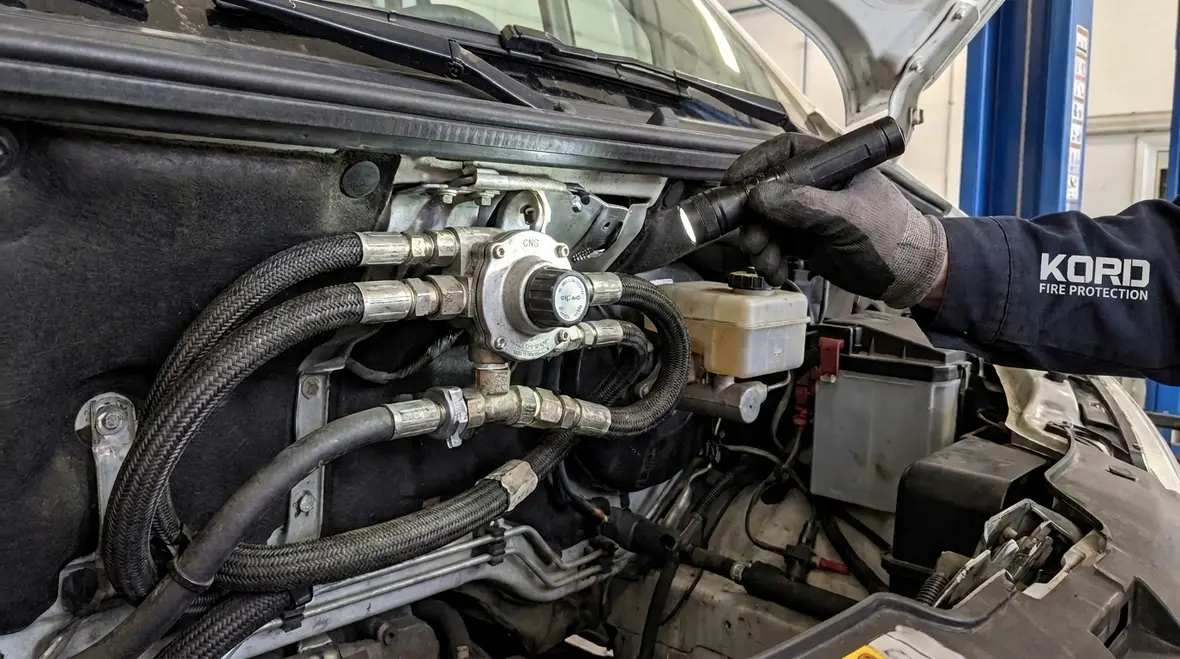
NFPA 52 Section 24.4: CNG Supplemental Requirements for Onboard Equipment
Quick Answer: NFPA 52 Section 24.4 sets supplemental safety requirements for onboard CNG equipment beyond baseline vehicle fuel system rules. It focuses on proper components, protection against damage and abnormal conditions, and verification through inspection and maintenance to reduce leak and ignition risk.
For organizations coordinating fleet safety and facility compliance, it can also help to review full fire protection services for commercial and industrial properties so inspection, maintenance, and documentation practices stay aligned across systems.
What NFPA 52 onboard CNG supplemental equipment requirements actually target
Commercial facilities that service, inspect, or maintain CNG powered vehicles and related equipment often discover that “compliant” is not a one time label. NFPA 52 onboard CNG supplemental equipment requirements under Section 24.4 are designed to close practical gaps that show up in the field, such as component vibration, physical impact from road debris, hose and fitting degradation, and inconsistent maintenance practices. The section reinforces that onboard hardware must maintain safe function over time, not only meet an original installation standard.
This article explains how Section 24.4 requirements typically affect onboard component selection, installation safeguards, routine inspection points, and common failure modes that drive enforcement and unsafe condition findings in commercial and industrial settings.
Section 24.4 in context: what “supplemental” means for onboard systems
NFPA 52 organizes natural gas vehicle safety requirements around preventing release of gas, controlling ignition sources, and ensuring components can withstand expected operating stresses. Section 24.4 operates as an added layer for onboard equipment. In practice, supplemental requirements often address:
- Additional protection and separation to limit propagation of damage after an abnormal event
- Component integrity and retention to prevent dislodgement, misalignment, or loss of sealing performance
- Verification through inspection to confirm the onboard system remains safe between maintenance intervals
- Controls intended to reduce the likelihood that a leak will reach an ignition source in normal or foreseeable conditions
For fleet operators, fueling depots, and maintenance providers, this means Section 24.4 must be treated as a maintenance and inspection program requirement, not solely a procurement specification.
Key onboard equipment safety mechanisms influenced by Section 24.4
While exact subsections and wording should be verified against the current adopted edition for the jurisdiction, Section 24.4 supplemental intent typically shows up through recurring engineering mechanisms. Inspectors and fire safety professionals commonly evaluate the following onboard elements during compliance checks and safety audits.
1) Mechanical protection against impact and vibration
Onboard CNG equipment experiences continuous vibration, thermal cycling, and real world road debris exposure. Section 24.4 style supplemental requirements generally emphasize that hoses, fittings, regulators, and related hardware remain protected and properly secured. The most common commercial compliance challenges include:
- Insufficient abrasion protection on flexible connections
- Loose mounting that allows rubbing against chassis members
- Missing guards or deterioration of protective covers
- Aftermarket parts installed without matching retention and protection design intent
When protection fails, micro leaks can develop and expand under pressure cycling. This can turn a low risk condition into a high consequence release if the leak is near an ignition source or ventilation path.
2) Integrity of seals, fittings, and regulated interfaces
Section 24.4 supplemental requirements are commonly enforced through the expectation that sealing interfaces remain reliable throughout service life. Typical inspection focus points include:
- Evidence of torque loss, corrosion, or seal extrusion
- Cracked or hardened elastomers at hose ends
- Improper adapter use that changes sealing geometry
- Contamination on threads that affects sealing performance
Commercial garages and fleet facilities frequently find sealing failures after component replacement where technicians cannot confirm matching part numbers, approved materials, or correct installation procedures.
3) Protection against damage from abnormal conditions
Supplemental onboard requirements usually aim to limit the consequences of abnormal events. In real operations, these events can include regulator malfunction, hose separation risk, or unintended mechanical contact during service. Compliance programs should address:
- Secure routing to prevent snagging or pulling stress during routine maintenance
- Clear identification of safe service access points
- Controls to prevent improper adjustment or bypassing of safety functions
Operational compliance challenges for commercial and industrial facilities
Facilities that manage mixed fleets or centralized maintenance programs often struggle with process consistency. Section 24.4 onboard expectations become difficult to sustain when responsibilities are split across multiple vendors or when vehicle maintenance records are incomplete.
Common field conditions that create nonconformities
- Inconsistent inspection intervals: Missing scheduled checks increase the chance that deterioration progresses unnoticed.
- Documentation gaps: Incomplete component traceability makes it hard to prove the onboard system matches approved installation requirements.
- Part substitution: Components that look similar may not meet sealing, pressure, temperature, or protection requirements.
- Improper repair practices: Repairs performed without the correct procedures can reintroduce leak paths.
- Environmental wear: Salt, chemicals, and road grime can accelerate corrosion and mask early warning signs.
Why maintenance procedures matter as much as initial installation
Supplemental onboard equipment requirements depend on the onboard system remaining safe under continued use. That is why commercial compliance programs should treat Section 24.4 as a maintenance governance topic, including technician qualification, approved repair workflows, and verification testing after service. Kord Fire Protection supports these efforts by helping organizations standardize inspection and maintenance practices that sustain safety performance over time.
Teams managing broader vehicle risk programs may also find useful context in Kord Fire Protection’s fleet vehicle fire suppression systems guide for fleet managers, especially when inspection readiness, vibration exposure, and documentation discipline all have to play nicely together.
Inspection and testing expectations: what inspectors typically look for
Even when equipment passes at commissioning, Section 24.4 style compliance checks often focus on whether the system remains intact and functional. A strong inspection program generally includes both visual verification and condition based evaluation.
Typical onboard inspection focus areas
- Visual condition: damage, abrasion, corrosion, misalignment, and missing protection
- Mounting and retention: evidence of movement, loose fasteners, or improper routing
- Leak risk indicators: residue patterns, seal wear, and abnormal hardware deformation
- Post service verification: confirming that any component replacement restored the intended configuration
Common failure points that drive enforcement
- Chafing at hose or cable contact points
- Regulator or fitting damage from repeated vibration without adequate guards
- Seal degradation due to temperature cycling and exposure
- Improper torque on fittings during routine repairs
To strengthen preparedness, many commercial operators schedule periodic compliance support with qualified specialists. For organizations seeking ongoing program support, Kord Fire Protection can assist with inspection support, documentation guidance, and maintenance coordination tailored to CNG onboard safety requirements. If you maintain industrial or retail operations where downtime impacts service levels, aligning your CNG maintenance workflow with your fire and safety plan reduces last minute compliance risk. For related background on natural gas fire safety considerations, see Kord Fire Protection.
How to build an internal compliance program around Section 24.4
A practical compliance approach treats NFPA 52 Section 24.4 as a set of onboard performance expectations that must be maintained. Commercial facilities benefit from a structured program that addresses procurement, installation controls, maintenance verification, and recordkeeping.
Recommended program controls
- Define approved components and sources. Maintain an approved parts list and prevent substitutions that do not match the original sealing and protection design intent.
- Standardize technician work instructions. Use controlled procedures for disassembly, repair, and reassembly, including correct torque and routing requirements.
- Require post service verification. Ensure the onboard configuration returns to the intended state and verify condition before the vehicle returns to service.
- Maintain traceable records. Track component changes, inspection results, and maintenance actions in a format that supports audits and rapid issue resolution.
- Schedule periodic review with qualified support. Use third party expertise to validate that onboard inspection practices remain effective as vehicle models and maintenance vendors change.
With Kord Fire Protection, commercial teams can align onboard CNG safety practices with facility expectations, reduce recurring inspection findings, and maintain consistent documentation across locations and contractors.
Frequently Asked Questions
Call to action
Ensure your onboard CNG equipment program stays aligned with NFPA 52 Section 24.4 by tightening maintenance workflows, inspection checklists, and documentation controls. Contact Kord Fire Protection to support ongoing compliance planning, verification, and safer maintenance practices for commercial fleets and facility operations. Acting early reduces downtime, limits enforcement risk, and protects staff and assets.

Join Our Newsletter!
Get the latest fire safety tips delivered straight to your inbox From our Newsletter.


