NFPA 52 Section 14.2: Installation of Nonresidential CNG Fueling Appliances
Quick Answer
NFPA 52 Section 14.2 sets the framework for safely installing nonresidential CNG fueling appliances used in commercial settings. Compliance focuses on location, clearances, electrical and ignition control, mechanical connections, ventilation, signage, and documented commissioning. This reduces gas release risks and supports inspection readiness.
NFPA 52 nonresidential CNG fueling appliance installation requires a disciplined approach because the hazards are not hypothetical. Natural gas is combustible, CNG releases can migrate quickly, and fueling equipment operates as a system where small misalignments can lead to leaks, ignition sources, or failure to shut down safely. This article explains how Section 14.2 is typically applied in real commercial environments, what inspection teams expect to see, and where facilities most often struggle during acceptance testing and ongoing maintenance.
If you are building out a broader compliance program, it also helps to review NFPA 52 Section 9.3: CNG Fueling Systems Requirements alongside appliance installation planning so the installed equipment, testing steps, and long-term maintenance approach stay aligned.
What NFPA 52 Section 14.2 Targets in Real Installations
Section 14.2 focuses on installation practices for fueling appliances serving nonresidential applications such as fleet fueling, transit depots, industrial sites, and public or private commercial fueling stations. The goal is straightforward: ensure the appliance is installed to prevent unsafe conditions during normal operation, foreseeable abnormal conditions, and emergency shutdown scenarios.
In practice, the compliance value sits in how the system is built and verified, including:
- Physical arrangement that limits exposure to ignition sources and maintains required separation from combustibles and traffic hazards.
- Correct integration of piping, valves, regulators, and any required protective devices.
- Electrical installation rules that control ignition risk and keep components operating within intended parameters.
- Documentation of commissioning steps so the installed system can be reliably inspected and maintained.
Facilities that treat installation as a “set and forget” task often discover problems later during functional testing, leak verification, and operational audits. A structured compliance plan during construction prevents rework and reduces the risk of failure points repeating across future maintenance cycles.
Pre-Installation Due Diligence: The Step Most Projects Miss
Before an appliance reaches the field, NFPA 52 nonresidential CNG fueling appliance installation depends on accurate site assumptions. Commercial facilities frequently accelerate procurement and construction, then attempt to resolve location and interface issues after delivery. Section 14.2 compliance starts earlier, with conditions that impact the final installation geometry and safe operation.
Key pre-installation checks for commercial and industrial sites
- Site classification and use profile: Identify occupancy types, vehicle movement patterns, and expected maintenance activities that can introduce ignition sources or physical damage.
- Appliance identification and listing alignment: Confirm the exact appliance model, configurations, and any manufacturer required installation parameters match the planned installation.
- Route planning and mechanical protection: Evaluate piping runs for impact exposure, corrosion exposure, and access for inspection and maintenance.
- Electrical and bonding intent: Ensure the installation plan addresses grounding and bonding, plus the correct classification approach for the environment where CNG components may be present.
- Abnormal condition strategy: Determine how the system limits unsafe releases and how personnel will recognize and respond to alarms and shutdown actions.
Where this fails in the real world, inspection findings often include incorrect clearances, incomplete labeling, missing protective barriers, or electrical installations that do not match the equipment requirements. These are not purely paperwork issues. They affect leak likelihood, ignition risk, and the reliability of emergency response.
Installation Requirements That Drive Safety: Location, Clearances, and Ignition Control
Section 14.2 emphasizes safe placement and installation conditions that minimize ignition and exposure pathways. Commercial fueling systems are typically installed in controlled layouts, but operational realities still introduce risk, such as routine fueling traffic, equipment access, and maintenance work.
Location and separation considerations
Installation practices must maintain required separation from ignition sources and exposure hazards. The site layout should also support safe vehicle access and emergency response. This includes evaluating:
- Proximity to electrical equipment and panels that can produce ignition sources.
- Placement relative to building openings, mechanical ventilation intakes, and traffic routes.
- Physical protection against vehicle impact and equipment movement.
- Accessibility for inspection, leak testing, and component replacement.
Ignition source control through electrical and equipment installation
CNG fueling appliance installation requires electrical systems that prevent ignition from occurring within hazardous areas. A compliant approach typically aligns with equipment listings and the intended hazardous location strategy used by the facility and electrical designer.
Common failure points include:
- Improper conduit seals or missing sealing practices where required.
- Incorrect selection of wiring methods and terminations.
- Grounding and bonding gaps that allow unexpected electrical behavior.
- Unverified electrical polarity or component substitutions that defeat design intent.
Because these issues can hide until functional testing, the most effective practice involves joint verification between the mechanical installer, electrical contractor, and the commissioning team.
Mechanical Integration and Connection Integrity: Where Leaks Begin
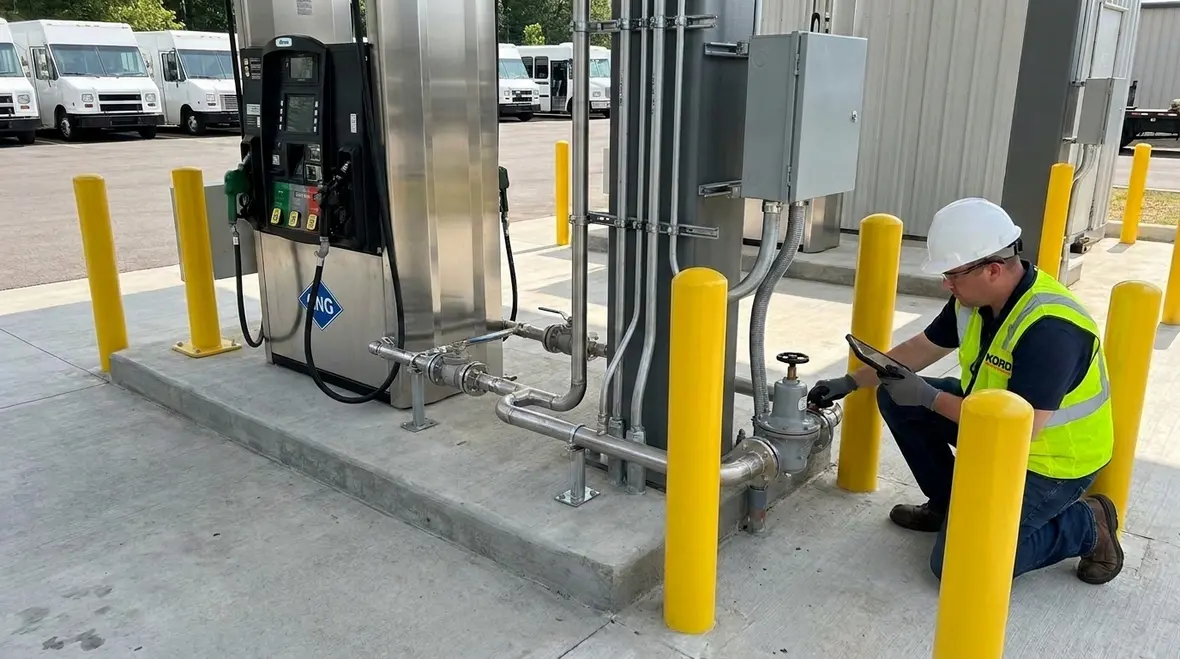
For NFPA 52 nonresidential CNG fueling appliance installation, mechanical assembly quality matters as much as the appliance itself. The system relies on secure connections, proper installation of valves, correct regulator performance, and protection of components against stress, vibration, and corrosion.
Piping, valves, and regulator installation controls
- Pipe alignment and support: Correct alignment prevents stress on fittings and reduces the chance of micro leakage under thermal cycling.
- Valve orientation and accessibility: Install valves for safe operation and future maintenance access without unsafe handling.
- Regulator and relief device handling: Follow manufacturer instructions for setpoints, discharge routing, and verification procedures.
- Protection against physical damage: Provide guards where the system is exposed to vehicle impact, tool contact, or environmental degradation.
Testing and verification that inspectors expect
Commercial acceptance testing should confirm that installed components perform as intended. The typical verification process includes:
- Pressure and leak testing appropriate to the system configuration.
- Functional checks of shutdown actions and control responses.
- Verification of labeling, identification, and alarm or indication functionality.
- Recordkeeping that matches what the AHJ and internal audit teams request.
Leak points often appear at transitions: vibration-prone sections, poorly supported runs, or connection interfaces where installation tolerances were not maintained. Facilities reduce those failures by using standardized assembly practices, careful torque verification, and documented test results.
Commissioning, Documentation, and Maintenance: Compliance That Lasts
NFPA 52 nonresidential CNG fueling appliance installation does not end at acceptance. Commercial facilities must sustain safe performance through structured maintenance, inspection readiness, and timely corrective action. This is where many organizations underperform because the fueling operation continues, and compliance tasks get deferred.
What strong documentation looks like
Inspection and service teams need installation evidence that supports traceability. Facilities should maintain:
- As built drawings and equipment lists tied to model numbers and configurations.
- Test reports and commissioning results, including pass or fail outcomes.
- Component maintenance histories, including corrective actions and parts replacement.
- Evidence of labeling and signage verification where required.
Maintenance planning for commercial fueling appliances
Maintenance affects leak risk, pressure regulation accuracy, and control reliability. Effective programs include routine checks for:
- Hose and connection condition, including wear and degradation indicators.
- Valve operation integrity and response time.
- Control system health, alarms, and any interlock functions.
- Corrosion protection and mechanical integrity of supports and guards.
Kord Fire Protection supports commercial CNG fueling compliance with ongoing inspection, testing, and documentation readiness. For facilities that must maintain throughput while meeting safety obligations, Kord Fire Protection provides a practical partnership model that aligns service schedules with operational constraints and keeps the installation audit ready.
Related resource: For broader commercial gas safety practices and service planning, see methane gas detection and related fire protection services for inspection and compliance support.
Common Compliance Challenges During Inspections
Even when equipment is correct and workmanship appears solid, commercial sites can still receive inspection findings. The patterns are consistent because they relate to process gaps rather than one-off mistakes.
Top recurring issues
- Clearance and access conflicts: Completed installs block inspection routes, deny safe access to shutoffs, or violate separation intents.
- Labeling and identification gaps: Missing signage, unclear equipment IDs, or incomplete system labeling that slows emergency response.
- Electrical mismatch: Wiring methods, terminations, or component substitutions that do not align with the equipment installation requirements.
- Incomplete commissioning evidence: Test reports that do not match the final installed configuration or lack required documentation details.
- Maintenance readiness gaps: No documented schedule, missing records, or delayed corrective actions that allow wear to accumulate.
To prevent repeat findings, facilities should build a compliance package early, then validate it through pre-functional walkthroughs before final acceptance. Kord Fire Protection can help teams verify that installation documentation, testing evidence, and maintenance plans align with inspection expectations.
Frequently Asked Questions
Next Step: Build Inspection-Ready Compliance Now
Commercial fueling owners and operators should treat NFPA 52 nonresidential CNG fueling appliance installation as an end to end program: planning, correct integration, documented commissioning, and continuous maintenance readiness. Contact Kord Fire Protection to review your installation and documentation package, support testing and inspection preparation, and establish a maintenance approach that protects throughput while meeting safety obligations. Act early to avoid costly rework during acceptance and repeat findings during future audits.

Join Our Newsletter!
Get the latest fire safety tips delivered straight to your inbox From our Newsletter.