
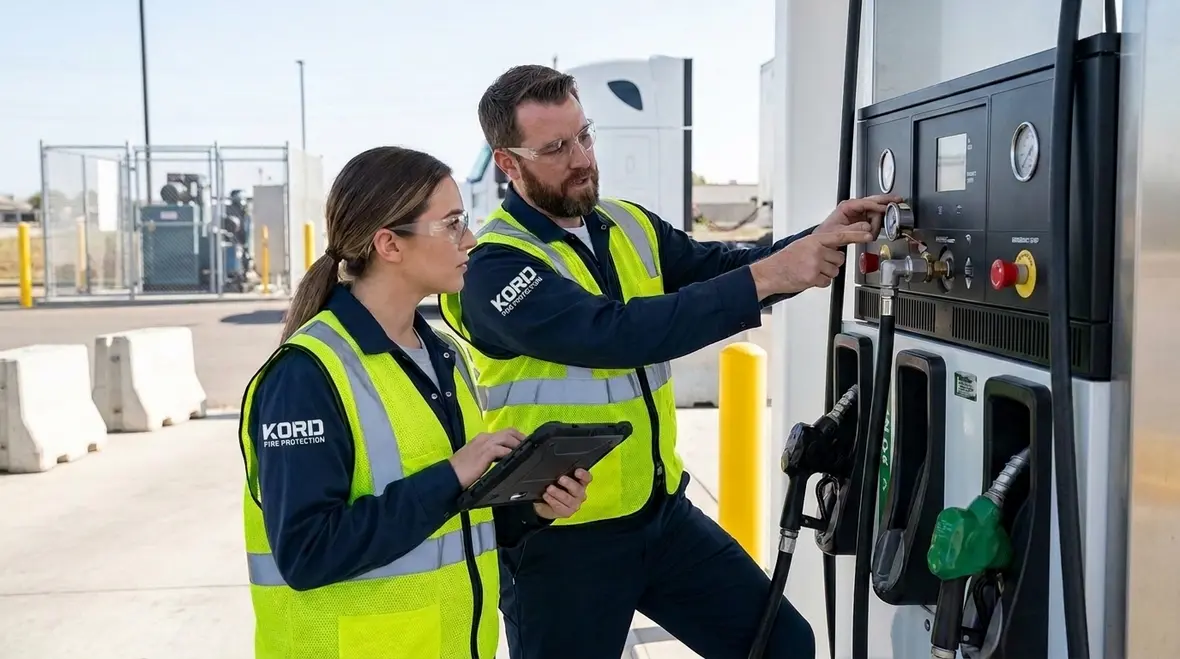
NFPA 52 Section 1.5 Training: Personnel Training Basics for Gas Vehicle Fueling
Quick Answer: NFPA 52 personnel training requirements natural gas fueling focus on ensuring fueling staff understand fire protection principles, operating procedures, and hazard controls. Section 1.5 establishes training expectations, recordkeeping practices, and competency-based instruction to support safe facility operations, maintenance, and emergency response.
Why NFPA 52 training matters at natural gas fueling sites
Commercial natural gas fueling facilities operate at the intersection of pressurized energy, fuel system hardware, ignition control, and emergency readiness. NFPA 52 personnel training requirements natural gas fueling do not treat training as a one-time checkbox. Instead, they establish a baseline for initial instruction and ongoing competence so workers can prevent incidents, recognize abnormal conditions, and respond effectively when upset conditions occur.
In day to day operations, most failures do not come from “lack of equipment.” They come from inadequate operator response to real world symptoms such as abnormal pressure trends, improper valve lineup, damaged or missing protective components, and failure to follow safe fueling and shutdown steps. Strong training is the mechanism that prevents these gaps from turning into loss events.
For facilities already tightening inspection workflows, it also helps to review broader fire pump testing requirements so training, documentation, and readiness programs stay aligned across life safety systems.
What Section 1.5 expects from facility personnel
NFPA 52 Section 1.5 centers on personnel training for natural gas fueling systems, including the competencies needed for safe operation. Facilities should structure training around roles and assigned tasks rather than generic attendance. The highest compliance risk occurs when training materials do not match the job reality at a specific station or site layout.
Training scope aligned to responsibilities
At minimum, training should cover the fueling process and the related hazards that staff may influence directly. Facilities typically assign training by role such as dispenser attendant, maintenance technician, supervisor on duty, and emergency responder coordinator. Each role needs task-relevant instruction, including how to recognize unsafe states and how to escalate concerns.
Competency and documentation controls
Effective compliance programs treat training records as operational controls. Facilities should maintain proof of instruction, dates, competency evaluation method, and retraining triggers. Records should clearly show who received training, what topics were covered, and when competency was confirmed.
Without strong documentation, a facility may have staff who are capable but cannot demonstrate that their training aligns with NFPA 52 personnel training requirements natural gas fueling during audits, incident investigations, or insurance underwriting reviews.
Core training topics for natural gas fueling operations
Training should cover the fundamentals that directly affect safety and system integrity. For commercial, industrial, and retail facilities, training becomes more valuable when it addresses site specific equipment, isolation strategy, and inspection outcomes.
Hazard awareness for compressed and liquefied fuel conditions
Training must help personnel understand what makes natural gas fueling different. Personnel should recognize potential ignition sources, understand the meaning of abnormal indications, and know why leak prevention and control procedures remain critical even when systems are designed with safeguards.
Operating procedures that prevent upset conditions
Personnel should be trained to follow step by step operating procedures, including correct fueling initiation, termination, and any required checks before and after fueling. Training should explicitly cover common operator errors that lead to unsafe states, such as incorrect valve position, incomplete checklist steps, and failure to verify system status before allowing vehicles to fuel.
Emergency response and escalation pathways
Training should connect normal operations to emergency actions. Personnel should know how to identify emergency conditions, activate site response, and coordinate with local emergency services. This includes understanding what information to relay such as location, system status, and any visible indicators of damage or leakage.
Maintenance awareness and what staff can safely do
Not all staff roles should perform maintenance. Training should clarify what personnel are authorized to do and what tasks require qualified technicians. A common compliance issue occurs when station staff are expected to troubleshoot equipment beyond their permitted scope, increasing the chance of improper repairs, incomplete verification testing, or bypassing safeguards.
How training connects to inspection, testing, and maintenance
NFPA 52 personnel training requirements natural gas fueling work best when paired with recurring equipment inspection and disciplined maintenance execution. Training should include how personnel interpret inspection findings and when to stop operation and escalate a defect.
Common failure points that training should address
- Improper isolation during abnormal conditions: Staff should understand the role of shutdown and isolation procedures and how to apply them consistently.
- Damaged protective components: Personnel should recognize physical damage to housings, protective covers, and barriers that can compromise safe operation.
- Inadequate response to abnormal system indications: Operators should recognize when pressure, flow, or system behavior suggests a potential fault.
- Maintenance verification gaps: Training should reinforce that after any adjustment or service, required verification steps must be completed and documented.
Commercial compliance reality: audits and operational continuity
Commercial facilities and retail sites typically face downtime constraints. That pressure can lead to rushed defect handling or incomplete documentation. A robust training program anticipates these realities by defining how to manage defects safely, how to communicate system status, and how to maintain an auditable record of staff competence alongside maintenance work.
To strengthen ongoing compliance programs, Kord Fire Protection supports facilities with testing, inspection planning, and maintenance coordination so training does not exist in isolation from physical system performance. For an overview of related compliance services, see Kord Fire Protection.
Building an effective training program step by step
Facilities should implement training as a controlled process. The goal is to ensure every person can operate safely, maintain basic awareness, and respond appropriately based on their role.
1) Map roles to tasks and system components
Start with a site walkdown and task inventory. Align training modules to the actual fueling system components present on that site, including dispenser functions, control interfaces, and any relevant shutdown or isolation steps.
2) Set initial training, then retraining triggers
Initial training should occur before independent operation. Retraining should be triggered by changes such as equipment upgrades, process revisions, incident or near miss events, or documented performance concerns.
3) Validate competence, not attendance
Facilities should confirm competence through role based demonstrations, practical checks, and clear evaluation criteria. Where possible, training validation should include observation of correct decision making under upset conditions.
4) Maintain auditable records
Keep records that support NFPA 52 compliance reviews, including training dates, topics, instructor or provider details, evaluation results, and any retraining rationale.
Frequently Asked Questions
Call to action
Review your natural gas fueling staff training against current NFPA 52 personnel training requirements natural gas fueling and confirm it matches your exact site equipment and operating procedures. Then strengthen the program by aligning training records with inspection, testing, and maintenance outcomes. Kord Fire Protection can help commercial facilities maintain practical, defensible compliance through ongoing support. Contact Kord Fire Protection to assess your current program and close training to maintenance gaps.

Join Our Newsletter!
Get the latest fire safety tips delivered straight to your inbox From our Newsletter.


