
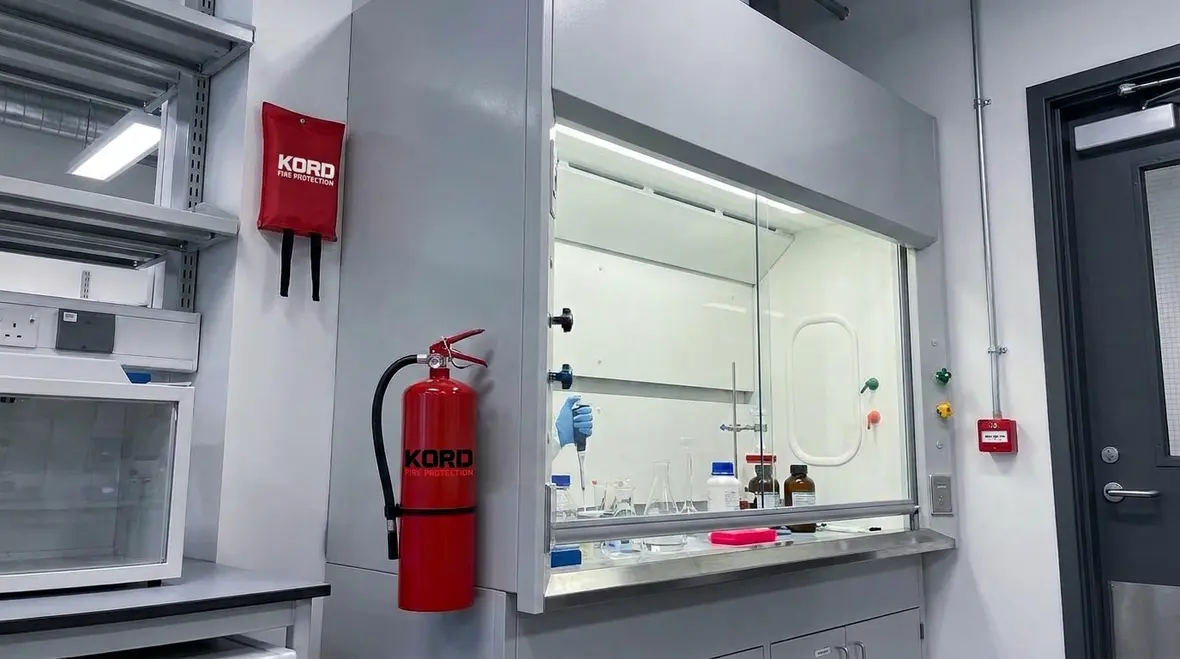
NFPA 45 Section 7.10: Fire Protection for Chemical Fume Hoods
Quick Answer
NFPA 45 Section 7.10 establishes fire protection expectations for chemical fume hoods in laboratories and other chemical processing spaces. It focuses on controlling ignition sources, protecting hood systems and ducting, and coordinating detection, suppression, and safe operation to reduce fire spread risk.
Facilities reviewing hood related fire pathways may also find it useful to read fire dampers and why every building needs them, especially where duct compartmentation and damper performance are part of the bigger compliance picture.
What NFPA 45 Section 7.10 requires for fume hood fire protection
NFPA 45 chemical fume hood fire protection requirements address a specific hazard pattern: many hood fires originate within the hood or in the hood exhaust path, then progress through ducting, dampers, and fans if systems are not designed and maintained to prevent fire spread. Facilities typically struggle most at the practical level, where laboratory operations, modifications, and deferred maintenance erode the original intent. The best way to keep compliance defensible is to treat Section 7.10 as an operational system, not a one time installation.
Where fires start and how they spread through hood exhaust systems
Most chemical fume hood fire scenarios follow a predictable chain:
- Initiation inside the hood: flammable vapors or aerosols from bench work, ignition from hot surfaces, electrical arcing, or accidental contact between combustion and ignition sources.
- Involvement of sash and airflow conditions: improper sash positioning or bypass airflow can change heat, visibility, and concentration of vapors entering the hood.
- Transport into the exhaust duct: duct sections accumulate residues and can experience flame impingement during a developing event.
- Failure to compartmentalize: missing or improperly functioning fire and smoke control measures can allow fire to move to other areas.
- Fan and motor exposure: a hood fire that reaches downstream components can create additional ignition sources and delay suppression effectiveness.
Section 7.10 requirements therefore concentrate on the hood as part of a connected ventilation and fire protection pathway. Commercial, industrial, and retail facilities often install new hoods or retrofit services without updating duct fire protection details, which increases risk during audits and insurance reviews.
Core design and protection considerations under Section 7.10
NFPA 45 Section 7.10 focuses on providing fire protection where chemical hoods and their exhaust systems create credible pathways for fire and flame spread. While the exact configuration depends on hood type, exhaust arrangement, and chemical use, facilities generally need to ensure the following performance themes:
1) Hood systems must support safe ignition control and containment
Design and operational controls should limit the likelihood that flammable material can accumulate in ignition tolerant environments. That includes ensuring correct hood airflow performance, verifying that duct layouts do not create pockets where residues collect, and controlling how exhausted vapors interact with any heat sources in the exhaust path.
2) Exhaust components require fire rated and compatible protection
Fire and smoke control elements in ductwork must be suitable for the installation. Common failure points include fire dampers installed incorrectly, dampers that do not fully close due to obstruction or cable damage, and duct penetrations that are not properly sealed. For compliance, facilities should verify that duct protection matches the hood exhaust design and that any required components remain accessible for testing.
3) Detection and suppression must align with hood operation
When detection and suppression apply to the hood system, the components must activate reliably under realistic conditions. Operational mismatch is frequent. Examples include sensors located so they cannot sense a developing hood fire, suppression systems blocked by modifications, or maintenance intervals that allow fouling in critical actuators.
Inspection, testing, and maintenance: where compliance commonly breaks down
NFPA 45 chemical fume hood fire protection is only effective when maintained as an integrated system. Inspections should treat hood fire protection hardware as life safety equipment, not as mechanical ventilation accessories.
Inspection items facilities typically miss
- Duct residue and corrosion: buildup reduces airflow and can increase the energy available during a fire event.
- Damper condition: stuck linkages, missing hold open devices, or damaged fusible elements can prevent proper operation.
- Actuation reliability: test methods that do not validate full travel, reset behavior, and alarm integration.
- Penetration firestopping: sealant shrinkage, improper materials, or unsealed service openings after renovations.
- Electrical integration: detector wiring changes, control panel labeling gaps, and undocumented overrides.
Commercial facility realities that affect readiness
In practice, commercial and industrial spaces change more frequently than design documents anticipate. Retail and mixed use facilities with testing areas also face scheduling constraints that push testing into non optimum windows. Kord Fire Protection supports facilities by coordinating inspection and testing around operations, documenting findings clearly, and providing corrective recommendations that do not disrupt ventilation performance.
To strengthen your internal workflow for compliance tracking and verification, review Kord Fire Protection’s approach to service planning and ongoing safety readiness here: Kord Fire Protection.
Common equipment and operational failure points in hood fire protection
Section 7.10 compliance is often challenged by predictable breakdowns. The following issues show up during field verification and loss prevention reviews:
- Uncontrolled modifications: adding duct runs, relocating fans, or changing hood exhaust routing without updating the fire protection method.
- Improper hood placement relative to escape and hazard controls: changes in use patterns can increase ignition likelihood and reduce effective response time.
- Bypass airflow and sash management: employees operating with abnormal sash positions can change fire behavior and smoke spread.
- Control logic confusion: alarms that do not clearly identify the affected hood zone, or suppression interlocks that block activation during faults.
- Maintenance gaps: deferred service for duct cleaning, fan inspection, and damper function checks.
These failures matter because they reduce confidence in whether the hood system will perform during an actual event, especially when fire grows faster than expected.
How facilities can manage Section 7.10 compliance as an ongoing program
Compliance management should operate like an integrated asset program. Facilities should maintain a current map of hood to exhaust duct routing, including all fire protection elements and controls. They should also ensure that contractors performing HVAC or laboratory fit outs coordinate with fire protection requirements before work begins.
Recommended program elements
- System documentation: current drawings, device lists, and sequence of operation for alarms and any suppression.
- Scheduled testing: damper and control verification, detector and alarm functional checks, and verification of alarm routing.
- Condition based maintenance: duct cleaning triggers based on residue accumulation indicators and performance degradations.
- Renovation controls: a formal review process when equipment, ductwork, or hood locations change.
- Training and accountability: hood operating procedures that support safe use, including sash management and reporting of abnormal conditions.
Kord Fire Protection can help commercial teams keep NFPA 45 chemical fume hood fire protection aligned with real world usage by delivering inspection, testing, documentation, and maintenance support that fits operational constraints.
Frequently Asked Questions
Next step: schedule a Section 7.10 readiness review
For dependable NFPA 45 chemical fume hood fire protection performance, facilities should confirm that every hood, duct segment, damper, detector, and control sequence matches the current installation and use pattern. Contact Kord Fire Protection to plan an inspection and testing review tailored to your hood layout, operational constraints, and documentation needs.

Join Our Newsletter!
Get the latest fire safety tips delivered straight to your inbox From our Newsletter.



