
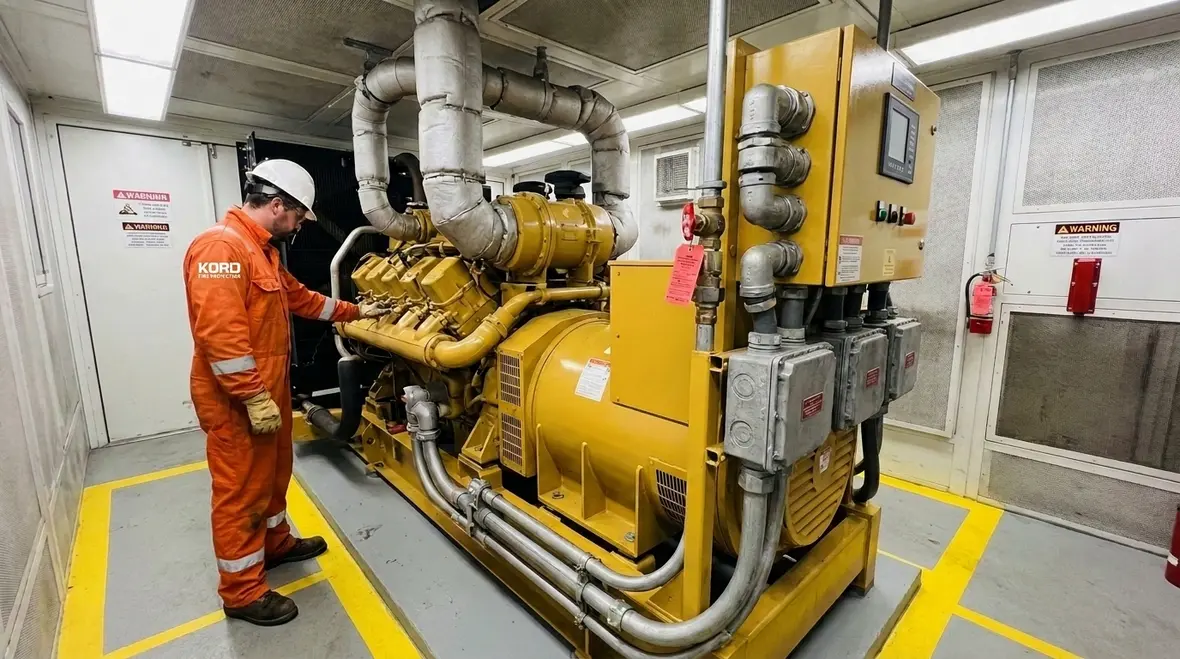
NFPA 37 Section 4.3: Engines in Hazardous (Classified) Locations
Quick Answer
NFPA 37 Section 4.3 establishes strict expectations for installing engines in hazardous (classified) locations to prevent ignition sources. Compliance depends on approved equipment, correct wiring and protection methods, proper placement, and documented inspection and maintenance practices throughout the engine’s life cycle.
NFPA 37 hazardous location engine installation requirements at a glance
For facilities that operate in areas classified for flammable gases, vapors, or combustible dust, NFPA 37 hazardous location engine installation requirements guide how engines must be selected, installed, protected, and maintained. Section 4.3 focuses on ignition source control, including location suitability and the prevention of unsafe operating conditions that can create sparks, hot surfaces, or mechanical failures.
For a broader compliance and documentation perspective, facilities can also review fire protection compliance auditing guidance from Kord Fire Protection to strengthen how installation records, inspections, and corrective actions are managed over time.
What Section 4.3 expects when engines serve hazardous areas
NFPA 37 Section 4.3 addresses engines that may be located in, or that may supply hazardous area service from, classified locations. The core objective stays consistent: eliminate or control ignition hazards produced by the engine and its associated operating systems. In practice, compliance requires coordinated engineering decisions across equipment selection, installation design, and commissioning verification.
Commercial and industrial sites often discover gaps during turnover or during routine maintenance because the engine package is treated as a stand-alone unit. Section 4.3 should instead be implemented as a system requirement, covering how the engine, controls, wiring, exhaust, ventilation, and guarding integrate into the hazardous area environment.
How NFPA 37 ignition hazards show up in the field
Ignition risk rarely comes from a single “bad” component. It usually emerges from predictable failure modes and installation shortcuts that allow hot surfaces, electrical arcing, or mechanical friction to develop in the wrong place. Common operational pathways include:
Hot surfaces from exhaust components, manifolds, turbo housings, or engine cooling system failures that increase surface temperatures beyond what the hazardous area design assumed.
Electrical ignition sources created by improper power distribution, incorrect control wiring, or damaged insulation where circuits enter or leave classified zones.
Mechanical sparks caused by loose hardware, coupling misalignment, belt or fan contact, or inadequate guarding that allows friction at start up and under load.
Fuel and vapor leaks that introduce flammable atmospheres near ignition-capable engine components.
Maintenance drift from overlooked torque checks, degraded gaskets, clogged ventilation, or exhaust routing changes after work orders.
These failure points become inspection findings when the installation was done to a partial spec. NFPA 37 compliance should be verified with the same discipline used for electrical classification and hot work controls.
Installation controls that typically determine compliance
Although hazardous location rules often get treated as electrical topics, engines introduce additional ignition contributors. Section 4.3 compliance typically depends on controlling these items through approved methods and documented verification steps.
1) Engine suitability and hazardous location rating alignment
The engine and its associated components must be appropriate for the location classification and operating conditions. Equipment selection should include documentation such as manufacturer hazard labeling, ratings, and installation instructions that specifically address classified environments.
Commercial facilities frequently encounter mismatches when the engine was approved for one environment but installed near a different classification boundary after process changes. Compliance requires alignment between the current hazardous area map and the installed engine scope.
2) Exhaust, air intake, and ventilation placement
Exhaust and air intake routing often governs real-world risk. Even when the engine is labeled for use, exhaust routing that allows hot gases to impinge on nearby combustible surfaces, or that places exhaust components into a higher-risk area, can undermine the safety assumptions.
Ventilation also matters. Poor airflow can raise ambient temperatures and can affect how heat dissipates from enclosures, guards, and intake systems. Facilities should confirm that enclosure integrity and ventilation paths stay free of obstructions and are maintained over time.
3) Wiring, controls, and interlocks
Control wiring, starting circuits, and shutdown interlocks must be installed and protected to maintain intended safety performance. Damaged conduit systems, incorrect fittings, missing seals, or improper routing can create ignition pathways.
Where multiple systems interface, the facility should confirm that commissioning checks include operational testing that verifies safe states under normal start up and under abnormal conditions, such as loss of ventilation or abnormal operating parameters.
4) Guards, mounting, and protection against mechanical ignition
Section 4.3 considerations include preventing mechanical ignition contributors. This typically involves proper mounting, secure covers, correct alignment for coupled components, and robust guarding that prevents contact between moving parts and adjacent structures.
In retail and warehouse environments where maintenance is frequent, guarding gets removed for quick access. Compliance programs should regulate guard removal and require documented reinstallation checks before the engine returns to service.
Commissioning, inspection, and maintenance programs that stand up to audits
NFPA 37 Section 4.3 compliance is not a one-time event. Engines in classified locations require a lifecycle approach that includes commissioning verification, periodic inspection, and maintenance controls that prevent drift.
Commissioning checks that reduce repeat findings
Documented location verification that confirms the engine operating footprint matches the current hazardous area classification.
Exhaust and intake review for routing, clearances, and thermal exposure. Verify that heat shields and discharge points remain installed exactly as designed.
Electrical integrity review for conduit, fittings, seals, cable terminations, and damage prevention at entry points.
Operational tests for start up, load changes, and normal protective shutdown functions.
Maintenance that protects the original hazard assumptions
Maintenance frequently introduces the very ignition risks that the original design intended to prevent. A robust program typically includes:
Torque verification for fasteners and mounting points that can loosen under vibration.
Inspection of gaskets, seals, and enclosure closures, especially after filter changes or service intervals.
Verification of exhaust condition, insulation integrity, and absence of corrosion that could change surface temperature behavior.
Training that emphasizes “classified location rules still apply” during repair work, including strict control of temporary bypasses.
For implementation support, Kord Fire Protection helps facilities develop practical compliance programs, plan inspection coverage, and keep maintenance workflows aligned with hazardous area safety objectives. Teams that want to tighten recordkeeping can also explore fire safety system documentation for compliance to support better audit readiness.
Common compliance gaps and how to prevent them
Many NFPA 37 issues encountered in commercial and industrial settings stem from predictable gaps. Addressing these early reduces downtime and rework.
Gap: Engine placed near classification boundary but design does not match the current map
Process changes, new equipment, or ventilation updates can shift where hazardous atmospheres exist. Preventive action includes updating hazardous location documentation and then verifying engine placement and labeling match the new classification.
Gap: “Maintenance convenience” modifications
Common examples include altered exhaust routing, removed guards, or replacement of enclosures with non comparable parts. Preventive action includes change control that requires engineering review before any modification returns the engine to classified service.
Gap: Lack of recorded verification after service
Inspections often fail when the maintenance record shows work was performed but does not show verification steps. Preventive action includes checklists that document specific acceptance criteria such as closure integrity, exhaust condition, and control function verification.
How Kord Fire Protection supports hazardous location readiness
Commercial facilities benefit from a compliance partner that understands both code requirements and operational realities, including maintenance constraints, documentation standards, and audit expectations. Kord Fire Protection supports ongoing readiness through structured inspection planning, practical maintenance alignment, and technical support that helps facilities maintain safe engine performance in classified environments.
For related hazardous area safety planning, facilities can also reference Kord Fire Protection resources such as fire protection infrastructure modernization for compliance.
Frequently Asked Questions
Conclusion and call to action
NFPA 37 Section 4.3 compliance for engines in hazardous (classified) locations depends on more than initial installation. Facilities must validate suitability, control exhaust and wiring pathways, and maintain the original safety assumptions through documented commissioning and disciplined maintenance. Partner with Kord Fire Protection to assess your current engine installation practices, identify likely failure points, and build a sustainable inspection and maintenance program that supports ongoing compliance and operational reliability.
If your broader protection program also depends on water supply performance, Kord Fire Protection’s fire pump testing requirements guide is a strong next read.

Join Our Newsletter!
Get the latest fire safety tips delivered straight to your inbox From our Newsletter.



