
NFPA 40 Section 4.1: Construction Requirements for Nitrate Film Buildings
Quick Answer: NFPA 40 Section 4.1 sets construction requirements for buildings storing nitrate film to manage rapid fire growth, heat, and fire spread. Facilities must meet specific structural, compartmentation, and protection criteria so hazards remain contained and controllable during emergencies.
If your team is reviewing building compliance as part of a larger maintenance strategy, it helps to look at the full lifecycle of fire protection servicing so construction integrity, inspections, and corrective work all stay on the same page.
What does NFPA 40 Section 4.1 require for nitrate film buildings?
NFPA 40 building construction requirements nitrate film focus on building design measures that reduce ignition likelihood, slow fire development, and limit fire and smoke spread. Section 4.1 addresses how a nitrate film storage building must be constructed to withstand the unique behavior of nitrate film hazards, including fast involvement, intense heat release, and the potential for rapid escalation when containment fails.
Commercial facility managers often encounter Section 4.1 compliance challenges during remodels, tenant build outs, and upgrades to life safety systems. A frequent operational reality is that the building may have been permitted under older standards, while current inspections expect today’s construction features to remain intact, functional, and documented for ongoing compliance.
NFPA 40 Section 4.1 construction baseline: containment and separation
In practice, Section 4.1 centers on construction choices that keep fire localized and prevent spread to adjacent spaces and exposures. For nitrate film buildings, the “how it is built” matters as much as the “what is installed.” Inspectors typically look for building features that support compartmentation, resist heat effects, and maintain integrity under fire conditions.
Compartmentation that does not degrade over time
Compartmentation is intended to prevent a fire in one area from quickly involving other film storage zones. Common failure points include penetrations through rated assemblies, degraded firestopping, improper sealants, and altered wall or ceiling systems made during maintenance or cable routing. Even when an occupancy seems unchanged, renovations can unintentionally compromise the containment intent of NFPA 40 building construction requirements nitrate film.
Facility teams should treat penetrations, service openings, and new penetrations as critical control points. The maintenance plan must require periodic verification that firestopping remains intact and that no unsealed breaches have been created by routine work orders.
Structural integrity and fire resistance during fire exposure
Construction materials and assemblies must support required performance during fire exposure. For nitrate film buildings, structural and enclosure performance influences evacuation time, firefighting access, and whether the incident stays within the design basis. Inspectors often evaluate whether construction matches the permitted design and whether field alterations compromised fire resistance.
Commercial operators should maintain construction documentation, including rated assembly details, room layouts, and any modifications. These records support faster decision making during inspections and help contractors build correctly the first time.
Building envelope, openings, and penetrations: where compliance breaks down
Even when compartmentation appears intact, building openings and penetrations can become the pathway that undermines containment. Section 4.1 compliance reviews typically include close attention to the building envelope and all service interfaces.
Doors, closures, and controlled openings
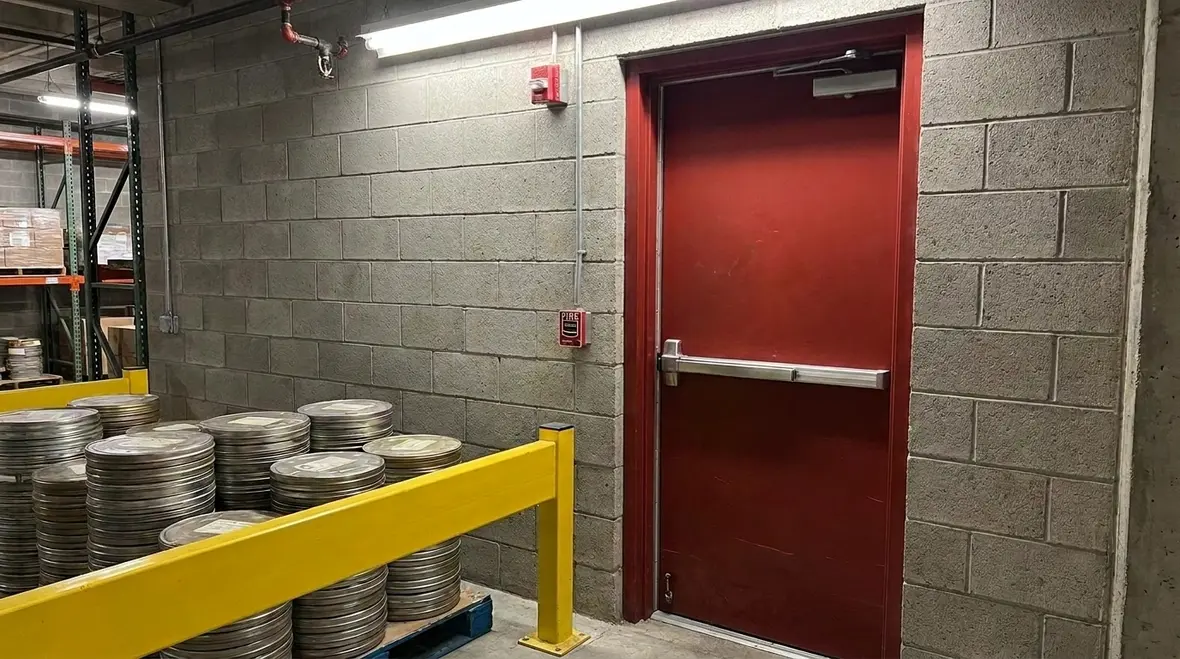
Nitrate film buildings require careful control of openings. Poorly maintained doors, damaged hardware, missing closers, and propped open doors are common reasons facilities fail during walkthroughs. In many cases, the issue is not the original installation, but the drift that occurs as the building is used daily by staff and vendors.
- Closers and latching hardware must function as intended, without excessive gaps.
- Door seals and edge conditions should remain intact and aligned.
- Any automatic door logic or hold-open devices must be assessed for compatibility with the facility emergency plan.
Penetrations and firestopping quality control
Firestopping is often treated as a one-time job, but nitrate film building performance depends on long-term integrity. Construction requirements become unreliable when new penetrations appear without inspection, when incompatible materials are used, or when repairs fail to match the original rating.
Facility teams should require a documented firestopping inspection after any work that affects rated assemblies. This includes cable pulls, conduit additions, HVAC service calls, and plumbing repairs. When firestopping is verified, it reduces the chance that a small defect becomes the fastest path for fire and smoke spread.
Fire protection interfaces: construction must support the life safety system
NFPA 40 building construction requirements nitrate film do not exist in isolation. Construction features must integrate with fire protection objectives, including emergency response access, system operability, and safe conditions for suppression and evacuation.
Operational readiness and testing access
Commercial facilities often discover that construction created obstacles to inspection and maintenance. Improper access panels, obstructed devices, or noncompliant ceiling modifications can slow maintenance and lead to delayed corrective action. Section 4.1 compliance is strongest when construction supports predictable inspection routines.
Kord Fire Protection supports commercial owners with ongoing testing and maintenance planning so that life safety systems remain accessible, documented, and aligned with the building’s construction intent. This reduces the risk of finding issues late in the inspection cycle when corrective work is more disruptive and expensive.
Maintenance corridors and emergency access routes
Construction must support safe movement of personnel and responders. Stored materials, temporary staging, and storage of packaging or solvents in prohibited areas can undermine the design basis even when the building is structurally compliant. Inspectors commonly evaluate whether the facility’s actual operations match the permitted and constructed condition.
Inspection and documentation: how to prove compliance for nitrate film buildings
Construction compliance is not only about meeting requirements at the time of installation. It is about proving continuity of condition through inspection readiness, maintenance records, and controlled change management.
Common inspection findings in commercial settings
In nitrate film building contexts, the most common findings typically involve:
- Unapproved renovations or tenant work that created new penetrations in rated assemblies.
- Missing or damaged firestopping around conduits, drains, or cable trays.
- Doors that do not close fully or lack functional latching.
- Altered ceiling systems that disrupt rated wall or ceiling interfaces.
- Inconsistent labeling and lack of construction and modification records.
Change control for facility teams and contractors
To protect compliance, commercial owners should implement change control that requires fire protection review when any work impacts construction features relevant to nitrate film hazards. This includes routing changes, electrical upgrades, and HVAC renovations. A controlled process reduces the likelihood of “quick fixes” that later create high impact inspection failures.
For related commercial life safety service guidance, facility teams can review Kord Fire Protection and explore fire sprinkler services that fit naturally into ongoing inspection, testing, and maintenance planning.
Frequently Asked Questions (NFPA 40 Section 4.1)
Take action now to protect compliance and reduce inspection risk
NFPA 40 building construction requirements nitrate film demand disciplined construction integrity and strict maintenance of rated features. Facility teams should audit compartmentation, openings, and penetrations, then establish change control for every contractor task that touches rated assemblies. Kord Fire Protection helps commercial owners maintain ongoing testing, documentation, and corrective action workflows so inspections focus on compliance, not surprises. Contact Kord Fire Protection to plan a compliance review and maintenance schedule.

Join Our Newsletter!
Get the latest fire safety tips delivered straight to your inbox From our Newsletter.



