
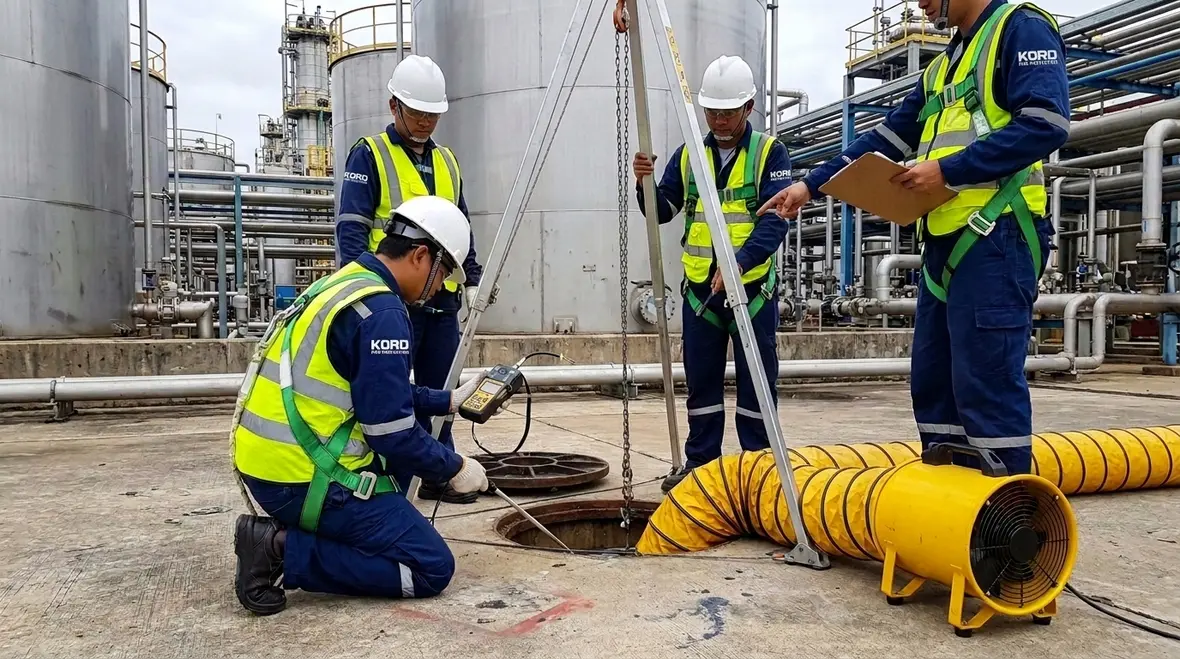
NFPA 35 Section 13.2: Confined Space Entry Requirements in Chemical, Industrial, and Commercial Facilities
Quick Answer: NFPA 35 Section 13.2 establishes how confined space entry must be planned, authorized, monitored, and controlled in facilities handling flammable or combustible materials. It aligns space characterization, atmospheric testing, ventilation, PPE, and rescue readiness to reduce ignition and exposure hazards.
Confined space work in process and storage areas introduces overlapping risks: hazardous atmospheres, ignition sources, oxygen deficiency, and delayed rescue. NFPA 35 Section 13.2 targets those hazards with structured entry planning and controls that apply to facilities where chemical processing, heating, transfer, and storage create fire and life safety exposure.
For safety managers and maintenance leadership searching for NFPA 35 confined space entry requirements plant clarity, the core outcome is consistent: only authorized personnel enter a classified space after verified atmospheric and fire control conditions are met, maintained, and documented throughout the task.
Facilities that want a stronger compliance backbone for inspection records, testing discipline, and maintenance workflow can also review ITM fire protection inspection, testing, and maintenance as part of a broader plant readiness strategy.
What Section 13.2 Requires Before Anyone Enters
Section 13.2 focuses on entry conditions and administrative controls that prevent entry during unacceptable atmospheric or fire risk states. In practice, this means the facility treats confined space entry as a high-hazard work permit activity rather than routine maintenance.
1) Hazard identification and space classification
Facilities must identify confined spaces and verify why they are hazardous. Typical plant examples include pits, tanks, sumps, vaults, ductwork access chambers, and manholes where ventilation is limited and atmospheric conditions can change rapidly.
2) Entry authorization and permit controls
A documented entry process should define who can approve entry, what conditions must be met, and what stops entry if conditions drift. Plants that use hot work permits often have to coordinate them because confined space ignition potential can persist even when general area hot work is controlled.
3) Equipment selection aligned to ignition risk
Even when atmospheric monitoring indicates “safe,” ignition control matters. The entry plan should address sources such as lighting, radios, portable tools, and mechanical equipment that can become ignition sources under abnormal conditions.
Atmospheric Testing: How Monitoring Must Be Performed and Maintained
Confined space atmosphere controls are where compliance efforts succeed or fail. NFPA 35 Section 13.2 expects atmospheric conditions to be evaluated and managed, not assumed. Monitoring must reflect the space’s actual conditions and the work activity that will disturb them.
What to test and why
Testing typically includes oxygen concentration and flammable vapor or gas indicators where chemical vapors or residues may be present. Oxygen deficiency increases breathing hazard. Flammable atmospheres increase the risk of ignition, flashback, and sustained burning once ignition occurs.
How to test correctly inside a space
- Before entry:
test at representative locations and depths. Stratification can occur, especially in pits, tanks, and low points where heavier vapors settle.
- During entry:
monitoring should continue as conditions can change due to ventilation changes, leaks, temperature shifts, and work operations.
- After changes:
re-test when entry conditions change, such as starting pumps, opening lines, altering ventilation, or applying chemicals.
Common monitoring failure points
- Single-point testing:
sampling only one location misses localized pockets.
- Inadequate probe positioning:
inaccurate readings occur when the probe is not positioned for the atmosphere being measured.
- Battery, calibration, or sensor drift:
instruments that are out of calibration or near end of service create false confidence.
- No documented action thresholds:
when measurements exceed planned limits, teams need clear stop work steps.
To support ongoing compliance, many facilities rely on structured testing, calibration, and documentation programs for confined space equipment and fire protection systems. Kord Fire Protection supports commercial and industrial clients with compliance-focused inspection and maintenance workflows that reduce avoidable downtime during audits and shutdowns.
Ventilation, Isolation, and Fire Prevention During Entry
Section 13.2 is not limited to “atmosphere readings.” It also expects the entry plan to control fire and process hazards so that a safe atmosphere is sustained and ignition sources do not escalate the incident.
Ventilation approach
When ventilation is used, it should match the space geometry and hazard profile. Airflow must effectively dilute and remove hazardous vapors. Plants often under ventilate due to restricted air paths, poor duct routing, or inadequate airflow verification.
Isolation of energy and process connections
Confined space entries commonly involve residual chemicals, transfer lines, or connected equipment. Isolation must address inadvertent introduction of flammable vapors or oxygen displacement. This includes verifying the absence of active flow, managing purge and drain steps, and controlling any connection points that could reintroduce hazards.
Ignition control and tool management
NFPA 35 confined space hazards include ignition of flammable atmospheres. The entry plan should govern equipment brought into the space, including lighting, portable tools, and any devices that could create heat, sparks, or static discharge. Where applicable, teams should use equipment rated for hazardous locations consistent with the hazard analysis.
PPE, Attendants, and Rescue Readiness That Actually Work
Confined space rescue readiness must be planned before entry begins. Section 13.2 drives a mindset where standby support and emergency capability are treated as safety systems, not last-minute improvisation.
PPE aligned to hazard assessment
PPE selection should reflect oxygen deficiency potential, toxic exposure potential, and flammability risk. Respiratory protection, protective clothing, and eye and face protection must match the conditions identified during testing and the expected disturbances caused by the work.
Attendant duties and communication
A trained attendant should remain outside the confined space. The attendant’s responsibilities typically include monitoring entrants, maintaining communication, tracking entry timing, and initiating emergency actions. Communication methods should function reliably under plant conditions such as noise, distance, and work pace.
Rescue plan elements
Rescue capability should address how rescuers access the space, how they protect themselves from the same atmosphere risks, and what equipment is staged. The plan should also consider whether rescue requires retrieval devices, air supply capability, and coordination with site emergency response.
Facilities frequently discover gaps after drills: missing retrieval equipment, incomplete access paths, or no clear responsibilities between contractors and site responders. A disciplined maintenance and inspection cycle helps prevent those gaps from becoming a failure point.
How Commercial Facilities Implement NFPA 35 Confined Space Controls
In commercial and industrial settings, compliance often fails due to operational friction rather than misunderstanding the standard. The most effective programs tie NFPA 35 Section 13.2 requirements into the facility’s day-to-day systems: maintenance scheduling, contractor management, and documentation control.
Plant-ready documentation and audit readiness
- Entry permits and checklists:
align with the exact hazards identified for each space.
- Training records:
document qualification of entrants, attendants, and supervisors.
- Instrument calibration logs:
maintain evidence of valid atmospheric testing capability.
- Rescue readiness records:
document equipment inspection, practice drills, and changes in staffing.
Contractor coordination
Many plants rely on contractors for cleaning, tank entry, and maintenance shutdown work. Contractor entry procedures must match the site’s fire and confined space controls. The entry plan should define who verifies atmospheric readings, who owns stop work authority, and how communication and rescue activation occurs across company lines.
Integrating with broader fire protection maintenance
Confined space entry hazards often intersect with broader fire protection responsibilities. If a facility lacks reliable testing and maintenance schedules for detection and suppression systems, the overall incident risk increases. Kord Fire Protection works with commercial and industrial clients to support ongoing compliance through inspection, testing, and maintenance programs that are easier to sustain during busy maintenance windows.
For related safety planning and documentation support, facilities may also review commercial fire safety audit guidance from Kord Fire Protection.
Keyword focus note: When establishing your NFPA 35 confined space entry requirements plant process, align entry planning, atmospheric testing, ventilation controls, ignition prevention, and rescue readiness as an integrated system. Treat each permit as a controlled workflow, not a generic template.
Frequently Asked Questions
Next Step: Make Your Confined Space Program Audit-Ready
Ensure every confined space permit, atmospheric test, ventilation setup, and rescue plan aligns with NFPA 35 Section 13.2 in real plant conditions. Kord Fire Protection can help commercial, industrial, and retail facilities maintain inspection and testing discipline across fire safety assets that support safer confined space work. Contact Kord Fire Protection today to review your confined space entry supporting systems and maintenance schedules and close the gaps before the next audit or shutdown.

Join Our Newsletter!
Get the latest fire safety tips delivered straight to your inbox From our Newsletter.



