
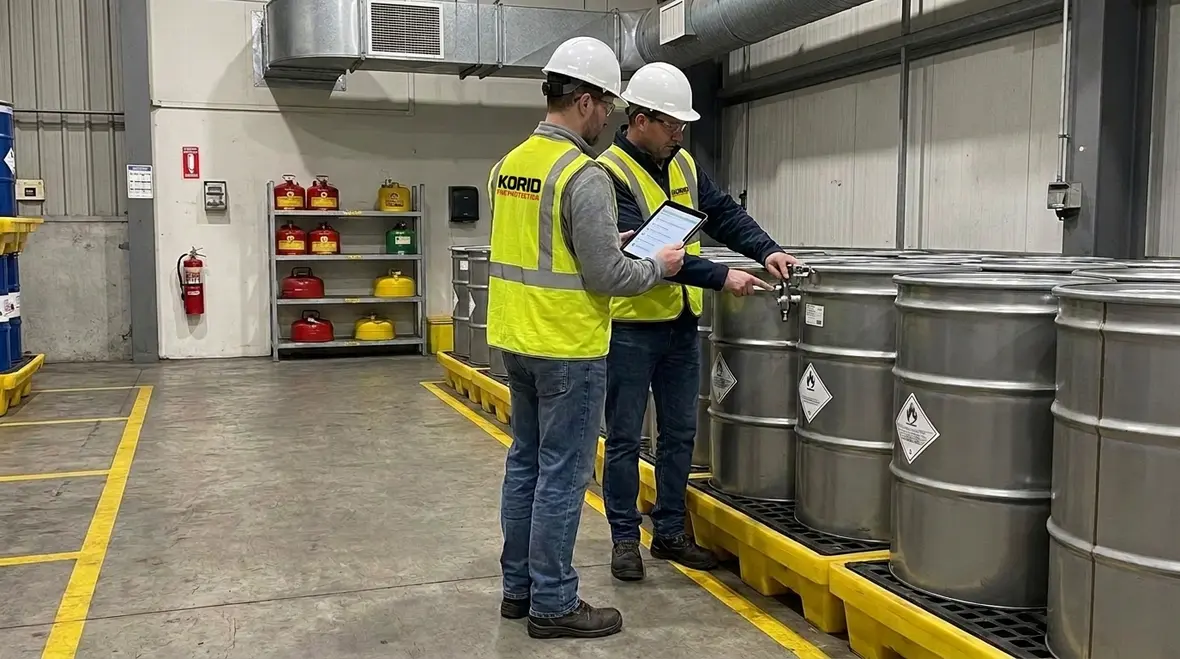
NFPA 35 Section 7.2: Flammable and Combustible Liquid Storage in the Plant
Quick Answer: NFPA 35 Section 7.2 governs how commercial and industrial facilities store flammable and combustible liquids inside a plant environment. It focuses on segregation, container and tank protection, containment, ventilation, monitoring, and inspection readiness to reduce ignition and spill risks.
For teams tightening inspection routines and documentation discipline, fire protection compliance auditing fits naturally into this conversation, especially when storage controls look fine on paper but wander off in the field like they pay rent there.
What Section 7.2 requires in a real plant environment
NFPA 35 flammable combustible liquid storage plant compliance is not just a paper exercise. Section 7.2 translates hazard control principles into practical building and operating requirements that facility teams can audit. Fire protection, operations, maintenance, and EHS staff must coordinate on storage layout, container management, ignition source control, and impairment prevention so that normal operations do not degrade safety over time.
In commercial settings such as chemical processing areas, retail back-of-house supply rooms, and industrial maintenance spaces, the most frequent gaps are the same: inconsistent storage practices, damaged containers, missing secondary containment where it is expected, and inspection programs that do not verify deterioration or control effectiveness.
Where storage controls begin: classification, quantity, and location
Section 7.2 drives fire and explosion risk reduction by controlling where flammable and combustible liquids sit relative to people, processes, and ignition sources. Facility teams typically start with accurate classification and inventory discipline:
- Confirm the liquid classification using the appropriate data and safety documentation. Misclassification changes permitted storage methods and control expectations.
- Define storage limits by area and ensure quantities match the intended hazard level. Storage creep commonly occurs when purchasing, production, or contractor scopes change.
- Protect the storage location by controlling access and separating storage from routine ignition sources and high heat processes.
For many facilities, the compliance challenge is not the initial design, but ongoing changes. Temporary storage during maintenance, contractor deliveries, and pallet staging often bypass the original hazard controls unless the site has a managed procedure and enforcement.
Containers, tanks, and connections: preventing leaks and ignition pathways
Section 7.2 places emphasis on container integrity and the reliability of liquid pathways. This includes practical details that determine whether small defects become major incidents.
1) Container management and damage control
Routine inspection should verify that containers remain serviceable. Common failure points include:
- Corroded drums or pails with compromised seams and bungs.
- Improper closures, damaged caps, or missing plugs on transfer points.
- Incompatible materials used for secondary containers or overpacks.
Facilities typically reduce risk by implementing a documented container inspection rhythm and by preventing uncontrolled substitutions. A strong program also ensures that labels remain legible so operators store and handle liquids correctly.
2) Handling, transfer, and connection integrity
Connections and hoses create ignition and leak pathways if they fail, degrade, or become loose during operations. Section 7.2 driven programs usually include:
- Transfer procedures that define when connections are made, how they are verified, and how spill response is initiated.
- Maintenance tracking for hoses, couplings, and fittings, including scheduled replacement thresholds.
- Control of static electricity and other ignition mechanisms where applicable to the stored and handled liquids.
When maintenance teams treat hoses and fittings as expendable without inspection data, connection integrity becomes the weakest link. The result can be slow leaks that saturate secondary containment and create hidden ignition hazards.
3) Ventilation and vapor control considerations
Flammable vapors can accumulate in storage areas, especially where ventilation is impaired by building modifications, obstructions, or operational changes. Compliance teams should verify ventilation effectiveness, including:
- Airflow paths that remain open and unobstructed.
- Exhaust system performance that matches design intent.
- Operational checks after building maintenance or tenant alterations.
Secondary containment, spill control, and housekeeping discipline
Secondary containment and spill control systems reduce fire severity and limit vapor spread following a release. Section 7.2 expectations commonly translate into inspection and maintenance requirements for:
- Containment structures that remain functional, clean, and free of pooled water or incompatible chemicals.
- Drainage control that prevents contaminated liquids from spreading to other areas.
- Absorbent and spill supplies that are available, compatible, and not expired or degraded.
Housekeeping acts as a control barrier. Residues, debris, and damaged packaging can obstruct containment features and degrade vapor management. Commercial and retail facilities often underestimate this because storage volumes may appear small. However, even smaller quantities can produce hazardous vapor concentrations in confined or poorly ventilated spaces.
Ignition source control and operational safeguards
Section 7.2 assumes a plant environment where ignition sources can exist. Therefore, safety depends on administrative controls and equipment condition.
- Hot work and maintenance coordination ensures flammable liquid storage zones remain protected during tasks that generate sparks or high temperatures.
- Electrical and equipment readiness ensures equipment used near storage areas does not introduce hazards due to damage or improper use.
- Access control and signage supports correct behavior by operators, contractors, and delivery personnel.
One of the most common operational failures occurs after approval. Over time, temporary behavior becomes routine, such as storing additional containers than planned or staging equipment near the storage boundary. A robust inspection program catches these changes before they increase risk.
Inspection, testing, and documentation: how compliance stays current
NFPA 35 Section 7.2 compliance depends on ongoing verification. Many facilities document the initial installation but struggle to document the ongoing condition. A practical compliance approach includes:
- Routine visual inspections of containers, closures, containment, and storage layout.
- Maintenance checks for transfer equipment, hoses, fittings, and related connection points.
- Operational audits that confirm staff follow procedures and that storage limits remain respected.
- Corrective action tracking with documented closure dates and effectiveness verification.
Kord Fire Protection supports ongoing NFPA-aligned readiness by helping facilities structure compliance activities around real operational schedules. This includes review support, inspection coordination, maintenance verification, and documentation readiness that reduces audit friction and improves corrective action quality. For related fire protection planning topics, see inspection, testing, and maintenance services.
Common compliance pitfalls in a NFPA 35 flammable combustible liquid storage plant
Teams typically encounter predictable issues. Addressing these early lowers risk and lowers rework during inspections:
- Uncontrolled quantities from receiving practices and temporary storage becoming permanent.
- Improper container condition such as damaged drums or mismatched overpacks without compatibility verification.
- Containment impairment from debris, pooled residues, or incorrect drainage practices.
- Ventilation degradation after facility modifications or during routine maintenance.
- Incomplete contractor controls where delivery and hot work coordination is not standardized.
Frequently Asked Questions
Take action now to protect your storage program
Review your plant’s flammable and combustible liquid storage practices against NFPA 35 Section 7.2 expectations, focusing on container condition, containment effectiveness, ventilation stability, and ignition control procedures. Then verify your inspection and maintenance program closes gaps quickly. Kord Fire Protection can help you maintain ongoing compliance readiness with practical service that aligns documentation, testing, and corrective action execution. Contact Kord Fire Protection today to schedule a compliance-focused assessment.

Join Our Newsletter!
Get the latest fire safety tips delivered straight to your inbox From our Newsletter.



