NFPA 35 Section 7.3: Storage of Finished Coating Products
Quick Answer: NFPA 35 Section 7.3 sets the safety rules for storing finished coating products to reduce ignition and exposure risks. Facilities must control quantities, segregation, ventilation, compatible container handling, and housekeeping, then verify compliance through inspection and maintenance.
For broader inspection planning and audit readiness, facilities can also review Kord Fire Protection’s fire inspection preparation checklist to tighten documentation, walkthroughs, and correction tracking before small issues turn theatrical. ([kordfire.com](https://kordfire.com/fire-inspection-preparation-checklist-30-day-plan/?utm_source=openai))
Why NFPA 35 finished product storage requirements matter in day to day operations
Finished coatings still contain flammable solvents, reactive ingredients, and heat sensitive components. Even when products are “finished” and ready for shipment or use, they can generate hazardous vapor concentrations, especially during transfer, opening, or container damage. This is why NFPA 35 finished product storage requirements focus on limiting ignition sources, managing ventilation and accumulation, and maintaining containers and storage areas in a dependable condition. In commercial, industrial, and retail facilities, day to day handling practices often drift over time, which increases the risk of noncompliance at inspection.
What Section 7.3 requires for storage control and layout
Section 7.3 addresses how finished coating products get stored so the facility prevents ignition, limits fire spread potential, and reduces the likelihood that containers will fail under normal or foreseeable conditions.
1) Quantity and arrangement controls
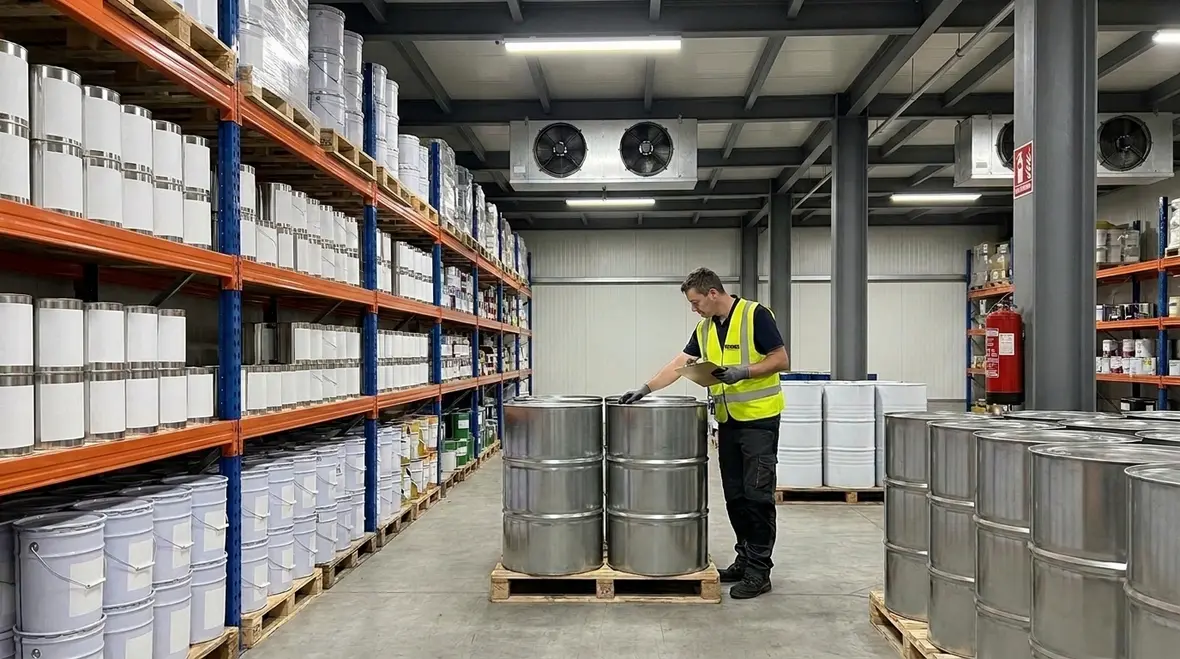
Commercial facilities commonly store finished coatings in bulk supply areas, staging rooms, paint mixing zones, and distribution warehouses. Section 7.3 emphasizes that storage must be controlled based on the hazard presented by the products and how they are arranged. Operationally, this means:
- Limiting on hand quantities to what the process and schedule require
- Maintaining clear separation between incompatible materials
- Preventing blocked egress routes and inaccessible fire protection equipment
- Using appropriate storage methods that reduce container stress from stacking, overfilling, or poor pallet conditions
Common failure point: facilities increase inventory during peak seasons but do not update the storage plan, fire protection expectations, or inspection routines to match the new volume.
2) Segregation and compatibility
Finished coatings can differ widely in solvent type, oxidation potential, and reactivity with other chemicals. Section 7.3 drives segregation discipline: coatings that must not be stored together require separate locations, barriers, or other approved methods. A robust approach uses container labeling, SDS based compatibility review, and controlled receiving so containers do not get mixed into “similar looking” storage zones.
Common failure point: “temporary” mixing zone staging becomes permanent, and segregation boundaries become ineffective due to overflow or repeated re-slotting.
3) Container integrity and handling discipline
NFPA 35 storage intent relies on container reliability. For finished coatings, facilities should ensure lids, bungs, caps, and seals stay intact and remain compatible with the product. Operational procedures should include:
- Managing dents, bulging, leaking, or corroded containers immediately
- Using compatible secondary containment where appropriate to prevent spill spread
- Storing drums and pails upright unless the product listing and container design support alternative arrangements
- Controlling forklift and rack handling so impacts do not compromise seals
Common failure point: minor leakage is treated as cosmetic rather than as a vapor and ignition hazard.
Ventilation, vapor control, and ignition source management
Finished coatings often release vapors that can form flammable mixtures when conditions align. Section 7.3 emphasizes controlling the environment around storage so vapors do not accumulate to hazardous levels.
Ventilation effectiveness as an operational control
Ventilation performance depends on maintained equipment, unobstructed airflow paths, and correct operating schedules. Facilities should verify that ventilation systems:
- Run when required for the storage area conditions
- Remain free of blocked intakes, damaged ductwork, or inoperable dampers
- Continue to perform after seasonal changes or tenant modifications
Maintenance challenge: fans and exhaust equipment can degrade quietly, and airflow may drop below intent without obvious signs at ground level.
Ignition source control during normal storage activities
Even when bulk storage conditions improve, day to day work creates ignition risk. Section 7.3 expectations align with controlling ignition sources around storage. Operational controls commonly include:
- Hot work permit discipline in or near coating storage zones
- Equipment selection appropriate for the environment and product hazard
- Static control practices during transfer, dispensing, or container handling
- No smoking and strict management of battery charging and spark producing tools
Common failure point: temporary electric heaters and ad hoc power tools appear during downtime, then remain in place.
Spill prevention, housekeeping, and waste handling
Storage areas do not stay compliant by signage alone. Section 7.3 implicitly relies on preventing release events from escalating, controlling residues, and maintaining clean conditions that support safe operation and inspection readiness.
Housekeeping that reduces vapor and fire load
Accumulated rags, empty containers, packaging debris, and drips can increase both fuel load and vapor generation. A practical compliance program includes:
- Scheduled cleanup tied to actual production and deliveries
- Dedicated waste containers for coating residue and contaminated materials
- Clear labeling of empties and separation from full product storage
- Prompt removal of damaged packaging that cannot be safely stored
Waste stream controls and container lifecycle
Even if finished products are not “waste,” the way empty or damaged containers flow through the facility affects risk. Facilities should ensure waste handling procedures prevent:
- Unknown residues from mixing into general trash
- Leaking containers sitting unattended
- Improper storage of empties in occupied or egress constrained areas
Common failure point: empty containers stored “until later” in the same racks used for full coatings.
Inspection, impairment tracking, and ongoing maintenance
NFPA 35 compliance for finished product storage depends on consistent verification. Section 7.3 requirements become real through inspection routines, maintenance records, and correction of impairments before risk escalates.
What to check during safety walkdowns
Facilities typically improve outcomes when they use a repeatable checklist tied to the storage area hazards. Walkdowns should look for:
- Container condition, labeling, and lid integrity
- Segregation boundaries and overflow controls
- Ventilation status, exhaust paths, and cleanliness around equipment
- Spill control measures and condition of secondary containment
- Access to fire protection equipment and clear egress routes
How impairments grow into inspection nonconformities
Most failures start small. A damaged pallet causes shifting. A shifted container leaks. A leak increases residue and vapor load. Housekeeping becomes reactive. Ventilation struggles against obstructions. The facility then faces repeat findings because root causes were never corrected. Documented correction closes the loop and reduces repeat violations.
For many commercial sites, Kord Fire Protection supports this ongoing reliability with compliance planning, inspection readiness, and maintenance oriented services. For facilities that need broader field support tied to inspections and ongoing system care, Kord Fire Protection’s fire suppression services fit naturally into a more dependable compliance program. ([kordfire.com](https://kordfire.com/fire-suppression/?utm_source=openai))
For guidance tailored to commercial storage and inspection preparation, see Kord Fire Protection for support with practical fire safety programs and sustained NFPA compliance.
NFPA 35 Section 7.3 compliance challenges in commercial and retail environments
Compliance varies by occupancy and operational model. Retail paint and coating stores, light industrial mixing rooms, and distribution warehouses often share the same patterns that create risk during normal business operations.
Common scenarios that trigger risk
- Seasonal inventory spikes that increase quantity in storage beyond what procedures and controls cover
- Shared corridors where storage encroaches into egress and creates accessibility issues
- Tenant modifications that change layout without updating the storage plan or ventilation assumptions
- Consolidated receiving where incompatible products get staged in the same temporary zone
How to keep control during change
Facilities should update internal storage mapping, training, and inspection checkpoints whenever product families, supplier labels, or storage locations change. A strong compliance process ties receiving approvals to storage compatibility and container condition, then reinforces the controls through routine inspections and documented corrective action.
Frequently Asked Questions
Call to action
Review your finished coating storage layout against NFPA 35 Section 7.3, then verify ventilation, segregation, and container integrity through a repeatable inspection checklist. If your facility has seasonal inventory swings, recent layout changes, or recurring housekeeping findings, contact Kord Fire Protection to strengthen ongoing compliance through tailored testing, inspection readiness, and maintenance support.
Join Our Newsletter!
Get the latest fire safety tips delivered straight to your inbox From our Newsletter.