
NFPA 35 Section 5.2: Drainage Requirements for Coatings Plant Buildings
Quick Answer
NFPA 35 Section 5.2 focuses on how coatings plant buildings manage contaminated water, spent wash water, and runoff so flammable residues do not accumulate. The core intent is reliable drainage, proper containment, and maintainable systems that support fire and environmental safety.
If your facility is reviewing broader coating process hazards, Kord Fire Protection’s guidance on liquid piping systems for coating and dipping is a strong companion resource near the front end of compliance planning.
Why NFPA 35 plant drainage requirements matter in real coatings operations
In coatings plants, daily production creates repeated chances for flammable and combustible liquid exposure through overspray, cleaning cycles, floor washing, and emergency response. NFPA 35 plant drainage requirements address these realities by requiring drainage systems that prevent dangerous pooling and reduce the likelihood that residues spread into unintended areas.
When these systems fail, the failure rarely looks like a single catastrophic event. More often, noncompliant slopes, clogged sumps, undersized trench drains, damaged seals, or poorly maintained water seals allow contaminated liquids to collect. Those collections can become ignition sources in the presence of flammable vapors, hot work, static discharge, or equipment malfunctions.
What Section 5.2 expects from drainage design in coatings plant buildings
NFPA 35 Section 5.2 centers on controlling the flow path for contaminated liquids so that they do not create hazardous accumulations. Compliance is not limited to installing a drain. Facilities must ensure the drainage system operates as intended during routine operations and foreseeable upset conditions.
Common design and layout expectations include the following operational outcomes:
- Containment of contaminated runoff. Liquids leaving production or wash areas must be directed to controlled collection rather than open spreading.
- Prevention of standing liquid. Building floors and drain collection points must not allow persistent wet areas that collect residue.
- Functional separation where required. Where water seals or closed connections protect against flame passage, those components must remain reliable and maintainable.
- Ability to inspect and maintain. Drain components, valves, interceptors, sumps, and cleanouts must be accessible for inspection, cleaning, and repair.
Because coatings plants run continuously and cleaning practices vary across shifts, drainage systems must be engineered for repeated wet and chemical exposure and for the realities of maintenance scheduling.
Operational mechanisms that drive compliance: floors, trenches, sumps, and cleanouts
NFPA 35 plant drainage requirements translate into day to day performance. Facilities typically comply when their drainage components perform as a system, not as isolated hardware.
1) Floor slopes and drainage paths
Floors must route water and liquid to designated collection points. In practice, compliance issues appear after renovations or equipment moves that alter traffic patterns. Dust and residue buildup can also mask low spots and divert liquids toward unexpected areas.
Key failure points include:
- Worn coatings and patched sections that change surface grade
- Debris accumulation in floor joints and around drains
- Improper sealing between floor penetrations and drain assemblies
2) Trench drains and channel systems
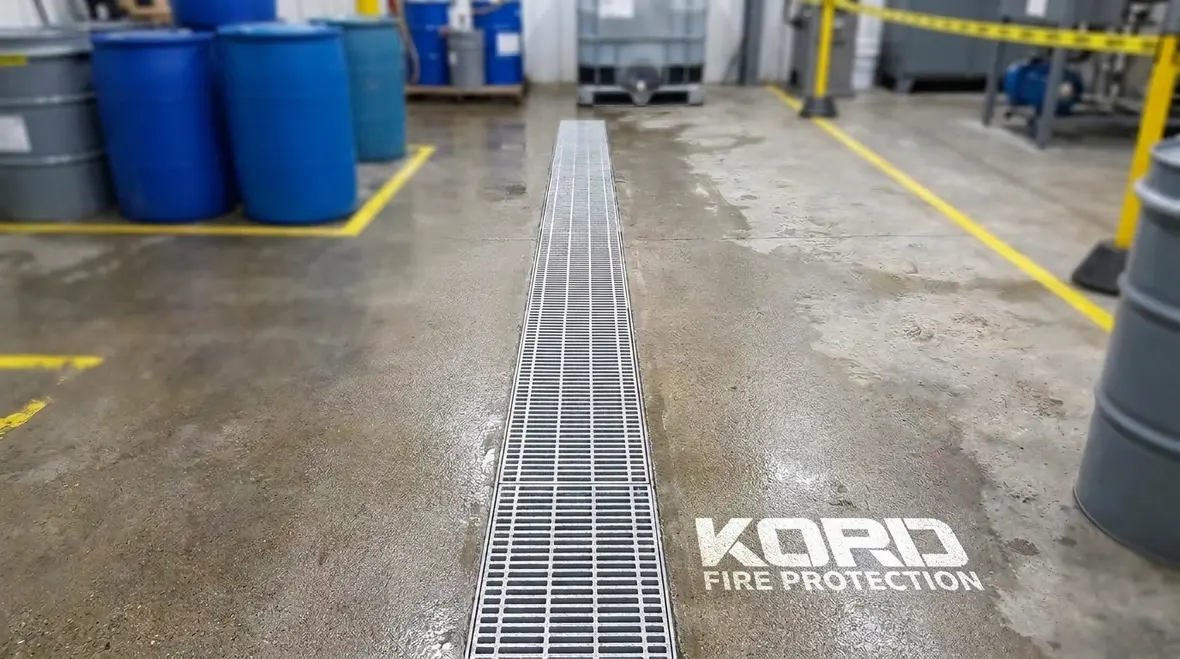
Trench drains must be sized and arranged to handle periodic wash down volumes without overflow. The trench cover strategy matters too. Covers help limit debris accumulation and reduce the chance that flammable residue settles in a way that later becomes difficult to remove.
Common problems include:
- Partial blockage from overspray residue, paint chips, and cleaning media
- Drain traps or connections that do not maintain required separation
- Inadequate slope within the trench that promotes standing liquid
3) Sumps and interceptors
Sumps and interceptors serve as controlled points where contaminated liquids collect prior to disposal or treatment. If the sump design relies on pumps or level controls, the reliability of those components becomes a life safety and operational continuity requirement.
Maintenance gaps typically appear as:
- Low discharge performance due to pump impairment
- Spent solids buildup that reduces capacity
- Incorrect pump start levels or float failures
4) Cleanouts, valves, and access for inspection
Drainage systems become noncompliant when personnel cannot inspect or clean them effectively. NFPA 35 plant drainage requirements assume practical maintainability, including access to key components.
Facilities should verify that cleanouts are accessible, that valve status is known during operations, and that personnel training includes drainage system behaviors during cleaning cycles and equipment outages.
Inspection and maintenance: how facilities prove drainage stays compliant
Drainage compliance is not a one-time acceptance test. Coatings facilities should implement an inspection and maintenance approach that aligns with production, cleaning frequency, and seasonal conditions.
What inspections should cover
- Flow verification. Confirm that wash water and incidental runoff move to the intended collection points without overflow.
- Residue and blockage checks. Inspect trenches, strainers, sump inlets, and connected piping for buildup and obstruction.
- Seal and separation performance. Where water seals or protected connections exist, verify they remain functional and not dry, bypassed, or compromised.
- Structural condition. Check for cracks, damaged gaskets, corrosion, and deterioration around drains and floor penetrations.
- Operational documentation. Maintain records that demonstrate consistent cleaning, repairs, and corrective actions.
Maintenance practices that prevent recurring failures
Effective maintenance focuses on the root causes that repeatedly turn into noncompliance findings. For example, overspray residue accumulation is often managed at the source through housekeeping and proper filter or media change intervals. It is also managed downstream with scheduled trench and sump cleaning.
Kord Fire Protection supports commercial facilities with inspection readiness and ongoing fire and life safety maintenance. For drainage related compliance confidence, Kord Fire Protection helps establish repeatable field verification procedures so facilities can sustain system performance rather than reacting after an incident.
For additional fire protection and inspection readiness support, facilities can review more guidance through Kord Fire Protection’s inspection checklist resource or explore Kord Fire Protection.
Common compliance gaps in coatings plants (and how to address them)
Even well designed facilities can drift out of compliance when operational practices change. The following issues repeatedly surface during compliance reviews and internal audits.
Overflow and bypass during cleaning
Cleaning procedures that exceed drainage capacity or cleaning that occurs before drains are cleared can cause overflow. The immediate fix is operational, but the sustainable fix includes documented capacity checks, drain clearing standards, and scheduling discipline.
Dry, failed, or bypassed separation components
If water seals or protected connections are allowed to dry out, damaged, or bypassed during maintenance, ignition control effectiveness declines. Facilities should implement simple controls such as tagged maintenance steps, pre start checks, and verification after system reassembly.
Blocked strainers and contaminated sump inlets
Overspray and cleaning residues settle into strainers and sump inlets. Blockage can reduce flow and increase the risk of standing liquid. A robust preventive maintenance schedule and clear responsibility assignment typically prevent recurrence.
Insufficient documentation and training
Maintenance staff and operations teams often know the “how” but not the “why.” Training that ties drainage actions to safety intent supports consistent execution and faster corrective actions when issues appear.
Frequently Asked Questions
Call to action
Coatings plant drainage systems need more than installation. Kord Fire Protection helps commercial facilities build inspection-ready maintenance routines, verify field performance, and reduce compliance drift over time. Contact Kord Fire Protection to discuss your current drainage practices, access constraints, and inspection schedule so NFPA 35 plant drainage requirements stay reliably met in day to day operations.

Join Our Newsletter!
Get the latest fire safety tips delivered straight to your inbox From our Newsletter.



