
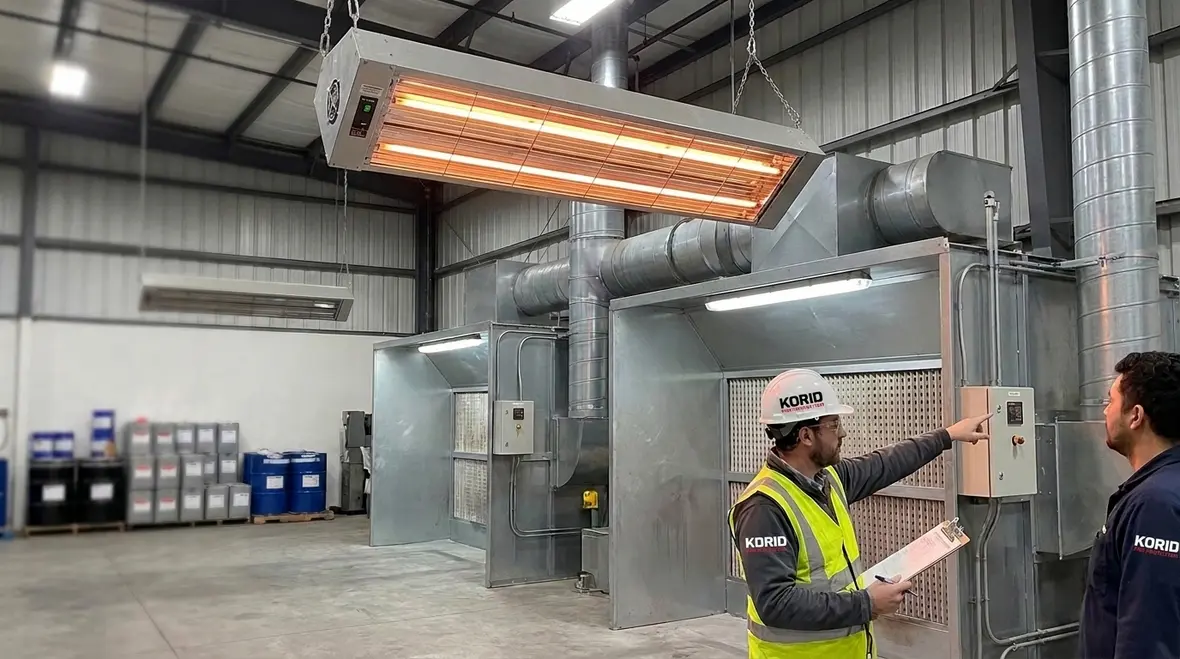
NFPA 35 Section 5.3: Building Heating Requirements for Coatings Plants
Quick Answer: NFPA 35 Section 5.3 sets safety expectations for how buildings in coatings operations are heated so ignition sources are controlled. Compliance focuses on heater selection, location, system maintenance, and operational practices that reduce fire and explosion risk from flammable vapors.
Owners and safety teams often ask what the NFPA 35 building heating requirements plant must do to support safe heat in coating facilities. The standard targets a single outcome: preventing heater systems and their operating conditions from becoming ignition sources when flammable or combustible vapors are present. For coatings plants, this means treating building heat as a process safety system, not a comfort upgrade.
For a broader look at industrial protection strategy, see manufacturing fire suppression planning with Kord Fire Protection, which fits naturally with how facilities evaluate ignition sources, suppression readiness, and change management in active production spaces.
Why NFPA 35 Section 5.3 Matters in Coatings Plants
Coatings plants manage flammable solvents, atomized materials, and exhaust streams that can release vapors into working areas. Heating equipment can introduce ignition through hot surfaces, improper venting, combustion air deficiencies, electrical faults, or misaligned airflow that concentrates vapors. NFPA 35 Section 5.3 addresses these hazards by requiring heating arrangements that minimize ignition potential and maintain reliable operation throughout the facility lifecycle.
In commercial and industrial environments, the risk commonly increases during production changes, seasonal load shifts, and deferred maintenance. A heater that is acceptable during low vapor load conditions may become unacceptable when solvent usage increases, spray schedules expand, or ventilation performance degrades.
What Section 5.3 Controls: Heating Source, Installation, and Operation
NFPA 35 building heating requirements plant compliance is not only about equipment type. Inspectors and fire safety professionals also look at how the heating system is installed, operated, and maintained. The core controls typically fall into three operational themes.
1) Heater ignition potential and where heaters are placed
Heating devices that rely on combustion or exposed heating elements can create ignition sources. NFPA 35 expectations focus on preventing those sources from being located where flammable atmospheres can form. This includes considering normal operations, likely abnormal conditions, and maintenance states where vapors may accumulate.
Practical compliance challenge: many coatings plants retrofit heating units after construction without updating the fire risk review. Even small relocation changes can alter vapor accumulation patterns, especially near spray booths, solvent storage, mixing rooms, and exhaust or make up air units.
2) Venting, combustion air, and exhaust integrity
Improper venting and combustion air problems can cause flame instability, elevated exhaust temperatures, and incomplete combustion. Those issues increase ignition risk and also create carbon monoxide hazards, which can drive occupants to disable safety controls.
Common failure points include cracked vent components, blocked combustion air intakes, misconfigured draft inducer operation, and loose fittings that allow leakage. Facilities often notice these issues first during cold weather because draft dynamics change.
3) Electrical components and control reliability
Even when the heat source is mechanical, controls, thermostats, motors, and wiring can present ignition hazards if installed incorrectly or if they fail. NFPA 35 considerations typically require that electrical heating components do not create an ignition source in vapor containing areas.
Maintenance gap to watch: replacement of components with non equivalent parts. For example, substituting a different thermostat type or cover style can change surface temperatures or compromise enclosure integrity.
Operational Procedures That Make Heating Compliance Real
NFPA 35 requirements work best when paired with disciplined operating procedures. Coatings plants often treat heating as an independent system, but fire safety depends on how it interacts with spray schedules, ventilation, and alarm response.
Coordination with ventilation and exhaust systems
Heating systems should not undermine exhaust effectiveness. If heat sources stratify air or alter airflow patterns, vapors can accumulate closer to ignition sources. Operators should confirm that heating does not create recirculation zones near spray operations.
Commercial facility standard alignment: the same teams that manage HVAC balance should also understand the process ventilation layout. Coordinated change management reduces the probability of creating vapor pockets after seasonal HVAC adjustments.
Start up and shutdown discipline
Many incidents occur during transitional periods when airflow changes and vapors are most likely to be present. Heating systems should follow defined start up sequences that preserve ventilation effectiveness. Shutdown procedures should avoid leaving combustion equipment running while vapor sources remain active or ventilation remains compromised.
Housekeeping and maintenance access
Accumulated dust, solvent residue, and debris can change surface temperatures and hinder safe heater operation. Maintenance access areas must support inspections of venting, combustion chambers, filters, ducting, and electrical enclosures.
Inspections and Documentation: What to Expect During Compliance Reviews
During audits, safety officers and AHJs typically evaluate whether installed and operating heating systems match the hazard assumptions used in the facility fire safety approach. A strong compliance program ties equipment condition to documented inspection evidence.
Inspection focus areas
- Heater placement and protection: confirmation that heating devices are located and protected to reduce exposure to flammable atmospheres.
- Venting and combustion integrity: checks for deterioration, proper draft, secure fittings, and unobstructed combustion air pathways.
- Controls and safety devices: verification of thermostat and control operation, proper safeties, and correct component equivalency after repairs.
- Electrical enclosure integrity: evaluation of covers, seals, cable routing, and signs of heat damage.
- Maintenance records: evidence that testing and service occur at defined intervals and after significant changes.
Common nonconformities that drive corrective actions
- Deferred vent inspections that allow gradual degradation.
- Unapproved heater swaps using standard commercial parts instead of matched rated components.
- Seasonal start up practices that bypass verification steps.
- HVAC balancing changes that alter airflow around coating operations.
For facilities seeking practical risk control beyond documentation, Kord Fire Protection provides ongoing inspection, testing, and maintenance support that aligns with commercial and industrial expectations. Their role is especially valuable when heating systems connect to a broader life safety and process safety program, because deficiencies rarely exist in isolation.
If you want a broader view of how fire protection planning supports operational continuity, review Kord Fire Protection services.
Facilities that need a more process-focused reference can also review manufacturing plant fire suppression systems for added context on how fire protection strategies are matched to higher-risk industrial environments.
How to Build a Compliance Plan for the “NFPA 35 building heating requirements plant”
A successful compliance plan treats heating as part of the coatings facility hazard picture. It also creates a repeatable process that reduces reliance on single individuals or one time audits.
Step 1: Perform a heating hazard review tied to coating operations
Map heaters to vapor producing locations, identify heating circulation pathways, and evaluate normal and likely abnormal states. This step should consider solvent usage patterns, room occupancy, and ventilation performance.
Step 2: Lock in installation and change control
Any relocation, component replacement, duct modification, or control system change should trigger a review for ignition source exposure and system operation compatibility.
Step 3: Implement inspection and maintenance intervals
Define maintenance tasks that include venting inspections, combustion analysis where applicable, control checks, and verification of safe operation after service. Tie documentation to equipment identifiers and locations.
Step 4: Train operators on safe sequences and “what to do when things drift”
Operators should understand warning indicators such as abnormal burner behavior, unusual odors, inconsistent temperature control, and ventilation anomalies. Training should also cover how to pause heat or coordinate with maintenance when issues appear.
Frequently Asked Questions
Conclusion and Call to Action
To meet NFPA 35 expectations and protect people, assets, and production continuity, treat building heating as a controlled ignition risk in your coatings process. Conduct a heating hazard review, enforce change control, and maintain evidence that systems operate safely year round. Partner with Kord Fire Protection to support inspection, testing, and maintenance activities that stand up during commercial compliance reviews. Start with a documented gap assessment and a corrective action plan.

Join Our Newsletter!
Get the latest fire safety tips delivered straight to your inbox From our Newsletter.



