
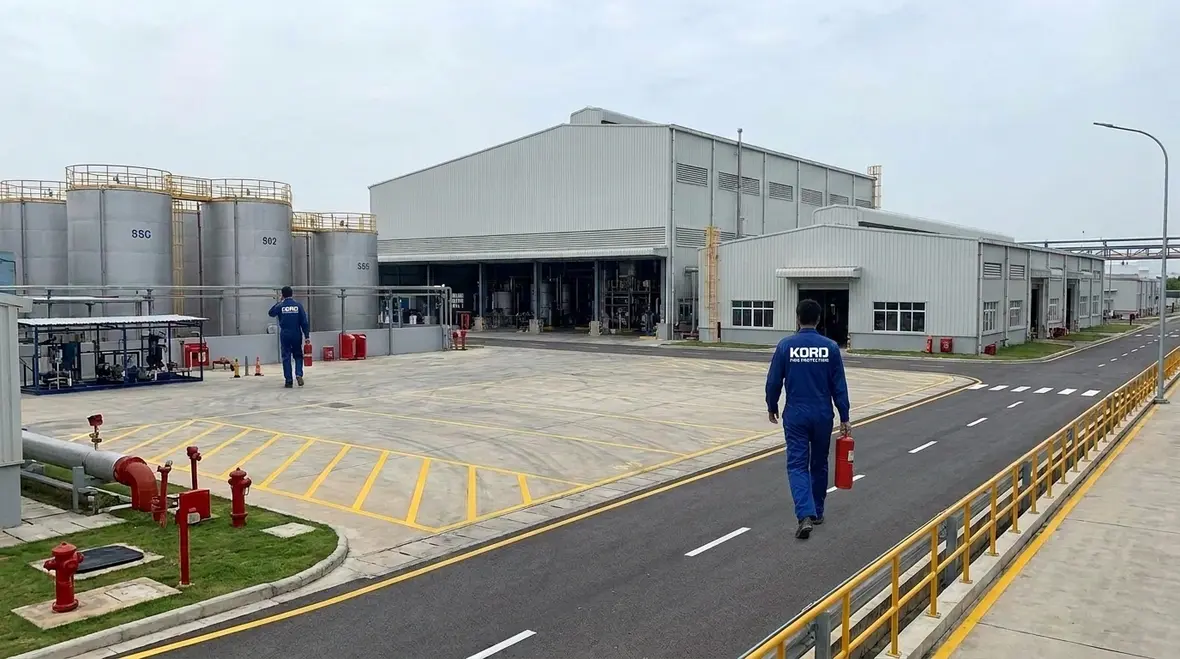
NFPA 35 Section 4.1: Location Requirements for Organic Coatings Plants
Quick Answer: NFPA 35 Section 4.1 requires organic coatings plants to be sited and arranged so ignition sources, combustible loading, and operational hazards are controlled. Facility managers must verify separation distances, building classifications, and safe access for inspection, emergency response, and ongoing maintenance under the NFPA 35 plant location requirements coatings framework.
Why this matters in the real world
- Controls where flammable and combustible hazards can safely exist
- Reduces the chance that fire or explosion hazards spread to nearby exposures
- Supports emergency response, inspection access, and defensible documentation
What NFPA 35 Section 4.1 requires and why it matters for coatings operations
NFPA 35 addresses fire and explosion hazards specific to processing organic coatings, including solvents, reactive ingredients, and flammable vapors. Section 4.1 focuses on location and arrangement controls that reduce the likelihood that fire and explosion hazards created inside the plant migrate to nearby areas, adjacent buildings, or public exposure points.
From a compliance standpoint, NFPA 35 plant location requirements coatings are not just theoretical siting rules. They directly influence how a commercial or industrial facility plans its layout, installs ventilation and fire protection equipment, controls access, and maintains safe operating clearances during upgrades, tenant changes, or production ramp ups.
How “location requirements” translate into real facility decisions
NFPA 35 Section 4.1 drives three operational outcomes: limit ignition potential, prevent uncontrolled hazard spread, and ensure that occupants and responders can safely operate and inspect equipment. In practice, these outcomes show up in facility workflows such as receiving, storage, transfer, mixing, application, curing, and waste handling.
1) Hazard zoning and separation between exposures
Facilities must evaluate where combustible and flammable hazards exist, then separate those hazards from exposures such as:
- Nonhazard process areas and public access corridors
- Adjacent tenants or outdoor storage yards
- Loading docks, vehicle traffic, and pedestrian routes
- Potential ignition sources, including hot surfaces and electrical equipment not rated for the hazard
Common failure point: a facility upgrades equipment, adds a new spray line, or increases solvent throughput without revalidating the hazard classification impacts on location and separation. Inspectors typically treat the as built arrangement, not the original drawing set, as the compliance baseline.
2) Building siting, occupancy interface, and property line exposure
Organic coatings operations often coexist with offices, warehouses, retail front areas, or mixed occupancy industrial buildings. Section 4.1 requires that the plant location and building interface prevent unacceptable risk to those areas. Commercial facility standards frequently require documented boundaries for hazardous operations, including controls for door openings, ventilation interfaces, and emergency egress paths that do not route through flammable vapor accumulation zones.
Common failure point: a facility assumes that fireproofing alone resolves location risk. In reality, fire and explosion control depends on maintaining the correct hazard separation and ensuring that openings and ventilation do not defeat the intended protection strategy.
3) Emergency response access and inspection pathways
Location requirements also affect how responders reach hazards safely and how maintenance teams access fire protection, electrical, and ventilation components. A compliant plant location supports clear access routes, unobstructed service areas, and maintained signage and documentation. These practical items often determine whether a system can be properly inspected, tested, and maintained to NFPA expectations.
What inspectors expect to see during compliance verification
When authorities evaluate a coatings facility, they typically connect Section 4.1 location requirements to operational controls. NFPA 35 is not limited to geometry and construction. It expects the entire hazard control approach to work consistently during normal operation and credible upset conditions.
Documented hazard mapping tied to the facility layout
Effective compliance files include:
- Process descriptions for each coating operation and solvent use
- Inventory information for flammable and combustible materials
- Area classifications and rationale for electrical equipment selection
- As built layout drawings showing separation and boundaries
Common failure point: drawings show nominal positions, while the shop floor shows seasonal changes, temporary storage, or relocated hoses and spray booths. Inspectors usually prioritize site reality. Updated as built diagrams reduce the risk of nonconformance during surveys or insurance inspections.
Ignition source control aligned with the location plan
Location requirements only perform as intended when ignition sources remain controlled in their assigned zones. This includes maintaining ventilation performance, grounding and bonding where required, and verifying that electrical and mechanical systems match the hazard classification.
For example, a change in coating chemistry that increases solvent volatility can shift risk. Even when the building has not changed, the hazard profile may change. That shift can require reassessing location interfaces and protection strategies to remain aligned with NFPA 35 plant location requirements coatings.
Maintenance and test records that prove ongoing control
Commercial and industrial facilities often focus on annual inspections but neglect routine verification that the location plan depends on. Inspectors frequently look for evidence that systems and controls supporting location requirements remain operational, including:
- Ventilation system inspection and functional testing documentation
- Fire protection equipment inspections and impairment handling records
- Housekeeping controls and flammable waste management procedures
- Management of change records when equipment or production changes occur
Kord Fire Protection supports ongoing compliance through practical inspection, testing, and maintenance services that help facilities keep documentation current and systems reliable. This operational continuity helps address one of the most common compliance gaps: “paper compliance” that does not reflect real maintenance performance.
Where compliance breaks down in shared or evolving facilities
Many organic coatings plants operate inside multi use buildings or industrial campuses with frequent tenant and layout changes. Section 4.1 location requirements coatings influence how the facility evolves. The biggest risks appear during renovations, expansions, or production changes that are not fully integrated into fire protection planning.
Tenant fit outs and production line additions
Retail distribution, light industrial, and commercial service buildings frequently add equipment to meet customer demand. If a facility adds a new spray area or expands solvent storage, it must reconsider how those changes affect separation, access, and interface with other occupancies.
Temporary staging, seasonal storage, and contractors
Temporary conditions can create lasting noncompliance if they persist. Contractors may stage flammable materials, install temporary power, or alter airflow patterns. Without strong controls, the hazard location plan can degrade. Policies should require contractor preplanning, documented temporary storage rules, and a return to as built hazard boundaries before resuming normal operations.
Ventilation and ductwork modifications
Ventilation frequently changes during maintenance and upgrades. Small modifications can affect vapor transport and air distribution, altering where flammable vapors accumulate. Location compliance depends on keeping ventilation aligned with the hazard control intent. Maintenance teams should treat ventilation as a safety system, not a utility.
Make Section 4.1 manageable with a maintenance and compliance program
NFPA 35 compliance works best when it becomes part of daily operations. Kord Fire Protection helps organizations turn inspection and testing into a repeatable process aligned with facility risk. That includes supporting documentation readiness, system reliability, and ongoing verification of protection features tied to the plant layout.
For teams that need a practical compliance approach, review Kord Fire Protection’s guidance on fire protection program planning and service execution here: Kord Fire Protection services.
Additionally, facility managers often benefit from understanding how fire protection impairments and readiness are handled. If your organization uses impairment or inspection scheduling workflows, integrating them into your NFPA 35 program helps avoid last minute gaps during surveys. A useful related read is Fire Suppression System Impairments and Kord Fire Protection.
Frequently Asked Questions
Next step: verify your as built layout against NFPA 35 Section 4.1
Review your coatings plant layout, separation interfaces, and access routes against NFPA 35 plant location requirements coatings, then confirm that maintenance and testing records support the hazard control strategy. Kord Fire Protection can help you keep systems inspection ready and documentation defensible through ongoing testing, service, and compliance support. Start with a gap assessment of your as built conditions so your next survey does not become a reconstruction exercise.

Join Our Newsletter!
Get the latest fire safety tips delivered straight to your inbox From our Newsletter.



