
NFPA 34 Section 10.6: Controlling Combustible Dusts and Residues
Quick Answer
NFPA 34 Section 10.6 focuses on preventing ignition sources from contacting combustible dusts and residues through control methods, cleaning practices, and process area management. A defensible program aligns housekeeping, engineering controls, inspection, and documented maintenance to reduce fire and explosion risk.
Why NFPA 34 Section 10.6 Matters in Real Facilities
Combustible dust incidents often develop from routine operational conditions: normal material handling, conveying, cutting, screening, packaging, and maintenance activities that create dust layers and residues. NFPA 34 Section 10.6 addresses these hazards by directing facilities to manage combustible dusts and residues in a manner that reduces both the likelihood of ignition and the consequences of potential ignition events.
In practice, compliance success depends on how well the facility governs NFPA 34 combustible dust residue control process areas across daily operations, cleaning cycles, and equipment uptime. The standard expects controls that stay effective under real production and maintenance conditions, not just during initial installation or periodic inspections.
Facilities trying to connect day-to-day dust control with broader inspection readiness can also review fire protection services in Southern California for a practical look at how ongoing compliance support fits into real operating schedules.
What Section 10.6 Requires: Control, Not Guesswork
Section 10.6 centers on controlling combustible dust accumulations and residues so that an ignition source cannot easily ignite dust clouds or the accumulated fuel layer. A compliant approach typically includes these core expectations:
- Defined control boundaries: clearly identifying where dust and residue accumulate, including transfers, storage interfaces, and shutdown conditions.
- Effective housekeeping: cleaning methods and frequencies matched to dust generation rates and the realities of production.
- Engineering and process controls: preventing release, containing dust, and minimizing buildup inside equipment.
- Maintenance and inspection discipline: verifying controls remain functional, especially after repairs and equipment changes.
- Documentation and training: maintaining records that demonstrate ongoing compliance and consistent execution.
Facilities often fail because they treat “housekeeping” as a generic task. NFPA 34 requires a system that anticipates failure modes such as leaking seals, clogged ductwork, worn gaskets, vacuum system degradation, and return air paths that reintroduce settled dust into occupied spaces.
Define the NFPA 34 Combustible Dust Residue Control Process Areas
The most actionable starting point is mapping the facility into practical zones based on how dust and residues behave. The goal is to establish NFPA 34 combustible dust residue control process areas that reflect actual operational pathways and accumulation patterns.
How to map process areas accurately
- Use operational reality: include areas affected during start up, upset conditions, and planned shutdowns.
- Track material movement: identify where dust escapes from conveyors, elevators, hoppers, chutes, duct penetrations, and bag or tote handling.
- Include maintenance release points: include filter housings, inspection doors, duct flange joints, and belt transfer points opened during service.
- Account for secondary spread: include floors, ledges, cable trays, rafters, light fixtures, and return air plenums where dust settles.
Common boundary mistakes that create enforcement risk
- Areas included on paper but not covered by cleaning routes or vacuum access.
- Control boundaries that ignore product carryover during abnormal operations.
- Overreliance on manual sweeping or compressed air, which can redistribute dust rather than remove it.
- Cleaning frequencies based on ideal production days rather than peak generation or staffing variation.
Housekeeping and Cleaning Systems That Actually Work
Section 10.6 control expectations translate into a cleaning and housekeeping program that minimizes dust accumulation and removes residues without creating ignition opportunities.
Cleaning methods and equipment mechanisms
Effective programs typically include one or more of the following, selected based on dust characteristics, floor surfaces, and process layout:
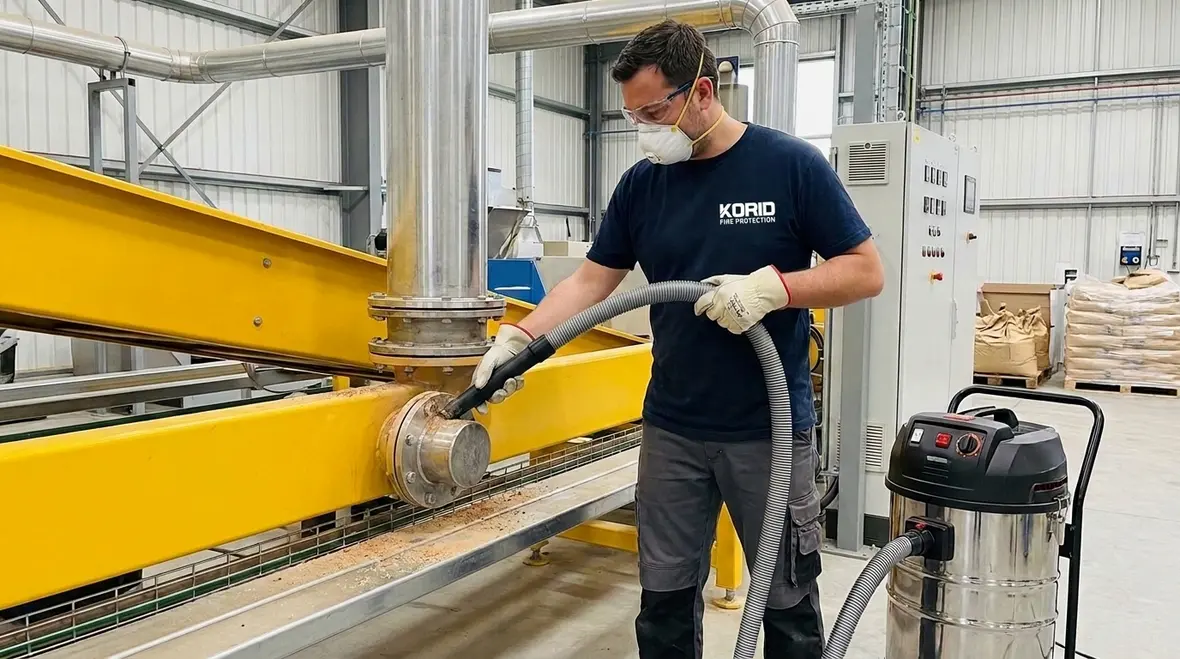
- Industrial dust collection and vacuum systems: use appropriately rated equipment designed for combustible dust environments. Verify suction performance, hose integrity, and filter status.
- Automated or semi automated cleaning: use engineered systems where manual access is difficult or where dust generation is continuous.
- Wet cleaning when compatible: only when dust properties and process requirements allow it. Verify that wet methods do not create corrosion, residue paste, or drying hazards.
- Careful manual cleaning protocols: if manual methods are necessary, use procedures that prevent dust dispersion and ensure proper waste disposal.
Inspection and verification points
Cleaning compliance should be verified through structured inspections. A defensible program includes:
- Dust accumulation checks: routine visual inspections supported by agreed acceptance criteria.
- Vacuum system checks: confirm filter condition, seals, downtime logs, and proper maintenance intervals.
- Waste handling review: confirm containers, closure methods, and removal schedules prevent re accumulation.
- Post maintenance verification: require documentation that cleaning occurred after repairs and that no dust residue remains in disturbed locations.
Common failure points
- Vacuum filters bypassing: damaged seals or saturated filters allow dust to escape.
- Blocked duct runs: buildup in ducts reduces extraction performance and increases leakage.
- Improper cleaning schedules: cleaning deferred due to production pressure, resulting in hazardous layers.
- Redistribution from compressed air: air jets can move dust into hard to reach areas and increase risk.
Process Controls, Engineering Controls, and Equipment Uptime
Housekeeping alone rarely solves the hazard. NFPA 34 Section 10.6 expects that combustible dusts and residues remain controlled by limiting releases and maintaining equipment that contains dust.
Engineering controls that support compliance
- Enclosed conveying and transfer systems: minimizes fugitive emissions at transfer points.
- Local exhaust ventilation: captures dust at the source and reduces residue formation.
- Dust collection system integrity: ensures filters, ducting, and hoppers function as designed.
- Seals, gaskets, and liners: prevent leakage from bearings housings, flanged connections, and chutes.
- Access control and operational practices: prevents unnecessary opening of housings during operation when dust is likely to escape.
Maintenance and change management
Commercial facilities, industrial manufacturers, and retail operations often experience compliance drift due to maintenance practices that change without notifying safety stakeholders. A control program must include:
- Scheduled preventative maintenance: filter change intervals, duct inspection, and seal replacement criteria.
- Functional testing after repairs: verify suction, airflow, and capture effectiveness after any service.
- Procedure updates: revise cleaning and inspection steps whenever equipment is modified.
- Training for contractors: ensure outside crews follow dust control and cleaning requirements during service work.
To strengthen ongoing compliance, Kord Fire Protection supports facilities through inspection readiness, documentation support, and maintenance support for dust hazard controls. For additional context on broader fire protection integration, see Kord Fire Protection’s resources at Kord Fire Protection.
If you want related reading that stays in the same lane, Kord Fire Protection also covers dust fire hazards in Inland Empire industrial facilities, which pairs nicely with the operational control themes in Section 10.6.
Commercial Compliance Challenges: Retail, Warehousing, and Industrial Operations
Dust hazard control programs must match the facility type. The biggest differences typically involve access, production variability, and workforce turnover.
Retail and merchandising environments
Retail dust incidents often involve wood products, confection ingredients, cosmetic ingredients, or packaging and labeling dust. Controls must address frequent reconfiguration, backroom storage, and cleaning between operational cycles. Residues can accumulate behind display equipment and inside ceiling cavities where routine sweeping never reaches.
Warehousing and distribution
In warehouses, dust generation can come from rebagging, loading, unloading, bulk handling, and incidental processing. The program must cover loading docks, return air routes, and vehicle traffic areas where dust is disturbed by movement.
Industrial manufacturing and processing
Industrial facilities typically require stronger integration between dust collection systems and housekeeping routines. Layering can occur rapidly due to continuous generation. Failed filters, misaligned duct flanges, or bypassed collection points can multiply residue control problems within days.
Frequently Asked Questions
Conclusion and Call to Action
Controlling combustible dusts and residues under NFPA 34 Section 10.6 requires more than scheduled cleaning. It demands defined NFPA 34 combustible dust residue control process areas, validated cleaning methods, functioning dust collection systems, and disciplined inspections and maintenance. Kord Fire Protection helps commercial facilities strengthen compliance through practical support for readiness and ongoing upkeep. Contact Kord Fire Protection today to assess your dust residue control program and close the gaps before they become findings.

Join Our Newsletter!
Get the latest fire safety tips delivered straight to your inbox From our Newsletter.



