
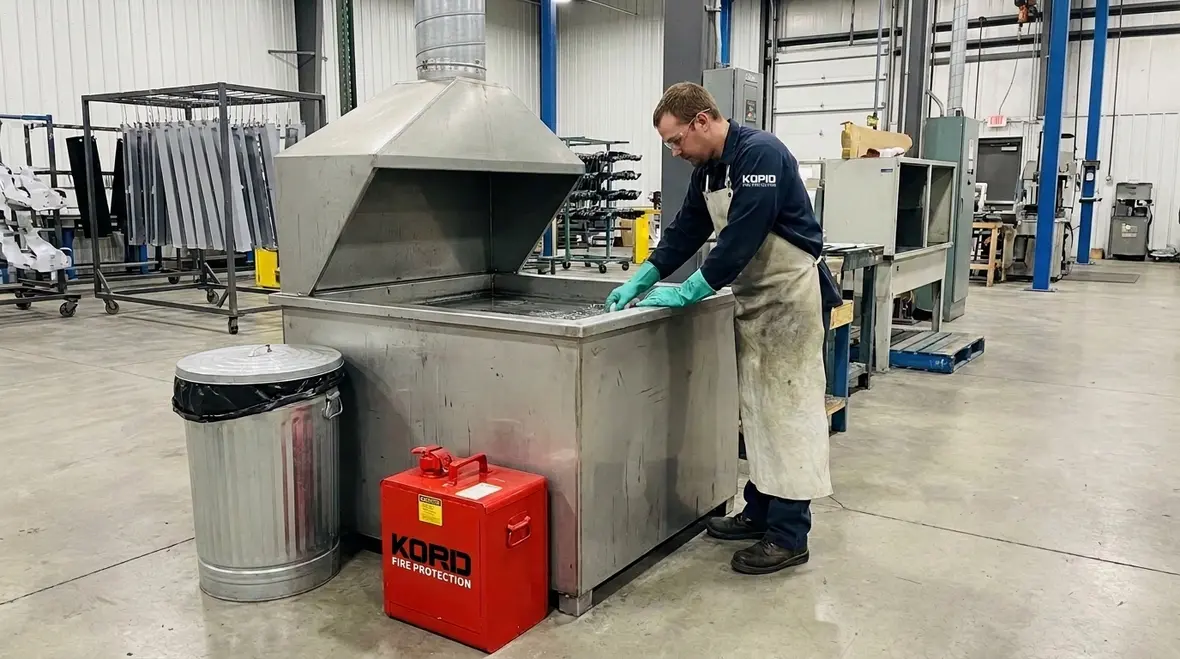
NFPA 34 Section 10.5: Cleaning Operations in Coating and Dipping Plants
Quick Answer
NFPA 34 Section 10.5 sets fire safety expectations for cleaning operations in coating and dipping plants, including how flammable and combustible liquids are handled, controlled, and maintained. Facilities must manage ignition sources, ventilation, waste handling, and equipment condition to reduce loss risk.
Facilities building out their broader compliance workflow can also review inspection, testing, and maintenance fire protection programs to support documentation, recurring checks, and corrective action planning.
What NFPA 34 Section 10.5 Requires for Cleaning Operations
Cleaning is a high risk activity in coating and dipping operations because residues, solvent vapors, and intermittent heat sources can accumulate where ignition protection and housekeeping may be hardest to maintain. For teams aligning operations with NFPA 34 cleaning operations coating plant requirements, Section 10.5 focuses on controlling conditions that enable fire spread during routine cleaning, equipment changeovers, and maintenance support activities.
In practice, compliance hinges on three operational themes: (1) controlling flammable liquid and residue management, (2) preventing ignition and limiting oxygen and vapor exposure, and (3) ensuring equipment and cleaning processes remain compatible with the plant hazard classification and the facility fire protection design.
Which Cleaning Activities Fall Under “Cleaning Operations” in Coating and Dipping
Cleaning operations in coating and dipping plants typically include tank and equipment cleaning, parts and rack cleaning, flushing and line clearing, filter or strainer cleaning, spray system purge procedures, and removal of coating and dragout residues. Even when cleaning appears procedural and brief, the fire safety controls must remain effective while vapors are present or when residue is disturbed.
Common compliance pressure points include:
- Intermittent cleaning during production when engineering controls may be temporarily reduced.
- Solvent selection and reuse when contaminated solvents increase vapor pressure or introduce reactive contaminants.
- Overlooked “small” cleaning tasks such as cleaning nozzles, hoses, or spill areas that generate localized vapor clouds.
- Inadequate waste segregation for wipes, sludge, spent filters, and residue contaminated with coating chemicals.
To keep cleaning operations aligned with NFPA 34 expectations, safety leadership should map each cleaning task to the controlling hazard and the site’s approved procedures, including permit requirements, supervision, and documentation.
How Facilities Control Flammable Vapors and Liquid Residues During Cleaning
Cleaning operations frequently involve flammable and combustible liquids used for degreasing, rinsing, flushing, and equipment recovery. The NFPA 34 approach prioritizes prevention by managing the fuel and vapor conditions that ignite easily in industrial environments.
1) Manage open handling and spill potential
Where cleaning requires open containers or transferring liquids, facilities should ensure:
- Containers remain closed when not in use, and transfer methods minimize splashing and misting.
- Spill response supplies and trained response actions are readily available and appropriate to the chemistry.
- Cleaning work uses approved receiving containers sized for worst case volume and expansion.
2) Control vapor exposure through ventilation and enclosure
Vapor accumulation becomes the primary threat when cleaning disturbs deposits or heats residues. Cleaning areas should maintain ventilation performance consistent with the facility design intent. Controls typically include local exhaust capture at points of solvent use, enclosure of tanks when practical, and procedures that prevent vapor release beyond the ventilation envelope.
3) Keep ignition sources controlled during residue removal
Cleaning can create ignition risk from friction, impact, hot surfaces, mechanical sparks, or electrical faults. Facilities should confirm that equipment used in cleaning is compatible with the classified environment, and that cleaning methods avoid introducing unintended ignition sources.
For commercial coating and dipping plants, this includes verifying that portable tools, heaters, extension cords, and battery charging activities follow the same ignition control standard used elsewhere in the facility.
Equipment, Waste, and Maintenance Standards That Commonly Fail in Audits
Section 10.5 compliance often breaks down when the plant focuses on production and underinvests in cleaning support systems and maintenance. NFPA 34 expectations require that cleaning operations remain safe because the hazards exist even when production equipment is not running.
Cleaning waste and residue handling
Used cleaning solutions, sludge, spent filters, and contaminated wipes can create sustained fuel sources. Facilities should:
- Use labeled, covered containers for waste collection and transport.
- Prevent mixing incompatible chemicals and avoid introducing oxidizers into fuel containing waste streams.
- Implement documented removal intervals, especially for high residue buildup periods.
Tank, drain, and piping condition
Deposits in drains, dead legs, and low points can re release vapors during cleaning. Maintenance should verify:
- Drain routing remains clear, sealed where required, and compatible with the chemical service.
- Flushing and purge lines do not leak or create unnoticed vapor release points.
- Valves and fittings maintain tightness during cleaning cycles.
Ventilation and control system performance
Ventilation that is not functioning as designed can undermine every other control. Auditors often find:
- Local exhaust capture that does not align with the current cleaning method or nozzle location.
- Fans or ductwork with damaged components that reduce airflow.
- Automatic damper logic or interlocks that are bypassed without a risk based justification.
Work practices and training gaps
Even with correct equipment, inadequate procedures and training create uncontrolled variability. Cleaning operations should include task specific instructions, documented competency, supervision expectations, and clear rules about stopping work when abnormal conditions occur, such as unexpected solvent odors, visible vapor plumes, or container overfilling.
How to Build Practical Compliance for Commercial Facilities
NFPA 34 cleaning operations coating plant requirements should integrate into daily operational controls, not remain isolated in a binder. Commercial facilities, including industrial parks and retail adjacent distribution sites with coating and dipping support activities, typically face rapid changeovers, contractor work, and shared utilities that require tight coordination.
Implement a cleaning operations compliance workflow
- Task review and hazard identification for each cleaning activity including solvent type, temperature conditions, and potential ignition sources.
- Procedure approval and revision control so production, maintenance, and contractors follow the current method.
- Ventilation and equipment verification prior to starting cleaning, including pre job checks and post work inspections for residue and leaks.
- Waste handling and staging discipline with documented container labeling, segregation, and removal schedules.
- Inspection and documentation that tracks the condition of cleaning related components and resolves issues before they recur.
For continuous improvement, Kord Fire Protection supports commercial facilities by aligning inspection, testing, maintenance, and documentation processes with life safety and fire protection expectations. This approach helps plants maintain readiness during cleaning schedules and reduces the chance that small deviations become major findings during audits or incident investigations.
To strengthen your facility program, consider reviewing related fire protection resources available through Kord Fire Protection and their guidance on fire and explosion prevention in coating and dipping operations to support ongoing compliance planning and service continuity.
Inspection and Verification: What to Check Before and After Cleaning
Fire safety during cleaning depends on verifying that controls remain effective. A focused inspection routine reduces the risk of hidden ignition sources and fuel accumulation.
Before cleaning begins
- Confirm ventilation is operating, ductwork is unobstructed, and exhaust capture aligns with the cleaning activity.
- Verify containers are compatible with the chemicals and kept closed when not in active use.
- Confirm ignition source control measures for hot work, portable power tools, and any electrical equipment brought into the area.
- Ensure emergency response items are available, accessible, and maintained.
During cleaning
- Monitor for abnormal vapor release, leaks, excessive residue disturbance, or container instability.
- Maintain spill control and keep waste staging away from ignition prone areas.
- Ensure workers follow the approved sequence and stop work when conditions deviate.
After cleaning completes
- Inspect for residue left in drains, low points, and on surfaces that can re vaporize during subsequent operations.
- Confirm waste is properly labeled, sealed, and removed on schedule.
- Verify equipment is returned to a safe state, including closing valves, securing access panels, and restoring ventilation interlocks where applicable.
Frequently Asked Questions
Call to Action
Review your current cleaning procedures against NFPA 34 cleaning operations coating plant requirements and verify ventilation, waste handling, and ignition source controls before the next cleaning cycle. If you want a defensible compliance posture, engage Kord Fire Protection to support inspection, testing, and maintenance documentation for your fire protection program. This reduces downtime risk and helps keep cleaning operations safe, repeatable, and audit ready.

Join Our Newsletter!
Get the latest fire safety tips delivered straight to your inbox From our Newsletter.



