
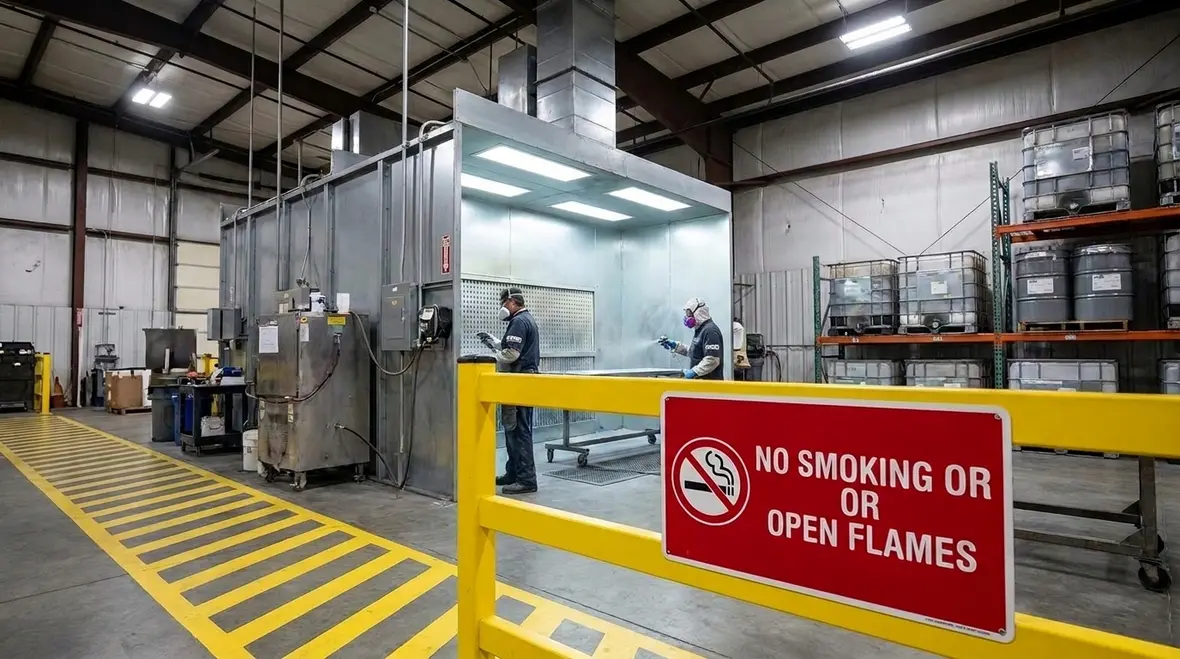
NFPA 34 Section 10.7 Smoking Restrictions in the Facility: Requirements, Compliance Steps, and Inspection Watchouts
Quick Answer: NFPA 34 Section 10.7 requires strict control of ignition sources inside coating and processing facilities. Smoking and open flame activities must be prohibited in hazardous areas and limited to designated, protected locations. Compliance depends on posted rules, supervised enforcement, and documented inspection readiness.
For a broader look at how coating and dipping operations approach fire and explosion prevention overall, see NFPA 34 Section 1.2 fire and explosion prevention in coating operations. If your team is tightening inspection readiness across the site, Kord Fire Protection also covers fire protection services and compliance support that fit naturally with smoking control enforcement.
What NFPA 34 Section 10.7 Requires and Why It Matters
NFPA 34 addresses fire prevention for facilities handling combustible residues and flammable vapors associated with coatings and surface preparation. Section 10.7 focuses on smoking restrictions because cigarettes, matches, and lighters can create ignition energy and also introduce secondary hazards like uncontrolled disposal and localized smoldering.
In practice, the NFPA 34 smoking restrictions coating plant expectation is not limited to a simple “no smoking” sign. Facilities must define where smoking is permitted, ensure hazardous zones are treated as non smoking, and prevent ignition sources from entering controlled operations.
For commercial, industrial, and retail coating environments, this section works in tandem with hot work controls, housekeeping procedures, and safe storage practices. A robust program reduces ignition risk during shifts when staffing levels, equipment status, and housekeeping conditions change.
Smoking Control Zones: How to Apply the Rule in Real Facilities
NFPA 34 Section 10.7 drives facilities toward zone based control. The facility should separate operations into areas with different risk profiles, then match smoking permissions to those risk levels.
Typical no smoking areas
- Any area where flammable vapors, combustible dust, or coating mist may be present during normal operations or foreseeable releases.
- Storage and handling rooms for flammable or combustible liquids, including drum storage zones and transfer areas.
- Spray application, drying, curing, and ventilation ducting zones, where vapor accumulation can occur even with ventilation running.
- Where combustible residues settle or where spills can create localized ignition sources.
Designated smoking areas (when allowed)
If the facility allows smoking in a controlled location, it should be a designated outdoor or otherwise protected area that minimizes the chance of introducing ignition into hazardous atmospheres. The intent is practical control: remove temptation from the shop floor and make the correct choice the easiest choice.
- Clearly marked boundary and signage visible from circulation routes.
- Physical separation so smoking materials cannot be carried into work zones.
- Waste disposal practices that prevent smoldering debris from entering normal trash streams.
Common failure point: A “designated area” that still sits too close to doors, ventilation intakes, loading bays, or vapor paths. Even minor wind effects and pressure changes can move vapors into the wrong place.
Posting, Enforcement, and Employee Behavior Controls
NFPA 34 smoking restrictions are only effective when enforcement mechanisms support them. Signage must be legible, consistent, and located where people make decisions, not only where they already know the answer.
Signage and communication that withstands inspection
- Post smoking restrictions at entrances to hazardous areas and near access points to coating operations.
- Include clear language and consistent iconography across the facility.
- Document staff orientation and refreshers, including contractors and visitors.
- Align smoking rules with the facility’s hot work and ignition source procedures.
Behavior and supervision controls
- Assign responsibility for monitoring compliance during high risk operations like spray shifts.
- Control access by issuing badges and restricting entry to non essential personnel.
- Provide designated break access routing so staff do not pass through hazardous zones while smoking.
Common failure point: Reliance on verbal reminders without audits. Inspectors often look for evidence that the restriction operates as a system, not as a one time policy.
How Smoking Restrictions Interact With Other Fire Prevention Requirements
Section 10.7 does not stand alone. A coating plant’s ignition risk is often driven by multiple interacting elements. A practical compliance strategy connects smoking restrictions to the rest of the fire protection program.
Ventilation, vapor control, and ignition sources
Even when ventilation operates correctly, transient vapor release events can occur. Smoking and matches become a direct ignition source during those events, turning a controllable upset into a fire scenario.
Housekeeping and combustible residue management
Coating residues and contaminated rags can smolder. Smoking materials can provide ignition energy or add hot debris that starts localized fires. A facility should align smoking controls with waste container placement, cleaning schedules, and spill response procedures.
Hot work controls and after hours risks
Hot work permits typically define additional ignition sources. Smoking restrictions must remain active during and after hot work, including during equipment downtime when supervisors may assume reduced risk.
Commercial readiness note: Retail and light industrial tenants often have higher visitor traffic and more contractor movement. That increases the need for consistent signage placement, visitor briefing, and controlled access routing.
Inspection Readiness: What Inspectors Look For and Where Facilities Lose Points
Fire officials and insurance partners typically evaluate whether smoking restrictions are implemented as part of a documented prevention program. They look for consistency between written policy, physical controls, and operational behavior.
Evidence and documentation to prepare
- Written facility policy that references applicable NFPA 34 provisions and defines smoking allowed and prohibited zones.
- Inspection and audit records showing signage checks and enforcement verification.
- Training logs for employees and contractor onboarding materials.
- Waste management procedures for smoking related disposal and general combustible waste.
Physical and operational checks that commonly fail
- Signs missing, faded, or placed only at one door rather than at all relevant access points.
- A smoking area with inadequate separation from loading, exhaust, or ventilation pathways.
- No clear routing instructions for personnel that need to take breaks away from hazardous operations.
- Disposal containers that do not prevent smoldering or that overflow during busy shifts.
Kord Fire Protection supports ongoing compliance by verifying that site controls align with operational risk, then maintaining the documentation and inspection program needed to support safe operations over time.
For related guidance on maintaining compliance and supporting documentation through ongoing service, see Kord Fire Protection’s resources at Kord Fire Protection.
Operational Best Practices for Coating Plants and Mixed Use Facilities
Facilities with multiple processes, mixed occupancies, and shifting production schedules need stronger operational routines. The smoking restriction program should be designed to work under real conditions.
Integrate smoking controls into daily operations
- Include smoking compliance checks in shift start and end routines.
- Confirm that ventilation status and monitoring practices remain consistent during high risk periods.
- Ensure spill response and cleaning procedures include ignition control messaging to prevent “temporary” workarounds.
Manage contractor and visitor access
- Provide visitor briefing that includes smoking rules before entry.
- Issue contractor routing instructions to avoid bypassing hazardous zones.
- Require contractors to follow the same break and disposal rules as employees.
Maintain consistency during turnarounds and downtime
During shutdown, stored materials and residues remain. The absence of visible active production can create complacency. Smoking restrictions must remain unchanged because vapor hazards and residue ignition risks can still exist.
Practical takeaway: Smoking restrictions work best when staff view them as part of the process workflow, not an extra rule that competes with production schedules.
Frequently Asked Questions
Conclusion and Call to Action
Smoking restrictions under NFPA 34 Section 10.7 succeed only when the facility controls ignition sources through zoning, signage, enforcement, and disposal practices. Review your smoking areas, access routes, and documentation today to ensure the program matches how your coating operations actually run. For an organized compliance check and ongoing maintenance support, contact Kord Fire Protection through https://kordfire.com/ to strengthen readiness before the next inspection.

Join Our Newsletter!
Get the latest fire safety tips delivered straight to your inbox From our Newsletter.



