
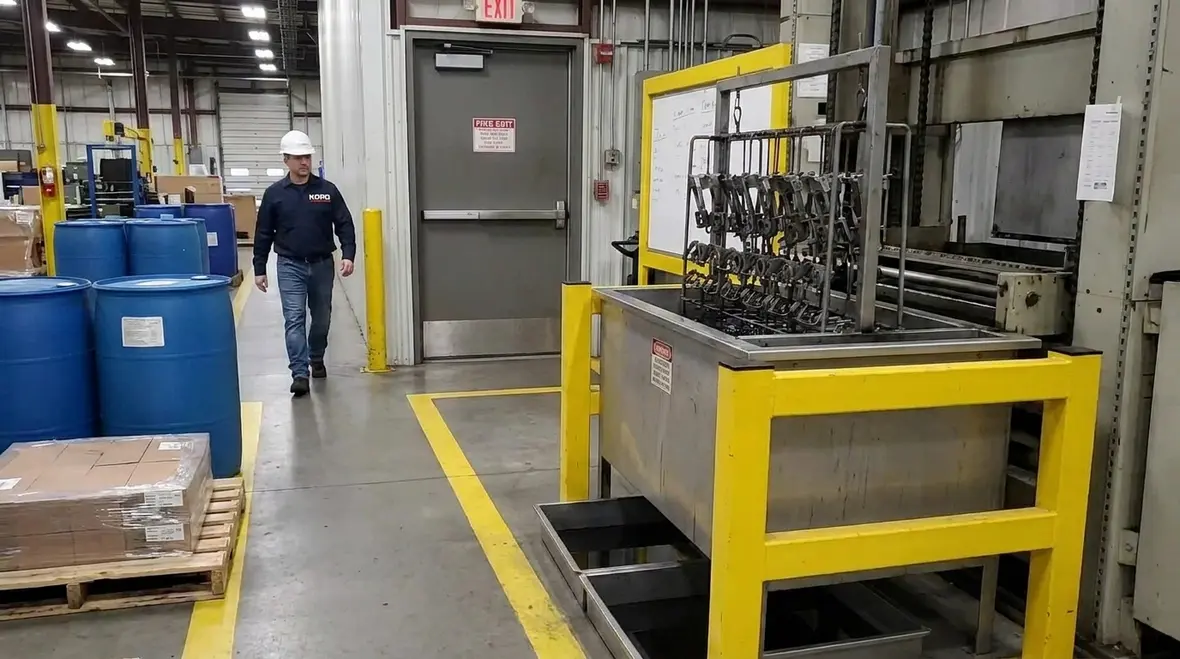
NFPA 34 Section 4.4: Keeping Egress Accessible Around Coating and Dipping Processes
Quick Answer
NFPA 34 Section 4.4 requires that exit routes remain usable despite coating and dipping operations. Facilities must control obstructions, manage dripping and overspray zones, and maintain clear travel paths during normal work and emergencies. Practical housekeeping, layout, and inspection routines sustain compliance.
For a broader compliance foundation before diving into egress details, start with NFPA 34 Section 1.3 application guidance for covered processes and installations, which helps clarify when dipping and coating equipment, ventilation, and related controls fall under the standard.
Why NFPA 34 treats egress like an active safety system during coating work
Coating and dipping operations create unique egress hazards: temporary shelving and racks, conveyors and carts, drippage on floors, ventilation ducting changes, and ongoing maintenance activities. NFPA 34 egress access dipping coating processes address these realities by requiring that the arrangement and day to day control of exits prevent blockage. Compliance requires more than “clear exits on paper.” It demands operational discipline and documented inspection.
For commercial facilities, the common failure is gradual obstruction. A route that starts compliant becomes noncompliant after production ramps, seasonal materials change, or contractors perform routine tasks near exits. A strong compliance program locks egress accessibility into the production process itself.
What “keeping egress accessible” means on the floor (not just on the drawing)
Section 4.4 focuses on maintaining usable means of egress around areas where coating and dipping occur. In practice, this includes ensuring that employees can reach an exit without encountering permanent or temporary obstructions, trip hazards, or conditions that make exit travel unsafe.
Operational control points that most often break compliance
- Material staging near doors and corridors: Coated parts, drums, filters, and pallets accumulate in travel paths during production surges.
- Hose and power cord placement: Flex lines, air hoses, and extension cords route through egress paths for rework, blasting, and temperature control.
- Drip and overspray residue build up: Floors become slippery or uneven, reducing safe egress effectiveness even when the route is “technically clear.”
- Maintenance work zones: Scaffolds, ladders, and temporary barriers remain in place longer than intended or overlap exit access routes.
- Conveyor loading and transfer equipment: Loading carts, conveyors, and transfer tables can encroach into corridors if layout controls are weak.
Common commercial inspection mismatch
Facilities often inspect egress on calm shifts, then experience blockage during peak scheduling. NFPA 34 compliance programs should include checks at start-up, during mid shift production, after changeovers, and during contractor work. The standard outcome is a maintained exit access route under real conditions.
Design and layout strategies that keep exits usable around dipping and coating stations
Mechanical systems and production equipment must coexist with egress. A practical layout strategy identifies egress access corridors as protected zones, then aligns equipment placement, flow of materials, and maintenance methods to preserve those zones.
Protective corridor planning
- Create fixed travel lanes: Paint or tape marking can help, but enforcement and maintenance matter. If marking fails under chemical exposure, replace it and verify reflectivity.
- Separate part movement from exit access: Use dedicated staging racks or tote lanes located outside the exit access route.
- Define “no temporary storage” rules: Post clear boundaries and incorporate them into SOPs for operators and supervisors.
- Use barriers designed for safe egress: Low-profile protective barriers can prevent cart encroachment while still allowing clear exit access.
Dripping control that supports egress safety
Dipping and coating processes can create persistent floor contamination. Use containment measures such as drip trays, routed catch systems, and properly configured floor drainage where appropriate. Pair this with routine cleaning that targets residue accumulation along corridors, door thresholds, and floor transitions.
How to manage “normal operations” and “emergency readiness” together
NFPA 34 egress requirements apply during routine conditions, not only during drills. The difference between a pass and a failure frequently comes from operational habits.
Standard operating procedures that work in production environments
- Staging limits tied to exit routes: SOPs should state maximum allowed distance from doors and corridors for pallets, drums, and containers.
- Drip and spill response tied to egress inspection: When cleaning occurs, include a targeted pass of doorways and travel lanes. Slips and residue are egress hazards.
- Contractor permit rules: Permit to work should include explicit egress route protection, barrier placement requirements, and timing controls for scaffolds and equipment.
- Changeover checklists: Each batch change can introduce temporary equipment and materials. Include an egress access checklist in the changeover routine.
Emergency conditions often reveal hidden vulnerabilities
In emergencies, visibility and mobility decrease. If overspray residue has reduced traction during normal operations, egress becomes less safe under stress. If egress is blocked by routine production staging, employees cannot compensate quickly. Therefore, operational controls around NFPA 34 egress access dipping coating processes should anticipate reduced lighting, increased smoke potential, and faster evacuation behavior.
Inspection, testing, and maintenance routines that prevent slow drift into noncompliance
A strong compliance program turns egress accessibility into a managed asset. The objective is to detect and correct obstructions early, before they become habitual.
Minimum inspection cadence for coating and dipping areas
- Daily walk-through: Supervisor or designated safety lead checks doors, corridor clearances, and floor conditions along exit access routes.
- Shift and changeover verification: Confirms that equipment repositioning, part staging, and housekeeping have not encroached on exit access.
- Weekly compliance sweep: Focuses on patterns such as recurring storage locations, cord and hose routing, and drip residue accumulation.
- Monthly management audit: Reviews trends, corrective actions, and training effectiveness.
Maintenance tasks that protect egress access
- Replace chemical resistant floor markings: Markings degrade in chemical environments and lose visibility.
- Inspect drip containment and drainage: Blocked catch systems increase floor contamination and slipping hazards.
- Maintain housekeeping equipment: Mops, spill kits, and proper cleaning tools must work reliably near exit access.
- Verify door operation and clearance: Ensure doors open fully and are not impeded by racks, signage, or residues.
For facilities that need consistent, documented support, Kord Fire Protection can assist with ongoing fire and life safety compliance services, including inspection support and maintenance coordination across industrial and commercial environments. If you want a structured approach to readiness, explore Kord Fire Protection’s Southern California fire protection services.
Failure points to watch during audits of dipping coating operations
Audits often find the same issues repeatedly. Identifying these in advance reduces correction costs and protects schedule continuity.
Top failure points in NFPA 34 egress access dipping coating processes
- Uncontrolled temporary storage: Pallets, totes, solvent containers, and filters stored too close to exit access routes.
- Improper placement of cords and hoses: Frequent repositioning without a controlled routing plan creates encroachment.
- Trip hazards from residue and uneven surfaces: Overspray residue can harden, creating uneven traction and buildup edges.
- Barriers left after work completion: Contractors maintain “protected” areas that accidentally block an exit access path.
- Inadequate supervision during peak production: The exit route becomes a storage zone when demand rises.
Each failure point connects to a control response: enforce storage boundaries, standardize hose routing, improve cleaning schedules, and require a closeout check after contractor work.
Frequently Asked Questions
Next step: build an enforceable egress plan for coating operations
Review your coating and dipping area for exit access obstructions during peak production, not just during quiet hours. Update SOPs for staging, hose and cord routing, and contractor work closeout, then implement a documented inspection cadence. If you want a practical compliance support partner, contact Kord Fire Protection to help maintain readiness through ongoing fire and life safety coordination, testing, and maintenance support.

Join Our Newsletter!
Get the latest fire safety tips delivered straight to your inbox From our Newsletter.



