
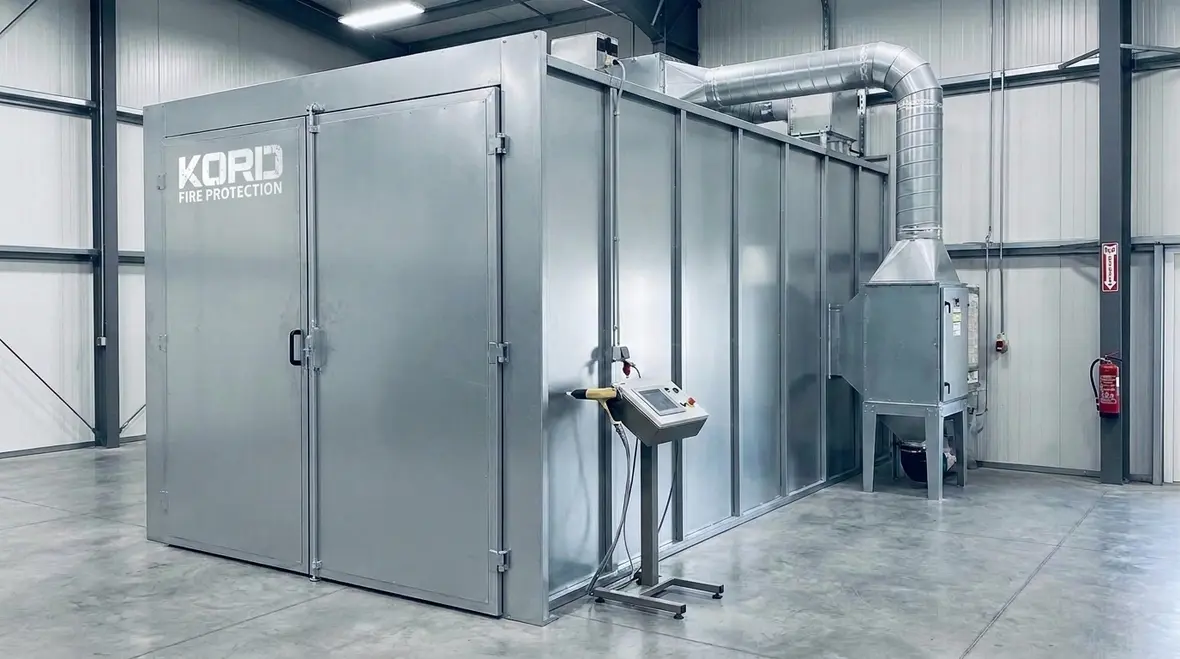
NFPA 33 Section 15.5: Powder Coating Booth and Room Construction
Quick Answer
NFPA 33 Section 15.5 sets construction and design expectations for powder coating booths and rooms, focusing on confinement of fugitive powder, controlled ventilation, ignition hazard reduction, and maintainable enclosure features. Proper booth and room construction supports compliant operations, inspection readiness, and long term safety.
What NFPA 33 Section 15.5 requires for powder coating booth room construction
NFPA 33 powder coating booth room construction addresses how facilities contain, ventilate, and manage combustible powder processing equipment so that ignition sources do not convert an upset condition into a fire or deflagration. In commercial environments, these provisions directly affect how booths connect to building structures, how walls and ceilings are finished, how ducting is supported, and how maintenance access is built into the design.
Because powder systems operate continuously and accumulate combustible dust over time, many compliance failures do not come from the original booth concept. They come from deterioration, improper repairs, unverified airflow changes, and enclosure alterations that undermine containment performance.
How booth and room construction controls ignition and powder migration
Section 15.5 construction requirements typically work together as a system. The enclosure limits the spread of powder and dust, the ventilation path maintains designed airflow, and the building interfaces do not introduce new hazards such as unsealed penetrations, incompatible wall finishes, or inaccessible collection points.
1) Enclosure integrity and powder confinement
Powder fugitive material migrates through gaps, cable penetrations, duct connections, imperfect door seals, and poorly executed retrofit work. NFPA 33 Section 15.5 style provisions focus on keeping the booth or room enclosure functional over time. For commercial facilities, that means:
- Sealing penetrations created for electrical, controls, and lighting so they do not become dust pathways.
- Maintaining door closures, self closing devices, and curtain systems where provided.
- Ensuring access panels can be opened for cleaning and inspection without compromising the enclosure upon reassembly.
2) Maintainable surfaces and finishes that support housekeeping
Construction choices affect cleaning performance. If surfaces trap powder or if finishing materials are incompatible with cleaning methods, dust accumulates where it should not. A compliant design still fails if maintenance cannot reliably restore surfaces after normal operating contamination.
Ventilation interfaces are part of construction, not an add on
In powder coating, ventilation is a primary hazard control. Even when the booth itself appears intact, construction details that connect the booth to ductwork and air handling systems determine whether fugitive powder remains confined and whether the collection system can capture suspended dust.
If your team is reviewing broader spray operation applicability at the same time, it is worth comparing these enclosure issues with NFPA 33 spray operations covered and excluded so the construction scope matches the actual hazard profile.
Common construction and retrofitting failure points
- Modified duct runs or elbows without a revised engineering check, leading to changed airflow patterns and incomplete capture.
- Unsupported or sagging duct sections that create leaks at joints.
- Damaged flange gaskets or improvised sealants that degrade under airflow, heat, or cleaning chemicals.
- Room pressure changes caused by supply and exhaust imbalances, allowing powder to migrate into adjacent areas.
Commercial owners often treat ventilation verification as a periodic commissioning task. NFPA 33 alignment expects ongoing operational control through testing, inspection, and maintenance. Kord Fire Protection commonly supports facilities by integrating construction realities with inspection planning, documenting findings, and helping teams maintain the ventilation and housekeeping controls expected under the standard.
Construction must work with ignition control and protection systems
Powder coating environments rely on more than airflow. The room or booth construction must not defeat ignition control measures. Electrical equipment, grounding practices, heating sources, lighting fixtures, and electrostatic components all create ignition management considerations. Construction that introduces friction sources, impact hazards, or damaged surfaces can degrade the overall risk control strategy.
Where construction intersects ignition hazards
- Penetrations and junction boxes that are not sealed, permitting dust accumulation near ignition capable equipment.
- Lighting fixtures or other overhead devices that do not maintain designed cover integrity, collecting powder on top surfaces.
- Door and wall interfaces that leave hidden voids where powder can accumulate and later become suspended.
Facilities typically discover these gaps during maintenance cleanouts or upon pre operational checks. A documented inspection approach reduces the likelihood that small construction defects become chronic ignition exposure points.
What inspectors look for during booth and room construction reviews
Even when a facility installed the system correctly, NFPA 33 compliance is operational. Inspectors evaluate whether the enclosure and connected systems still meet the intent of powder confinement, ignition control, and controllable housekeeping. Construction details often trigger noncompliance citations because they are observable and repeatable.
Inspection readiness checklist
- Enclosure condition: walls, ceilings, floor-to-wall transitions, and overhead devices maintained and free of hazardous accumulation.
- Seals and penetrations: verified around conduits, cables, and utility connections after any change in scope.
- Duct joints and supports: checked for leaks, misalignment, and deterioration that can release powder.
- Access and cleaning: ability to clean buildup locations without bypassing enclosure integrity.
- Operational verification: ventilation performance and airflow behavior consistent with the design basis.
To support this level of diligence, many commercial operators partner with Kord Fire Protection’s NFPA code compliance services for ongoing compliance support, field verification, and maintenance coordination. This helps facilities close gaps before they become audit findings.
How to keep NFPA 33 powder coating booth room construction compliant over time
Powder coating areas are change prone. New production lines, equipment relocations, lighting upgrades, and electrical modifications often occur with short downtime windows. The risk is that construction features supporting powder confinement do not receive equivalent attention during alterations.
Change control that protects the enclosure
- Require enclosure and duct joint inspection after any penetration, cable pull, or panel rework.
- Document modifications to ventilation components so that airflow verification can be performed after scope completion.
- Update housekeeping plans to reflect actual buildup patterns observed after maintenance changes.
- Train contractors on sealing, reassembly, and verification expectations to prevent recurring failures.
Maintenance procedures that address common failure modes
Dust accumulation is expected, but uncontrolled accumulation is not. Construction and maintenance should work together so that cleaning removes powder before it becomes suspended or ignitable. Attention should focus on concealed ledges, overhead components, and any location where the enclosure design traps powder.
Frequently Asked Questions
Next step: validate your powder coating room construction before an issue happens
NFPA 33 powder coating booth room construction is only as effective as its enclosure integrity, ventilation interfaces, and maintenance reality. Kord Fire Protection helps commercial facilities close common construction and change management gaps through practical compliance support, inspection readiness, and ongoing service coordination. Schedule a consultation to review your booth and room configuration, identify high risk failure points, and build a verification plan aligned with how your operation actually runs.

Join Our Newsletter!
Get the latest fire safety tips delivered straight to your inbox From our Newsletter.



