
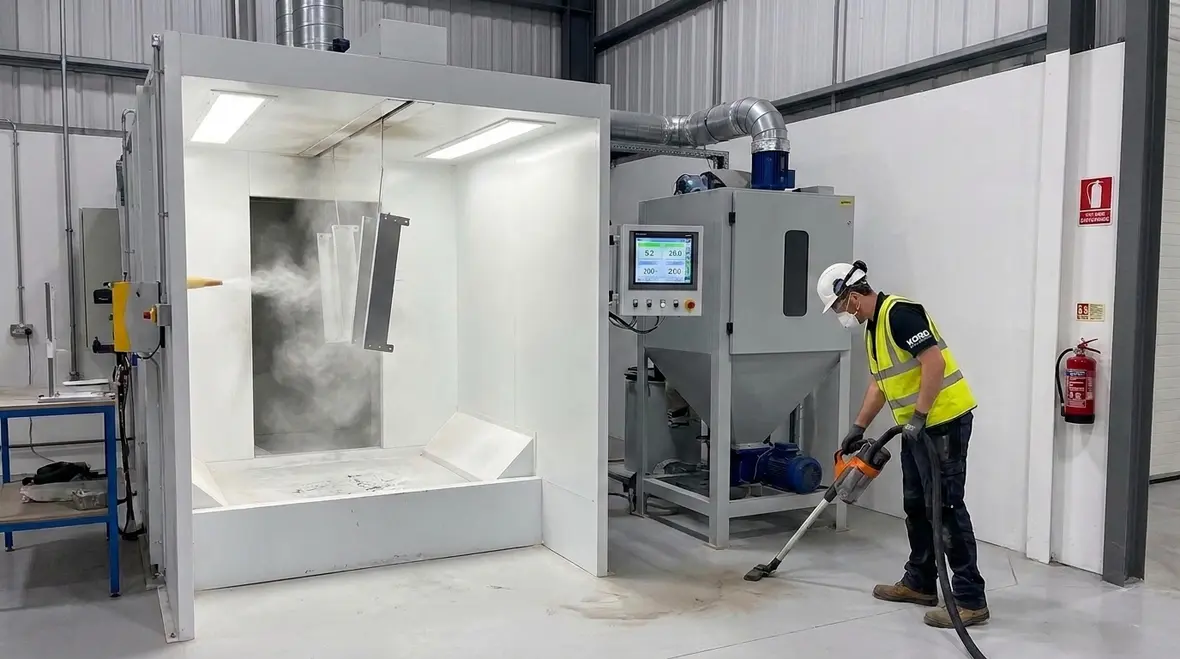
NFPA 33 Section 15.2: General Rules for Powder Coating
Quick Answer: NFPA 33 Section 15.2 sets the baseline operational and safety controls for powder coating areas, covering housekeeping, ventilation, ignition source control, and protection of electrical and mechanical systems. For facilities, compliance depends on consistent procedures, documented inspections, and maintenance that prevents dust buildup and ignition risk.
If your team is reviewing broader industrial protection planning, it is worth exploring industrial fire protection system design early in the process. It fits naturally with powder coating compliance because airflow, hazard zoning, ignition prevention, and maintenance discipline all behave like they are on the same coffee break until someone skips a check.
What Section 15.2 means for powder coating operations
NFPA 33 powder coating general requirements in Section 15.2 establish the recurring rules facilities must follow during day to day powder coating production, not only during installation and initial commissioning. In practice, Section 15.2 drives how a powder line is run, how accumulations are managed, how equipment is verified, and how ignition risks are prevented in both sprayed and unsprayed areas. This is where commercial, industrial, and retail operations typically see compliance gaps: operational drift, incomplete maintenance, and dust handling practices that change during shift schedules or during production surges.
Where NFPA 33 Section 15.2 applies and what it targets
Section 15.2 applies to the general operation of powder coating processes and the conditions that can create hazards. The intent is to control ignition sources and minimize the conditions that allow combustible powder dust to disperse and ignite. While other sections address specific equipment and systems, Section 15.2 focuses on the baseline rules that keep the entire booth, reclaim area, conveying routes, and storage regions operating safely.
For fire safety teams, the key interpretation move is this: if a facility changes how powder is handled, how cleaning occurs, or how ventilation is operated, Section 15.2 can become the compliance hinge. The “general rules” do not forgive inconsistent practices simply because the production line still runs.
Which general rules usually become inspection findings
1) Housekeeping and control of combustible dust accumulations
Powder coating environments commonly accumulate fine particulate on ledges, light fixtures, ductwork components, rafters, and inside electrical enclosures. Section 15.2 expectations align with the broader premise that combustible dust must be kept under control to limit ignition and fire growth. Facilities typically fail inspections when dust cleaning becomes optional, when cleaning methods are inconsistent, or when compressed air is used in ways that re suspend powder into the air.
Operational best practice: implement a defined cleaning frequency based on production hours, powder usage, and observed residue patterns. Ensure cleaning procedures specify approved methods for powder dust removal and include verification steps, not just “cleaned once.”
Common failure points:
- Dust settling around booth skirts, edges of the spray zone, and under reclaim hoppers.
- Powder buildup behind access panels in reclaim and dust collector areas.
- Infrequent cleaning after product color changes that increase overspray.
2) Ventilation performance and airflow stability
Section 15.2 relies on the facility maintaining safe airflow conditions that prevent combustible dust from migrating to uncontrolled locations. When ventilation equipment underperforms, powder can accumulate, leak into adjacent spaces, or create pockets of dust. Commercial facilities with multiple shifts often see airflow drift because of filter loading, partially blocked ducts, or changes to damper positions without engineering review.
Operational best practice: keep ventilation systems within approved operational parameters and ensure maintenance schedules include filter inspections and performance verification. When production parameters change significantly, validate that airflow conditions remain within design intent.
Common failure points:
- Dust collector differential pressure not monitored or not acted on.
- Inadequate housekeeping around fan inlets and exhaust plenums.
- Blocked duct runs caused by loose powder residue or misrouted flexible connections.
3) Ignition source control in and around the coating area
NFPA 33 powder coating general requirements emphasize ignition source control through equipment selection, proper operation, and preventing conditions that can create sparks or hot surfaces. In the field, ignition sources emerge from both direct and indirect causes: electrical faults, static discharge, mechanical rubbing, overheated bearings, and poor grounding practices.
Operational best practice: treat ignition control as an ongoing program. Require routine checks for overheating indicators, abnormal noise, damaged wiring insulation, degraded grounding straps, and mechanical interference that can produce sparks.
Common failure points:
- Damaged electrical enclosures or unsecured covers that bypass designed protection.
- Static control measures not verified after equipment moves or line modifications.
- Fans and motors operating outside normal temperature thresholds due to blocked airflow.
4) Safe operating procedures during production changes
“General rules” become critical during start up, color changes, shutdown, and maintenance windows. Powder can accumulate during purges, manual clearing, and equipment transitions. Facilities often underestimate how quickly dust loads can change after changing powder type, increasing powder flow, or modifying reclaim handling practices.
Operational best practice: standardize startup and shutdown checklists that require verification of ventilation status, dust collector condition, and booth integrity before production resumes. Require a controlled approach to clearing stoppages so powder is not dispersed into uncontrolled air.
How commercial facilities can build a Section 15.2 compliant inspection rhythm
A practical compliance program translates Section 15.2 concepts into measurable activities. The most effective facilities use a layered inspection approach that includes daily operator checks, scheduled maintenance, and documented verification tied to risk.
Daily and shift level checks
- Confirm exhaust and booth ventilation are operating before spraying starts.
- Verify access panels and enclosures are secured and not visibly dust contaminated beyond acceptable limits.
- Check for abnormal odor, heat, smoke, unusual fan behavior, or signs of arcing.
Scheduled maintenance and documented verification
- Inspect dust collector components for buildup, damage, and filter loading trends.
- Verify that grounding and bonding connections remain intact after maintenance.
- Inspect mechanical wear points on fans, conveyance components, and moving assemblies.
Recordkeeping and audit readiness
NFPA compliance requires evidence. Facilities should maintain maintenance logs, cleaning records, and inspection findings with corrective actions. Kord Fire Protection supports documentation and ongoing service programs so commercial teams can reduce compliance downtime and prevent the cycle of “fix it after inspection.”
For related facility safety planning, consider reviewing additional industrial fire protection guidance through Kord Fire Protection to align testing and maintenance practices with day to day production realities.
What typically goes wrong in powder lines, and how to prevent it
Scenario 1: Dust cleanup methods create airborne dispersal
When crews use inappropriate tools, powder dust becomes airborne and can travel beyond the booth. Even when the booth looks clean, residue can remain in suspended form long enough to create ignition conditions. Prevention requires controlled cleaning methods and verification of residue removal in hard to reach areas.
Scenario 2: Filter loading and ventilation degradation
As filters load, airflow drops and powder escapes containment. A facility can pass visual checks while still operating at unsafe airflow. The fix is performance based maintenance tied to differential pressure trends and operational verification.
Scenario 3: Equipment modifications without hazard review
Facility teams sometimes change duct routing, replace parts, or adjust dampers during production without updating documentation. Those changes can reduce containment and alter airflow distribution. Prevention requires a controlled change management process and reassessment of safety critical conditions.
Scenario 4: Inadequate response to stoppages
Clearing jams or addressing coating interruptions can create powder spillage and rapid dust buildup if procedures are not standardized. Prevention requires defined stoppage response steps, controlled clearing tools, and confirmation of ventilation status before returning to spray.
Frequently Asked Questions
Take action now
Section 15.2 compliance depends on consistent execution, not one time fixes. Kord Fire Protection can help commercial powder coating facilities build and sustain an inspection and maintenance program that supports NFPA 33 powder coating general requirements, strengthens audit readiness, and reduces production disruption. Schedule an assessment to identify dust control and ignition risk weak points in your booth, reclaim, and ventilation systems.

Join Our Newsletter!
Get the latest fire safety tips delivered straight to your inbox From our Newsletter.



