NFPA 33 Section 15.5: Powder Coating Booth and Room Construction
Quick Answer: NFPA 33 Section 15.5 sets construction requirements for powder coating booths and the surrounding room to reduce ignition and fire spread. It focuses on enclosure integrity, ventilation pathways, electrical and mechanical hazards, and maintaining controls through inspection and ongoing maintenance.
NFPA 33 powder coating booth room construction becomes a compliance-critical topic when a commercial facility scales coating operations, changes layouts, or upgrades equipment. Section 15.5 ties booth performance to the built environment: how walls, floors, penetrations, and openings are configured so powder handling and ventilation do not create concealed ignition pathways or allow fire and heat to migrate.
If your broader fire protection strategy also needs inspection support and code-focused service, Kord Fire Protection’s full-service fire protection solutions can help connect booth-area compliance with the rest of your building systems.
What NFPA 33 Section 15.5 Covers for Booths and Rooms
Section 15.5 addresses how powder coating booths and the enclosing spaces are built and maintained so that ignition sources do not propagate into surrounding areas. In practical terms, the standard expects facilities to manage three problem areas that repeatedly show up during inspections and fire investigations:
- Uncontrolled leakage and airflow bypass: openings that allow powder laden air or hot gases to escape the intended booth airflows.
- Ignition propagation through penetrations: gaps around ductwork, electrical conduits, structural connections, and lighting or service panels.
- Concealed accumulation and hidden heat transfer: powder deposits on ledges, behind panels, above ceilings, or inside ventilation plenums that can support ignition under abnormal conditions.
For many commercial, industrial, and retail coating spaces, the compliance challenge is not the booth equipment alone. It is the facility interface: how the booth transitions into the room and how the room itself is controlled, sealed, and maintained.
How Booth Construction Protects Operations
NFPA 33 powder coating booth room construction relies on enclosure design to keep powder and air movement where the system expects it. Booth construction typically includes boundaries, service openings, and engineered interfaces that must remain intact over time.
Enclosure integrity and expected failure points
During routine maintenance and annual checks, the most common construction-related failures include:
- Damaged or misaligned booth curtains and panels: even small gaps can create recurring powder escape and airflow bypass.
- Backside and side panel openings left unsealed: penetrations created for added wiring or sensors that were never closed properly.
- Ceiling and roof penetrations for exhaust or make-up air: poor sealing materials or degraded fire stopping.
- Fastener loosening: vibration and maintenance access gradually loosen panels, changing airflow paths.
Interface with ventilation systems
Powder coating relies on controlled airflow to transport overspray to collectors and maintain the booth’s operating envelope. When booth construction does not match ventilation design, the facility can experience chronic overpressure or underpressure conditions. Either scenario can increase powder migration outside the intended enclosure and undermine fire control objectives tied to Section 15.5.
Room Construction Requirements: Containing Powder and Controlling Spread
The “room” surrounding a booth must function as part of the overall protection strategy. NFPA 33 expects the facility to treat the booth space as an engineered hazard area, not as a generic workshop.
Sealing, fire stopping, and penetration management
Construction around penetrations influences whether heat, smoke, and ignition risk migrate to adjacent spaces. Facilities typically need to document the following:
- Methods and materials used to seal duct penetrations and electrical conduit openings.
- Fire stopping inspection intervals, including any modifications after construction.
- Maintenance records showing that closures are returned to the designed condition after service work.
Openings and paths that defeat enclosure boundaries
Rooms often include doors, service panels, observation windows, and access hatches. Noncompliant or poorly maintained openings can create pathways for powder-laden air, hot gases, or ember-like material to reach adjacent areas. The most effective compliance programs treat these openings as controlled interfaces with scheduled checks.
Operational Controls: Keeping Construction in Compliance Day to Day
Even when the initial build meets NFPA 33 requirements, day to day operational practices can degrade the effectiveness of booth and room construction. Construction compliance becomes a management system.
Maintenance procedures that prevent concealed hazards
Commercial facilities should align cleaning and maintenance tasks with the booth enclosure and room boundaries. Key practices include:
- Scheduled powder removal: focus on ledges, behind panels, near cable trays, and any elevated areas where powder settles.
- Verification after work orders: every time contractors add or remove conduit, wire, piping, or duct sections, the original sealing and closures must be restored.
- Inspection of access panels: service access points need clear documentation of closure condition and gasket or sealing integrity.
Common construction-adjacent process failures
Inspection teams frequently uncover operational patterns that increase reliance on construction that is already compromised:
- Dust and powder housekeeping gaps leading to accumulation near ventilation components.
- Changes in exhaust or make-up air that shift pressure balance, increasing powder escape.
- Upgrades to lighting, heaters, or controls installed without verifying enclosure interface details.
Inspection and Documentation: What Compliance Looks Like in the Field
Facilities do not typically fail because they missed the construction plan once. They fail because they cannot prove ongoing condition. A strong inspection approach aligns construction checks with operational risk.
Inspection focus areas under Section 15.5 style expectations
On-site verification should include:
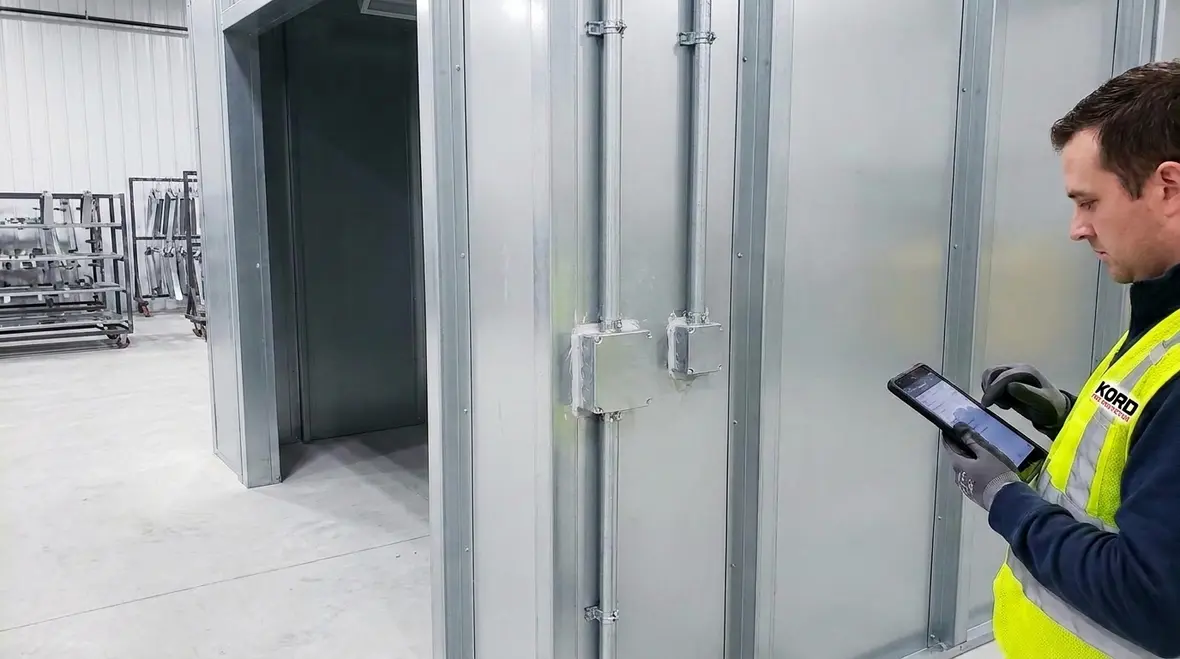
- Visual assessment of enclosure boundaries for gaps, damaged panels, and degraded seals.
- Verification that duct penetrations and electrical interfaces remain properly closed.
- Confirmation that access doors and service openings maintain designed closure and sealing.
- Review of maintenance activities that affect booth and room boundaries.
How Kord Fire Protection supports ongoing compliance
Kord Fire Protection helps commercial operators maintain the real-world performance of NFPA 33 powder coating booth room construction through inspection readiness, documentation support, and maintenance coordination. For more information on broader fire protection support for commercial and industrial environments, see industrial fire suppression solutions for real hazards.
For organizations that want a repeatable approach to inspections and corrective actions, Kord Fire Protection can assist with structured evaluations and practical closeout guidance that aligns with commercial facility maintenance realities.
Implementation Checklist: Practical Steps for Commercial Facilities
The following checklist supports field execution for NFPA 33 powder coating booth room construction compliance. It is written for facility managers, maintenance supervisors, and safety teams who must coordinate across engineering, operations, and contractors.
- Baseline the enclosure: capture drawings, as built conditions, and photos of booth and room interfaces for reference.
- Control penetrations: establish a permit or work order step that requires closure verification after any wiring or duct modifications.
- Schedule enclosure condition checks: include access doors, observation windows, panel latches, and sealing materials.
- Integrate housekeeping with construction risk: clean where powder can settle near boundaries, not only inside the booth visual zone.
- Audit pressure balance changes: confirm ventilation settings after filter changes or duct maintenance to avoid airflow bypass.
- Maintain records: keep inspection findings, corrective actions, and dates of closure verification for each interface.
Frequently Asked Questions
Call to Action
NFPA 33 powder coating booth room construction compliance succeeds when enclosure integrity, penetration sealing, and housekeeping stay aligned with the hazard profile over time. If your facility needs a practical inspection plan, documentation support, or maintenance coordination, contact Kord Fire Protection to strengthen ongoing compliance and reduce fire safety risk in commercial coating operations.

Join Our Newsletter!
Get the latest fire safety tips delivered straight to your inbox From our Newsletter.