
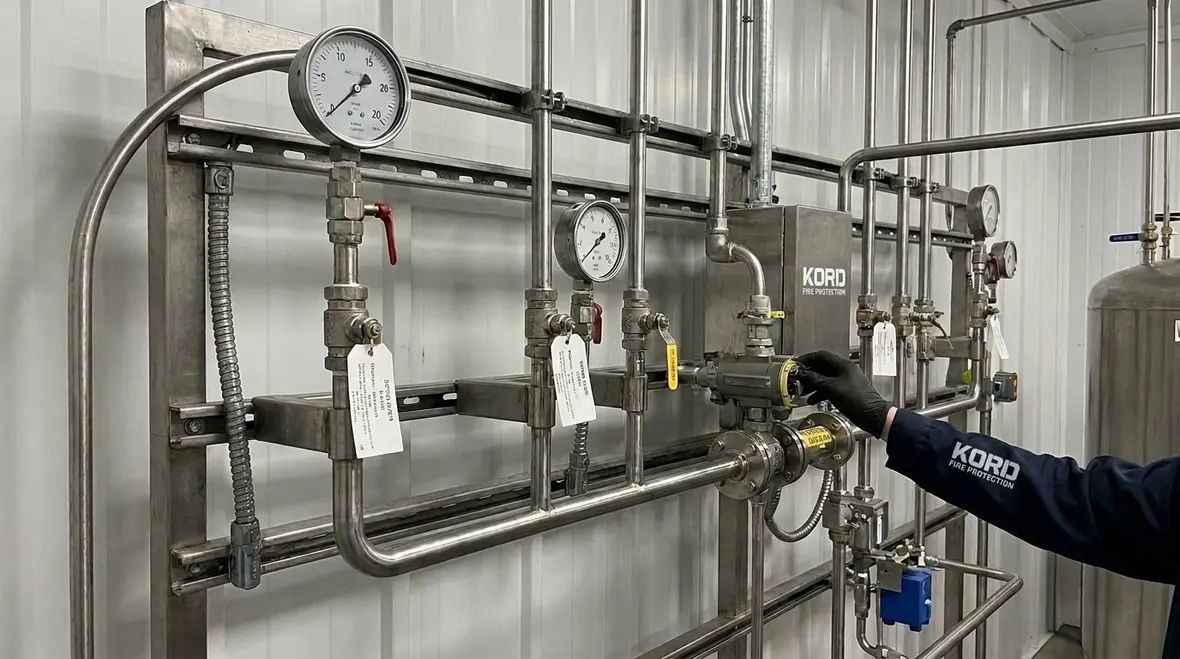
NFPA 32 Section 8.5 Process and Equipment Requirements for Type III Facilities
Quick Answer
NFPA 32 Section 8.5 sets the operational and mechanical expectations for process equipment in Type III facilities. These provisions focus on safe installation, protection of components, operational control, and maintenance practices that keep fire and explosion hazards under control.
What NFPA 32 Section 8.5 requires in Type III operations
NFPA 32 Type III process equipment requirements center on ensuring that process systems and their supporting equipment remain suitable for the hazards they handle. In practical terms, Section 8.5 addresses how equipment is installed, operated, monitored, and maintained so that abnormal conditions, deterioration, and failure modes do not create uncontrolled ignition sources or allow hazardous releases to escalate.
This is not a one time compliance exercise. Commercial facilities often operate continuously, change process loads, and perform maintenance that unintentionally alters system performance. Section 8.5 expectations therefore align closely with inspection readiness, documented maintenance, and component condition monitoring across the life of the equipment.
Scope and applicability: how “process equipment” shows up in real facilities
In Type III facilities, process equipment typically includes the vessels, piping, transfer components, pressure systems, vents, relief devices, appurtenances, electrical components integral to operation, and related controls that support handling of materials defined under the applicable NFPA 32 framework. Section 8.5 is designed around functional safety, not just hardware presence.
Common commercial and industrial compliance challenges include:
Mixed equipment generations: Older skid mounted systems and newer modifications that do not match the original design intent.
Improvised maintenance: Replacement parts that are not rated for the service, temperature, or corrosive environment.
Change management gaps: Process changes that alter vapor generation rates, system pressures, or ventilation performance.
Instrumentation drift: Sensors and interlocks that remain installed but no longer respond correctly.
Uncontrolled penetrations and fittings: Gaskets, flange connections, hoses, and threaded joints that leak and compromise ignition control.
For facilities operating in retail and light industrial settings, these issues often occur in spaces that were not originally built as dedicated hazard spaces but now host process operations and associated transfer activities.
Key NFPA 32 Type III process equipment requirements under Section 8.5
Section 8.5 requirements are best understood as a system approach. Equipment must be fit for purpose, protected against damage and improper operating states, and maintained so that hazard controls remain effective. The following categories reflect the operational themes inspectors commonly focus on during walkthroughs and record reviews.
1) Installation integrity and hazard segregation
Process equipment must be installed to prevent unsafe conditions caused by misalignment, unsupported loads, improper routing, inadequate clearances, or placement near ignition capable sources. Where separation is required, it must be maintained. Where equipment shares space with other functions, the facility should confirm that the process design intent still applies after tenant improvements or layout changes.
Failure points include loose anchoring, damaged pipe supports, corrosion under insulation, and missing or degraded protective shields around moving parts that can create ignition sources.
2) Control of pressure, venting, and release pathways
Section 8.5 expectations align with preventing hazardous releases and limiting escalation when abnormal conditions occur. That includes maintaining correct vent and relief arrangements and ensuring that discharge locations and pathways do not create new ignition risks. Relief devices, vents, and associated piping must remain unobstructed and serviceable.
In the field, common failure points include blocked vent outlets, cracked discharge piping, incorrect valve orientation after maintenance, and debris accumulation in vents due to nearby construction or stored materials.
3) Electrical and ignition source management tied to process operation
NFPA 32 Type III equipment requirements also connect equipment condition to ignition source control. Even when electrical classification is correct at installation, cable damage, improper seals, poor grounding, and failed fittings can defeat protection. Section 8.5 drives the need to keep these elements in working order through appropriate inspection intervals.
For example, damaged conduit seals or deteriorated seals in hazardous location boundaries can enable hazardous mixtures to reach ignition capable components.
4) Guarding, labeling, and operational readiness
Equipment must remain operationally safe. Section 8.5 supports operational readiness through requirements that help ensure systems cannot be easily placed into unsafe modes. That typically includes guarding of mechanical hazards, accurate labels, and maintaining interlocks and safety devices that prevent unsafe operation.
Commercial sites frequently lose labels during renovations and replace guards during short stop repairs without restoring them afterward. Inspectors treat these as risk-significant because they correlate to uncontrolled access and bypassing of intended safety features.
Inspection and maintenance: what “compliance ready” looks like
Section 8.5 performance depends heavily on maintenance quality. The most common compliance breakdown is not missing equipment, but missing proof that the equipment still performs as required. Effective programs pair physical inspection with recordkeeping and verification testing where applicable.
Facilities that want stronger inspection readiness and better documentation support can also benefit from fire suppression impairment owner guidance and readiness planning.
Maintenance practices that prevent common failure modes
Leak control and joint integrity: Inspect flanges, threaded joints, gaskets, and hose connections for seepage, degradation, and improper torque or alignment after service.
Condition of relief and vent components: Verify clear, unobstructed discharge paths and inspect for corrosion, damage, or misrouting.
Sensor and interlock verification: Confirm that devices respond within expected ranges and that alarm and shutdown logic cannot be defeated unintentionally.
Electrical component condition checks: Include inspections for seal integrity, cable jacket damage, and grounding continuity as part of scheduled maintenance.
Pre startup and post maintenance checks: Use checklists that align with the hazard control strategy, not just mechanical startup steps.
Recordkeeping that withstands scrutiny
To support audit readiness, facilities should maintain inspection and maintenance records that show:
What was inspected, tested, or replaced
When it occurred
Who performed the work
What was found, including corrective actions and follow-up verification
Kord Fire Protection supports commercial clients with program development, testing coordination, and ongoing documentation support so maintenance aligns with the intent behind NFPA 32 Type III process equipment requirements and the expectations of fire and safety reviewers.
Commercial compliance realities: tenant fit outs, retrofits, and change management
Many Type III facilities are not static. Equipment swaps occur during business hours, design modifications happen to accommodate new product lines, and piping routes get adjusted to suit layout changes. Section 8.5 emphasizes continued suitability, so compliance must track changes over time.
Common high risk scenarios
Retrofit after a leak incident: Repairs that restore function but leave degraded materials, altered supports, or misapplied fittings.
Temporary bypasses: Interlocks or control sequences disabled “for troubleshooting” and not reinstated correctly.
Construction debris in venting systems: Post renovation residue that blocks vent outlets.
Thermal and chemical aging: Gaskets and seals that degrade faster than expected due to updated process conditions.
To reduce risk, facilities typically need a formal change management workflow that includes hazard review, safety device verification, and documentation updates. For guidance on how this safety work fits into broader process hazard controls, explore related program support from Kord Fire Protection services in Southern California.
How Kord Fire Protection helps meet Section 8.5 expectations
NFPA 32 Type III process equipment requirements create a compliance burden that touches inspection scheduling, technical verification, and documentation quality. Kord Fire Protection functions as a commercial service partner that helps facilities maintain a defensible compliance posture through ongoing testing, maintenance support coordination, and program alignment.
Typical service value points include:
Inspection readiness support that focuses on high consequence equipment conditions.
Maintenance and testing coordination to reduce downtime while maintaining safety performance.
Documentation alignment so records reflect what the system needs to demonstrate under Section 8.5.
If a facility needs to confirm whether its current program aligns with NFPA 32 Type III process equipment requirements, Kord Fire Protection can help bridge the gap between code intent and day to day operational reality.
Frequently Asked Questions
Next step: build a defensible compliance program
To keep NFPA 32 Type III process equipment requirements aligned with real operations, confirm that your installation integrity, venting and relief readiness, ignition source controls, and maintenance documentation all reflect current equipment condition and process changes. Contact Kord Fire Protection to assess your Section 8.5 readiness and strengthen your inspection and maintenance program before issues become shutdown events or enforcement findings.

Join Our Newsletter!
Get the latest fire safety tips delivered straight to your inbox From our Newsletter.



