
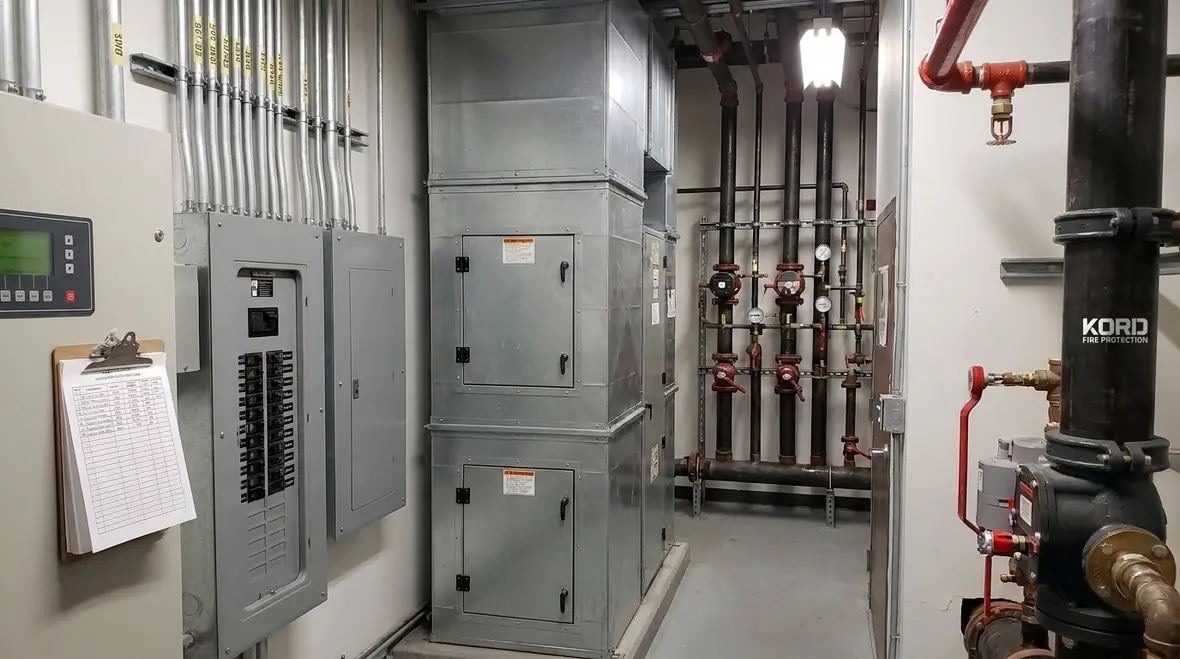
NFPA 32 Section 8.3: Building Services for Type III Facilities
Quick Answer
NFPA 32 Section 8.3 addresses how building services support safe operation in Type III facilities, focusing on reliable utilities, safe installation practices, and inspection readiness. It drives consistent compliance through documented procedures, defined maintenance intervals, and controls that reduce ignition and fire spread risks.
If your team is tightening records and proving ongoing readiness, fire safety system documentation for compliance is a smart related resource to review early, especially when building services, inspections, and corrective actions all need to tell the same story.
What NFPA 32 Section 8.3 Means for Type III Building Services
NFPA 32 Type III facility building services includes the infrastructure that enables facility operation, such as electrical systems, heating arrangements, ventilation support, piping interfaces, and service penetrations. In practical terms, Section 8.3 shapes how facilities design, install, test, and maintain these systems so they do not create ignition sources, undermine hazardous location controls, or interfere with fire protection performance.
For commercial, industrial, and retail operators, the compliance challenge is not only meeting initial installation requirements. Teams must also prove ongoing service integrity through inspections, testing, and documented maintenance. Changes in tenants, renovations, warehouse reconfigurations, and ongoing equipment turnover often degrade service safety over time unless a disciplined program exists.
How Building Services Become a Fire Risk in Type III Operations
In Type III facilities, building services can create risk through common failure points:
- Loss of continuity: Damaged grounding, poorly bonded raceways, or degraded surge protection can increase fault and ignition potential.
- Overheated components: Loose terminations, overloaded circuits, and missing inspections can elevate temperatures at electrical connections.
- Improper interfaces: Unapproved penetrations and unsealed service openings allow smoke, flame, and toxic products to migrate.
- Ventilation disruption: Inadequate airflow control can compromise containment strategies or concentrate flammable vapors in pockets.
- Uncontrolled ignition sources: Heating equipment placement, contact points, or malfunctioning controls can introduce ignition in sensitive areas.
- Maintenance gaps: Work orders completed without verifying service safety can create “silent” deviations from the approved condition.
Section 8.3 is intended to prevent these outcomes by requiring building services to remain suitable for hazardous operation conditions and by supporting verifiable, inspection-ready maintenance practices.
Electrical and Controls: The Operational Backbone Under Section 8.3
Electrical building services often define whether safe operation remains stable over time. For NFPA 32 Type III facility building services, compliance depends on correct installation practices and consistent verification that components remain in a safe operating condition.
What to verify during compliance-focused electrical service review
- Termination quality: Evidence of torque-controlled terminations, correct wire gauge, and damage-free conductors.
- Grounding and bonding: Continuous bonding paths for metallic enclosures and compliant bonding methods across systems.
- Overcurrent protection: Correct device ratings, no bypassing, and coordination checks where applicable.
- Clear labeling: Service labels and circuit directories that remain accurate after renovations.
- Control reliability: Interlocks and control logic that matches the safety strategy for the facility’s operational profile.
Common failure points commercial teams overlook
- Tenant build-outs: New equipment is added without confirming circuit capacity and service integrity.
- Temporary power usage: Construction extensions or ad hoc feeds persist longer than planned.
- Water ingress: Cable tray routing or conduit seals degrade, especially in loading dock environments.
- Smart control drift: Software updates or sensor replacement changes control behavior without documenting safety impacts.
A robust service plan should pair inspection records with operational checks. Kord Fire Protection supports commercial compliance needs by aligning documentation, testing readiness, and maintenance control processes with real-world facility operations, including frequent change management. For teams that need the electrical side of that equation to behave itself too, Kord Electric’s commercial electrical preventative maintenance checklist is a practical companion piece.
Mechanical, Ventilation, and Service Penetrations That Must Stay “Safe by Design”
Building services do not operate independently. Ventilation and mechanical support systems influence how hazardous conditions develop and how emergency response strategies perform. Section 8.3 expectations typically translate into ensuring building services do not undermine safe operation or compromise separation and containment measures.
Ventilation and air movement integrity
- Maintain intended airflow patterns so hazardous materials do not accumulate in uncontrolled zones.
- Verify control sequences during seasonal changes, equipment swaps, and filter replacements.
- Document maintenance for fans, dampers, actuators, and sensors to prevent unnoticed performance loss.
Service penetrations and penetrations through rated or controlled areas
Penetrations are a frequent compliance gap because they appear after installation and are often addressed during routine work orders. Even when the original design protected openings, later cabling runs or piping additions can breach the intended barrier system.
- Confirm that openings remain sealed using approved materials and methods.
- Validate firestopping condition during scheduled inspections, not only at initial construction.
- Ensure that modifications follow the facility’s approved construction and documentation process.
For operational teams managing mixed industrial and retail spaces, Kord Fire Protection can help maintain ongoing service integrity through systematic inspection support, maintenance coordination, and documentation standards that hold up under survey or authority having jurisdiction review. If you want a related read that reinforces the paper trail side of that work, fire protection compliance auditing fits naturally here.
Operational Inspection, Testing, and Maintenance: The Compliance Proof Section 8.3 Requires
Section 8.3 effectively turns building services into a maintainable safety system. The compliance standard is not only “installed correctly.” It is also “stays correct.” NFPA 32 Type III facility building services requires facilities to run an inspection and maintenance process that can prove safe condition over time.
Build an inspection program around service life and change triggers
- Scheduled intervals for mechanical and electrical service checks based on risk and manufacturer recommendations.
- Change triggers that require re-verification after equipment replacement, control modifications, or tenant improvements.
- Service documentation that connects the inspection scope to the installed safety intent.
What inspection documentation should include
- Date and scope of work performed
- Measured results where applicable
- Component identifiers and locations
- Deficiency descriptions and corrective action tracking
- Evidence of acceptance after repair or replacement
Commercial facilities that rely on inconsistent vendor handoffs often lose compliance continuity. Kord Fire Protection acts as a compliance-focused partner that helps maintain inspection readiness, supports coordinated testing, and strengthens the maintenance workflow so teams can demonstrate consistent control of building services.
Practical Compliance Challenges for Commercial, Industrial, and Retail Operators
NFPA 32 Type III facility building services often intersects with high-change environments. The following scenarios commonly drive risk and documentation breakdowns:
Multi-tenant buildings and frequent scope changes
New equipment changes circuit loading, adds penetrations, and alters ventilation behavior. Without a controlled process, building services drift from the originally approved condition.
Warehouse operations with heavy maintenance activity
Forklift impacts, cable tray damage, and ongoing cable rerouting create a steady stream of minor deviations that can accumulate into major safety gaps.
Retail and light industrial hybrids
Retail teams often manage maintenance informally while industrial operations require strict control. NFPA 32 compliance is sustained only when both sides follow the same documentation and maintenance standards.
To reduce operational friction, Kord Fire Protection can provide structured support so inspection outcomes translate into corrective actions that facility teams can execute quickly and safely.
Frequently Asked Questions
Call to Action: If your facility manages Type III operations and building services are in constant motion due to maintenance or tenant changes, schedule a compliance-focused service review with Kord Fire Protection. A structured inspection and maintenance alignment helps reduce risk, strengthen documentation, and support smoother authority having jurisdiction outcomes. Contact Kord Fire Protection today to build an inspection-ready program for NFPA 32 Type III facility building services.

Join Our Newsletter!
Get the latest fire safety tips delivered straight to your inbox From our Newsletter.



