
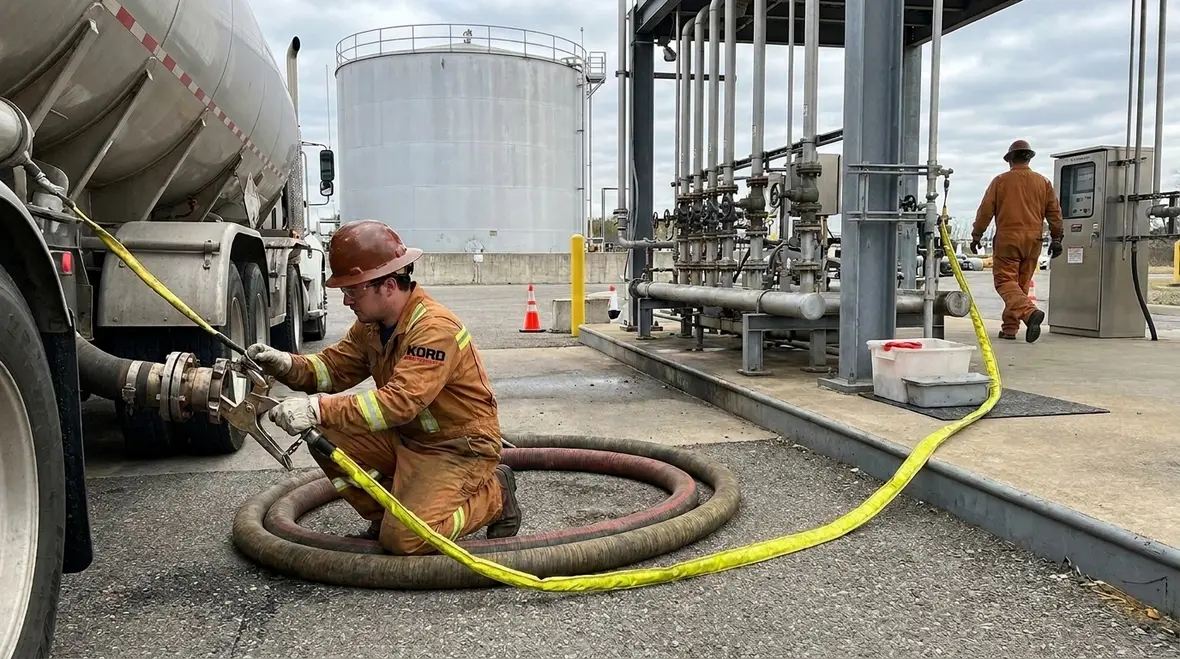
NFPA 30 Section 28.11: Operating Bulk Loading and Unloading Safely
Quick Answer: NFPA 30 Section 28.11 sets practical safety expectations for bulk loading and unloading operations. It focuses on controlling ignition sources, maintaining safe equipment condition, verifying transfer hose and connections, and managing static electricity and spill risk to protect personnel and facilities during flammable liquid transfers.
Why NFPA 30 Section 28.11 drives day to day transfer safety
Commercial flammable liquid operations succeed or fail at the transfer interface. Even when tank systems and storage comply, bulk loading and unloading create short duration, high exposure conditions: flexible hoses connect, pumps energize, valves cycle, and vehicles arrive and depart. The core intent behind NFPA 30 Section 28.11 bulk transfer operating requirements is to keep these high risk steps controlled, predictable, and repeatable across shifts and contractors.
Facilities commonly include retail fuel sites, industrial plants, warehouses with drum or tote pre staging, and specialty logistics yards. In all of these environments, the most frequent compliance problems come from operational drift: outdated procedures, poorly maintained hoses, missing bonding verification, and weak housekeeping around spill response and traffic control. For ongoing compliance support, see how NFPA 30 regulates flammable liquids. Near the same operational lane, Kord Fire Protection also supports buildings with inspection, testing, and maintenance planning across the full lifecycle of fire protection servicing, which fits naturally when transfer areas need better documentation and upkeep discipline.
Operating controls before transfer starts
NFPA 30 expectations do not begin at pump start. The inspection and setup phase protects against preventable ignition and release scenarios. Facilities should treat bulk transfer as a controlled work activity with clear preconditions.
1) Verify site readiness and traffic separation
Before any hose connection, operators should confirm the area is prepared for safe access and egress, including vehicle placement, pedestrian separation, and exclusion of unauthorized ignition sources. Practical challenges include customer foot traffic, fork truck movements nearby, and contractors using portable tools without permit controls.
- Confirm the unloading or loading position prevents vehicle movement while hoses are connected.
- Maintain clear walkways and stable footing to reduce trips during emergency shutdown.
- Control ignition sources around the work zone, including hot work and non rated electrical equipment.
2) Perform hose and connection checks as a documented step
Hoses and couplings get stressed by vibration, torsion, and vehicle positioning. Wear, abrasion, and damage can develop without visible catastrophic failure. Operators should use a standardized inspection checklist immediately prior to connection.
- Check hose integrity for cuts, blistering, cracking, and kinks that can restrict flow or create weak points.
- Verify correct hose length, rating, and compatibility with the transferred product.
- Inspect couplings, gaskets, clamps, and thread engagement for secure fit.
- Confirm valves and quick connect mechanisms operate smoothly and close fully.
Common failure points include hoses stored outdoors exposed to UV degradation, mismatched fittings from prior loads, and clamps that become loose after repeated re positioning. These issues frequently show up during internal audits but may not be captured if inspections happen informally.
Static electricity and bonding and grounding verification
Flammable liquids can generate static electricity during pumping and flow, especially during turbulent conditions and rapid filling. NFPA 30 Section 28.11 bulk transfer operating requirements emphasize managing static discharge risk as part of safe operation.
Bonding points must be verified, not assumed
Operators should verify bonding continuity between the transport vehicle, piping system, and receiving tank as applicable. A compliant process includes establishing proper connection before flow begins, and maintaining it through the transfer.
- Use designated bonding cables and clamp locations.
- Confirm the bonding pathway remains intact while hoses are repositioned.
- Ensure bonding does not conflict with required insulation distances or hose routing.
Control flow initiation to reduce turbulence
Best practice is to prevent conditions that intensify static generation. Operationally this means controlled startup, appropriate pump settings, and avoiding splashing at the receiving end. Many incidents occur when operators start flow quickly, fail to verify valve positions, or do not monitor for irregular discharge behavior.
- Confirm valve positions and discharge orientation before energizing pumps.
- Use controlled flow startup and avoid sudden valve manipulation.
- Monitor for abnormal bubbling, spurting, or excessive foam formation.
Safe transfer operations during bulk loading and unloading
Once flow begins, NFPA 30 expectations focus on maintaining safe operating conditions and responding quickly to abnormal situations. The operational goal is to keep the system within designed tolerances and prevent uncontrolled release.
Operational monitoring and “stop work” triggers
Facilities should define clear triggers for stopping the operation. Operators should have authority to stop without penalty when safety indicators change. Common triggers include hose leaks, abnormal pressure or flow indications, and damaged couplings or kinked hoses.
- Stop and secure flow upon detecting leaks, drips, or wetness at couplings.
- Stop if there is evidence of hose movement that compromises connection integrity.
- Stop if instrumentation indicates pressure outside expected limits.
Maintain separation and housekeeping to prevent escalation
Spills and residues can accumulate around connection points, sumps, and pump areas. Even small leaks increase ignition risk and can spread product into drains or low points. Housekeeping also supports emergency response by keeping spill control materials accessible.
- Keep spill response kits staged and unobstructed.
- Prevent product from reaching storm drains or unsuitable containment paths.
- Remove debris and wipe down connection areas during and after transfers as required by site procedure.
Shutdown, disconnection, and post transfer verification
Many compliance gaps occur at the end of the transfer. As flow stops, residual product remains in hoses and at connection interfaces. Proper shutdown and disconnection reduces spill exposure and lowers the chance of ignition from vapor release or drips.
Secure energy sources and manage residual liquids
- Stop pumps and close valves in the prescribed sequence.
- Manage residual flow in hoses to minimize dripping during disconnection.
- Confirm hoses drain or are handled per documented procedure.
Document the completion and inspect for damage or deterioration
After disconnection, operators should inspect the hose ends and coupling surfaces for damage and confirm no leaks occurred during the operation. The next shift depends on the same equipment condition standards, so post transfer documentation should be part of the work order closeout.
- Record any abnormal events, near misses, or equipment issues.
- Tag hoses that show damage or persistent leakage risk for removal from service.
- Confirm the vehicle and facility connections are returned to safe stowage positions.
How commercial facilities maintain compliance over time
NFPA 30 Section 28.11 bulk transfer operating requirements are not a one time checklist. Compliance depends on continual upkeep of the transfer system and the competency of the workforce. Commercial facilities also face pressure to keep operations running, which can reduce the time available for inspections and maintenance unless these activities are planned.
Common maintenance and compliance friction points
- Hose aging and storage practices: abrasion, UV exposure, and improper coiling lead to hidden deterioration.
- Connection hardware mismatch: substitutions or re use of couplings can compromise sealing and integrity.
- Bonding system degradation: corrosion and damaged clamp interfaces weaken continuity.
- Valve drift: valves and actuators may not close fully, increasing residual release risk.
Position Kord Fire Protection for inspection, testing, and upkeep
Kord Fire Protection supports commercial sites with practical fire and life safety compliance guidance aligned with NFPA 30 expectations for flammable liquids. In bulk transfer environments, routine inspection and maintenance planning helps eliminate recurring failure points in hoses, connectors, and ignition control interfaces. A reliable service partner also helps standardize documentation across multiple shifts and contractors, which directly supports operational consistency during loading and unloading. This kind of ongoing care lines up well with Kord’s broader fire suppression system inspection and maintenance support for commercial and industrial facilities.
If your organization needs a compliance pathway for bulk transfer operations, Kord Fire Protection can help you align field practice with the required operating controls and maintenance expectations.
Frequently Asked Questions
Conclusion and next step
Bulk transfer safety depends on disciplined setup, verified bonding, controlled startup and shutdown, and documented inspections before, during, and after every operation. Facilities that treat NFPA 30 Section 28.11 bulk transfer operating requirements as an ongoing maintenance and training program reduce leak and ignition exposure while improving audit readiness. Contact Kord Fire Protection to review your transfer procedures, assess common failure points, and set up an inspection and maintenance plan that supports reliable compliance across shifts and contractors.

Join Our Newsletter!
Get the latest fire safety tips delivered straight to your inbox From our Newsletter.



