
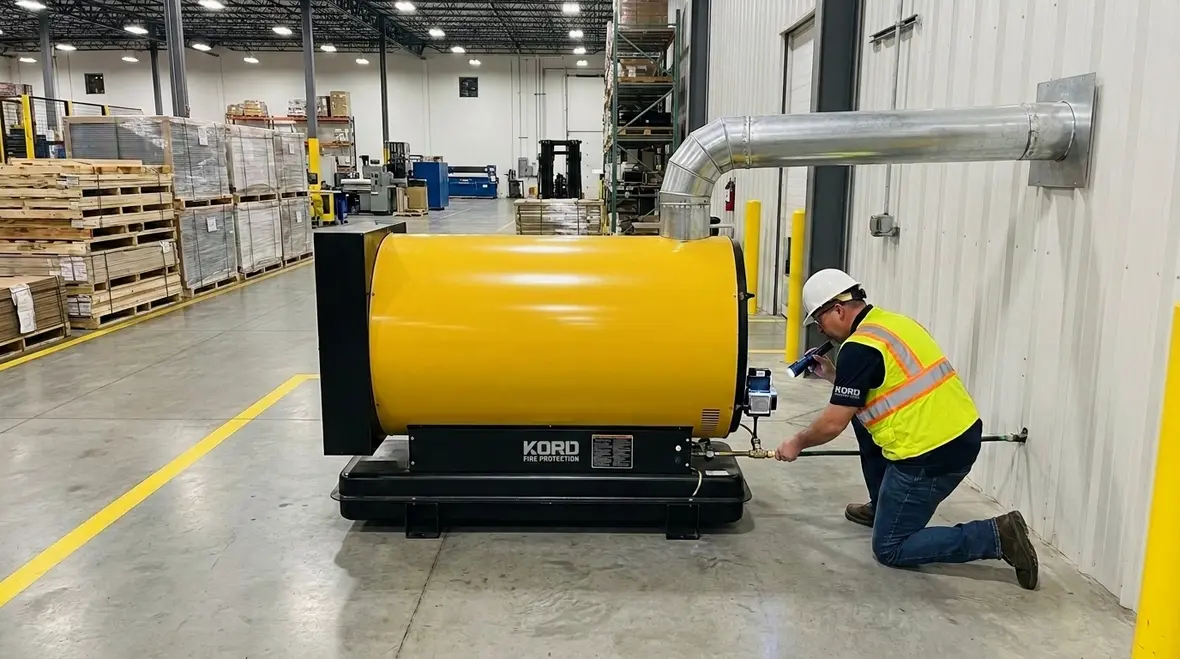
NFPA 31 Section 10.12: Miscellaneous Heaters and Salamander Installation Requirements
Quick Answer
NFPA 31 Section 10.12 governs how salamanders and similar miscellaneous heaters get installed for safe oil burner operation. The requirements focus on location, clearances, venting, combustion air, fuel piping, and inspection access. Correct installation prevents overheating, fire spread, and hazardous combustion conditions.
Commercial facilities frequently install salamanders for targeted space heating and process support, then underestimate how quickly noncompliant details can create heat, flame, and fuel hazards. This article explains the practical compliance issues and inspection expectations behind NFPA 31 air heater salamander installation requirements, so facility teams can plan, verify, and maintain systems with confidence.
If your team is reviewing broader inspection, repair, or installation priorities across the building, fire protection services in Southern California can help frame how heater-related compliance fits into a larger life safety plan.
What NFPA 31 Section 10.12 Covers in Plain Language
NFPA 31 Section 10.12 addresses miscellaneous heaters and salamanders used in connection with oil burning equipment. While salamanders often appear simple, they combine high heat output with open flame or intense radiant surfaces and require engineered safeguards. The code intent centers on controlling ignition sources, managing combustion air and products of combustion, and ensuring fuel systems remain leak resistant and serviceable.
In practice, inspectors evaluate whether the heater is installed as a complete system, not as a standalone appliance. That means they look at surrounding construction, ventilation pathways, clear access for servicing, and correct connection to fuel piping and controls. When owners treat the unit as a “temporary” solution, they commonly create permanent risk through improper placement, blocked venting, or neglected burner maintenance.
Where Salamanders Can Be Installed: Location, Clearances, and Heat Exposure
NFPA 31 air heater salamander installation requirements place heavy emphasis on safe installation location. A salamander’s radiant heat output can elevate wall and ceiling temperatures enough to char finishes, dry out combustible dust, or compromise concealed spaces. Compliance planning therefore starts with the installation environment and continues into construction details.
Common compliance challenges in commercial buildings
-
Insufficient clearance to combustibles: Units get placed close to stored materials, shelving, or ductwork that is vulnerable to heat buildup.
-
Improper protection of nearby surfaces: Heat resistant shields get installed inconsistently or not at all where required by the heater listing or the code expectations.
-
Vent termination conflicts: Vents discharge near openings, eaves, or airflow pathways that can reintroduce products of combustion into occupied areas.
-
Installation in high airflow zones: Supply and exhaust systems can change draft conditions, affecting combustion stability.
Facility teams should treat clearance and protection requirements as a design and documentation task, not a field convenience. Kord Fire Protection commonly supports commercial stakeholders by reviewing installation layouts, verifying clearances, and ensuring that firestopping and shielding details align with ongoing operational realities.
Venting and Combustion Air: Preventing Draft Problems and Incomplete Combustion
For any oil burning salamander configuration, venting and combustion air determine whether the burner produces stable, complete combustion or unsafe exhaust conditions. NFPA 31 air heater salamander installation requirements expect that the installation manages flue gas removal and provides adequate air for combustion, especially in commercial and industrial spaces with strong mechanical ventilation.
Operational failure points that lead to noncompliance
-
Incorrect vent routing or sizing: Long horizontal runs or wrong fittings can reduce draft and increase soot formation.
-
Blocked or restricted vent paths: Construction dust, condensate, or improper termination locations can restrict flow.
-
Negative pressure effects: Exhaust fans, make up air changes, or door traffic can pull air away from combustion zones, leading to backdrafting.
-
Inadequate combustion air openings: Tight buildings and upgraded HVAC systems may starve combustion unless openings are engineered and maintained.
When combustion conditions drift, the consequences escalate quickly. Carbon monoxide risk rises, soot deposits increase, and heat transfer becomes unpredictable. Kord Fire Protection typically supports compliance through commissioning style checks, maintenance scheduling, and evidence based inspections that connect installation details to operational performance.
Fuel Supply and Burner Interface: Leak Resistance, Controls, and Service Access
Salamanders depend on reliable oil fuel supply and properly functioning burner controls. NFPA 31 air heater salamander installation requirements therefore extend beyond the heater shell to the fuel piping, connection methods, and the ability to inspect and service components without improvisation.
What inspectors and technicians verify
-
Fuel piping arrangement: Proper routing and protection from mechanical damage and heat exposure.
-
Leak control and secure connections: Joints and fittings designed to minimize seepage and reduce odor or fire risk.
-
Shutoff and control behavior: Safety controls operate as intended and respond correctly to operating conditions.
-
Service access: Maintenance access is not blocked by ceilings, permanent duct housings, or storage arrangements.
A practical compliance strategy starts with documenting the “as installed” fuel and vent configuration, then aligning maintenance practices to that documentation. A common issue arises when facilities modify HVAC layouts, add partitions, or reroute ductwork without verifying that the salamander still meets the original installation intent.
For broader oil burning equipment installation context, Kord Fire Protection recommends using this practical guide as a reference: NFPA 31 oil burning equipment installation considerations.
Inspection, Testing, and Maintenance: How Compliance Stays Real Over Time
NFPA 31 compliance does not end at commissioning. Salamanders require ongoing attention because performance changes as burners collect soot, fuel quality varies, and ventilation conditions shift with daily operations. This matters especially in retail and industrial spaces where loading, cleaning, and tenant activity can impact vent and combustion air pathways.
Maintenance items that prevent common failure trends
-
Burner cleaning: Soot and scale reduce heat transfer efficiency and can worsen combustion.
-
Fuel system verification: Filters, lines, fittings, and control settings require routine inspection to avoid pressure and atomization issues.
-
Flue and vent condition checks: Inspect for blockage, corrosion, loose joints, and condensate related restrictions.
-
Combustion condition monitoring: Test results confirm stability and reduce the likelihood of incomplete combustion.
-
Clearance and housekeeping audits: Ensure stored materials do not drift into prohibited zones.
Commercial compliance teams often struggle with scheduling and evidence control. Kord Fire Protection supports facility managers by helping align service intervals, documenting corrective actions, and verifying that installed equipment remains consistent with NFPA 31 expectations between annual or periodic inspections.
How to Meet NFPA 31 Requirements Without Disrupting Operations
Facilities frequently need salamanders for seasonal use, temporary production demands, or supplemental heating during HVAC upgrades. The key is to manage risk during installation and afterward with controlled access, verified venting, and disciplined commissioning.
A practical compliance workflow
-
Confirm listing and intended application: Match the heater configuration to the installation environment and fuel type.
-
Verify clearances and shielding: Use measured distances and documented protection details before the unit becomes operational.
-
Validate venting and combustion air: Confirm draft and that termination locations prevent reentry into occupied areas.
-
Verify fuel connections and controls: Ensure leak resistance, correct shutoff behavior, and service access.
-
Commission and document: Record operating conditions and inspection results so future maintenance can verify continuity.
-
Maintain evidence and housekeeping: Set reminders for recurring checks and control storage drift around the unit.
When teams follow this approach, they reduce both inspection failures and the operational surprises that often follow “quick installs.” Kord Fire Protection can function as a compliance partner by coordinating the technical review, inspection support, and maintenance documentation required to keep systems safe and auditable.
Frequently Asked Questions
Conclusion and Call to Action
NFPA 31 Section 10.12 requires salamanders to be installed and maintained as engineered fire and combustion systems, not as simple space heaters. Facilities should verify clearances, combustion air, venting, fuel piping, and service access, then sustain compliance through evidence based inspections and burner maintenance. Kord Fire Protection can support your team with installation review, inspection readiness, and ongoing service documentation. Contact Kord Fire Protection today to assess current units and close compliance gaps before the next inspection cycle.

Join Our Newsletter!
Get the latest fire safety tips delivered straight to your inbox From our Newsletter.



