
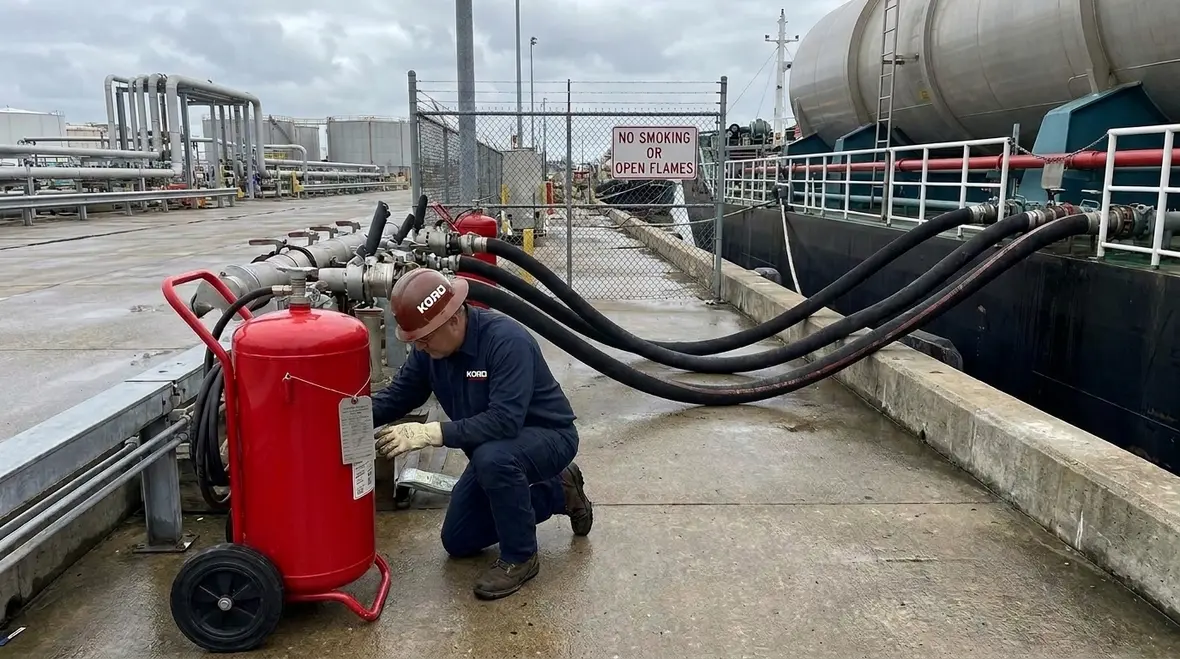
NFPA 30 Section 29.3: General Requirements for Wharf Operations
Quick Answer
NFPA 30 Section 29.3 sets the baseline fire safety expectations for wharf operations handling flammable and combustible liquids. It focuses on safe arrangement, controlled ignition sources, protection of transfer areas, and ongoing readiness through inspection, maintenance, and competent operational practices.
What does NFPA 30 Section 29.3 cover for wharf operations?
NFPA 30 Section 29.3 wharf general requirements establish the minimum operational and administrative controls that help prevent fire and explosion scenarios where tank vessels, transfer hoses, piping, and storage areas converge. For commercial ports, fuel services, and industrial marine terminals, these general requirements typically drive how facilities manage ignition control, equipment condition, operating procedures, and compliance documentation.
Unlike prescriptive design-only standards, this section emphasizes “daily reality” controls. That means facilities must not only install compliant equipment, but also ensure it is continuously serviceable, inspected on a defined cadence, and operated by personnel who understand ignition risk and release response. This is where audits often find gaps: equipment exists, but maintenance records, inspection tags, or operating procedures do not align with the actual workflow.
For an overview of how NFPA 30 regulates flammable liquids across operations, refer to how NFPA 30 regulates flammable liquids. That context helps wharf teams translate storage and transfer hazards into workable controls.
How the “general requirements” translate into day to day wharf controls
In practice, NFPA 30 Section 29.3 wharf general requirements typically influence the following operational pillars:
- Ignition source management: controlling hot work, engine exhaust, electrical switching practices, portable tools, and any activities that can produce sparks.
- Safe transfer area conditions: keeping transfer zones free of unnecessary combustibles and ensuring barriers, drainage, and access routes support incident response.
- Release prevention and containment awareness: ensuring hoses, couplings, valves, and connections are correctly secured and positioned to reduce hose whip, abrasion, and accidental pull out.
- Equipment readiness: verifying that firefighting and emergency control features are accessible, functional, and maintained.
- Competent operations: ensuring personnel understand procedures for start up, transfer, shutdown, and abnormal events.
Wharf operations involve moving assets frequently: visiting vessels, changing hose routings, shift turnover, and weather exposure. Compliance becomes easier when the facility converts requirements into operational checklists and repeatable inspection routines that match the way the wharf actually functions.
Facilities that need broader inspection and maintenance coordination can also benefit from a structured fire sprinkler system service program that supports inspection readiness and code-focused documentation across critical protection systems.
Operational ignition control: where inspections often fail
Fire prevention for wharves hinges on controlling ignition sources around flammable liquid transfer and storage interfaces. Compliance reviews frequently discover that ignition control exists in policy but fails in implementation. Common operational failure points include:
- Hot work coordination gaps: welding and cutting performed near transfer lines without verified gas free status, permits, fire watch, and documented authorization controls.
- Improvised extension cords and unapproved equipment: temporary power used for lighting or tools without evaluating suitability in hazardous environments.
- Static discharge risk: inadequate bonding and grounding practices during hose connection or during start up, especially after a change in equipment or transfer line configuration.
- Vehicle and equipment movement: forklifts, mobile plant, and maintenance vehicles operating without a verified exclusion strategy within transfer and vapor influencing areas.
To keep ignition control defensible, a wharf typically needs written work permits aligned with transfer schedules, clear boundaries for “no ignition” zones, and evidence that supervision verifies conditions before work begins. A competent fire safety partner helps by reviewing procedures against field conditions and ensuring findings are closed with corrective actions that can withstand audit scrutiny.
Transfer area protection and equipment readiness
The general requirements for wharves are only effective when the transfer area functions like a controlled zone. That means facilities must manage physical layout and the operational state of equipment, including:
- Hoses, couplings, and valves: correct connection methods, securement to prevent strain and leakage, and verified condition checks before and after each transfer.
- Signage and access control: limiting unnecessary entry into transfer areas while maintaining clear access for emergency response equipment.
- Spill and drainage management: ensuring drainage routes do not spread contamination into ignition sensitive areas and that collection practices are maintained.
- Emergency equipment availability: verifying that firefighting access routes remain unobstructed and that emergency controls are within operational reach.
One of the most common compliance problems is equipment deterioration that develops between audits. Marine environments accelerate corrosion, abrasion, and contamination buildup. Even if a device is originally installed to standard, its long term reliability depends on scheduled inspections, replacement triggers, and cleaning methods that do not degrade components.
Kord Fire Protection supports commercial and industrial facilities with coordinated fire protection service, inspections, installations, repairs, and ongoing maintenance programs. That partnership approach is especially valuable when wharf operations involve frequent vessel turnover, multiple transfer regimes, and tight shift schedules that make thorough checks easy to miss.
Maintenance, inspection, and documentation: making compliance repeatable
NFPA 30 Section 29.3 wharf general requirements drive a compliance standard that relies on measurable evidence: what was checked, when it was checked, what was found, and how issues were corrected. For wharves, the documentation challenge is significant because inspections span multiple systems and disciplines, including marine operations, mechanical maintenance, electrical services, and fire protection.
Facilities strengthen compliance by implementing a practical inspection system that addresses:
- Defined frequency: routine checks for hoses, fittings, bonding points, transfer line integrity, and emergency readiness.
- Competency verification: records that show personnel performing inspections and transfer operations can demonstrate correct understanding of ignition and release controls.
- Corrective action workflow: repair or replacement criteria that prevent “temporary fixes” from becoming permanent.
- Change management: updates to procedures and risk controls when hoses, equipment types, or operating schedules change.
For retail and commercial sites that support fueling or logistics on the perimeter of the wharf, documentation often fails at interfaces. For example, staff may be trained for general site safety but not for flammable liquid transfer boundaries. Kord Fire Protection helps align training support, inspection practices, and evidence packages so that operational teams can demonstrate control, not just claim it.
Planning for audits and incident readiness
Wharf audits and incident investigations tend to converge on a few themes: whether ignition sources were controlled, whether transfer equipment was properly managed, and whether emergency response capability was accessible and functional. The most audit ready sites treat NFPA 30 Section 29.3 wharf general requirements as a system, not a checklist.
Operationally, that means facilities should be able to answer, quickly and consistently:
- Who authorizes and verifies “no ignition” conditions during transfer and maintenance?
- What inspection records prove equipment integrity at the time of transfer?
- How does the facility control access to transfer zones during vessel docking and hose hook up?
- What are the immediate actions for suspected leaks, abnormal pressure, or spills?
- How does the facility ensure emergency equipment and routes remain unobstructed?
When these questions cannot be answered from current records, facilities usually respond with reactive updates after an audit, which increases operational disruption. A proactive compliance schedule reduces that risk and helps wharf teams maintain continuity across seasonal and operational peaks.
Frequently Asked Questions
Next step: get wharf compliance support that stands up to real audits
Wharf operations fail compliance when procedures do not match field realities. Kord Fire Protection can help you review transfer zone controls, align inspection and maintenance evidence, and strengthen operational readiness tied to NFPA 30. If you want a practical compliance pathway for NFPA 30 Section 29.3 wharf general requirements, contact Kord Fire Protection to discuss your site workflow, audit timeline, and corrective action priorities.

Join Our Newsletter!
Get the latest fire safety tips delivered straight to your inbox From our Newsletter.



