
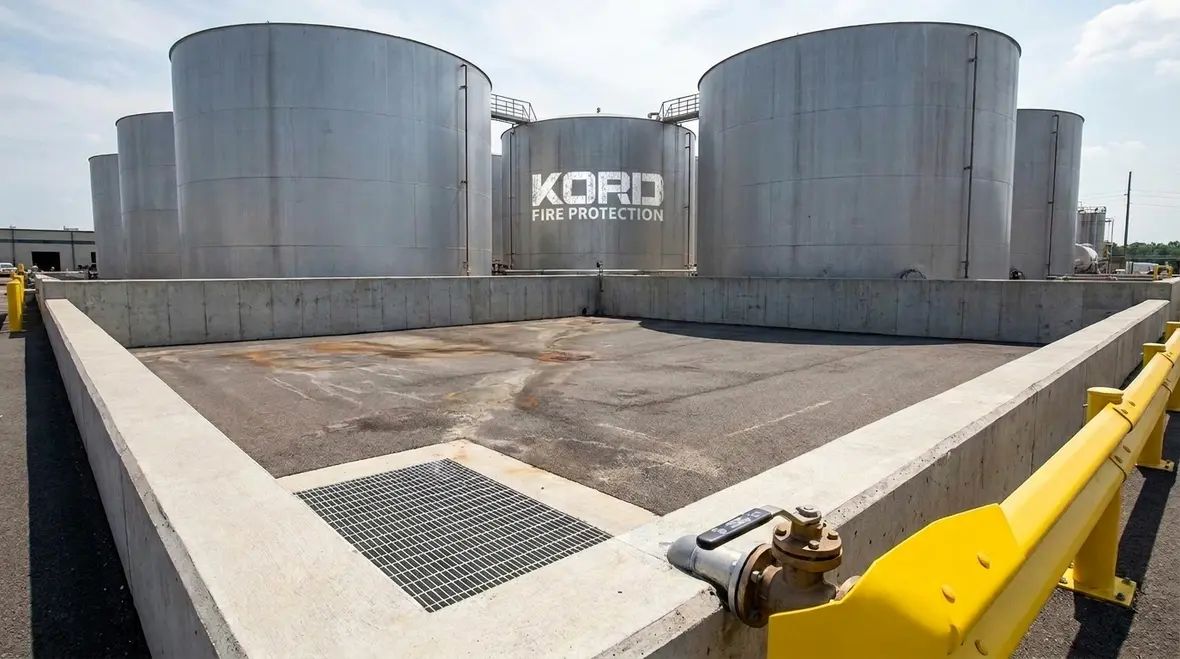
NFPA 30 Section 22.11: Containing Spills From Aboveground Tanks
Quick Answer: NFPA 30 Section 22.11 sets requirements for spill containment from aboveground tanks, including measures to control releases that originate from normal tank operations or credible scenarios. Effective compliance depends on correctly designed curbs, drainage control, detection, and routine inspection and maintenance of the entire containment system.
Why NFPA 30 Section 22.11 spill control aboveground tanks matters on commercial sites
NFPA 30 Section 22.11 spill control aboveground tanks focuses on preventing released flammable or combustible liquids from spreading offsite, into buildings, or toward ignition sources. In commercial, industrial, and retail facilities, the containment system is only as reliable as its installed details and ongoing upkeep. Common real world issues include blocked or misrouted drainage paths, damaged containment surfaces, compromised gaskets, and lack of functional testing for monitoring and isolation components.
Facilities that treat spill control as a “build and forget” project often discover deficiencies during insurance reviews, municipal inspections, or operational incidents. For a broader context on how the standard regulates flammable liquid handling and storage, see how NFPA 30 regulates flammable liquids. If you need coordinated inspection, testing, and maintenance support across related protection systems, Kord Fire also provides commercial fire suppression systems and services that fit naturally into broader compliance planning.
What Section 22.11 is trying to prevent
Section 22.11 addresses containment of spills that can occur from aboveground tanks, including releases from tank connections, fittings, pumps, overfills, leaks, and other credible events. The underlying risk control strategy is containment plus controlled drainage, so any spilled liquid remains within a defined area long enough to support safe response and recovery.
From a safety engineering standpoint, the containment boundary must manage these competing demands:
- Contain the liquid volume expected from the design scenario.
- Prevent migration to storm drains, floor drains, or subsurface pathways.
- Maintain integrity under fire exposure and normal operating conditions.
- Enable rapid detection, isolation, and cleanup without spreading contamination.
Commercial sites with shared utilities, complex pipe routing, and frequent contractor access commonly experience the highest nonconformity risk. A small change, such as repiping or adding a sump pump, can defeat the original containment intent if drainage control controls are not updated and verified.
How spill containment systems are built for aboveground tanks
NFPA 30 Section 22.11 typically expects containment solutions that keep releases confined and prevent escape. While tank layouts vary, most compliant designs include several coordinated elements.
1) Impervious dikes, curbs, and graded containment areas
Containment basins often use concrete, earthen dikes, or engineered curbs with impervious liners. The system must maintain structural integrity, continuity of the barrier, and resistance to the stored liquid. Operationally, the containment area also needs proper grading so spilled product flows toward a controlled collection point rather than spreading laterally.
Common failure points:
- Cracks, spalls, or patchwork failures that allow seepage.
- Vegetation or debris buildup that blocks designed flow paths.
- Damage from vehicle traffic, material handling, or snowplow operations.
- Liners or coatings that degrade due to chemical compatibility issues.
2) Drainage control devices that stop migration
Many facilities require controlled drainage or isolation to prevent rainwater from leaving the containment area unless it can be handled safely. Drainage control typically includes sumps, valves, automatic shutoffs, or sealed penetrations, depending on the system design. The key is that the spill control aboveground tanks approach remains effective even when the site receives stormwater or process washdown.
Common failure points:
- Valves left in the wrong position during routine operations.
- Isolation components that fail closed or fail to actuate on demand.
- Improper maintenance of seals, actuators, or electrical controls.
- Over time, documentation and as built drawings no longer match field conditions.
3) Collection points, sumps, and transfer pathways
Containment systems usually direct spilled liquid to a collection point for removal. That pathway must support safe transfer to approved storage or waste handling. If a facility uses pumps or vacuum equipment, the design must prevent overflow, backflow, or accidental discharge outside the containment boundary.
Operational watchouts:
- Pumps with suction hoses or hoses stored in ways that permit quick disconnection under stress.
- Inadequate spill response procedures for transfer equipment.
- Absence of secondary containment for transfer hoses and connection points.
4) Tank and connection leak paths
Containment success depends on identifying where releases originate. Spills from aboveground tanks frequently involve valve packing leaks, flanges, gaskets, sampling ports, and hose or quick connect interfaces. NFPA 30 spill control strategies often work best when the facility pairs containment construction with component quality and inspection discipline.
Typical weak links:
- Worn gaskets at flanged connections.
- Loose or improperly torqued bolting after maintenance.
- Hose reels and fittings that degrade and permit drips to escape the dike area.
Compliance is an ongoing program, not a one time installation
Facilities typically pass initial inspections but lose compliance through deterioration and operational drift. NFPA 30 Section 22.11 emphasizes the effectiveness of spill control aboveground tanks, which means the containment system must remain functional over time.
Inspection routines that support real compliance
Commercial operators should conduct structured inspections that cover physical integrity, drainage functionality, and documentation accuracy. Effective programs include:
- Visual checks of dikes, curbs, and containment surfaces for cracks, settlement, or chemical attack.
- Verification that no modifications or obstructions defeat the designed flow path.
- Inspection of valves and isolation devices associated with drainage control.
- Review of maintenance records for gaskets, fittings, and transfer equipment.
- Field confirmation that installed conditions match drawings and hazard plans.
Functional testing and operational readiness
For systems with isolation valves, sumps, or monitoring features, the site should include periodic functional testing. In practice, this means confirming that isolation mechanisms actuate correctly and that collected liquids can be removed without discharging beyond the containment area.
Testing often reveals hidden issues such as seized actuators, miswired controls, incorrect fail positions, or insufficient priming of pumps after seasonal shutdown. These are common reasons containment systems do not perform as expected during real incidents.
Maintenance practices that reduce recurrence
Maintenance should include chemical compatibility checks, seal replacement schedules, and protection of containment areas from repeated physical damage. A strong maintenance program also ensures that housekeeping supports containment performance.
Examples of maintenance controls that matter:
- Spill kit readiness positioned within safe access routes to the containment area.
- Routine cleaning that removes debris without altering drainage slope or plug devices.
- Controlled contractor work procedures during tie ins, valve swaps, and pipe rerouting.
- Post maintenance leak checks on tank appurtenances and flanges within the containment zone.
Kord Fire Protection supports facilities by coordinating code informed inspections, testing support, documentation, and maintenance planning so that containment systems remain credible under both day to day operations and emergency scenarios.
Where facilities typically fall short (and how to correct it)
Experience shows that most deficiencies connect to practical site realities: drainage interfaces, contractor changes, corrosion, and incomplete integration between containment and response procedures.
Challenge 1: Stormwater and washdown contradict containment intent
Rainfall and cleaning can move product beyond a dike if drainage valves remain mispositioned or if bypass pathways exist. Corrective action includes confirming valve logic, sealing penetrations, and verifying that stormwater handling aligns with the containment design intent.
Challenge 2: As built drift after modifications
Relocating pumps, rerouting hoses, installing new drains, or adding equipment pedestals can change how spills travel across the surface. Facilities should update drawings and conduct field verification after any scope change that touches grading, drains, or pipe connections.
Challenge 3: Containment surfaces degrade over time
Cracks, coatings failures, and joint deterioration reduce containment effectiveness. Repairs must be compatible with the stored liquid and must restore continuity of the barrier and designed slope.
Challenge 4: Connection leaks outpace containment capacity
Small, repeated leaks can accumulate and overflow the containment area. Corrective action includes improving leak detection, tightening maintenance intervals for seals and fittings, and ensuring response procedures include rapid isolation and cleanup.
Need a compliance approach that works across tanks, pipes, and operations?
NFPA 30 spill control aboveground tanks works best when containment design, operational controls, and inspection discipline function as one system. Many facilities struggle when documentation, hardware, and response processes drift out of alignment.
Kord Fire Protection helps commercial operators close those gaps by supporting ongoing inspections, testing readiness, and maintenance planning tied to real site conditions. This partnership reduces the risk of failed functional tests, repeat deficiencies, and gaps exposed during audits.
For additional compliance context on flammable liquid regulation and practical expectations, reference how NFPA 30 regulates flammable liquids.
Frequently Asked Questions
Next step: confirm your spill containment is inspection ready
If your facility stores flammable or combustible liquids in aboveground tanks, validate that containment boundaries, drainage control, and response pathways still perform as designed. Contact Kord Fire Protection to schedule a containment focused review, identify gaps, and build an inspection and maintenance plan that supports NFPA 30 expectations for spill control aboveground tanks. Act now to reduce audit findings and improve incident readiness.

Join Our Newsletter!
Get the latest fire safety tips delivered straight to your inbox From our Newsletter.



