
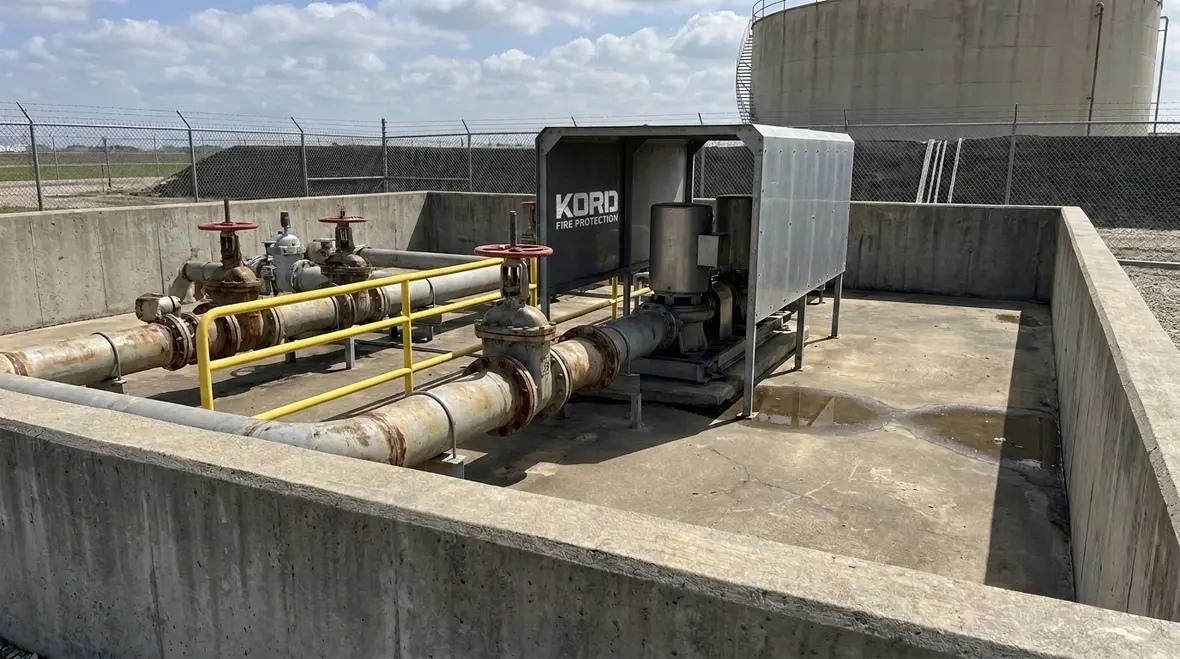
NFPA 30 Section 22.12: Equipment and Protection in Diked Areas
Quick Answer: NFPA 30 Section 22.12 sets practical requirements for how equipment and protective features must be arranged and maintained inside diked areas handling flammable liquids. It focuses on reducing ignition sources, protecting equipment from exposure, and maintaining operability and inspection readiness.
What NFPA 30 Section 22.12 actually requires for diked areas
Facilities that store or dispense flammable liquids inside containment or diked areas must ensure the equipment located in those areas does not compromise safety. The intent behind NFPA 30 Section 22.12 diked area equipment piping provisions is to prevent ignition, limit heat and impact hazards, and maintain reliable protection features throughout the life of the system, not just at installation.
Commercial, industrial, and retail operators typically encounter compliance risk when equipment changes over time. Piping routes get modified, temporary hoses get added, instrumentation gets relocated, and protective devices get deferred. NFPA 30 Section 22.12 addresses those gaps by tying safe operation to proper equipment placement, protection against damage, and a defensible inspection and maintenance program.
For facilities tightening their broader fire protection posture, Australia fire protection for compliance and readiness fits naturally alongside diked area inspection planning, especially where documentation, maintenance discipline, and audit readiness all need to stop acting like distant cousins. ([kordfire.com](https://kordfire.com/australia-fire-protection-for-compliance-and-readiness/?utm_source=openai))
Where the standard applies: common diked area scenarios
Section 22.12 applies to diked areas formed to prevent the spread of flammable liquid and to provide an additional safety barrier around storage and handling equipment. Typical scenarios include:
- Aboveground tank diked areas at bulk chemical storage, fuel or solvent storage, and industrial process sites
- Transfer and dispensing areas where piping passes through or terminates within containment boundaries
- Retail and commercial back of house storage zones where flammable liquids feed pumps, manifolds, or point of use systems
In practice, the highest risk is often not the tank itself but the supporting components. Piping, valves, pumps, hoses, fittings, strainers, electrical devices, and instrumentation can all become ignition sources or become inoperable due to heat exposure, mechanical impact, corrosion, or contamination.
Equipment protection and ignition control inside diked areas
NFPA 30 Section 22.12 centers on keeping equipment and protection features effective in the environment created by a diked release. This includes controlling how equipment is protected and how it is prevented from becoming a hazard during a spill scenario.
Key operational expectations
- Maintain safe separation and protection of ignition capable equipment: Electrical and mechanical components must not introduce credible ignition sources into conditions created by flammable vapors. This includes ensuring the equipment remains suitable for the environment and remains correctly rated and installed.
- Prevent damage that disables safety functions: Equipment must resist impact and exposure that could impair valves, isolation arrangements, or emergency response capabilities.
- Control exposure paths from a release: Routing and protection should reduce direct impingement onto equipment that could fail, leak, or generate heat.
Common failure points that trigger noncompliance during audits
- Piping sections installed without appropriate routing protection, allowing abrasion and corrosion that lead to leakage within the diked area
- Valves and fittings exposed to mechanical damage from vehicle movement, racks, or maintenance activity
- Non compliant temporary modifications such as bypass jumpers, ad hoc hose connections, or incomplete restoration after maintenance
- Instrumentation and electrical accessories that lose their safe condition due to damaged enclosures, missing seals, failed gaskets, or improper cable management
These issues often appear long after commissioning. A compliance program must therefore treat Section 22.12 as an ongoing performance requirement, not a one time installation checklist.
How diked area equipment piping is typically handled under Section 22.12
For many facilities, the most visible part of compliance is the piping that routes flammable liquid within or through diked areas. NFPA 30 requirements drive operators to treat piping as a system that must remain leak tight, protected, and capable of safe shutoff or continued safe operation.
Practical compliance controls for piping and routing
- Protection from mechanical damage: Piping should be shielded where forklifts, carts, or maintenance traffic can strike it. Where impact risk exists, physical barriers or protective guards usually provide a stronger defensible position than relying on distance alone.
- Corrosion and chemical compatibility management: Diked areas accumulate wet and contaminated conditions during spills and firefighting. Operators must confirm materials, coatings, supports, and fasteners remain compatible and maintain integrity.
- Leak management and containment compatibility: Penetrations, supports, and seals must be maintained so a release does not migrate under insulation, through cable trays, or behind skids.
- Maintenance access without creating new ignition risks: Work practices must allow inspections and repairs without leaving incorrect temporary components in place.
Piping supports, joints, and penetrations: where integrity breaks first
Experience shows that failures often begin at interfaces, not along the pipe wall. Supports loosen due to thermal cycling, joints loosen due to vibration, and penetrations fail due to seal degradation or maintenance damage. When these failures occur within a diked area, they can quickly escalate the incident by increasing liquid and vapor release duration.
To close that gap, commercial sites should implement routine checks aligned with how the facility actually behaves. That includes post maintenance verification, corrosion inspections, and documented checks of seals around penetrations and equipment interfaces.
Inspection, testing, and maintenance requirements that keep Section 22.12 defensible
Inspection and maintenance determine whether the design intent survives daily operations. A strong program connects Section 22.12 compliance to field verifications, not just drawings.
What to verify during routine inspections
- Equipment protection condition: Confirm guards, shields, protective barriers, and enclosures remain intact, secure, and correctly located.
- Piping integrity: Look for corrosion, abrasion, loose supports, leaking joints, and deteriorated insulation that can conceal defects.
- Valve readiness: Confirm isolation valves and related components remain accessible, correctly labeled, and operational.
- Electrical and instrumentation suitability: Verify enclosures are sealed and free of damage that can compromise safe operation.
Maintenance practices that commonly undermine compliance
- Delayed repair of small leaks, resulting in hidden corrosion and degraded sealing surfaces
- Replacing components with non equivalent parts or materials without a documented review
- Leaving bypasses, temporary couplings, or improvised supports after servicing
- Skipping post maintenance functional checks after isolations or valve work
Kord Fire Protection supports commercial compliance by helping facilities build a repeatable process for inspection readiness, documented maintenance outcomes, and risk based corrective action. For additional context on how compliance expectations link to flammable liquid controls, review this resource: How NFPA 30 regulates flammable liquids. ([kordfire.com](https://kordfire.com/how-nfpa-30-regulates-flammable-liquids/?utm_source=openai))
Commercial implementation: aligning Section 22.12 with site standards
Most noncompliance events in diked areas stem from disconnects between site operational standards and the details required by NFPA 30. Commercial facilities often face fast turnaround maintenance, contracted labor, and periodic equipment upgrades. Section 22.12 needs to be embedded into the day to day system.
Recommended governance for industrial and retail facilities
- Asset register and labeling: Maintain an up to date list of equipment and piping that lies within diked boundaries, including change records.
- Work permit alignment: Require the correct isolation verification and restoration checks before closing permits after maintenance.
- Corrective action turnaround: Treat leaks, compromised seals, and damaged protective barriers as urgent due to their impact on vapor and fire load conditions.
- Contractor control: Ensure vendors understand that temporary modifications must be controlled, logged, and removed promptly.
As a commercial service partner, Kord Fire Protection helps facilities in Australia and beyond align documentation, field verification, and ongoing maintenance to support auditable compliance outcomes. Facilities with higher consequence liquid hazards may also benefit from special hazard fire suppression in Australia by Kord where flammable liquids, enclosed spaces, or sensitive equipment all share the same address and refuse to keep things simple. ([kordfire.com](https://kordfire.com/special-hazard-fire-suppression-in-australia-by-kord/?utm_source=openai))
Frequently Asked Questions
Take action now
Review your diked area equipment protection, piping routing, and post maintenance restoration procedures against NFPA 30 Section 22.12 expectations. If you want a practical compliance check that identifies vulnerable piping runs, damaged protections, and maintenance gaps, contact Kord Fire Protection to schedule an assessment and build a maintainable inspection and maintenance plan.

Join Our Newsletter!
Get the latest fire safety tips delivered straight to your inbox From our Newsletter.



