
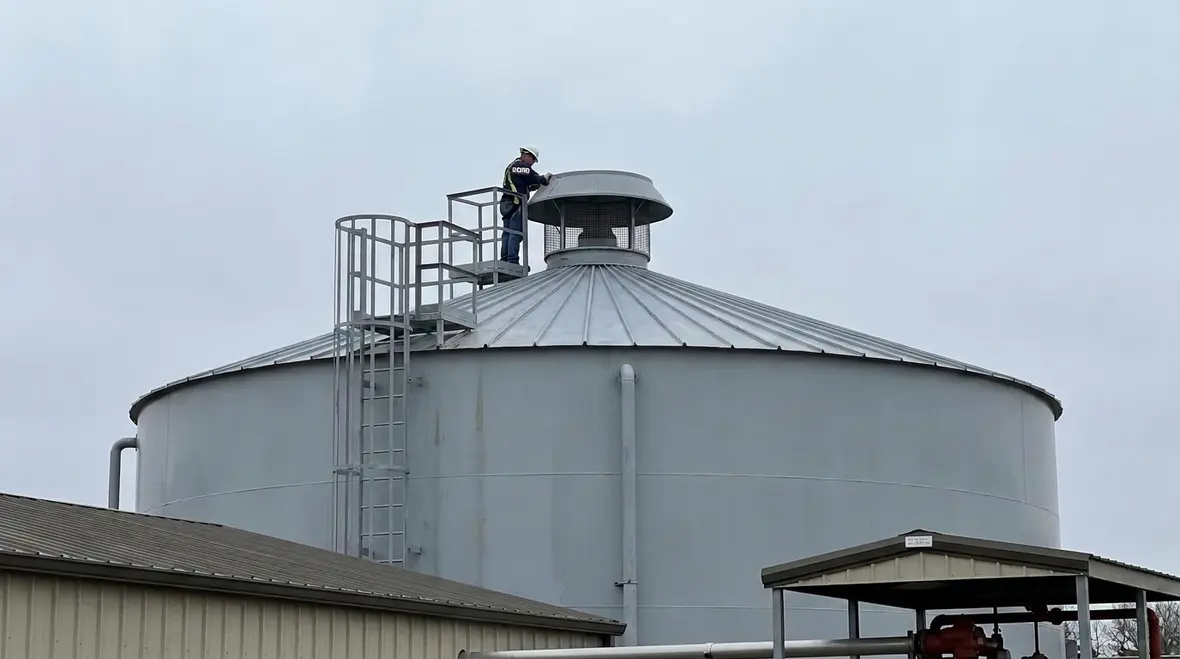
NFPA 22 Section 4.15: Roof Vent Requirements for Water Tanks
Quick Answer
NFPA 22 Section 4.15 sets performance focused roof vent requirements for fire protection water tanks to prevent harmful pressure and vacuum conditions. Proper venting reduces air lock risks, supports stable water delivery, and improves reliability during inspections and emergency operation.
Facilities coordinating tank readiness with broader maintenance planning can also benefit from a fire protection water storage tank inspection approach that connects vent condition, documentation, and long term system reliability.
Why roof venting in NFPA 22 Section 4.15 matters in real facilities
Commercial and industrial fire protection systems rely on water tanks that can deliver flow when pumps start, control valves open, and sprinkler or standpipe demand occurs. If a tank’s roof venting cannot relieve air movement properly, the tank can experience excessive vacuum or pressure during filling, draining, or pump driven drawdown. In practice, this can delay water delivery, reduce effective discharge, or create intermittent operational problems that are difficult to diagnose during commissioning or inspection.
For facilities responsible for maintaining these systems, the most common compliance challenge is not knowing whether vents exist, but ensuring vents are properly sized, unobstructed, protected from weather and insects, and maintained so they function as intended over time. This is where water tank roof vent requirements become an operational reliability issue, not just a paper compliance task.
Where Section 4.15 roof vent requirements apply
NFPA 22 Section 4.15 addresses roof venting for fire protection water storage tanks used with fire protection systems. The requirement focuses on controlling the tank’s air exchange during normal operation and fire demand conditions. In day to day terms, roof venting supports safe pressure equalization as water level changes and as pumps draw down water.
In commercial settings such as retail centers, warehouses, manufacturing plants, and multi tenant buildings, the “where it applies” question often becomes “which tank(s) are connected to the system we maintain.” When owners operate multiple tanks for different functions, technicians sometimes assume that a venting arrangement for one tank covers the other. Section 4.15 requirements should be verified per tank connected to the fire protection system, including any modifications made by facility upgrades.
How roof vents work during tank filling and fire demand
1) Air movement control to prevent harmful pressure and vacuum
As water level in a tank changes, air must move in and out. Without functional venting, the tank can resist air movement, which creates vacuum conditions during drawdown or pressure conditions during filling. Those conditions can impact how quickly water flows to the connected fire protection equipment.
2) Support for stable suction and pump performance
Pumps tolerate certain levels of suction conditions, but tank vent deficiencies can contribute to system instability. When the tank roof cannot vent adequately, air can be trapped, water columns can become inconsistent, and pump behavior can change under demand. Over time, these operational shifts can increase wear and lead to recurring service calls after maintenance downtime.
3) Reliability under real weather and maintenance conditions
Roof mounted vents face wind, rain, debris, and seasonal insects. Even if vents were correct at installation, field conditions can clog them, damage screens, or allow ice formation where applicable. For these reasons, inspections must treat vents as active safety components rather than passive roof hardware.
Common noncompliance and failure points that trigger service issues
Most failures related to water tank roof vent requirements fall into predictable categories. Fire safety teams that focus only on annual paperwork often miss these field conditions.
Blocked or partially obstructed vents
Typical causes include roof debris accumulation, spider or insect blockage, paint buildup, insulation intrusion, and improperly installed weather hoods that do not perform as the designer intended.
Incorrect vent sizing or mismatched vent configurations after modifications
Facilities frequently modify roofs for HVAC changes or structural upgrades. Contractors sometimes replace vent components with “equivalent” hardware that reduces vent area or alters vent behavior. If the venting geometry changes, the tank may not exchange air at the required rate.
Damaged vent caps, screens, or louvers
Wind driven damage can bend vent parts, crack caps, or dislodge screens. Even small changes can reduce airflow and create preferential flow paths that do not meet the system’s needs.
Improper maintenance access and inspection practices
Facilities may schedule inspections but fail to verify that vents are clean, unobstructed, correctly seated, and functional. In many commercial environments, access restrictions lead to partial inspections. A vent can appear intact from a distance while remaining blocked at the outlet.
Interaction with other tank components and roof penetrations
Roof modifications can introduce new obstructions near vent outlets. Landscaping, parapet alterations, or new duct work can affect airflow around vents and reduce performance during peak demand conditions.
Inspection and maintenance practices that support ongoing compliance
Effective compliance with NFPA 22 Section 4.15 requires a repeatable operational process. The goal is to verify vent function, not only to document the presence of roof hardware.
Step 1: Confirm the vent arrangement matches the tank design
Review the approved submittals and record drawings for each water tank. Cross check the roof vent configuration against the installed condition. If the facility underwent roof retrofits, HVAC additions, or tank component changes, verify vent compatibility and ensure no “equivalent” substitutions were made without engineering review.
Step 2: Inspect for obstructions and damage at roof level
Perform a direct visual inspection at the vent outlet. Confirm that screens and caps remain intact and that no debris or contamination restricts vent openings. For systems requiring access controls, implement a documented access plan so staff can inspect each vent at the outlet, not just at the base.
Step 3: Verify vent performance indicators during seasonal operation
Facilities often observe operational symptoms when venting is insufficient. These can include air related irregularities after tank refills, unusual pump response during system activation, or repeat service callouts tied to the water level cycle. When these indicators appear, treat them as potential venting issues requiring immediate corrective action and re inspection.
Step 4: Maintain documentation tied to compliance readiness
Track inspection dates, findings, corrective actions, and component replacement information. This record supports compliance continuity during insurance reviews, jurisdictional authority questions, and internal audits.
For additional context on how NFPA 22 regulates fire protection water tanks and related system components, reference: how NFPA 22 regulates fire protection water tanks.
How Kord Fire Protection helps facilities maintain vent compliance and reliability
Roof vent compliance succeeds when it stays connected to day to day operations. Kord Fire Protection supports commercial, industrial, and retail facilities by verifying tank related components, documenting condition trends, and assisting with ongoing maintenance so systems perform when required.
Typical service support includes compliance focused inspections, identification of vent obstruction risks, coordination of corrective actions, and maintenance planning that accounts for roof environment realities such as debris patterns, insect activity, and access constraints. This approach helps reduce uncertainty during inspections and minimizes the likelihood of late discovery of venting deficiencies that can impact system performance.
Frequently Asked Questions
Next step
If your facility manages fire protection water tanks, validate your water tank roof vent requirements now by comparing installed vent conditions against the approved design and checking vents at the outlet for obstructions and damage. Contact Kord Fire Protection to schedule a compliance focused roof vent and tank related inspection, document findings, and build a maintenance plan that keeps your system dependable between inspections.

Join Our Newsletter!
Get the latest fire safety tips delivered straight to your inbox From our Newsletter.



