
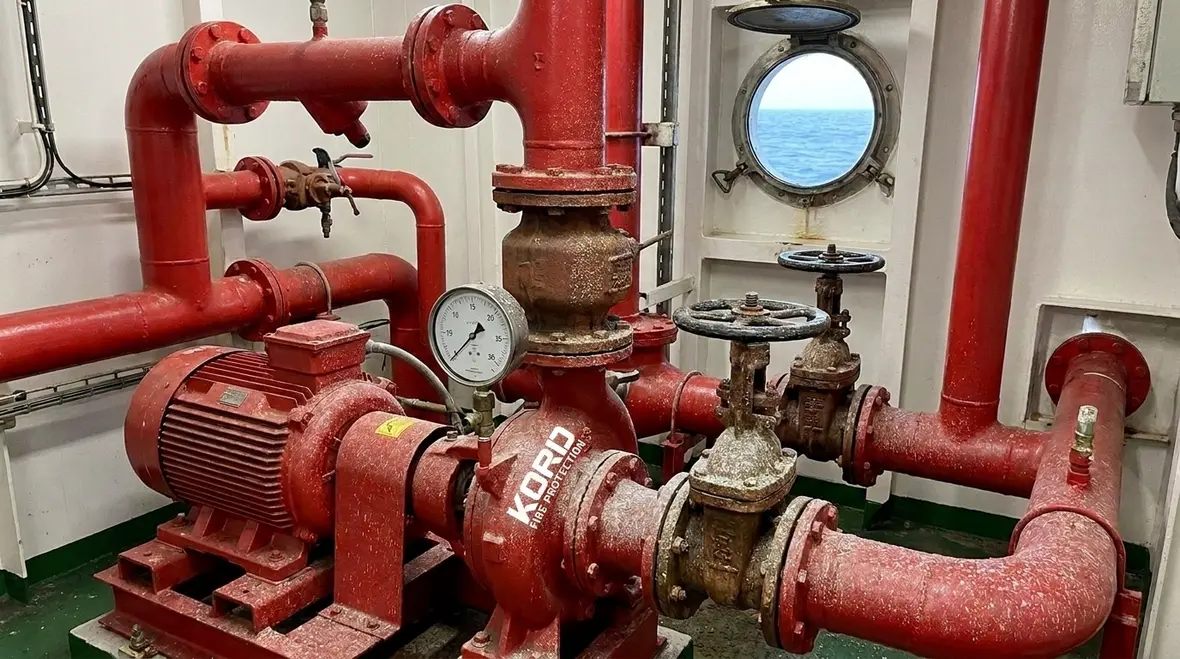
NFPA 13 Section 31.7 – Water Supplies for Marine Sprinkler Systems
Quick Answer: NFPA 13 Section 31.7 sets the minimum requirements for water supplies that support marine sprinkler systems, including sea water and alternative fire pumps, tank sizing concepts, reliability controls, and acceptance and inspection expectations. The goal is dependable water delivery despite corrosion, vibration, and limited access.
If you want broader context on how sprinkler system requirements connect back to installation fundamentals, this NFPA 13 overview for automatic fire sprinkler system installation is a useful place to start.
What NFPA 13 Section 31.7 Requires for Marine Water Supplies
NFPA 13 Section 31.7 addresses water supplies used to operate sprinklers on vessels and other marine exposure scenarios where system reliability can be challenged by compartment boundaries, environmental corrosion, and constrained installation space. For facilities tasked with designing, retrofitting, or maintaining NFPA 13 marine water supplies sprinkler systems, the central compliance theme is operational certainty: the water supply must provide the required hydraulic performance during a credible fire event, and it must remain dependable through inspection, testing, and maintenance.
Commercial owners and facility teams often encounter implementation gaps not because the concepts are unclear, but because marine conditions impose unique failure points. These include saltwater intrusion, compromised valves from marine fouling, pump controller faults from vibration and moisture, and reduced flow caused by undersized piping or uncontrolled cross connections.
Key Water Supply Components and How They Provide Fire Flow
Section 31.7 ties system performance to the reliability of the water supply. In practice, water supplies typically include a combination of pumps, tanks, seawater or dedicated marine connections, and interfaces that prevent contaminated or non fire sources from undermining the system. The arrangement must support the design fire demand with appropriate controls and safeguards.
Pumps and reliable priming under marine conditions
Pumps support the pressure and flow needed for sprinkler operation. Marine systems frequently require attention to suction stability, priming reliability, and pump protection against corrosion and debris. Common non compliance drivers include:
- Suction piping that allows air entrainment during vessel motion.
- Inadequate strainer maintenance leading to restricted flow.
- Controller faults caused by salt fog, humidity ingress, and electrical insulation degradation.
Tank and source interfaces
Where tanks or alternative sources support firefighting flow, Section 31.7 expectations generally emphasize that the supply must be sized and configured to deliver the required duration and flow under the specified design basis. Maintenance teams must verify that isolation valves, level controls, and discharge connections operate as intended and remain accessible for inspection and testing.
Seawater considerations
For marine sprinkler systems that rely on seawater or seawater sourced firefighting supply, corrosion control becomes a primary operational requirement. Seawater piping and fittings can become roughened, scaling can occur, and marine growth can affect effective flow area. Designers and maintainers must consider how the supply system handles intermittently used equipment and how the system prevents seawater from back flowing into non seawater rated components.
Acceptance, Inspection, and Testing: Where Compliance Breaks Down
Commercial and industrial facilities typically budget time for sprinkler system commissioning, but marine systems add constraints that can delay corrective actions. A key compliance outcome is that the water supply must pass inspections and tests that verify performance under expected conditions.
What inspectors and AHJs usually target
When AHJs or insurers evaluate water supply readiness for marine sprinkler systems, scrutiny commonly focuses on:
- Valve positions and lock and tag practices that prevent inadvertent misalignment.
- Pump start logic, automatic controls, and alarm reporting pathways.
- Fire pump performance metrics against the intended design demand.
- Effective flow path integrity, including strainers, check valves, and isolation valves.
- Electrical reliability for pump controllers, including fault indicators and protective device coordination.
Operational maintenance that keeps systems dependable
Many failures trace back to maintenance practices that do not fully address marine realities. Examples include strainers that are never cleared on schedule, corrosion related valve seizure, and testing schedules that do not simulate realistic flow and suction conditions. To reduce risk, marine operators commonly need a disciplined regimen for:
- Periodic pump performance testing and verification of flow and pressure response.
- Inspection and cleaning of seawater strainers and intake components.
- Verification that backflow prevention arrangements remain functional and unobstructed.
- Documentation of corrective actions and re acceptance steps after component replacement.
For broader automatic fire sprinkler installation background that supports compliance thinking, facility teams can also review this practical overview: NFPA 13 overview for automatic fire sprinkler system installation.
Common Failure Points in Marine Water Supply Systems
Marine environments accelerate wear mechanisms that can quietly degrade fire water availability. The most costly issues often emerge during drills, warranty periods, or inspection cycles. Identifying them early improves compliance readiness.
Corrosion, scaling, and marine growth
Salt exposure and marine biofouling can reduce effective pipe diameter and increase friction loss, which lowers delivered pressure and flow. This can manifest as slow pump discharge ramp up, reduced sprinkler pressure, and inconsistent water delivery during the first moments of actuation.
Valve and check valve malfunction
Valves can seize or fail to travel fully due to corrosion, sediment, or improper lubrication practices. Check valves may stick partially open or close unexpectedly, changing system hydraulics. Because marine systems may remain idle for long periods, periodic functional verification becomes critical.
Suction and priming failures during vessel motion
Vessel movement can expose suction intakes to air. If priming depends on conditions that are not stable during motion, pump performance can deviate during a real fire event. A robust water supply design anticipates these variations and provides an approach that maintains reliable operation.
Electrical and control vulnerabilities
Water supplies depend on pumps that depend on reliable controls. Moisture ingress, corrosion on terminals, and controller faults can prevent automatic starting or cause nuisance alarms that mask true system activation. Maintenance plans should explicitly include controller inspection routines.
How Commercial Service Partners Support Ongoing Compliance
NFPA 13 marine water supplies sprinkler systems require more than initial installation quality. They require maintenance that is repeatable, documented, and oriented toward reliability. Kord Fire Protection supports this operational reality by helping owners and facility managers plan and execute commissioning follow ups, testing programs, corrective maintenance, and documentation support that aligns with typical commercial compliance expectations.
For facility teams building a maintenance and compliance strategy, Kord Fire Protection resources are available at https://kordelectric.com and https://kordfire.com.au. For additional fire pump and water supply educational context, teams can also reference https://firepumps.org.
Practical support during audits and insurance reviews
Commercial facilities, industrial operators, and retail owners often share the same operational constraint: they need evidence that testing and maintenance occurred and that it produced measurable results. A competent partner helps coordinate:
- Test scheduling around availability windows and operational downtime restrictions.
- Retest and re acceptance procedures after repairs or component replacements.
- Trend tracking for pump performance, valve operation, and suction conditions.
- Corrective action documentation that reduces repeat findings.
FAQs About NFPA 13 Section 31.7 Marine Water Supplies
Next Step: Confirm Your Marine Water Supply Readiness
To maintain compliance and avoid last minute test surprises, owners should validate marine water supply performance through a documented inspection and testing plan tied to Section 31.7 expectations. Engage a qualified commercial service partner like Kord Fire Protection to review pump and valve readiness, verify seawater related components, and establish a reliable maintenance cycle. Start by scheduling a system performance assessment and risk based maintenance review.

Join Our Newsletter!
Get the latest fire safety tips delivered straight to your inbox From our Newsletter.


