NFPA 12 Section 1.4: Carbon Dioxide System Units and Measurements
Quick Answer: This article explains NFPA 12 Section 1.4 and the NFPA 12 CO2 system units measurements that drive unit sizing, placement, and verification, along with testing requirements. It highlights practical compliance challenges for commercial facilities and outlines maintenance needs to sustain reliable CO2 suppression performance.
For teams mapping out service, inspection, or upgrades, CO2 fire suppression system services can help connect the code language in Section 1.4 with the real equipment, layout, and maintenance work happening in the field.
What NFPA 12 Section 1.4 covers and why it matters for commercial facilities
NFPA 12 Section 1.4 sets the framework for the units and measurements used to design carbon dioxide extinguishing systems. It ties together terminology, design metrics, and verification methods to ensure reliable discharge performance while protecting occupants and property. For commercial, industrial, and retail facilities, this means consistent documentation of unit sizes, discharge characteristics, and measurement tolerances that AHJs expect during plan reviews and field inspections.
Unit configurations and sizing methodology
System designers select configurations that balance space constraints with effective protection. Unit sizing hinges on room geometry, product or hazard type, and the required design concentration. The section guides how to translate room volume, cylinder mass, and discharge pathways into a practical layout of cylinders, manifolds, and discharge nozzles. Accurate measurement of these elements ensures the system can deliver the needed CO2 quickly while avoiding overfill risks or underprotection. Documentation must reflect the chosen configuration, supported by engineering calculations and shop drawings that meet code intent.
Why precise measurements shape real world performance
A CO2 system is not just a pile of cylinders and piping that somehow becomes heroic under pressure. Every measurement affects how quickly agent moves, how evenly it distributes, and whether the hazard receives the intended concentration. That is why the measurement side of Section 1.4 matters so much during layout, documentation, and later testing.
Measuring, documenting and verifying compliance during commissioning
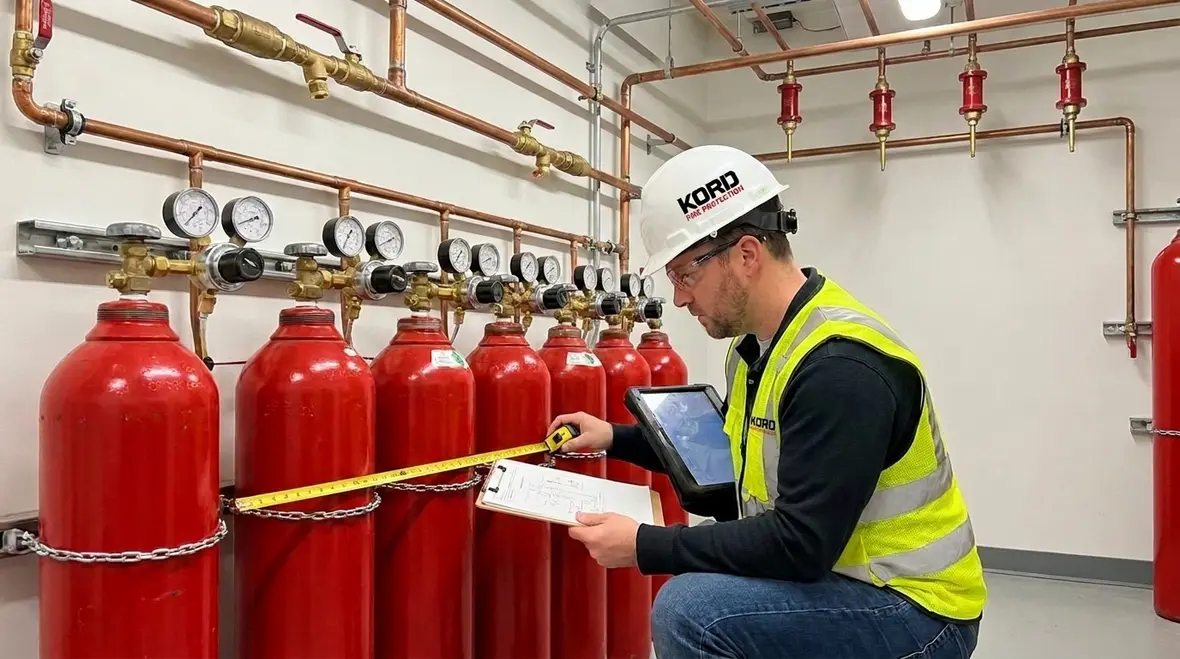
Commissioning validates that as-built installations align with the design intent described in NFPA 12 Section 1.4. Field measurements include cylinder counts and weights, pipe lengths and diameters, and the configuration of discharge devices. Technicians compare actual drawings against the project design, confirm tagging and labeling, and verify that control sequences will release CO2 under the specified conditions. Documentation should capture design coordinates, sensor placements, interlocks with building systems, and test results to support AHJ review and future maintenance.
Where a project involves more specialized hazards, related applications such as machinery space CO2 suppression design and service can also offer useful context for how measurement accuracy, ventilation logic, and discharge planning come together in demanding environments.
Practical compliance challenges in commercial facilities
Commercial facilities frequently encounter barriers when applying NFPA 12 CO2 system units measurements in real world conditions. Coordination with adjacent fire protection systems and building automation can create integration challenges. Space constraints in mechanical rooms may force unconventional cylinder arrangements or nonstandard piping, which must still satisfy 1.4 measurement tolerances. Occupant safety concerns demand robust pre discharge alarms, clear signage, and stringent access controls to prevent accidental exposure. Supply chain variability and vendor coordination can also impact the accuracy of unit sizing and verification during installation and upgrades.
Integration issues that tend to show up late
A design can look neat on paper and still become a mild menace once field conditions start talking back. Tight equipment rooms, control interface conflicts, and awkward routing paths often show up late in the project, which is exactly when everyone suddenly wishes the measurements had been checked one more time.
Maintenance, inspection and ongoing verification
Ongoing maintenance keeps CO2 protection reliable and compliant. Routine activities include visual inspections of cylinders, valves, and wiring; functional testing of release mechanisms; and verification that alarms and interlocks operate correctly. Cylinder hydrostatic testing, replacement of degraded components, and periodic recalibration of monitoring devices may be required as per manufacturer recommendations and AHJ requirements. Accurate recordkeeping is essential; service history should document any deviations from the design intent and corrective actions taken. Engaging a qualified partner ensures compliance with NFPA 12 CO2 system units measurements across design, installation, and maintenance cycles.
Facilities that want a broader view of coordinated protection may also find value in reviewing commercial fire suppression systems and services, especially when CO2 equipment has to work alongside other suppression strategies in the same property.
Kord Fire Protection and the path to ongoing compliance
Kord Fire Protection serves as a trusted commercial service partner for design review, commissioning, testing, and maintenance of NFPA 12 CO2 systems. The firm specializes in aligning field practice with the formal guidance of Section 1.4, ensuring that unit sizing, measurement documentation, and verification procedures meet current codes and AHJ expectations. Regular audits, performance testing, and proactive maintenance programs help commercial, industrial, and retail facilities maintain reliable CO2 protection and minimize downtime or compliance gaps.
Frequently Asked Questions
Conclusion and call to action: For complex CO2 suppression needs in commercial settings, partnering with a knowledgeable provider simplifies compliance with NFPA 12 CO2 system units measurements. Kord Fire Protection offers design review, commissioning, and ongoing maintenance to ensure your system remains code compliant, reliably protects people and assets, and minimizes risk during inspections and emergencies. Contact Kord Fire Protection today to schedule a comprehensive assessment, tailor a maintenance plan, and establish a proactive testing program that fits your facility profile and budget.

Join Our Newsletter!
Get the latest fire safety tips delivered straight to your inbox From our Newsletter.