NFPA 1 Section 16.3 for Demolition Fire Safety
Quick Answer: NFPA 1 Section 16.3 gives demolition teams a clear fire safety path before, during, and after structural work begins. It focuses on hazard control, water supply, access, watches, and hot work planning. For industrial, retail, commercial, and facility projects across Australia, Kord Fire Protection can help keep demolition sites compliant, safer, and far less likely to turn into a very expensive bonfire.
When a building comes down, fire risk does not leave politely at the front door. It multiplies. Dust, damaged services, fuel residues, exposed timber, cutting torches, and unstable layouts can all create trouble fast. That is why demolition fire safety NFPA matters so much in modern project planning. In the same breath, the building demolition fire code and structural demolition fire protection practices help contractors manage fire before it manages them. For industrial, retail, and commercial sites across Australia, this is not paperwork for the sake of paperwork. It is risk control with teeth.
NFPA 1 Section 16.3 sets the tone for demolition work by requiring fire safety measures that match the changing site conditions. As walls fall and systems get isolated, the fire profile shifts hour by hour. Therefore, teams need a live plan, not a dusty binder that sits in a ute and looks important. This is where a specialist partner like Kord Fire Protection becomes a valuable part of the job, helping projects line up safety, compliance, and practical site control. Teams reviewing broader protection strategy can also explore fire protection for compliance and readiness to connect demolition planning with the bigger picture of site safety.
Near the top of any sensible demolition strategy, it also helps to understand how system changes affect upgrades, temporary safeguards, and staged works. That is why Kord Fire Protection’s article on fire protection system upgrades fits naturally into this conversation. Demolition rarely happens in a neat little bubble, and the sites that stay safest usually treat changing conditions as a full fire protection issue, not just a demolition checklist with sharp edges.
What NFPA 1 Section 16.3 means on a demolition site
NFPA 1 Section 16.3 deals with fire safety during demolition and related site activity. It expects the contractor to control ignition sources, protect workers, and keep access ready for emergency response. It also pushes teams to look at the site as a changing fire hazard, not a fixed building. That matters because demolition work often exposes hidden risks, and those risks rarely send a warning email first.
In practice, the section supports a clear idea: fire safety must stay active from the first strip out to the final load out. As services are cut, walls open, and waste builds up, the fire load can rise quickly. So, demolition fire planning must stay ahead of the work, not chase it like a junior runner after a runaway pallet jack.
Why changing site conditions matter
A normal occupied building follows familiar patterns. A demolition site does not. One morning there may be intact compartmentation, functioning utilities, and predictable access. By lunch, half of that could be gone. Open shafts, exposed framing, disconnected alarms, and temporary barriers can all change how smoke, heat, and crews move through the site. That is exactly why structural demolition fire protection cannot be static. The hazard map keeps moving, so the controls have to move with it.
How the building demolition fire code shapes site planning
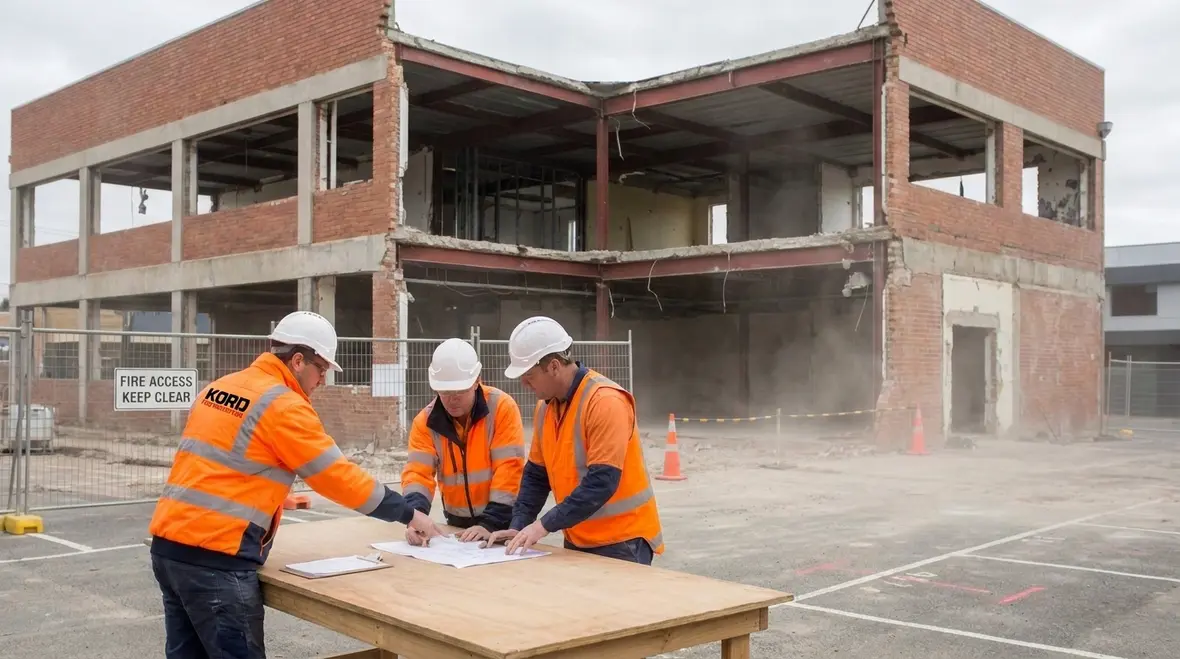
The building demolition fire code approach starts before the first machine rolls in. First, the team should check the building use, stored materials, live services, and any hazardous contents. Then it should map fire access routes, temporary water needs, and emergency contact points. After that, it should identify hot work zones, fuel storage areas, and places where debris may trap heat or spark.
For industrial and commercial sites, this step matters even more. Warehouses, plant rooms, shopping areas, loading bays, and mixed use facilities often hold old cabling, packaging, chemical traces, oils, or dust. Each one can feed fire. Therefore, strong planning supports both compliance and real site safety.
Planning details that deserve attention
- Confirm which fire systems stay active, which are isolated, and who signs off on those changes
- Mark clear emergency access routes before equipment, bins, and fencing start crowding the site
- Check whether water supply remains reliable as services are altered during staged demolition
- Separate fuel storage and hot work areas so sparks do not get an easy invitation
- Review debris removal frequency because rubbish has a rude habit of becoming fuel
Where structural demolition fire protection matters most
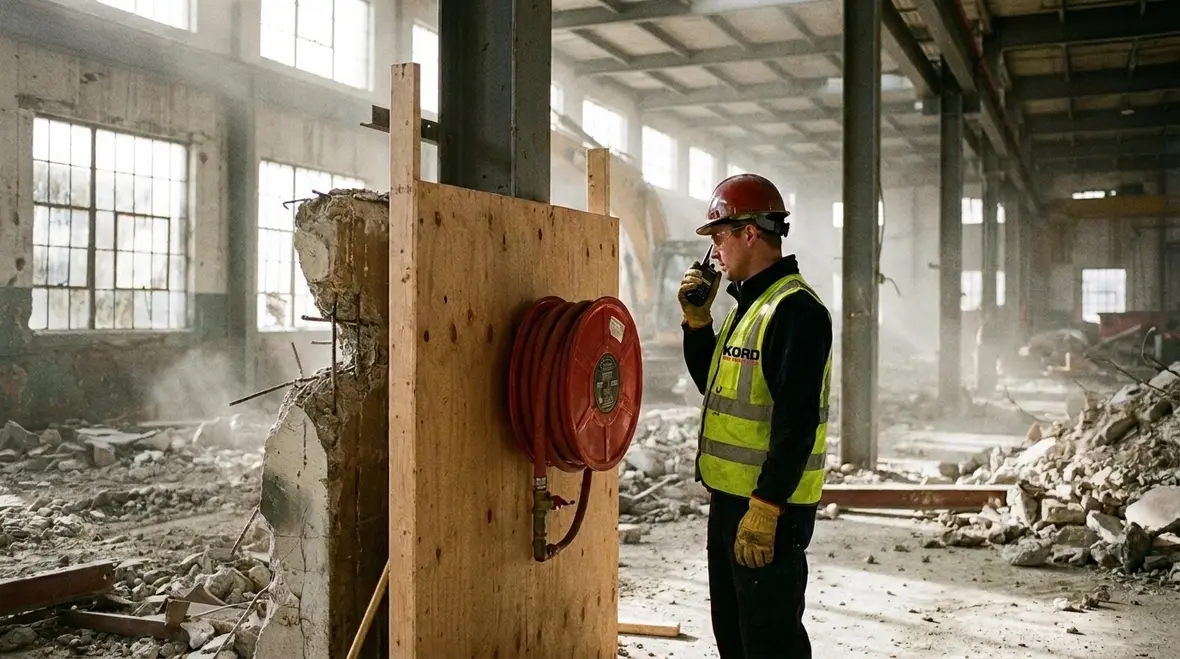
Structural demolition fire protection becomes critical when the building starts losing its shape and stability. Once partitions, ceilings, cladding, or structural members come down, fire can travel in fresh and unexpected ways. Open cavities can act like channels. Temporary walls can hide smouldering waste. And cut steel can stay hot long after the crew has moved on to the next section.
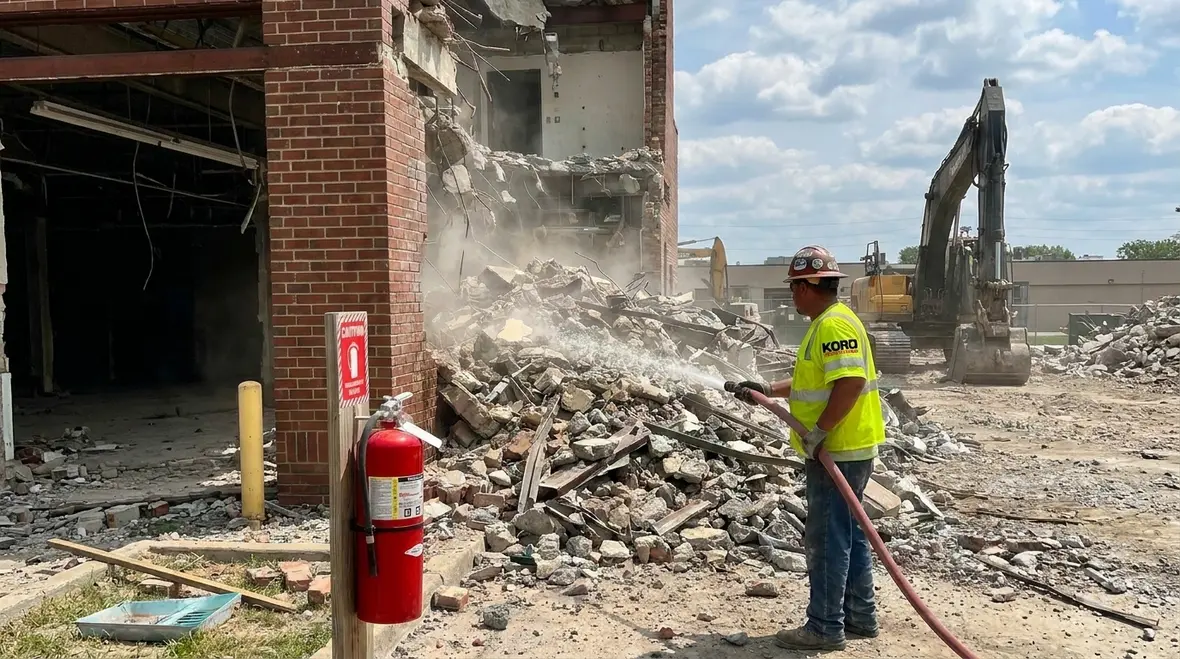
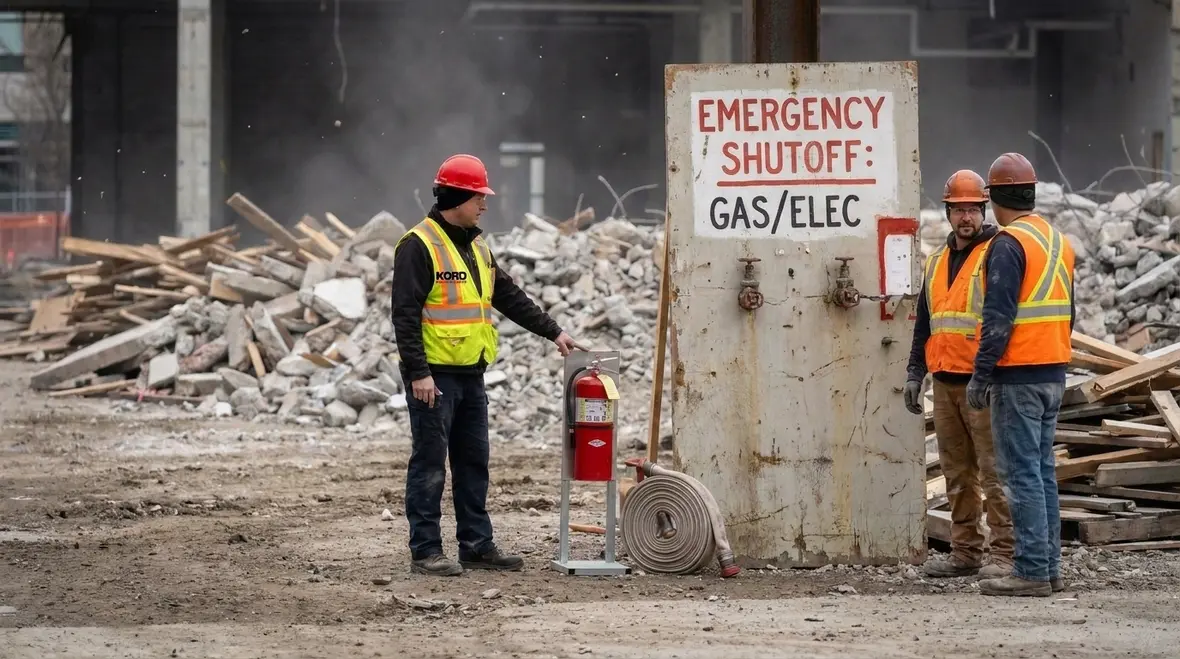
That is why fire protection during demolition should include watch routines, equipment checks, and clear rules for shutdown points. In many cases, the site also needs temporary extinguishers, hose access, isolation of gas and power, and a simple chain of command. The goal is not drama. The goal is control. A calm site is usually a safer site, and nobody wants their project trending for the wrong reason.
Hot work is usually where the plot thickens
Cutting, welding, and grinding are often necessary, but they are also famous for turning ordinary site mess into a fire story. Sparks can travel farther than people expect, drop into cavities, or land near packaging and dust. A proper permit process, a real fire watch, and follow up inspections after the work stops are not overkill. They are what stop a small glow from becoming an overnight headline.
What a good demolition fire plan should include
A good plan keeps fire safety practical and easy to follow. It should not read like a legal maze designed by someone who hates sleep. Instead, it should give the crew direct instructions that match the work area.
Site control
- Access routes
- Services isolation
- Hot work
- Debris handling
- Fire watch
- Water and extinguishers
Fire safety action
- Keep paths clear for emergency crews and site movement
- Disconnect gas, electricity, and other live hazards before work starts
- Permit, monitor, and inspect cutting, welding, and grinding areas
- Remove waste often to reduce fuel and heat buildup
- Assign trained staff to check for smoke or hidden ignition
- Keep suitable equipment on site and ready for use
Because demolition work changes fast, the plan should change too. If the crew opens a new void, shifts equipment, or discovers hidden fuel or chemicals, the fire plan should update right away.
Why Kord Fire Protection can add real value
Kord Fire Protection can become a vital partner on demolition jobs because it brings fire knowledge into the messy middle of construction change. Instead of treating fire safety as a box to tick, Kord Fire Protection can help shape a practical system that fits the site. That may include pre demolition reviews, temporary fire equipment support, fire system isolation guidance, and advice that lines up with demolition fire safety NFPA principles.
For Australian industrial, retail, and commercial projects, this kind of support saves time and helps avoid costly mistakes. It also helps project teams speak a common language across contractors, site managers, and safety staff. And when the site gets noisy, which it always does, clear fire direction matters even more.
If your team is reviewing wider standards alongside demolition controls, it is also worth reading NFPA 1: A Comprehensive Guide to Fire Prevention and Safety. It helps place Section 16.3 into the broader logic of prevention, access, and site responsibility, which is handy when everyone is trying to juggle compliance without turning the meeting room into a hostage situation.
Common demolition fire mistakes to avoid
Many fire incidents on demolition sites start with small failures that grow fast. A spark meets waste. A gas line stays live. A hot work area lacks supervision. Or debris piles up near a wall that should have been cleared hours ago. Each issue sounds minor until it is not.
To reduce risk, teams should avoid these mistakes:
- Leaving fire checks until the end of the shift
- Using hot work without proper monitoring
- Blocking fire access with plant, bins, or debris
- Failing to inspect hidden cavities after cutting
- Ignoring temporary fire protection when services change
Although these errors are common, they are also avoidable. With discipline, communication, and the right support, most can be stopped early. The trick is consistency. Fire safety on a demolition site is not won by one heroic toolbox talk. It is won by small, repeatable actions that keep sparks, fuel, and confusion from forming a nasty little alliance.
FAQ
Conclusion
Demolition work moves fast, but fire risk moves faster if nobody watches it. By following NFPA 1 Section 16.3 and applying solid demolition fire safety NFPA practices, teams can protect people, property, and project schedules. For industrial, retail, and commercial sites across Australia, Kord Fire Protection can help turn fire compliance into a practical advantage.
When the structure comes down, the fire plan should stand up. That means active planning, disciplined site control, sensible temporary protection, and a team that treats changing hazards seriously before they become expensive, smoky lessons in hindsight.

Join Our Newsletter!
Get the latest fire safety tips delivered straight to your inbox From our Newsletter.