NFPA 16 Section 6.8 Strainers for Foam Concentrate Systems
Quick Answer: NFPA 16 Section 6.8 requires clean, properly sized strainers to protect foam concentrate delivery in foam water sprinkler systems. These strainers help keep debris out, support reliable foam flow, and reduce system failure risk. For industrial, retail, and commercial sites, proper fire suppression foam filtration is not a nice extra. It is the quiet hero that helps the whole system do its job.
If your facility uses foam protection, this is also a smart time to review your foam fire suppression systems service options so the strainer, concentrate line, and overall discharge setup all work together like they actually know each other.
Why Foam Strainers Matter in Real Systems
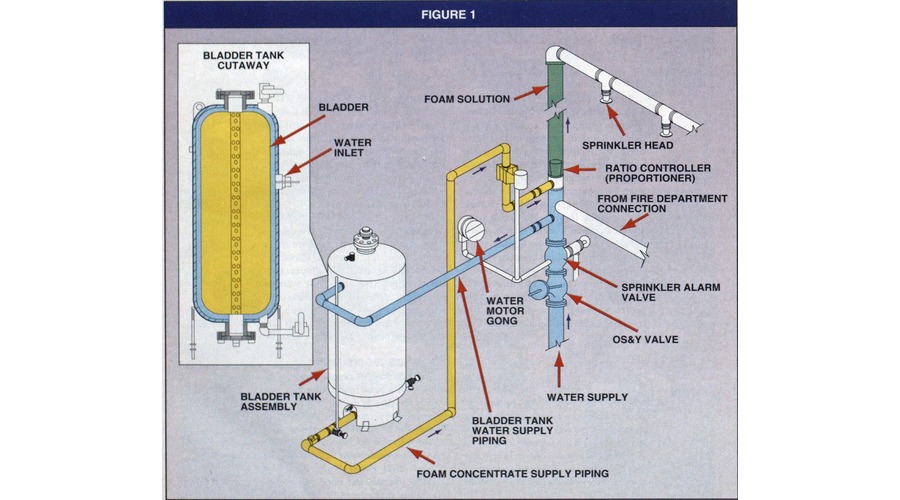
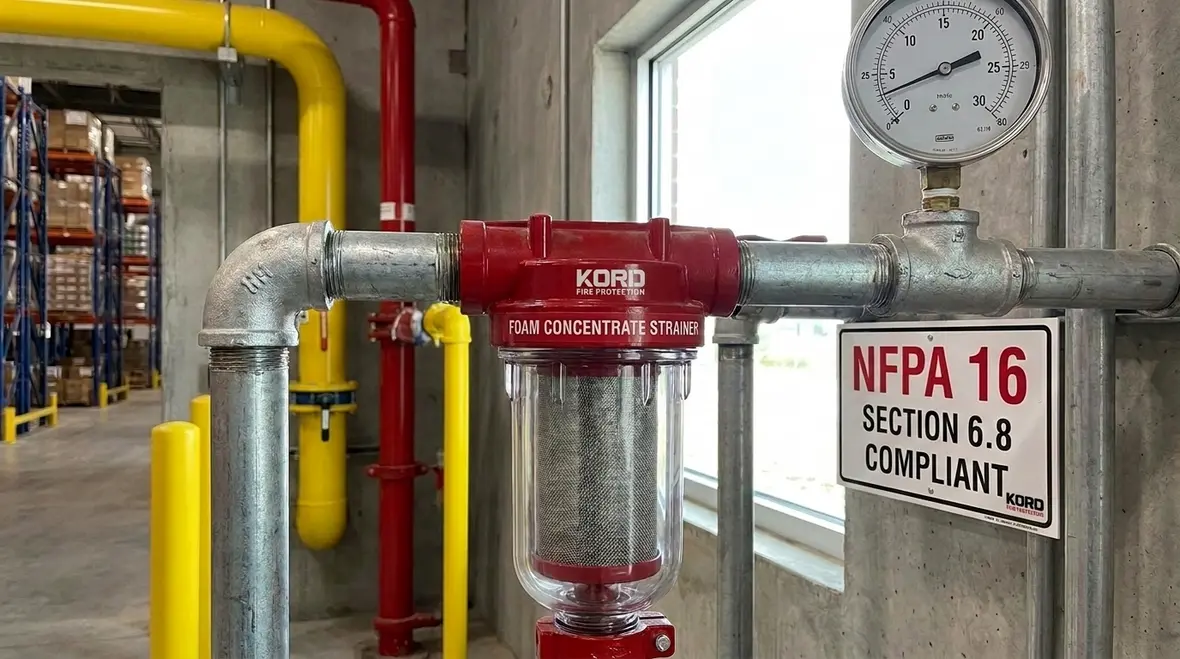
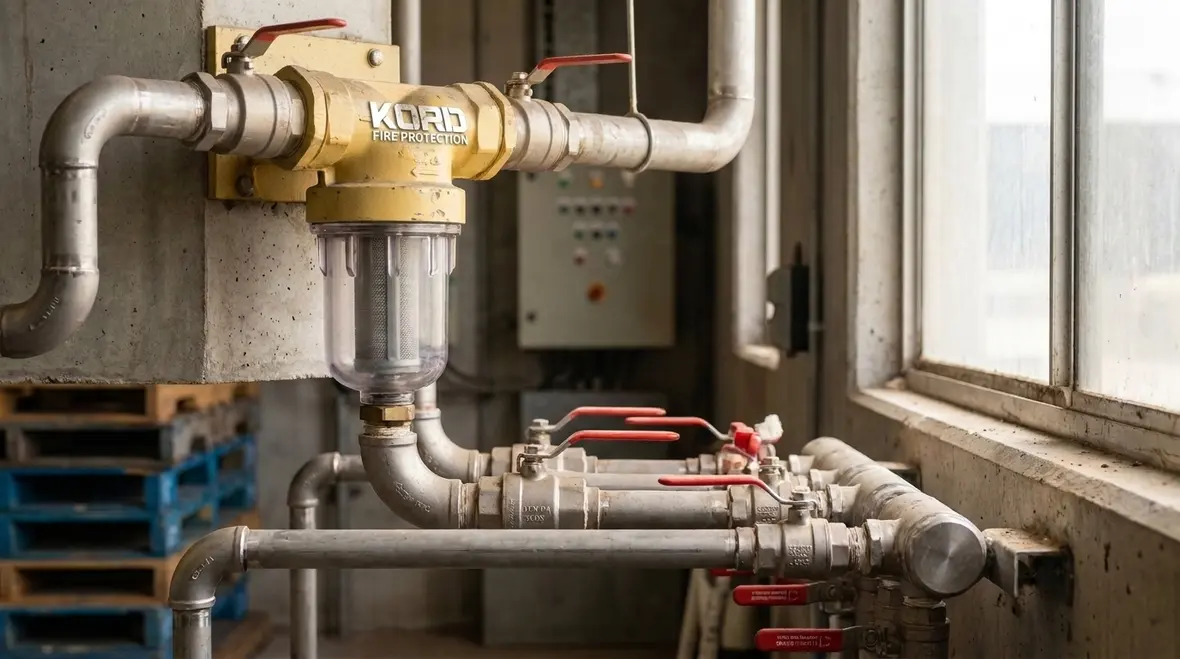
NFPA 16 foam strainers play a small role with a very large job. In foam water sprinkler systems, foam concentrate must move cleanly and at the right rate. If dirt, scale, or debris gets into the line, the system can stumble when it matters most. That is where foam water system strainers step in. They protect the path that foam concentrate follows, and they help keep fire suppression foam filtration steady and dependable.
This matters even more in high hazard occupancies where foam is selected because plain water alone may not be the right answer. Kord Fire Protection’s suppression resources repeatedly point to foam systems for flammable liquid and special hazard environments, where dependable proportioning and discharge quality are part of the whole point of having the system in the first place. When concentrate flow gets compromised, the rest of the setup can start acting brave on paper and confused in real life.
Small Part, Big Consequence
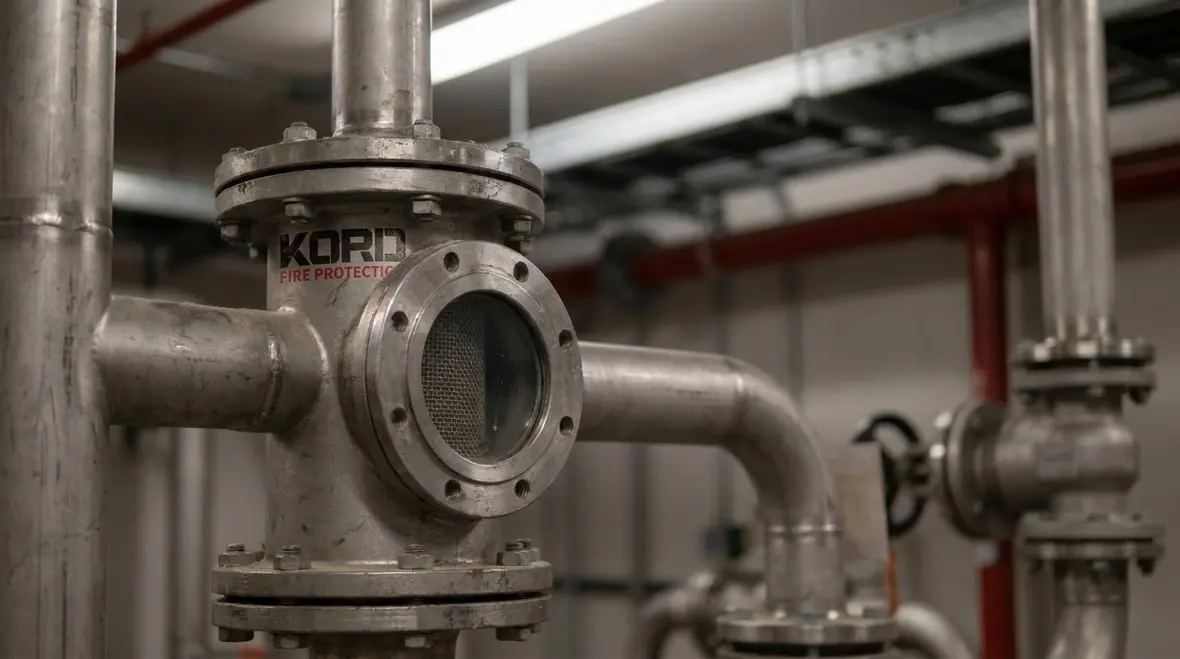
For warehouses, fuel related areas, aircraft spaces, process zones, and commercial properties with specialized hazards, a strainer is one of those components people forget right up until they should not have. A little contamination can interfere with concentrate movement, affect downstream components, and increase the chance of uneven foam delivery. In fire protection, tiny problems have a weird talent for becoming expensive stories.
What NFPA 16 Section 6.8 Requires
Section 6.8 focuses on strainers for foam concentrate in foam water sprinkler systems. The rule exists because foam systems depend on correct flow and proper mix. If the concentrate stream picks up debris, the foam quality can drop fast. As a result, the system may not perform as designed.
That fits neatly with Kord Fire Protection’s broader foam guidance, which highlights NFPA 16 as one of the key standards used for foam-water sprinkler and spray systems, alongside related foam standards and UL equipment criteria. In plain English, the standard is there to support real system performance, not to win a prize for paperwork thickness.
In simple terms, the section calls for:
- Strainers that protect foam concentrate delivery components.
- Proper placement so the system stays serviceable.
- Maintenance that keeps strainers clear and ready.
- A setup that supports dependable foam discharge during an incident.
Because NFPA standards guide performance, the goal is not box ticking. The goal is reliable protection. That is the kind of detail that keeps a system from acting like a diva when the alarm sounds. If you want the related standard context, Kord Fire Protection also has a dedicated resource on the NFPA 16 standard that fits naturally into a deeper compliance review.
How Foam Water System Strainers Support Performance
Foam water system strainers do more than catch debris. They help preserve the entire fire suppression chain. First, they reduce blockage in valves and piping. Next, they help maintain stable pressure and flow. Then, they support the foam concentrate’s ability to mix properly with water and reach the hazard area.
Kord Fire Protection’s foam system content consistently emphasizes that concentrate and water have to combine correctly, and that inspection, testing, maintenance, repairs, and documentation are all part of keeping a system ready for real use. That makes the strainer less of an accessory and more of a bodyguard standing in front of the concentrate path.
| System Area | Strainer Benefit |
|---|---|
| Foam concentrate line | Blocks debris before it reaches key components |
| Discharge path | Helps keep foam flow steady and clean |
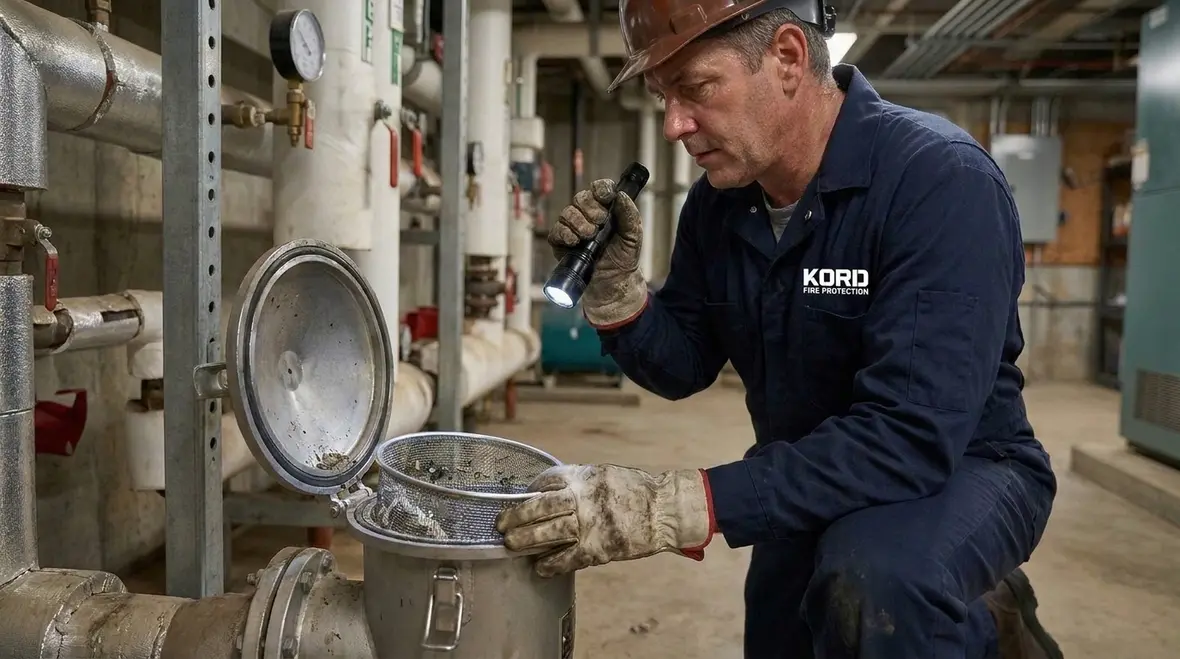
| Maintenance access point | Makes inspection and cleaning easier |
| Long term operation | Reduces wear and lowers failure risk |
Why matching matters
When a facility handles flammable liquids, process equipment, or high value stock, even a small failure can create a big problem. Therefore, the strainer must match the system design, the foam type, and the site conditions. A one size fits all approach works about as well as a paper umbrella in a monsoon. The right screen size, material compatibility, and service access all matter if you expect dependable discharge when stress levels are already high enough.
Where Facilities Often Run Into Trouble
Many sites do not fail because the system was absent. They fail because small parts were ignored. Over time, corrosion, poor water quality, tank residue, and construction debris can build up inside the system. In addition, if strainers are hard to reach, staff may skip inspections. That shortcut can become expensive later.
Common issues include:
- Blocked mesh or screen openings
- Incorrect strainer size
- Poor placement for access and maintenance
- Wrong match for foam concentrate type
- Neglected cleaning after service work
Kord Fire Protection’s inspection-focused foam articles also warn that clogs can reduce discharge flow and change spray patterns, leading to poor blanket formation and uneven foam application. That is a blunt reminder that a blocked strainer does not stay a strainer problem for long. It becomes a system performance problem.
Because many facilities operate around the clock, maintenance windows are tight. Therefore, the system must be easy to service and built for real world conditions, not just a drawing in a binder. If nobody can get to the component without muttering darkly at the ceiling, inspections will eventually drift.
How Kord Fire Protection Can Become a Vital Partner
Kord Fire Protection can become a vital partner because the job is not just installation. It is planning, checking, testing, and keeping the system ready for the long haul. Their service pages describe support for design, installation, inspection, testing, maintenance, repair, documentation, and emergency response across suppression systems, including dedicated foam system work. That kind of support helps sites align technical requirements with the less glamorous reality of keeping equipment ready year after year.
Kord Fire Protection can help with:
- System review to confirm the right strainer type and placement.
- Installation support so foam concentrate lines perform as intended.
- Inspection and maintenance to keep foam strainers clear and useful.
- Compliance focused service that supports long term reliability.
- Practical advice for busy facilities that need minimal disruption.
In other words, Kord Fire Protection can help turn a technical requirement into a smooth working part of site safety. That matters, because nobody wants a foam system that looks ready but acts confused under pressure. Even the best equipment needs a steady hand behind it.
How to Keep Foam Filtration Reliable Over Time
Reliable fire suppression foam filtration starts with the right design, but it ends with good upkeep. Facilities should inspect strainers after system work, check for buildup during scheduled maintenance, and replace damaged parts without delay. They should also keep records, because memory is a charming thing, but paperwork usually wins the argument.
Simple habits that help
- Check strainers after repairs, modifications, or component replacement.
- Confirm access points are clear and serviceable.
- Review concentrate compatibility with the installed setup.
- Document inspection results and cleaning dates.
- Address damage, corrosion, or residue before it snowballs.
Regular attention helps reduce hidden risks. It also supports better system life, fewer surprise repairs, and stronger response performance. For sites with high hazard areas, that consistency can make a serious difference. Boring maintenance is often the reason dramatic failures never get their big moment.
What Facilities Should Ask Next
Facility managers should ask whether their foam water sprinkler systems have the right strainers, whether those strainers are easy to access, and whether service records show regular checks. They should also confirm that the system matches the foam concentrate in use. If the answer to any of those questions feels fuzzy, it is time for a deeper review.
A good follow-up question is whether the broader suppression system has been reviewed recently by a team that actually works on these hazards every week. That is where contextual planning helps. Foam performance depends on more than one component, and strainers only shine when the rest of the system is not freelancing.
FAQ
Keep Foam Systems Ready Before They Are Needed
NFPA 16 foam strainers are small parts with a serious purpose. When they are sized, placed, and maintained correctly, they help foam water system strainers do what they were built to do. They protect concentrate flow, support cleaner discharge, and reduce the odds of a preventable failure showing up at exactly the worst moment.
Kord Fire Protection can support that process with practical service and expert care across foam and broader suppression systems. For facilities that cannot afford guesswork, now is the time to review the system, confirm the details, and keep it ready before it is ever asked to prove itself.

Join Our Newsletter!
Get the latest fire safety tips delivered straight to your inbox From our Newsletter.