
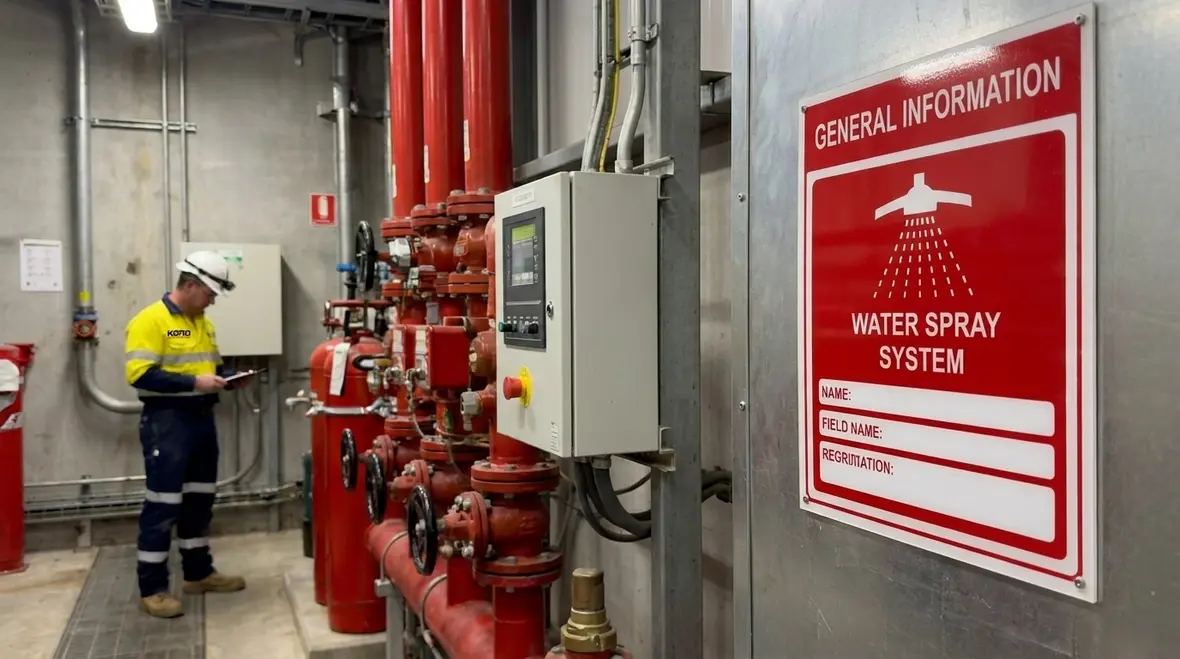
NFPA 15 Section 10.6 Water Spray System Signage
Quick Answer
NFPA 15 Section 10.6 calls for a clear general information sign for water spray systems so people can identify the system, understand its purpose, and respond correctly in an emergency. On busy industrial and commercial properties, that small sign can make a very big difference. Kord Fire Protection can help deliver compliant, practical signage support that fits the system and the site.
If your facility also needs broader system support beyond signage, Kord Fire Protection’s fire sprinkler system service can fit naturally into inspection, maintenance, and readiness planning for commercial properties. That matters because signage works best when it is tied to a system that is already being managed properly rather than treated like an afterthought taped on at the end of a long week.
In fast moving industrial sites, warehouses, plant rooms, and commercial facilities, clear fire system signage is not decoration. It is part of safety control. The NFPA 15 general information sign water spray requirement helps staff, contractors, and responders know what the system does and how it should be handled. That matters when time is short and confusion is expensive. It also matters when a site wants to stay organised, compliant, and ready for inspection without the drama of last minute fixes.
For many facilities, this topic sits right where compliance meets real world use. A water spray system may protect critical equipment, process hazards, or high risk spaces. However, if no one can quickly identify the system, part of that protection advantage gets lost. That is why NFPA 15 Section 10.6 deserves attention, and why a capable partner like Kord Fire Protection can become a practical part of getting the job done right.
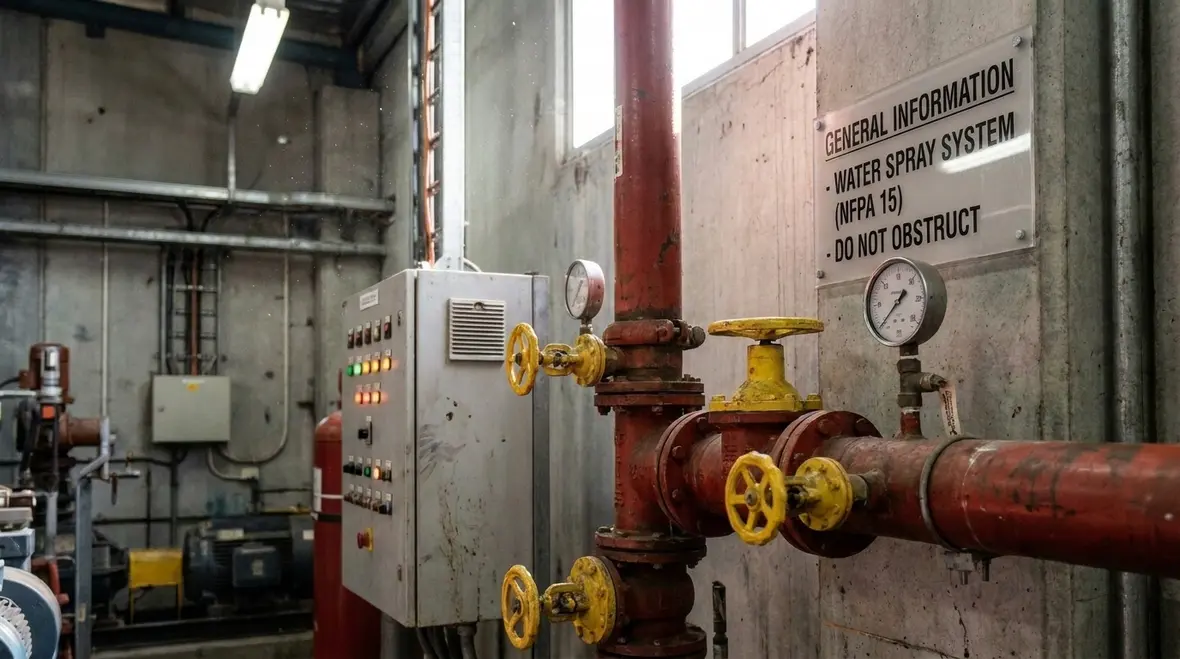
What NFPA 15 Section 10.6 Means in Simple Terms
NFPA 15 Section 10.6 focuses on general information signs for water spray systems. In plain language, the point is simple: the system should be clearly identified so the people around it can understand what it is and what it protects. The sign should communicate useful details, not just exist for decoration or satisfy a checkbox that no one looks at until inspection day.
That practical purpose matters. Maintenance staff may need to know what hazard zone the system covers before touching nearby equipment. Contractors may need to verify what system they are working around. Emergency responders may need quick confirmation that the installed protection is a water spray arrangement and not another suppression setup with different operating expectations. That kind of clarity reduces delay, and delay is not a charming personality trait during a fire event.
Why the wording has to be useful
A good sign gives fast, direct information that a person can absorb in seconds. It does not need to become a wall mounted novel, but it should not be so vague that it tells people almost nothing. The best signage bridges the gap between engineering intent and day to day site reality. That is where it earns its keep.
Why the Sign Matters in Active Facilities
In a plant room, warehouse, shopping centre, or production site, fire protection equipment often sits among valves, pumps, panels, pipework, and controls that all look like they belong to the same extended mechanical family reunion. As a result, clear identification prevents mistakes before they start.
A proper NFPA 15 general information sign water spray setup can support staff awareness during normal operations, contractor safety during maintenance work, faster emergency response, cleaner inspection outcomes, and a reduced chance of system misuse. Moreover, the sign helps people connect the visible equipment to the actual protection strategy behind it. A great water spray system still needs clear communication. Otherwise, it is a powerful tool sitting in silence, like Batman without the cape.
- staff awareness during normal operations
- contractor safety during maintenance work
- faster emergency response
- better inspection outcomes
- reduced chance of system misuse
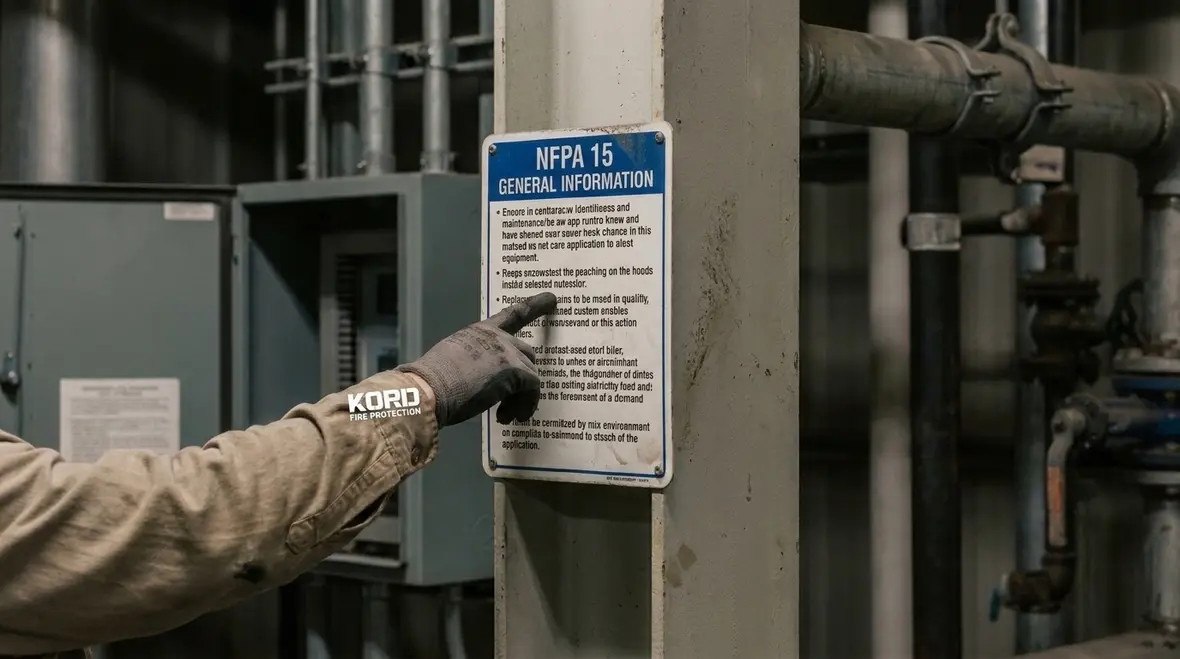
What the Sign Should Communicate
A useful sign should do more than show a label and move on with life. It should present clear, direct facts that people can read quickly under pressure. NFPA 15 guidance is valuable because it pushes signage toward practical communication rather than generic wording that sounds official but helps nobody.
At a minimum, a sign often needs to identify the system type and function, the area or hazard protected, and any key operating or control notes that matter during use, maintenance, isolation, or emergency response. Depending on the facility, it may also need identification details that connect neatly with system records, maintenance documentation, or inspection routines.
- system type and function
- area or hazard protected
- operating or control notes where required
- maintenance or identification details if relevant to the site
Because every facility has different hazards and layouts, the exact content should match the actual design and operating needs on site. That is why good signage should link back to the original system intent, not just a generic template pulled from the nearest drawer. Matching the real installation matters more than producing something that merely looks tidy in a catalog.
Consistency matters more than people think
When signage wording, system documents, maintenance records, and on site labelling all line up, the facility becomes easier to understand. That reduces wasted time, supports audits, and makes the whole protection setup feel deliberate instead of patched together over several contractors and several Mondays.
How Kord Fire Protection Supports Compliance and Site Confidence
| Service need | How Kord Fire Protection helps |
|---|---|
| Sign selection | Provides guidance so the sign suits the system and site layout |
| Compliance support | Helps align signage with NFPA 15 Section 10.6 expectations and practical site use |
| Installation planning | Places signs where they can be seen quickly and read easily |
| Site coordination | Works around live operations to reduce disruption |
| Inspection readiness | Supports a cleaner, more professional presentation for audits and checks |
Kord Fire Protection can become a vital partner because signage is rarely just about the sign. It is about understanding the system, the facility, the access points, and the people who will rely on the information later. In other words, Kord can help turn compliance into something useful rather than something filed away in a folder that nobody opens until Friday afternoon.
For readers who want a broader code context around water based special hazard protection, Kord Fire Protection also has a related resource on NFPA 15 and water spray fixed systems. That makes a helpful companion piece when a project is moving from general signage questions into bigger system planning and compliance conversations.
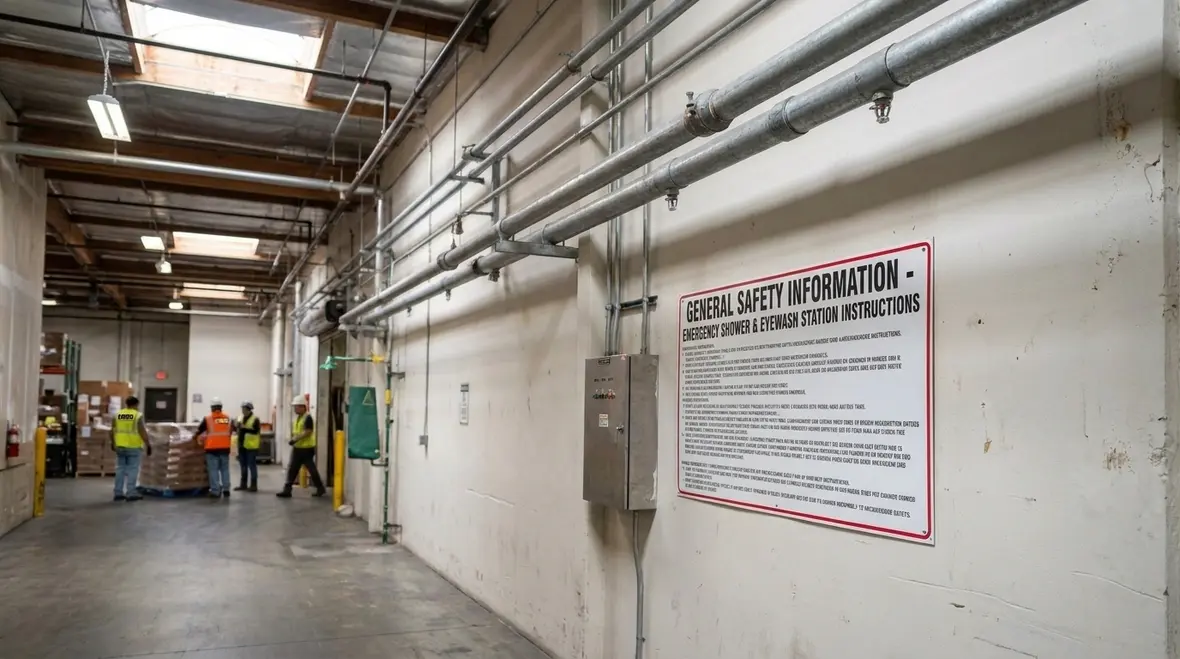
How to Make Water Spray Signage Work on Site
Good signage should be easy to see, easy to understand, and hard to ignore. That means placement matters just as much as wording. Signs should be positioned where people naturally look when approaching the system, the control area, or the protected hazard zone. If the sign is technically present but hidden behind equipment, tucked around a corner, or mounted where nobody reads it, the site is not getting much real value from it.
Readability over time matters too. Dust, heat, vibration, moisture, sunlight, and daily operations can all wear down a sign’s usefulness. A sign that starts clear but turns into a faded mystery rectangle six months later is not helping anyone. Choosing durable materials and sensible mounting methods is part of making the requirement work in the real world rather than only on installation day.
- clear mounting near the control or main access point
- durable materials suited to the site environment
- consistent wording that matches system records
- regular checks during maintenance rounds
When those basics are handled well, the system stays easy to find and easy to trust. That is the difference between signage that quietly supports site safety every day and signage that exists only because someone remembered it near the end of a project closeout list.
Common Mistakes to Avoid
Many sites do not run into trouble because they ignore fire safety completely. More often, they get tripped up because small details were rushed, copied, or left floating between teams. Signage falls into that trap all the time.
Common mistakes include vague wording, poor placement, faded finishes, and signs that do not match the actual installed system. Sometimes facilities keep old labels after upgrades, expansions, or equipment changes. That creates confusion, especially when multiple contractors have touched the same area over time. It is the fire protection version of a group chat where nobody knows who changed the plan.
Another problem is using a sign that looks professional from a distance but provides almost no value once someone stands in front of it. A water spray system sign should support fast decision making, not just decorate the wall like a very responsible poster. If the wording is too generic to guide action, the sign is not doing enough heavy lifting.
A simple self check for facilities
Ask three quick questions: can someone find the sign fast, understand it fast, and trust that it matches the system in front of them? If the answer to any of those is shaky, the signage probably needs attention.
Why a Specialist Partner Helps
Facilities vary widely in layout, hazards, access conditions, maintenance rhythms, and compliance priorities. Because of that, signage is rarely a one size solution. What works in a simple equipment area may not work in a process plant, mixed use commercial property, or busy industrial environment with multiple protection zones and frequent contractor activity.
Kord Fire Protection helps by bringing practical fire protection experience to the task. That supports better coordination, better placement, and better alignment between the system and the sign that identifies it. A specialist partner can also save time during upgrades, maintenance work, and compliance checks because the signage conversation is handled as part of the bigger protection picture instead of being chased as a separate loose end.
FAQ
Conclusion
NFPA 15 Section 10.6 may seem like a small detail, yet it supports safer, clearer, and more reliable water spray system use. When people can identify the system quickly and understand what it protects, the whole fire protection setup becomes more useful in normal operations and more dependable in stressful moments.
For facilities that want compliance without chaos, Kord Fire Protection can be the practical partner that helps align the system, the sign, and the standard. If your site needs clear signage support, this is one of those small upgrades that can quietly make the whole property function better.

Join Our Newsletter!
Get the latest fire safety tips delivered straight to your inbox From our Newsletter.



