NFPA 16 Section 6.3 Foam Concentrate Requirements
Quick Answer
NFPA 16 Section 6.3 sets the rules for foam concentrate used in foam water sprinkler systems. In simple terms, the concentrate must match the system design, stay compatible with the equipment, and perform as tested. For industrial, retail, and commercial sites, that means safer fire control, fewer failures, and stronger compliance. Kord Fire Protection can help make that happen.
Foam fire protection is not the kind of topic that wins a dinner party, unless the dinner party includes fire engineers and facility managers. Still, NFPA 16 foam concentrate, foam water system foam concentrate, and the right fire suppression foam types matter a great deal in warehouses, fuel areas, processing plants, logistics hubs, and other high risk sites. The key point is simple: the concentrate must do its job when heat, fuel, and pressure all decide to have a bad day. That is where NFPA 16 Section 6.3 comes in, and where a skilled partner like Kord Fire Protection can become a vital part of the service team. If your site needs support beyond paperwork, Kord’s fire suppression system services fit naturally into that bigger picture.
What NFPA 16 Section 6.3 Means for Foam Systems
NFPA 16 Section 6.3 focuses on the foam concentrate used in foam water sprinkler systems. It requires the concentrate to meet the system design, the hazard type, and the test data tied to the approved system. In plain English, the foam must be the right foam, not just any foam that looks good on paper.
This matters because foam systems do not rely on guesswork. They rely on measured performance, proper mix ratios, and the right discharge behavior. If the concentrate does not match the system, the system may still spray, but it may not control the fire as expected. That is not the kind of surprise anyone wants on a Monday morning.
Matching the Concentrate to the Approval Basis
The approval basis is where many foam conversations stop being casual and start becoming expensive. Foam concentrate is selected around tested system performance, meaning the concentrate, hardware, and hazard profile are supposed to work together as a package. Change one part without checking the others, and the nice neat design logic starts wobbling. A concentrate that is chemically sound but not approved for that exact arrangement can undermine discharge quality, drainage characteristics, and overall suppression reliability.
That is why selection should be treated as an engineering and service issue, not just a purchasing choice. A cheaper drum is not really cheaper if it creates compatibility headaches, retesting requirements, or uncertain fire performance. In practical site terms, Section 6.3 is the standard’s way of saying, “Please do not improvise with the one thing standing between a flammable liquid fire and a very bad afternoon.”
Why Foam Concentrate Selection Matters
Foam systems protect hazards where water alone may not be enough. They help suppress flammable liquid fires, reduce vapour release, and create a blanket that slows re ignition. However, not every foam behaves the same. Some work best on hydrocarbon fuels, while others suit polar solvents or special industrial risks.
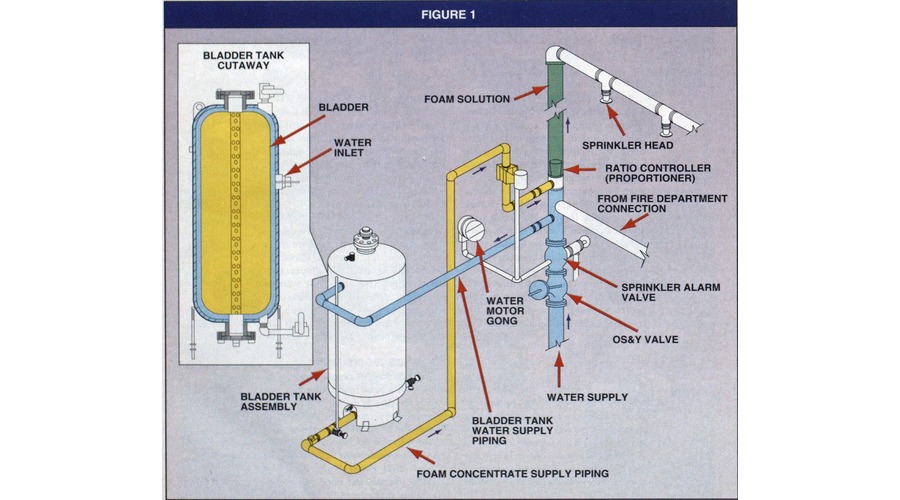
Therefore, the selected foam concentrate must fit the exact fire suppression task. It must also work with the system hardware, including proportioners, piping, pumps, and discharge devices. A mismatch can lead to weak foam quality, poor expansion, or uneven application. In a serious event, that can cost time, property, and business continuity.
There is also the very unglamorous issue of system confidence. Facility teams need to know the system will respond the way the design intended, especially in fuel handling areas, loading bays, chemical storage zones, and industrial process spaces. If the concentrate is wrong, the whole protection strategy becomes a bit like bringing a garden hose to a refinery problem. Technically you brought water. Practically, everyone is still worried.
Equipment Compatibility Is Not Optional
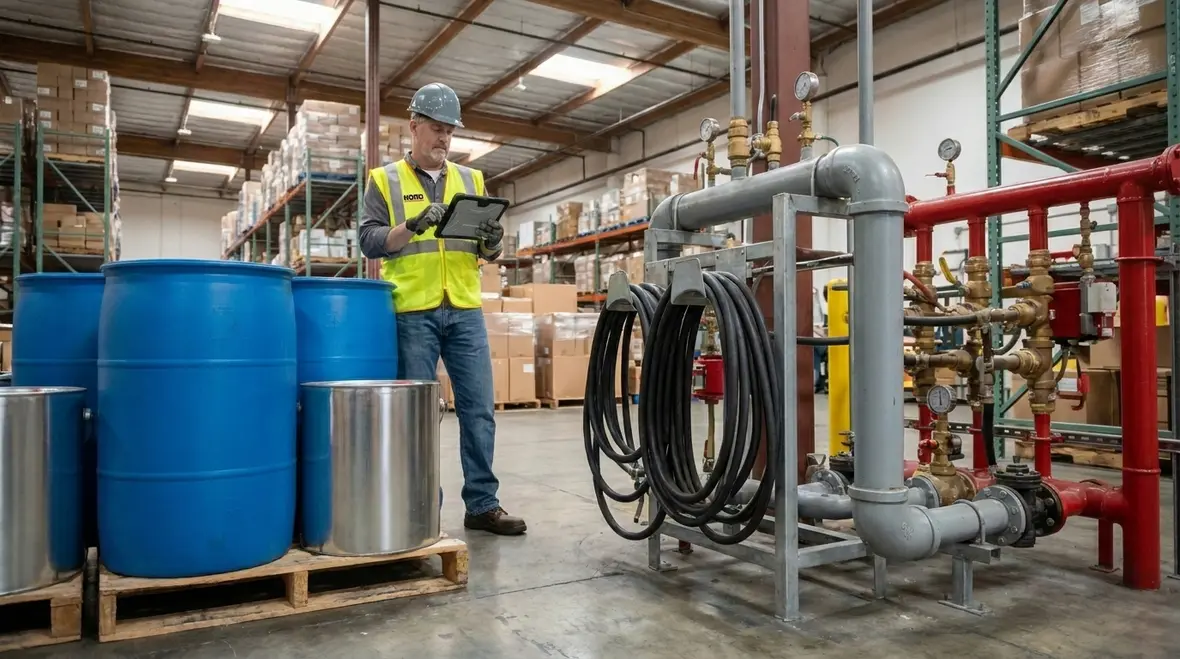
Foam concentrate has to do more than exist in a storage container and look official. It has to move through proportioning equipment correctly, mix at the intended rate, and discharge in a way that supports actual suppression. If a concentrate is too viscous for the setup, unsuitable for the proportioner, or inconsistent with the discharge device listing, performance can slip even when the rest of the system appears healthy. That is exactly the kind of hidden weakness good service programs are supposed to catch before the fire shows up to test everyone’s assumptions.
Foam Water System Foam Concentrate and Compliance
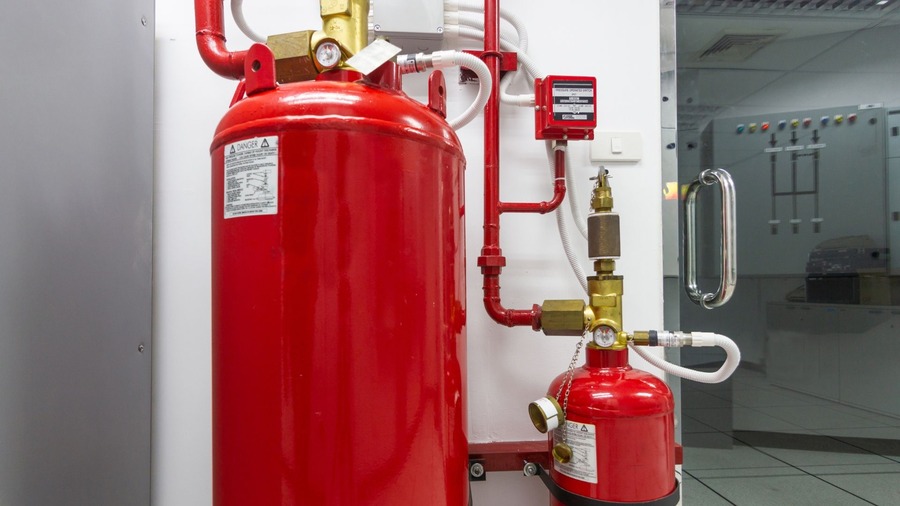
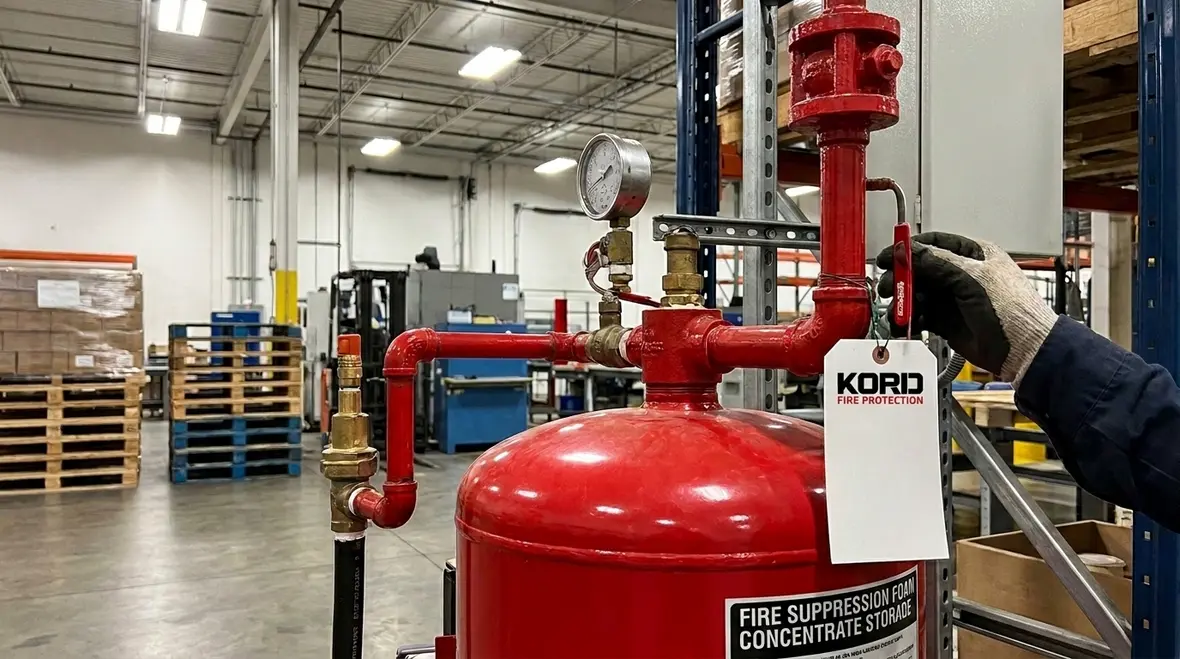
Compliance is not only about having a label on a drum. It also means the foam water system foam concentrate has been approved, stored correctly, and kept within its service life. Temperature, contamination, and age can all affect performance. As a result, regular checks matter just as much as the original selection.
For facilities, this can sit alongside site risk plans, insurer demands, and maintenance schedules. So, while NFPA 16 gives the technical baseline, the real world asks for more: proper inspection, record keeping, and a service partner who knows what to look for before a small issue turns into a large one.
The paperwork side matters because foam systems are often judged long before they are ever discharged in an emergency. Inspectors, insurers, facility managers, and safety teams want evidence that the concentrate is appropriate, documented, and maintained. When records are missing or vague, confidence drops fast. That usually leads to extra testing, awkward questions, and more budget conversations than anyone had planned for the quarter.
If you need a broader standard reference while reviewing design or maintenance requirements, it also helps to compare your program against NFPA 16 standard guidance so the concentrate discussion stays connected to the rest of the foam-water system design.
Fire Suppression Foam Types Used in Industry
Different fire suppression foam types serve different hazards. The most common categories include foam for hydrocarbon fuels, foam for alcohol resistant needs, and specialty products for particular industrial conditions. Each type brings its own strengths, and each one needs the right system setup.
For example, a fuel storage area may need a different solution than a chemical handling zone. Likewise, a bulk warehouse with mixed contents may need a design review before any product choice is made. This is why foam planning should never feel like choosing a brand of coffee. There is a real standard behind the choice, and the fire does not care about branding.
Common Hazard Pairings
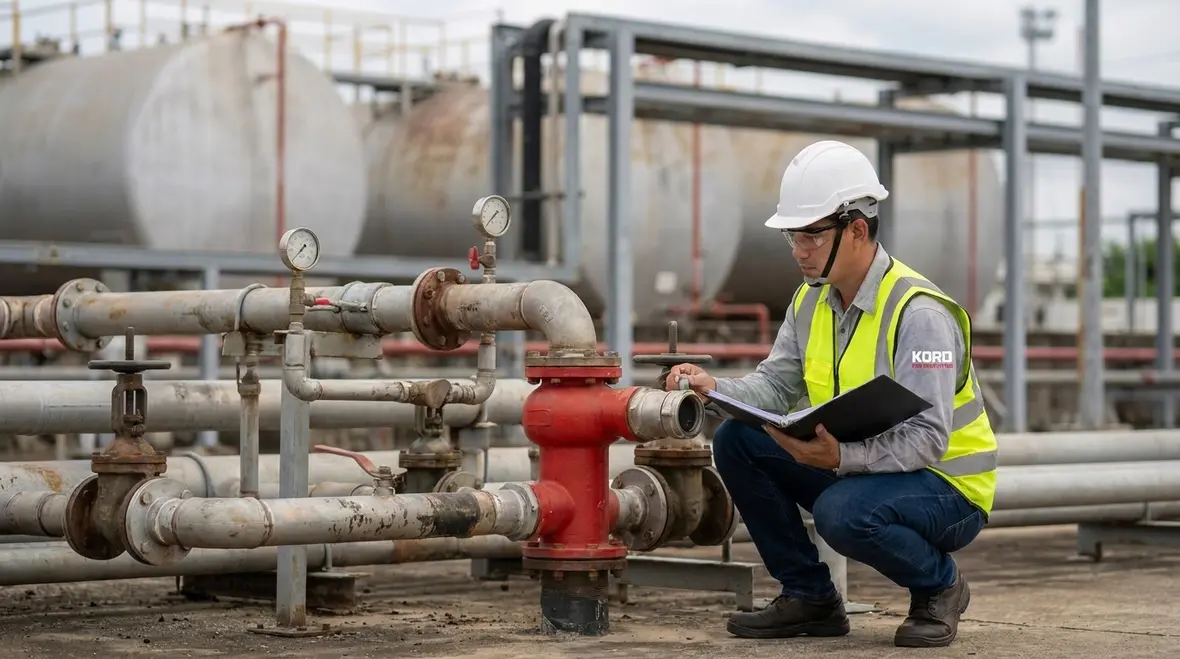
Hydrocarbon liquid hazards often call for one style of foam performance, while polar solvent hazards may need alcohol resistant characteristics to prevent the fuel from breaking down the foam blanket. Specialty industrial processes can add another layer of complexity through temperature, contamination potential, or unique fuel behavior. The point is not to memorize every foam family over coffee. The point is to understand that the hazard drives the choice, and the system design has to support that choice all the way from storage tank to discharge point.
How Kord Fire Protection Supports Foam System Service
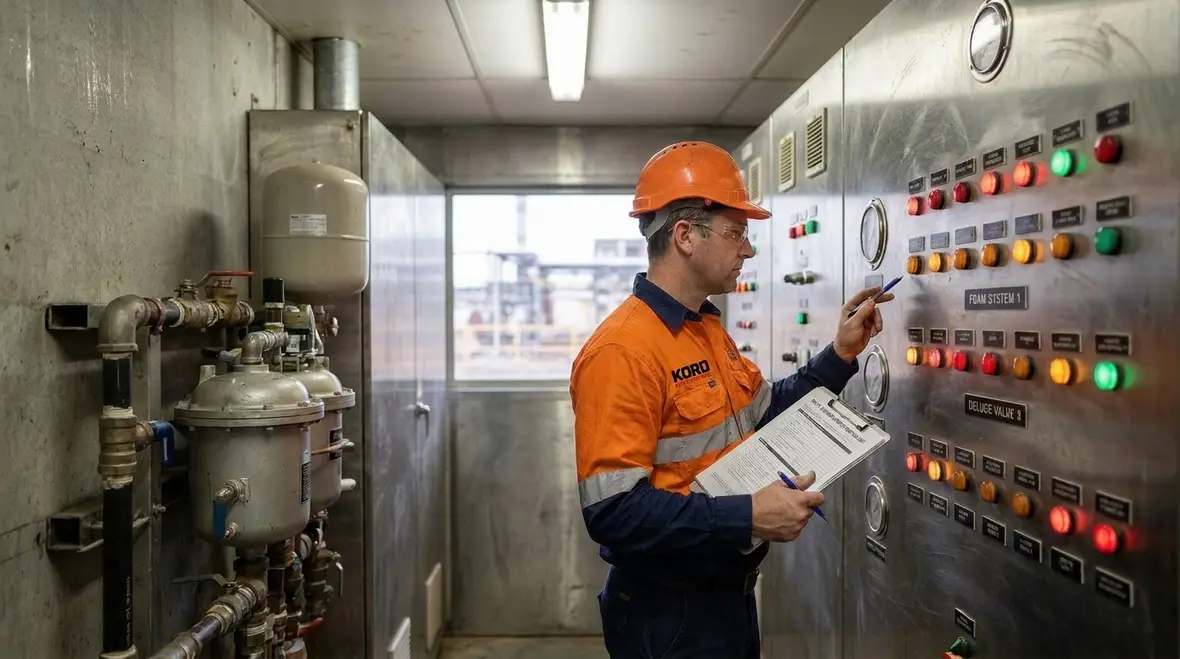
Kord Fire Protection can become a vital partner by helping facilities select, inspect, test, and maintain foam systems that align with NFPA 16 Section 6.3. That support can include concentrate checks, system review, equipment coordination, and scheduled service work that keeps the protection ready for duty.
More importantly, Kord Fire Protection can help reduce the risk of using the wrong concentrate, the wrong mix, or the wrong maintenance cycle. For industrial, retail, and commercial sites, that kind of support brings peace of mind. It also helps site teams stay focused on business operations instead of chasing fire protection problems after hours.
That support is easier to appreciate when you consider how many moving parts a foam-water system has. Concentrate quality, storage conditions, proportioning hardware, valves, pumps, test schedules, documentation, and hazard changes all need to stay aligned. One weak link can make the entire setup less dependable. Good service is really about preserving that alignment over time, which is much less dramatic than firefighting and much more useful for preventing it.
Foam System Service Checklist for Facilities
Technical checks
- Confirm concentrate type and approval
- Check mix ratio and compatibility
- Review hazard class and discharge needs
- Verify hardware alignment with the concentrate used
Service checks
- Inspect storage, labels, and dates
- Test pumps, valves, and proportioning parts
- Keep service records and inspection logs
- Review concentrate condition after maintenance or changes
This kind of review helps teams spot gaps early. It also supports better planning for shutdowns, repairs, and upgrades. In other words, fewer fire system headaches and fewer dramatic conversations no one asked for.
When to Review Foam Concentrate Again
Facilities should review foam concentrate whenever the hazard changes, the system is modified, or the stored product reaches a point where performance may shift. They should also check after contamination concerns, container damage, or major maintenance work.
Additionally, a review makes sense when a site expands, adds new stock, or changes its production process. A foam system that suited last year’s risk may not suit this year’s layout. Fire protection should move with the site, not lag behind it like a tired sequel.
FAQ
Conclusion
NFPA 16 Section 6.3 gives facilities a clear path to safer foam system performance, but the value comes from proper selection, testing, and service. The concentrate has to match the design, the hazard, and the equipment, and it has to stay in good condition over time. That may not be glamorous, but it is exactly how dependable fire protection is built.
Kord Fire Protection can help sites stay compliant, ready, and protected with practical service support that keeps foam systems aligned with real world risks. For businesses that depend on strong fire protection, the next step is simple: review the system, confirm the concentrate, and bring in a partner who knows the job well.

Join Our Newsletter!
Get the latest fire safety tips delivered straight to your inbox From our Newsletter.