NFPA 15 Section 5.2: Water Spray Nozzles Specifications
Quick Answer: NFPA 15 Section 5.2 sets clear expectations for water spray nozzles used in fixed fire protection systems. It focuses on how nozzles must be listed, suited to the hazard, and able to deliver the right spray pattern and flow. For industrial, retail, and commercial sites, these details help improve safety, compliance, and system performance.
NFPA 15 water spray nozzle requirements matter because the nozzle is where design becomes action. In plain terms, the system may look smart on paper, but if the nozzle cannot spread water where it should, the whole setup starts acting like a very expensive sprinkler with stage fright. Under Section 5.2, the nozzle must match the hazard, support the intended spray pattern, and perform reliably in real conditions. That makes the standard especially important for facilities protecting process areas, storage zones, electrical equipment, and other high risk assets.
Near the top of any planning conversation, it makes sense to connect nozzle selection with broader fire suppression system services, because the nozzle is only one part of a larger protection strategy. It also helps to review Kord Fire Protection’s related article on NFPA 15 and water spray fixed systems when you want extra context around where Section 5.2 fits into the full standard.
What NFPA 15 Section 5.2 Means for Water Spray Nozzles
Section 5.2 of NFPA 15 focuses on nozzle selection and performance. It requires nozzles to be suitable for the specific fire exposure and to deliver water in the pattern the system design calls for. This is not a guesswork exercise. The nozzle must help achieve controlled cooling, exposure protection, or direct application depending on the hazard.
That sounds straightforward, yet this is exactly where good engineering earns its keep. A nozzle that works beautifully for one area may be completely wrong for another. A loading bay with vehicle activity, an electrical room with sensitive equipment nearby, and a process area with concentrated heat exposure all demand different thinking. The standard pushes teams to be intentional rather than optimistic, which is a very healthy habit in fire protection.
For businesses, this is where compliance and practicality meet. A retail loading zone, a warehouse aisle, and a plant room each create different risks. Therefore, the nozzle must fit the job rather than force the job to fit the nozzle. That simple idea saves money, time, and a fair amount of future grief.
Why the nozzle is the moment of truth
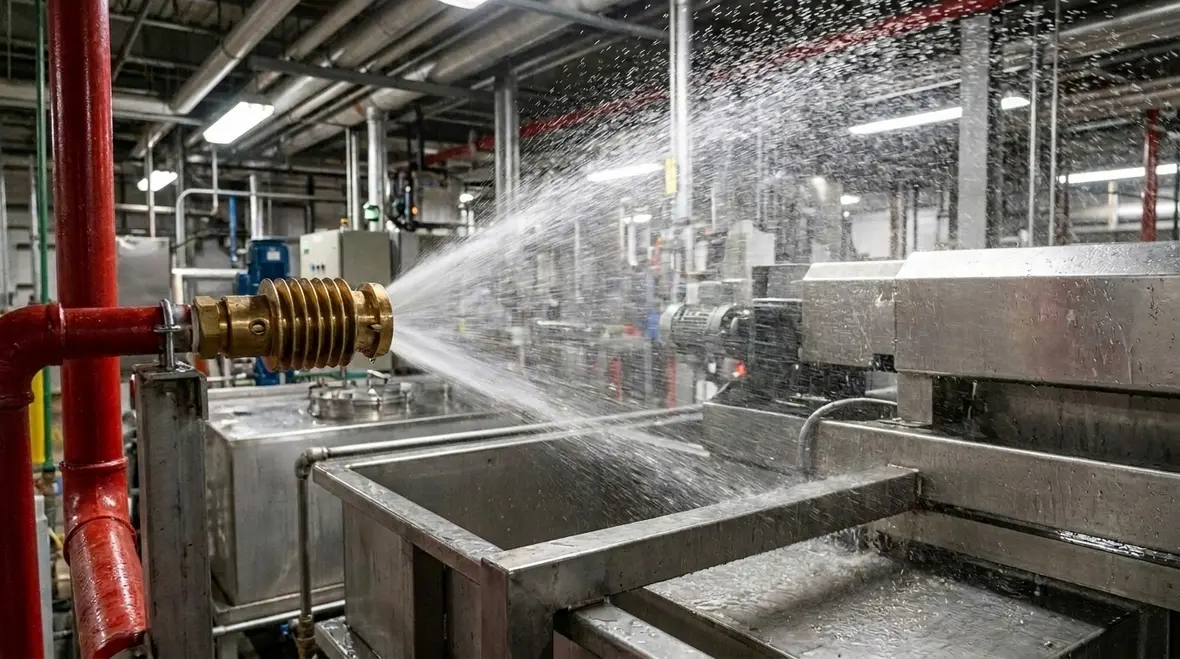
Drawings can be polished. Calculations can be tidy. Specifications can look impressive in a binder. But when a system activates, the nozzle is the part that has to actually perform. It determines whether water reaches the hazard in the required pattern, density, and direction. If the wrong nozzle is selected, the rest of the design can start looking less like a protection plan and more like an expensive confidence exercise.

What Specifications Matter Most in Nozzle Selection
NFPA 15 water spray nozzle requirements place strong focus on listing, spray pattern, discharge rate, and coverage. The nozzle should come from a recognized testing path and suit the system design. It should not only move water, but move it in the right way. After all, spraying water in the wrong place is a bit like bringing a fire hose to a tea party.
The specification checklist that actually matters
- Proper listing for the intended use
- Correct spray angle and pattern
- Suitable flow rate for the hazard
- Durable construction for the site environment
- Compatibility with pressure and piping design
- Reliable coverage over the protected surface or equipment
- Resistance to blockage, corrosion, and rough operating conditions
These points matter because the system must respond quickly and evenly. If pressure falls short or the spray pattern is off, exposed equipment may still take damage. As a result, the best nozzle is the one that fits both the risk and the hydraulic plan.
Coverage is especially important because it is easy to assume a nozzle protects more than it really does. A catalog value does not magically erase real world obstructions, elevation changes, or oddly shaped equipment. Design teams need to confirm what the nozzle can deliver in the field, not just what it promises in a neat table.
Pressure, pattern, and performance all travel together
Pressure and pattern are linked. If the available pressure is lower than intended, the droplet formation and reach may change. If the layout is altered during installation, coverage may no longer line up with the original design goal. That is why nozzle selection should never happen in isolation. The piping arrangement, water supply, hazard geometry, and operating objective all have to pull in the same direction.
How Design Teams Match Nozzles to the Hazard
Design teams do not choose nozzles by vibe, mood, or whatever the latest action movie used. Instead, they review the fuel load, heat exposure, equipment layout, and target area. Then they select a nozzle that can create the right coverage density and droplet size for that setting.
This step is especially important in facilities with mixed use spaces. For example, a distribution center may protect storage racks, battery charging zones, and service rooms. Meanwhile, an industrial site may need focused spray for pumps, tanks, or conveyors. In each case, the nozzle must support the system goal without wasting water or leaving gaps.
Also, the design must consider maintenance access. A nozzle that meets the spec but cannot be inspected or replaced easily will cause headaches later. And no one needs more surprises from a fire system.
Design side
- The nozzle must match the hazard, pressure, and required spray pattern
- Its discharge characteristics should support the intended control or cooling objective
- The layout must account for obstructions, reach, and overlapping coverage where needed
- The hydraulic design must support reliable performance during actual discharge conditions
Site side
- The nozzle must fit the building layout and the realities of access
- It should be practical to inspect, test, clean, and replace over time
- Nearby equipment, cable trays, beams, or partitions cannot be ignored
- The maintenance plan must protect long term reliability, not just installation day confidence
NFPA 15 Water Spray Nozzle Requirements in Practice
In practical terms, NFPA 15 water spray nozzle requirements guide how the system behaves during discharge. The nozzle must create the right distribution over the hazard zone, and the layout must make that coverage repeatable. This is why field review matters so much. Real buildings have beams, cable trays, equipment, and partitions that can block spray paths.
The standard also supports consistency across installation and testing. Once the nozzle is selected, the system should be installed as designed, then inspected and maintained with care. That means checking for obstruction, corrosion, damage, and alignment issues. Even a small change in nozzle position can affect coverage. Fire protection may sound quiet, but it is rather picky about details.
In the field, small mistakes often become large problems. A nozzle turned slightly off line, a newly added cable tray, or a protective guard installed without thought can all interfere with discharge. None of these changes look dramatic during a walk through, yet they can quietly reduce the effectiveness of the system. That is why inspection teams need to pay attention to the boring details. The boring details are usually the ones that decide whether the system behaves like a professional or a panicked amateur.
Where maintenance protects the original design intent
Maintenance is not just about satisfying a calendar. It is about preserving the performance the designer intended in the first place. If debris builds up, corrosion develops, or replacement parts do not match the listed nozzle characteristics, the system can drift away from compliance and effectiveness. A good maintenance program brings the system back to reality before reality brings a fire test no one asked for.
Why Compliance Helps Facilities Reduce Risk
Compliance does more than satisfy paperwork. It improves confidence that the system will work during a real event. For industrial and commercial sites, that can mean better protection for staff, stock, plant, and business continuity. It also supports smoother audits and fewer costly surprises during inspections.
Furthermore, a compliant nozzle selection helps reduce the chance of underperformance during a fire exposure. That matters for assets with high replacement cost or long downtime. In a world where one bad day can upset the whole quarter, that kind of protection is worth serious attention.
There is also a documentation benefit that people tend to appreciate only after something goes wrong. When nozzle selection, layout, servicing, and testing are well documented, teams can show that the system was chosen and maintained with purpose. That helps everyone from facility managers to compliance reviewers understand what the system is supposed to do and whether it is still ready to do it.
How Kord Fire Protection Can Support This Service and Job
Kord Fire Protection can become a vital partner because nozzle selection is only one part of the full picture. The real value comes from combining code knowledge, site review, design support, installation, testing, and maintenance. That combination helps facilities meet NFPA 15 expectations while keeping the system practical for daily operations.
For businesses across Southern California, Kord Fire Protection can help assess the hazard, confirm suitable nozzle types, support system design, and keep performance on track through inspection and servicing. In addition, their experience can reduce delays, improve documentation, and help site teams avoid the classic “we thought it was fine” problem that tends to show up at the worst time.
If your team needs a practical next step, exploring Kord Fire Protection’s broader full fire protection services can help connect nozzle performance with inspections, testing, repairs, and long term readiness. That bigger view is often what turns a technically compliant system into one that is also easier to manage in real life.
FAQ on NFPA 15 Water Spray Nozzle Requirements
Final Word for Facilities That Need the Right Protection
NFPA 15 Section 5.2 gives facilities a clear path to better nozzle selection and stronger fire protection performance. For industrial, retail, and commercial sites, the smartest move is to treat nozzle choice as a critical design step, not a small detail. When the nozzle matches the hazard, the pressure, and the layout, the system has a far better chance of doing exactly what it was meant to do when conditions get serious.
Kord Fire Protection can help turn that standard into a working system that supports safety, compliance, and peace of mind. From site review and design support to inspection, testing, and maintenance, the goal is to keep performance practical as well as compliant. Now that is a job worth doing right.

Join Our Newsletter!
Get the latest fire safety tips delivered straight to your inbox From our Newsletter.