NFPA 291 Section 4.6 Hydrant Flow Testing Equipment Checklist
Quick Answer: NFPA 291 Section 4.6 calls for the right tools, proper setup, and careful measurement to test hydrant flow safely and accurately. For industrial, retail, and commercial sites, the right hydrant flow testing equipment helps confirm water supply performance, support fire system design, and reduce risk. Kord Fire Protection can make that process smoother from start to finish.
Hydrant flow testing may sound like one of those jobs that only gets attention when someone in a hard hat starts pointing at a valve and nodding with great seriousness. Yet it matters. A lot. In the first steps of a proper test, technicians rely on hydrant flow testing equipment to measure pressure, track flow, and record results that can guide fire protection decisions. Under NFPA 291 Section 4.6, the equipment must do more than look official. It must deliver reliable data that helps facilities understand what their water supply can really do when the heat is on.
If your property also needs broader support beyond a single test, Kord Fire’s fire hydrant testing services fit naturally into the conversation near the top, because many sites need both accurate field measurements and a team that knows how to turn those measurements into useful next steps. Kord also offers a broader full fire protection services approach when hydrant flow testing is part of a larger site safety plan. And for readers who want more standard-specific context, Kord already has a related NFPA 291 fire hydrant testing and marking guide that connects well with this checklist-focused topic.
What NFPA 291 Section 4.6 Means for Site Testing
NFPA 291 Section 4.6 focuses on the tools and methods used during hydrant flow testing. It sets the stage for accurate field work, because a bad reading can lead to poor design choices, weak fire protection planning, and expensive rework later. For commercial and industrial sites, that is not a small detail. It can affect compliance, system performance, and emergency readiness.
The section supports a simple idea: if the test is not measured well, the result cannot be trusted. Therefore, technicians need equipment that can handle real site conditions, deliver consistent readings, and support clear reporting. In practice, this means the job needs more than a wrench and a hopeful attitude. Although that attitude is nice, it does not pass an audit.
Why the standard cares so much about equipment quality
Field testing is not performed in a perfect laboratory where every condition behaves politely. It happens on busy streets, active facilities, loading zones, retail centers, and sites where someone always seems to be asking whether the water will spray near the only door anyone wants to use. Because of that, the testing equipment must stay dependable under real conditions. Gauges need to read accurately. Connections need to stay secure. Logging tools need to capture information clearly enough that engineers and site managers can use it later without playing detective.
Hydrant Flow Testing Equipment Needed on Site
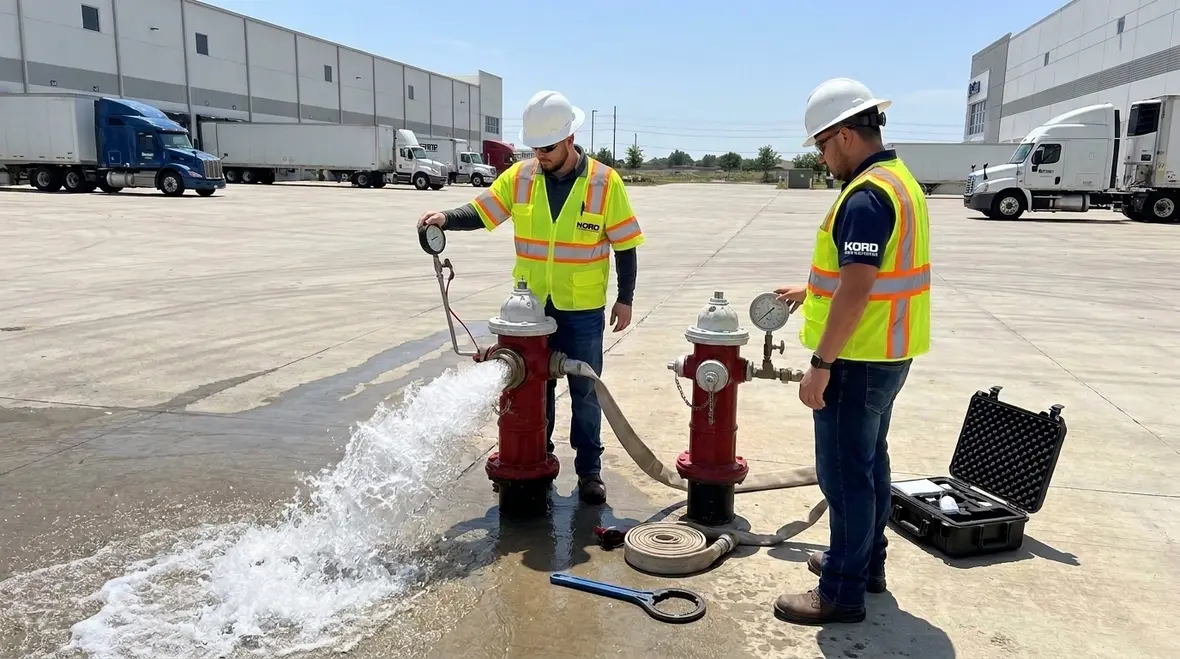
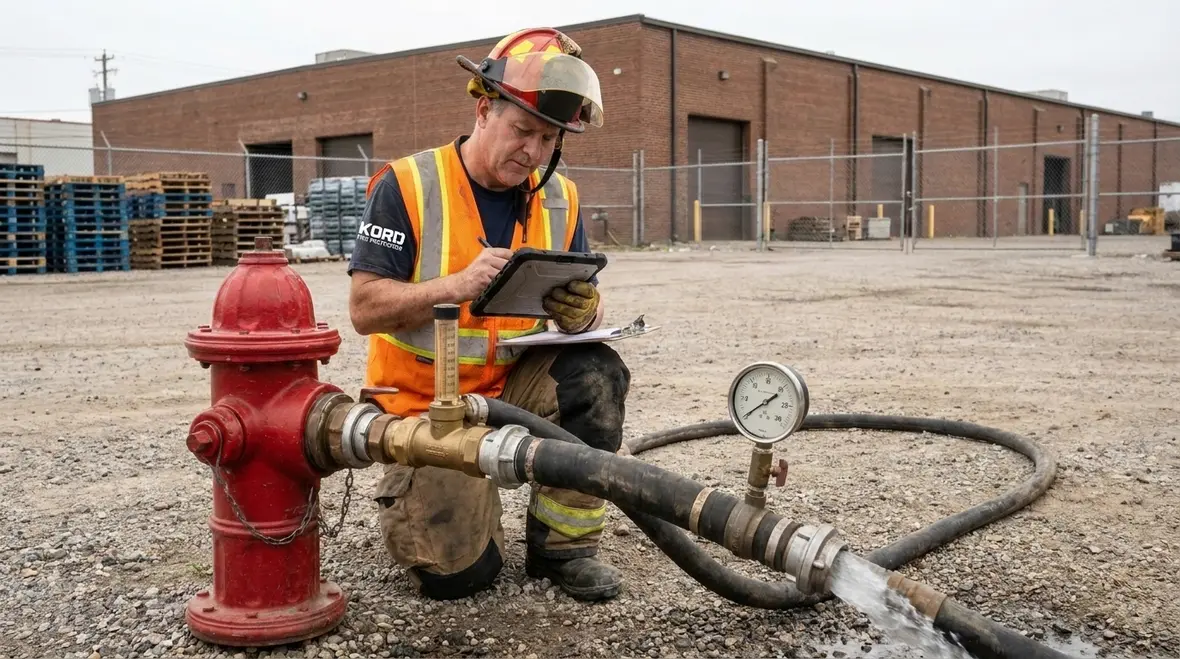
The core hydrant flow testing equipment usually includes pressure gauges, flow meters, pitot gauges, hydrant adapters, hose, data sheets, and safety gear. Each item plays a role. For example, gauges measure pressure before and during discharge. Flow devices help estimate the water volume leaving the hydrant. Meanwhile, adapters and hoses make the connection secure and keep the test controlled.
Accurate tools matter because hydrant tests must reflect real supply conditions. If a gauge drifts or a hose leaks, the results can mislead engineers and building managers. Also, field crews often work in active commercial zones, so the equipment must be easy to deploy and safe to use. That is especially true on large industrial estates, busy retail sites, and multi building facilities where the clock never seems to sit still.
The essential checklist at a glance
- Pressure gauges for static and residual pressure readings
- Pitot gauge or flow meter for discharge measurement
- Hydrant wrench for safe operation of caps and valves
- Adapters and fittings for secure outlet connections
- Hose and discharge control gear to direct water safely
- Test forms or digital logging tools for accurate recordkeeping
- Traffic and safety equipment for public and crew protection
- Communication tools so the team can coordinate without confusion
That list may not look glamorous, but then again neither does a clipboard until it saves a project from using bad numbers. The point is that each item supports either measurement accuracy, safe field control, or clear documentation. Remove one piece, and the whole process gets shakier than it needs to be.
How the Main Tools Work Together
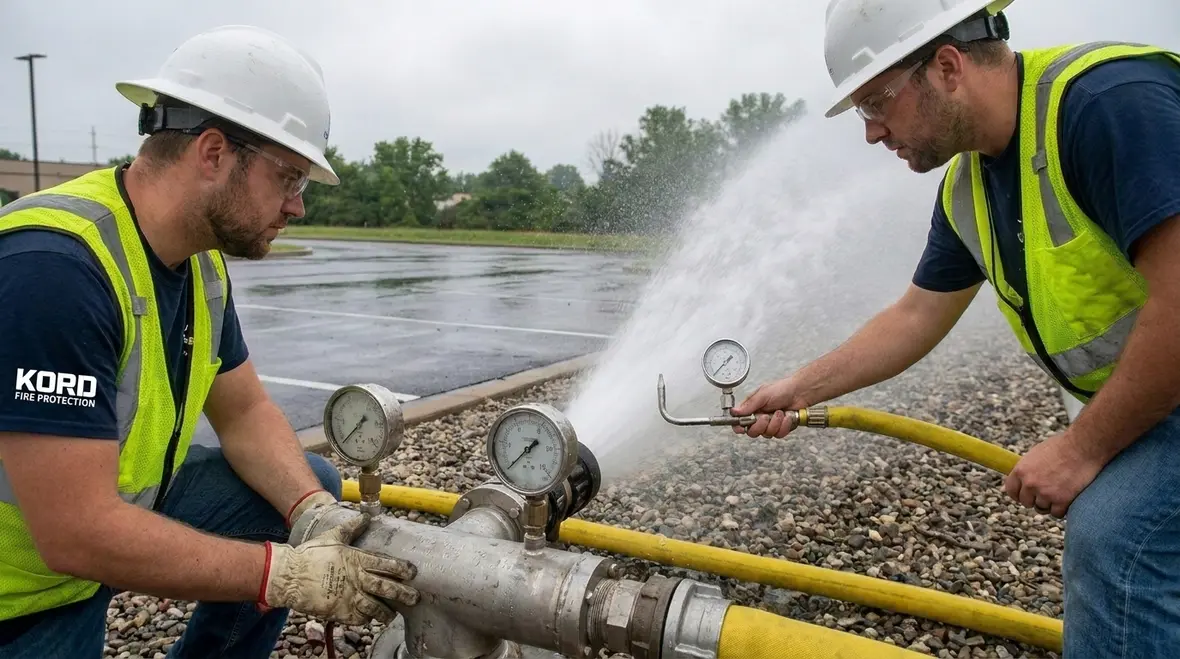
The process depends on teamwork, and the equipment works like a well tuned cast. One tool reads residual pressure, another measures flowing pressure, and a third helps record the numbers that shape the final report. Then the technician compares the data to determine available supply and system suitability.
Here is a simple breakdown:
- Pressure gauge to measure static and residual pressure
- Pitot gauge or flow meter to assess discharge flow
- Hydrant wrench and adapters to open and connect safely
- Hose and discharge control gear to direct water away from people and property
- Test forms or digital logging tools to record the field results
When all of these pieces work together, the test becomes more than a routine task. It becomes a clear picture of site water supply. And that picture matters when a facility needs to prove its readiness rather than just talk about it over a cup of coffee.
What technicians are really trying to learn
At the practical level, the team wants to know whether the available supply can support the intended fire protection strategy. Static pressure shows the baseline. Residual pressure shows how the system behaves under demand. Flow measurement shows the volume that can be delivered. Documentation ties those facts together so decision makers are not forced to rely on assumptions, memory, or the always risky phrase, “it should probably be fine.”
This is one reason Kord’s related hydrant testing content fits so naturally around the topic. The company’s exterior hydrant flow testing article emphasizes organized measurement setup, safe discharge direction, data recording, and follow-up review, all of which reinforce why equipment and process have to work together rather than exist as separate boxes on a checklist.
Why Accurate Measurement Protects Commercial Sites
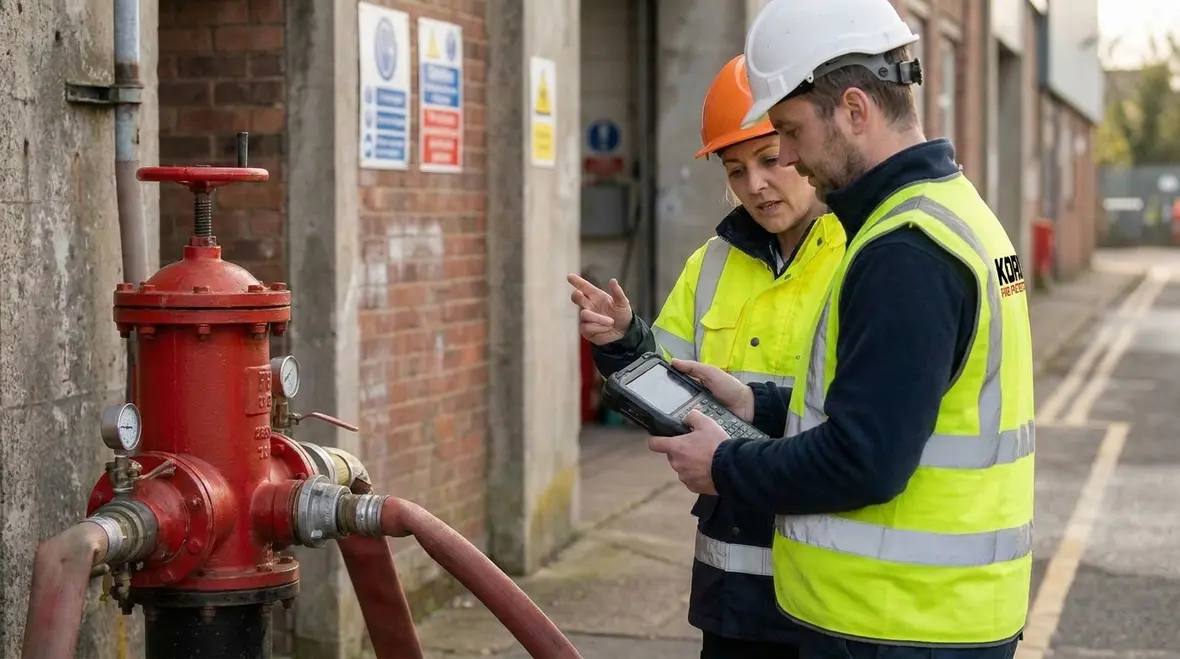
Commercial and industrial properties face different fire risks, but they share one need: dependable water supply data. Accurate hydrant testing helps engineers size fire systems correctly, helps facility managers understand supply limits, and helps compliance teams avoid nasty surprises later. In short, it saves time, money, and stress.
Also, many sites change over time. Tenants move in, process loads increase, and building layouts shift. As a result, old assumptions about water supply can become outdated. Hydrant flow testing equipment gives teams current information so they can plan with confidence. That is better than guessing, and guessing is fine for trivia night, not fire safety.
Where the results show up later
Reliable test results do not disappear into a folder that no one opens again until next year. They often shape sprinkler system design, support hydraulic calculations, guide maintenance planning, help verify whether hydrants can meet response expectations, and provide documentation that makes audit conversations much less painful. If the numbers are off, all of those later decisions can wobble. If the numbers are sound, the site gets a stronger foundation for planning.
How Kord Fire Protection Supports the Job
Kord Fire Protection can become a vital partner in hydrant flow testing because the service needs both technical skill and practical field experience. A reliable partner helps organize the job, bring the right equipment, manage site safety, and produce clear results that decision makers can use. That support is valuable for facilities that cannot afford downtime or confusion.
In addition, Kord Fire Protection can help teams move from raw readings to useful action. For example, the company can support testing, reporting, maintenance planning, and follow up recommendations. That means site managers do not just receive numbers. They receive context, direction, and a clear path forward. For busy industrial, retail, and commercial sites, that kind of help can feel like finding the last parking spot right outside the entrance.
Why a specialist partner reduces friction
The smoother the team coordination, the easier it becomes to work around access limits, operating hours, active traffic, and site-specific safety concerns. Kord’s service-focused pages repeatedly frame testing as both an operational task and a documentation task, which is exactly the combination most facilities need. Good field work without a usable report leaves questions unanswered. A good report without disciplined field work is just neat looking paperwork. The value sits in the combination.
What Facilities Should Ask Before the Test
Before any hydrant flow test begins, facility teams should confirm the testing scope, site access, shutdown needs, and reporting format. They should also ask what hydrant flow testing equipment will be used and how the data will be verified. This keeps the process smooth and avoids last minute surprises.
It also helps to ask how the test results will support future fire protection planning. In many cases, the value of the test goes far beyond one report. Instead, it becomes a baseline for upgrades, compliance reviews, and risk management. That is where a skilled partner matters most, because the right questions often lead to the right answers.
A practical pre-test question list
- Which hydrants will be used for static and flowing measurements?
- What gauges or meters will be brought to site?
- How will water discharge be directed safely?
- Will traffic control or pedestrian management be needed?
- What report format will the site receive after testing?
- How will the results support future sprinkler or hydrant planning?
- Are there related Kord resources the site team should review in advance?
Final Word for Safer Site Planning
Hydrant flow testing works best when the equipment, the process, and the reporting all line up. For commercial and industrial facilities, that means using the right tools and the right team. Kord Fire Protection can help turn a technical requirement into a clear, dependable service that supports safety and compliance.
If a site needs accurate results and less fuss, it is time to bring in a partner that knows the drill. Better numbers lead to better fire protection decisions, and better fire protection decisions are far more comforting than crossing your fingers and hoping the hydrant is feeling generous that day.
FAQ

Join Our Newsletter!
Get the latest fire safety tips delivered straight to your inbox From our Newsletter.