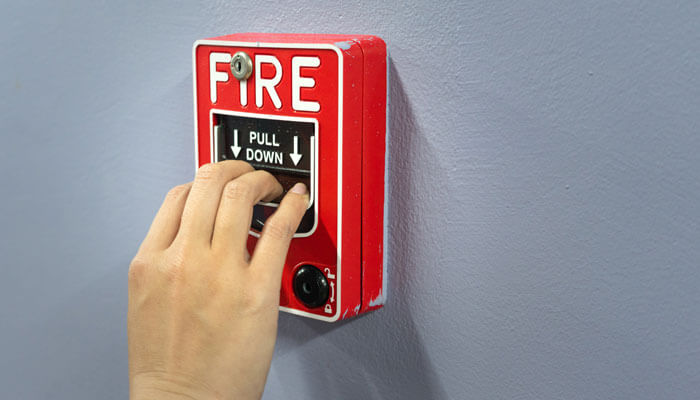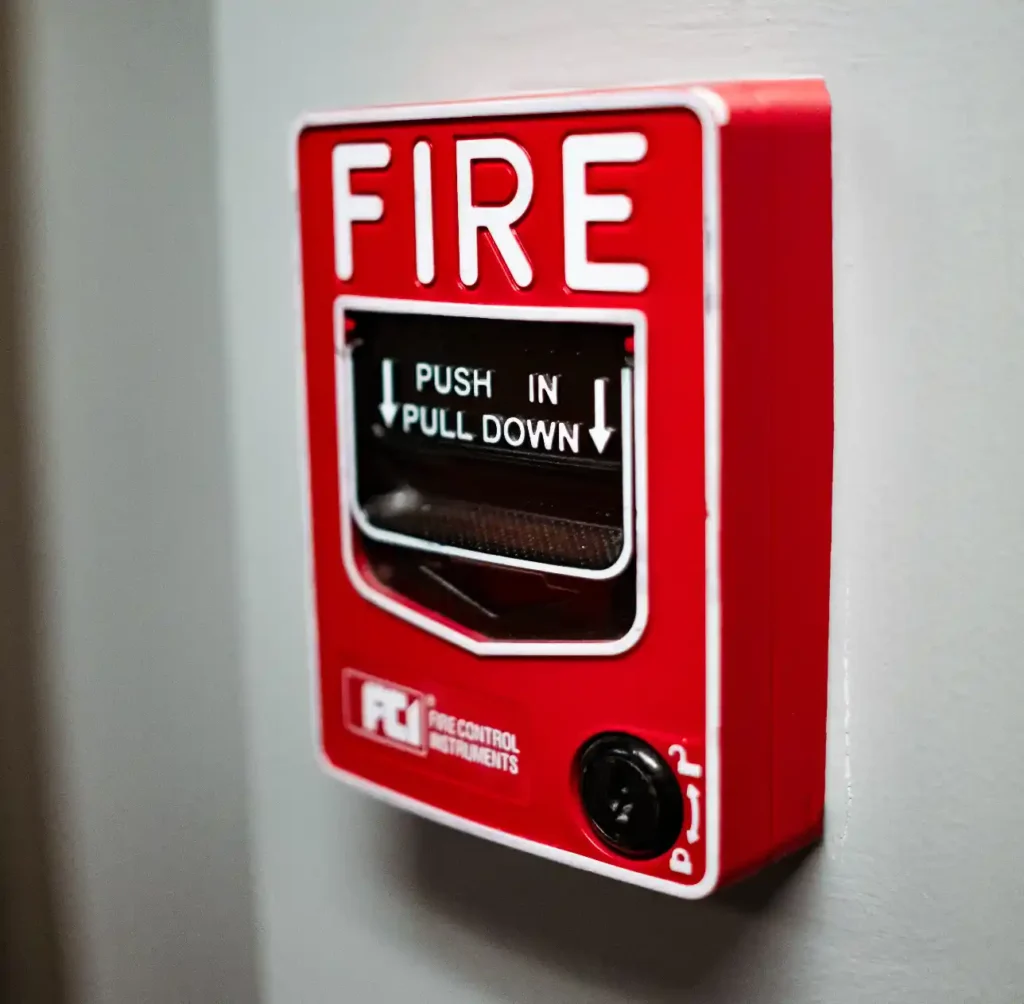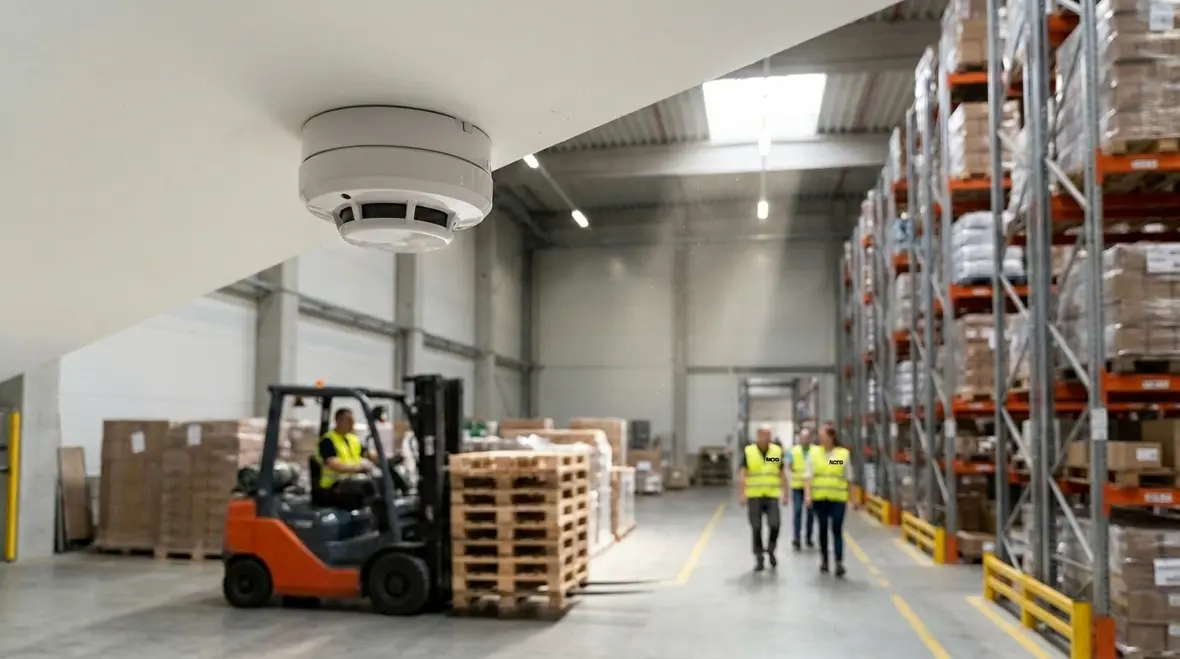
Fire Alarm Sensor Technology to Reduce False Alarms
Quick Answer (40-60 words)
Advanced sensors cut false fire alarms by spotting real danger patterns, not just smoke haze or minor heat changes. When facilities use smart detection and clean alarm logic, nuisance calls drop and response time improves. Kord Fire Protection can act as a vital partner by designing, installing, and maintaining systems that stay accurate under real-world conditions.
In commercial and industrial buildings, false alarms cost more than a few interrupted minutes. They break concentration, slow operations, frustrate tenants and staff, and can slowly teach people to treat the alarm like background drama instead of a real warning. That is exactly where fire alarm sensor technology earns its keep. Modern detectors can separate nuisance conditions from actual fire signatures far better than older devices that reacted the second something vaguely smoky wandered by. When that smarter detection is paired with proper setup, testing, and maintenance from a provider like professional fire alarm services, the result is a system that stays sharp in the messy reality of warehouses, kitchens, loading docks, plant rooms, retail floors, and mechanical spaces.
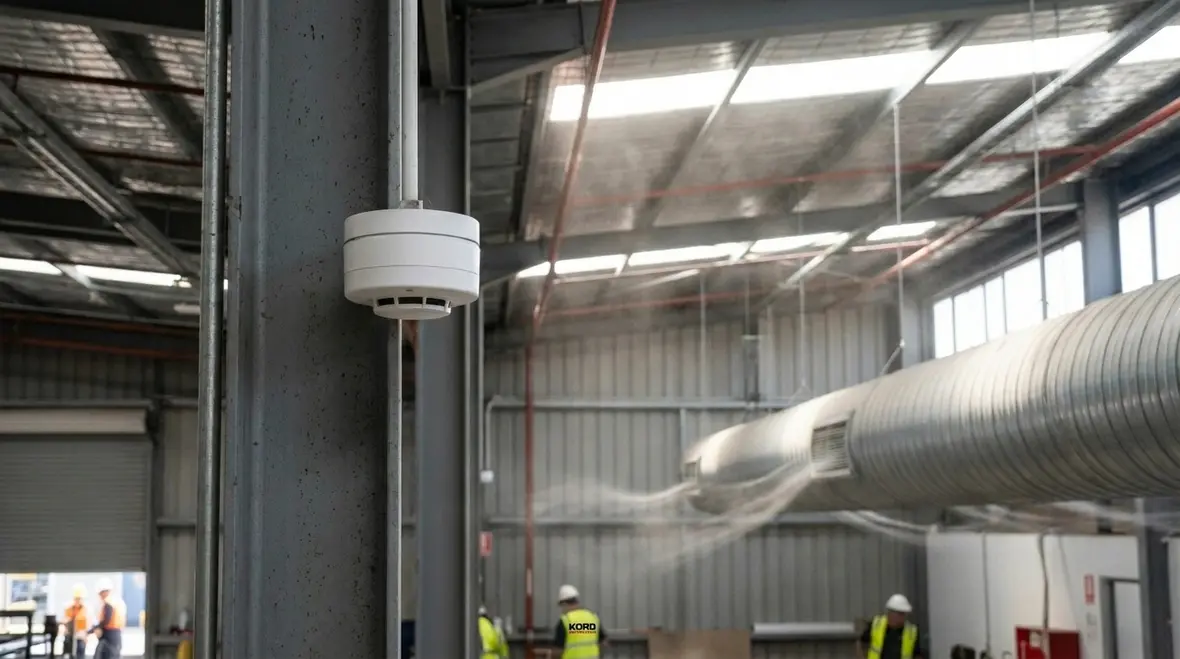
How advanced detection reduces nuisance alarms in real sites
Advanced sensors reduce false fire alarms because they do not rely on one clue and immediately panic. Older detection could act like a very literal neighbor who calls the authorities because they heard one suspicious cough through the wall. Newer systems look for patterns, compare changes over time, and weigh more than one signal before escalating an event.
Fire alarm sensor technology can use sensitivity tuning, environmental compensation, and multi-criteria decision logic to deal with common nuisance sources such as dust, steam, cooking aerosols, changing airflow, and minor heat variation. That means the detector is not simply asking, “Did I sense something odd?” It is asking, “Does this odd thing actually behave like a developing fire?” That is a much better question, and honestly, more systems should ask better questions.
The goal is not a mythical system that never makes a bad call. The goal is a system that makes fewer bad calls, gives clearer information, and preserves trust. When occupants believe an alarm probably means something real, response quality improves immediately. That trust matters as much as the hardware.
Why confidence matters as much as detection
A detector that cries wolf too often does more than create paperwork. It creates alarm fatigue. Staff begin to hesitate, managers delay investigation, and tenants mentally downgrade the urgency of the signal. Smart sensors help break that cycle by improving the quality of each activation and making the alarm feel credible again.
What false alarms usually come from
To reduce false fire alarms, facilities need to understand the source of the problem before they start swapping devices or blaming the panel. Most nuisance events come from a handful of recurring causes, and modern sensor logic handles each one a little differently.
- Dust and airborne particles from sanding, cutting, grinding, shipping, packaging, or renovation work
- Steam and condensation near kitchens, wash bays, sterilization areas, locker rooms, or humid process zones
- Small smoke events from maintenance, hot work, welding, or testing activity
- Airflow changes caused by HVAC cycling, extraction systems, roll-up doors, dock traffic, or pressure differences
- Rapid temperature shifts from heaters, motors, machinery, or hot equipment installed too close to detectors
- Dirty sensing chambers, blocked inlets, aging components, or sensitivity drift over time
Then there is the human factor. A detector can be high quality and still perform poorly if it is installed in the wrong place, left dirty for too long, or set too aggressively for the environment. That is why lower nuisance alarm rates come from both smarter equipment and disciplined service. Technology is not magic. It still has to live in your building.
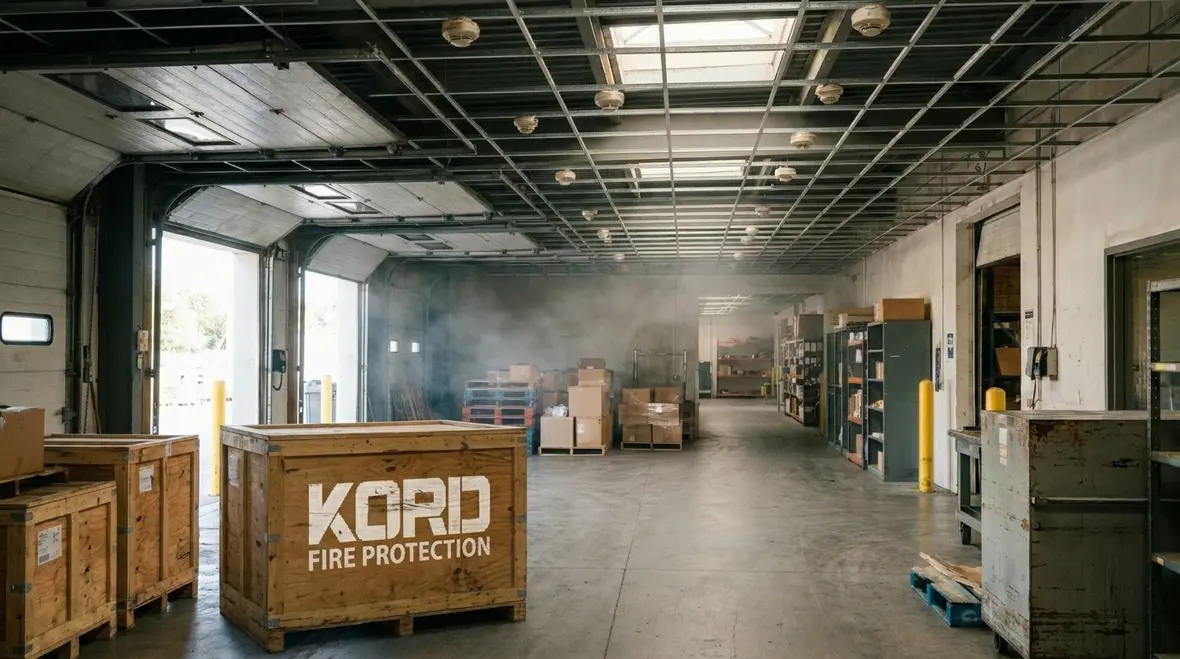
How multi-criteria sensing separates smoke from trouble
One of the biggest improvements in modern detection is multi-criteria sensing. Instead of reacting to a single smoke-like or heat-like condition, the detector and panel evaluate multiple inputs and look at how they change together. This can include smoke density behavior, rate of rise, temperature trend, timing, and the broader context of the zone.
That matters because nuisance conditions often imitate only part of a fire signature. Steam may look suspicious for a moment, airborne dust may scatter light in an optical chamber, and hot machinery may raise ambient temperature. But those conditions do not necessarily behave like a genuine developing fire when the system evaluates the pattern over time. Multi-criteria logic helps stop the detector from jumping to the loudest conclusion first.
In active facilities, this is a major advantage. Distribution centers keep moving, manufacturing lines keep producing, kitchens keep steaming, and commercial buildings keep breathing through their HVAC systems. Advanced sensing allows the system to stay alert without becoming comically overdramatic. Nobody needs an alarm system with the emotional stability of a soap opera character.
Where this logic helps most
Facilities with changing environmental conditions benefit the most from smarter decision logic. That includes sites with high door traffic, dusty operations, intermittent heat sources, food preparation, or mechanical equipment that affects air patterns. In those environments, better interpretation is often more valuable than simply adding more devices.
Why placement, zoning, and calibration matter as much as sensing
Even the best detector cannot rescue a bad layout. If placement ignores air movement, repeated steam exposure, obstructions, ceiling configuration, or heat-producing equipment, nuisance alarms will keep showing up like uninvited relatives. Good design gives advanced technology a fair chance to work properly.
- Correct mounting height and spacing for the room type and conditions
- Avoiding placement where repeated steam bursts or heavy dust clouds strike the detector
- Accounting for HVAC supply and return paths that influence smoke travel
- Using clear zoning so responding teams can identify the likely source area quickly
- Balancing coverage so sensors detect meaningful smoke trends instead of random particles
- Reviewing changes after remodels, new equipment installs, or process updates
Calibration and commissioning finish the job. Buildings change over time. Air systems are adjusted, production lines move, tenant spaces are reworked, and storage patterns evolve. A detector that made perfect sense on day one may become less reliable if the environment around it changes. That is why Kord Fire Protection can provide lasting value not just with installation, but with ongoing evaluation and service. Their related guidance on proper detector placement to reduce false alarms makes the same point from another angle: smart devices still need smart positioning.
Because the truth is simple. Sensors do not lose accuracy because the universe is rude. They lose accuracy because dust builds up, environments drift, and time keeps showing up uninvited.
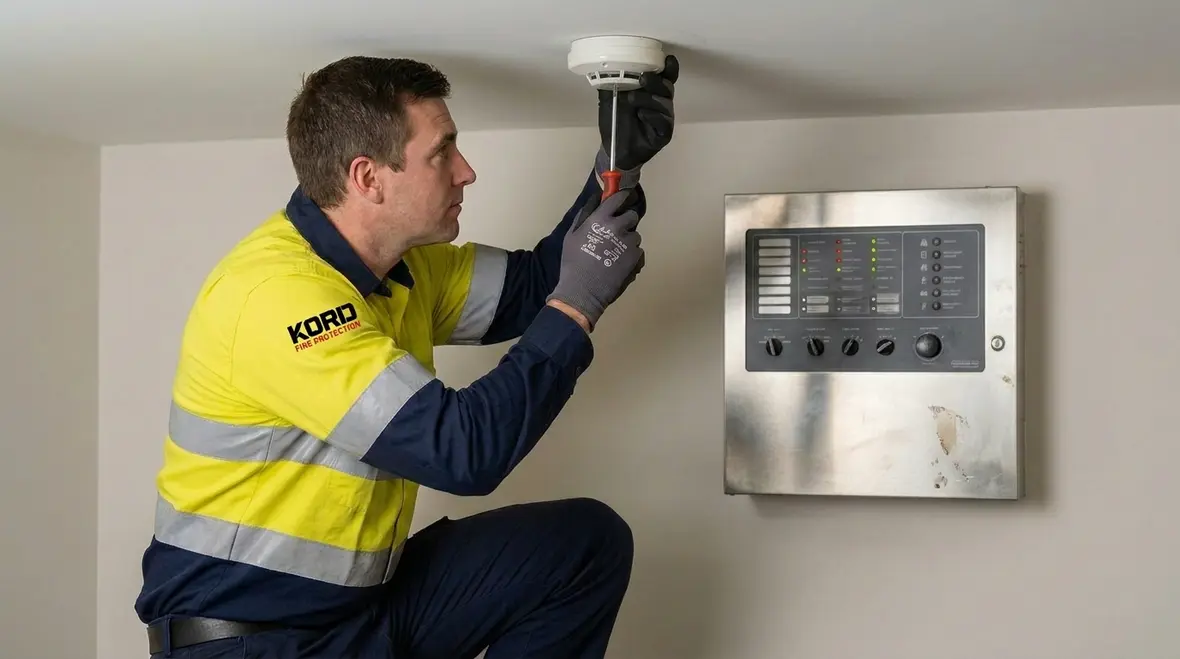
Service and maintenance that keep sensor logic trustworthy
Modern detection can reduce false alarms dramatically, but it still depends on maintenance. Smoke sensors collect contaminants. Heat elements drift. Chamber performance changes. Lenses and inlets get dirty. Small shifts can alter how a detector interprets an event, and over time those small shifts start making very expensive noise.
- Regular inspection and cleaning of detector components
- Functional verification using the correct test tools and procedures
- Review of thresholds and sensitivity where design and code permit adjustment
- Event log analysis to identify repeating nuisance patterns
- Coordination with operations staff when processes, storage, or layouts change
- Follow-up after repairs or upgrades to confirm performance in real conditions
This is where service becomes more than a checklist. Kord Fire Protection can connect detector history, placement, site activity, and alarm events to find the actual cause of repeated nuisance alarms. Their related article on proper device calibration reinforces the same idea: when systems are tuned with precision, the alarm speaks with more authority and less confusion. That is much better than a panel that looks impressive but behaves like it had three coffees and a crisis.
How Kord Fire Protection supports facilities
Different properties create different detection challenges. A dusty industrial operation, a logistics building with constant loading activity, a mixed-use commercial site, and a retail environment with changing occupancy patterns will not all need the same maintenance rhythm or detector strategy. Kord Fire Protection can help owners and managers turn those differences into a practical plan.
- System reviews to identify nuisance alarm trends and zone issues
- Recommendations for upgrading outdated detection where needed
- Commissioning and verification support after changes to the building or process
- Maintenance schedules matched to building activity and exposure conditions
- Integrated support through broader fire protection services when multiple life safety systems need coordination
That practical support matters because repeated nuisance alarms are rarely random forever. Patterns usually exist. They may tie back to one process, one location, one HVAC condition, one neglected detector, or one design assumption that no longer matches the building. Once those patterns are identified, facilities can stop rerunning the same troubleshooting loop and actually fix the root cause.
Real-world impact: less downtime, less stress, better response
Reducing false alarms is not just about cleaner reports. It improves daily operations, helps preserve occupant confidence, reduces unnecessary disruption, and supports faster, more focused response when a real event occurs. Meaningful alerts allow teams to act decisively instead of wondering whether this is another sensor having a moment.
| Operational area | Benefit from advanced sensor decision logic |
| Industrial sites | Fewer alerts from dust, routine maintenance activity, and normal equipment heat cycles |
| Retail and logistics | Less disruption from aerosols, airflow changes, dock traffic, and shifting occupancy patterns |
| Commercial facilities | More reliable zoning and clearer event information so teams reach the right area faster |
When these improvements are supported by ongoing maintenance, they stick. That is the difference between a system that performs well during commissioning and a system that continues performing well after months of real-world use. Trustworthy detection is not a one-time achievement. It is a managed condition.
FAQ
Final word: make false alarms a manageable problem
Advanced sensors cut false fire alarms by making detection smarter, not just louder. But the benefit lasts only when design, placement, and maintenance continue matching the way the building actually operates. That is why better hardware alone is not the full answer.
Kord Fire Protection can help reduce nuisance events, improve response readiness, and keep detection performance aligned with real site conditions. If your alarm history feels like an ongoing prank with wiring, it may be time for a smarter review and a better long-term plan.

Join Our Newsletter!
Get the latest fire safety tips delivered straight to your inbox From our Newsletter.