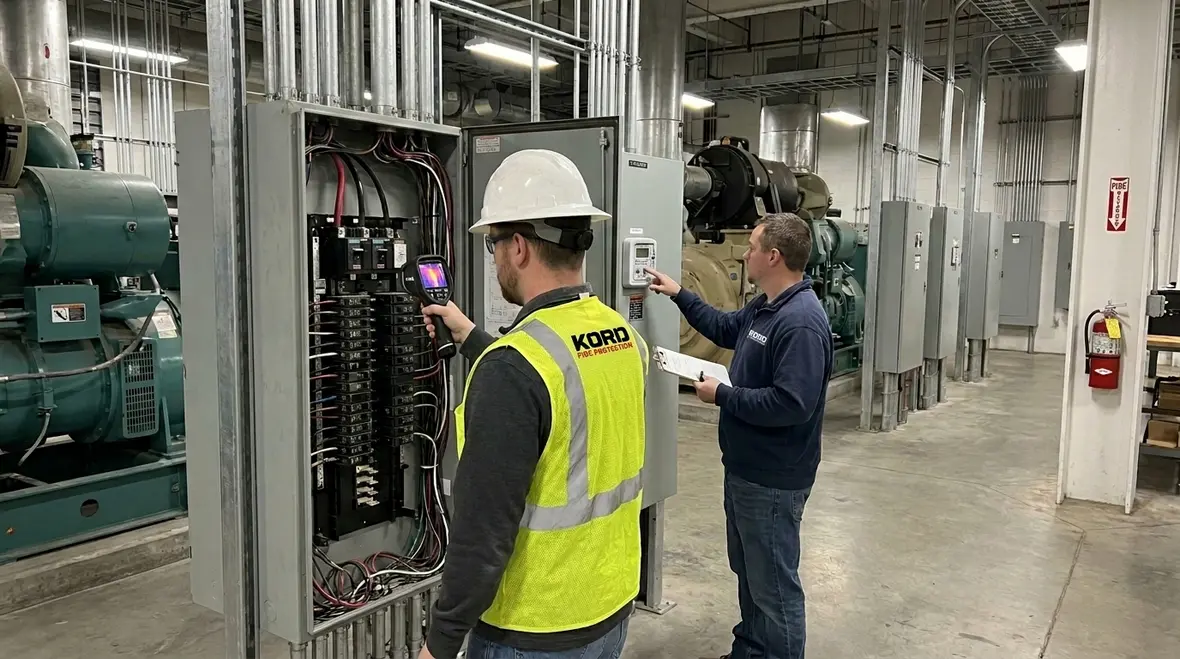
Commercial Electrical Load Analysis to Prevent Overloads
Quick Answer: Overloads in industrial, retail, and commercial facilities often start small: a circuit runs hot, a panel ages, or new equipment gets added without planning. Professional commercial electrical load analysis helps teams predict demand, balance phases, and prevent failures before they happen. Kord Fire Protection can then align electrical decisions with life safety needs.
In the real world, electrical problems rarely announce themselves with a giant neon sign. They show up as nuisance trips, scorched breakers, flickering lighting, and the occasional “Why did this just fail?” moment during peak operations. That is exactly where commercial electrical load analysis earns its keep. Early planning turns unknowns into measurable demand so facilities can size conductors, verify breaker ratings, and avoid hidden overload conditions across switchboards, distribution boards, and final circuits. And when fire risk enters the conversation, Kord Fire Protection becomes a vital partner by helping ensure the electrical strategy supports reliable protection systems, safe evacuation conditions, and compliant coordination. Near the start of that bigger planning process, it also makes sense to review full fire protection services so electrical upgrades and life safety needs are moving in the same direction.
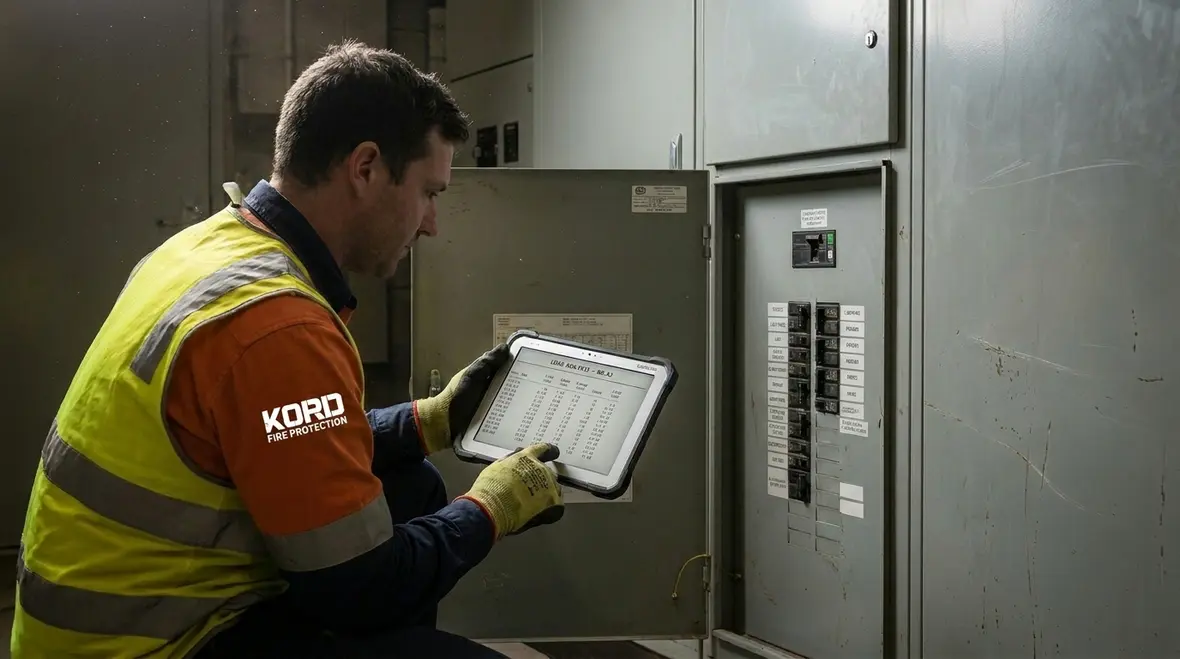
Plan the Demand Before It Becomes a Fire Drill
Facilities teams often face frequent changes: new refrigeration, additional forklifts, upgraded production lines, expanded retail fit outs, or added HVAC capacity. Each change can shift the electrical load, sometimes in ways that do not match the original design assumptions.
Professional commercial electrical load analysis helps by building a load picture that reflects actual and future equipment. It typically considers connected load, demand factors, operating schedules, power factor, diversity, and start up behaviour for motors and compressors. Then it ties that information to the electrical system’s ability to carry current safely and continuously.
Without this step, the facility ends up guessing. And while guessing works fine for trivia night, it is a terrible method for busbars, thermal aging, and protective device coordination.
Why early load planning saves money and panic
What makes early planning valuable is not just compliance or design neatness. It is the ability to stop bad assumptions from becoming expensive surprises. A realistic load review helps teams see whether existing feeders still have room, whether new machinery needs its own dedicated capacity, and whether the site is quietly creeping toward a situation where one hot afternoon or one simultaneous startup causes the whole place to grumble.
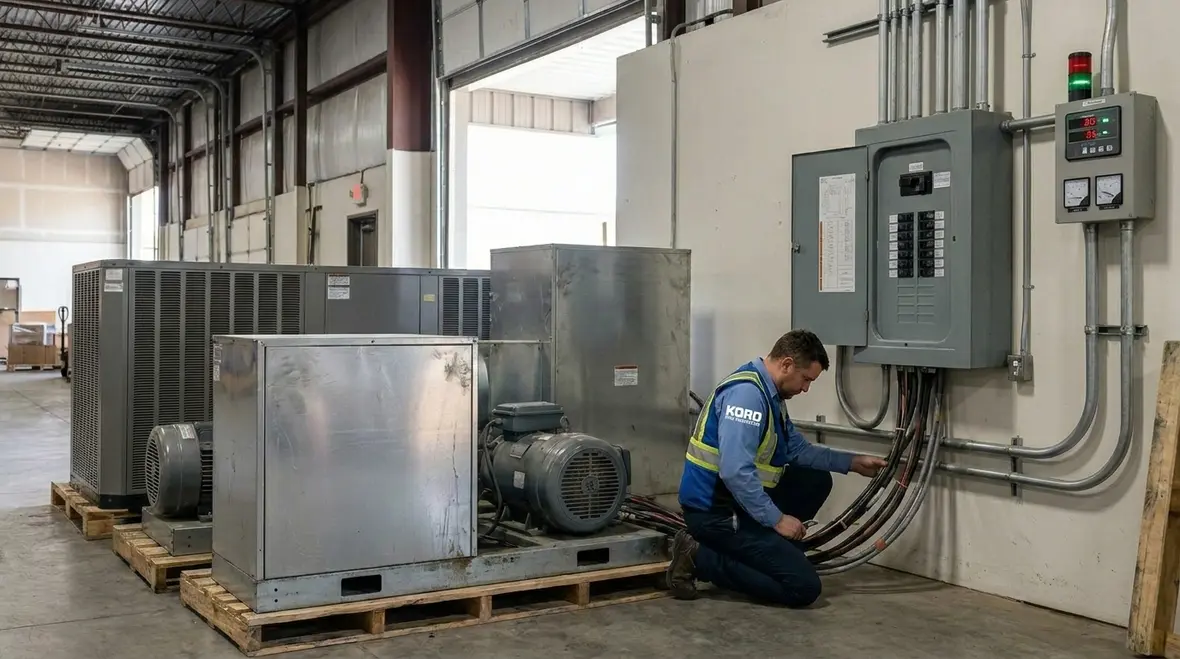
Where Overloads Actually Start in Commercial Sites
Overloads rarely appear out of nowhere. Instead, they develop through a chain of small mismatches. For example, a panel that once had margin can lose it after “temporary” equipment additions become permanent. Similarly, load balancing might drift when single phase loads grow unevenly across phases.
Common overload sources include:
- Motor and compressor starting currents that stress conductors and protective devices
- Continuous loads that run closer to nameplate limits than records show
- Loose terminations, aging connections, and thermal hotspots that reduce effective capacity
- Voltage drop that increases current draw and accelerates heating
- Non linear loads from drives, chargers, and modern control systems
When crews then add circuits without updating the load study, the system can behave like a restaurant kitchen that keeps adding orders on the same aging fryer. Eventually, something burns. Ideally, the analysis catches the trend early, before maintenance turns into emergency response.
Small mismatches that become big problems
This is the part many facilities underestimate. A single change may be harmless. Three or four untracked changes across separate tenancies, equipment rooms, or process areas are where things get spicy. Records fall behind, labels stop matching reality, and the electrical system starts carrying a story nobody has properly written down.
How a Load Study Supports Safer, More Reliable Protection
A good electrical load study does more than count watts. It strengthens the decision chain that supports safe operation. For instance, it helps determine cable sizing, breaker and fuse selection, neutral capacity where applicable, and the correct arrangement of panels and feeders.
That matters because overload conditions often interact with protection systems. If protective devices do not coordinate properly, the site can experience nuisance trips during normal operations, or worse, delayed clearing during fault and overload events. In both cases, downtime and damage costs climb quickly.
In addition, load analysis supports system resilience. Facilities can plan generator tie ins, UPS requirements, and backup power loads with better accuracy. Therefore, when critical systems need power, the electrical design reflects reality, not hope.
That reliability matters even more for life safety equipment. If a site is already reviewing electrical resilience, Kord’s article on fire alarm system reliability and battery health fits naturally into the conversation because standby power is only useful when it performs under real demand.
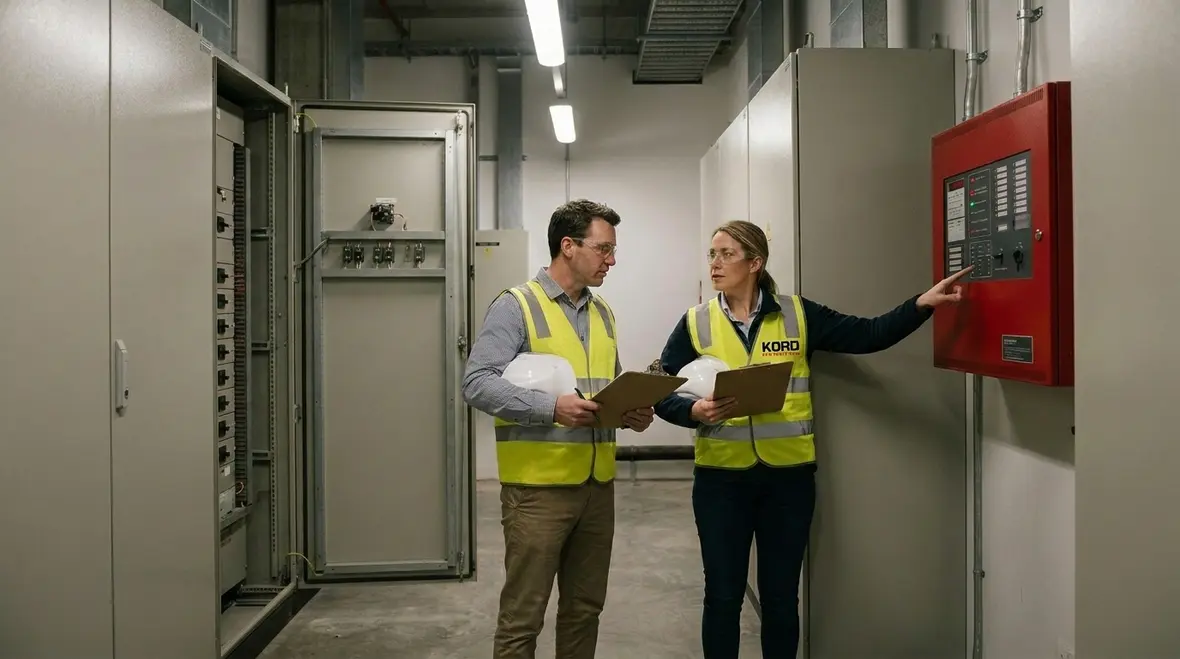
Why Power Factor and Startup Behaviour Get Ignored Too Often
Teams sometimes focus on totals and forget what makes electricity misbehave. Power factor affects how much current flows for a given amount of real power. Meanwhile, startup behaviour determines short duration current peaks that can still stress equipment.
For example, a warehouse with multiple refrigeration systems might look fine on paper at steady state. However, when motors start together during morning ramp up, the surge current can push panels closer to thermal limits. That is where commercial electrical load analysis can uncover timing conflicts and propose sensible mitigation, such as staged starting, better distribution, or revised feeder sizing.
Also, modern drives, chargers, and variable speed equipment introduce harmonics. Those harmonics can heat transformers and neutral conductors, and they can confuse protective device performance. A strong load assessment addresses these factors with practical assumptions so the facility does not find out the hard way.
The current may be brief, but the consequences are not
Some of the most frustrating electrical problems happen during transitions, not steady operation. Morning start up, production changeovers, and backup power testing can all reveal limits that stay hidden during calmer hours. A proper load analysis captures that behaviour instead of pretending every load lives a perfectly polite life.
Dual Column Reality Check for Commercial Facilities
Different sites need different details. Still, the goal stays the same: prevent overload and improve reliability. Here is a simple way to compare common outcomes:
| What Facilities Often Do | What a Professional Load Analysis Enables |
|---|---|
| Use historical schedules and rough estimates | Build a load model using actual equipment data and operating patterns |
| Upgrade circuits without revisiting feeder and panel capacity | Verify panel boards, switchboards, feeders, and conductor limits |
| Rely on breaker ratings only, ignoring coordination | Support protective device selection and better coordination planning |
| Overlook harmonics and neutral loading risks | Account for non linear loads and adjust design assumptions |
| Only troubleshoot after failures | Predict overload trends and plan mitigation before incidents |
And yes, it is totally normal for people to treat electricity like it runs on vibes. Unfortunately, physics does not care about vibes.
How Kord Fire Protection Fits Into the Bigger Safety Picture
Electrical safety and fire protection work together, not in separate corners of the plant. Electrical overload risk can influence the reliability of fire alarm systems, emergency lighting, detection circuits, and control power. It also affects how reliably protection devices clear faults that could create ignition sources.
This is where Kord Fire Protection becomes more than a “nice to have.” When teams plan upgrades, expansions, or audits, Kord Fire Protection can act as a vital partner by aligning electrical decisions with life safety requirements. That means the facility can better support system integrity, dependable signalling, and coordinated protection pathways.
To put it plainly, if the electrical backbone is weak, fire protection can still be strong, but it may not perform when it matters most. Coordinating both sides reduces the chance of surprises during inspections and real events.
Electrical planning is part of fire protection planning
That connection becomes clearer when facilities expand. New loads affect panels, standby capacity, control circuits, and sometimes the environmental conditions around protection equipment. If the electrical strategy ignores those relationships, the building may pass a surface level check while carrying deeper reliability issues underneath.
Delivering Results That Teams Can Act On
After the analysis, good providers present recommendations that maintenance and project teams can actually implement. That includes clear options, such as updating load schedules, rebalancing phases, adding capacity where needed, selecting correct overcurrent protection, and addressing voltage drop risks in long runs.
Then, they help translate findings into project planning. Therefore, facilities can schedule works with minimal disruption, budget accurately, and reduce the chance of stop start construction because someone discovers a capacity problem mid renovation.
When the site operates across industrial, retail, and multi-facility footprints, repeatable reporting matters. Teams can compare results across locations, prioritize risk, and standardise design decisions without cutting corners.
FAQ
Call Kord, Then Call the Load Study Team
Electrical overload prevention works best when teams plan before problems surface. A professional commercial electrical load analysis turns uncertain demand into clear actions for panels, feeders, conductors, and protection coordination.
Then Kord Fire Protection can help align that electrical plan with life safety performance, so the facility protects people and assets with less guesswork. Reach out to plan a load assessment and safety coordination for your site today.

Join Our Newsletter!
Get the latest fire safety tips delivered straight to your inbox From our Newsletter.