Fire Alarm Integration Strategies for Smart Buildings
Quick Answer: Smart buildings need fire alarm integration strategies that connect detection, control panels, life safety outputs, and building automation into one reliable workflow. The best approach uses tested device communication, clear zoning rules, and coordination with commissioning teams. With the right partner, these systems stay compliant and fast under stress.
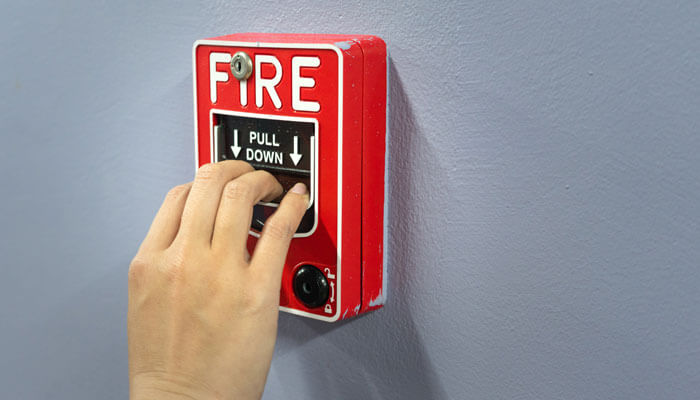
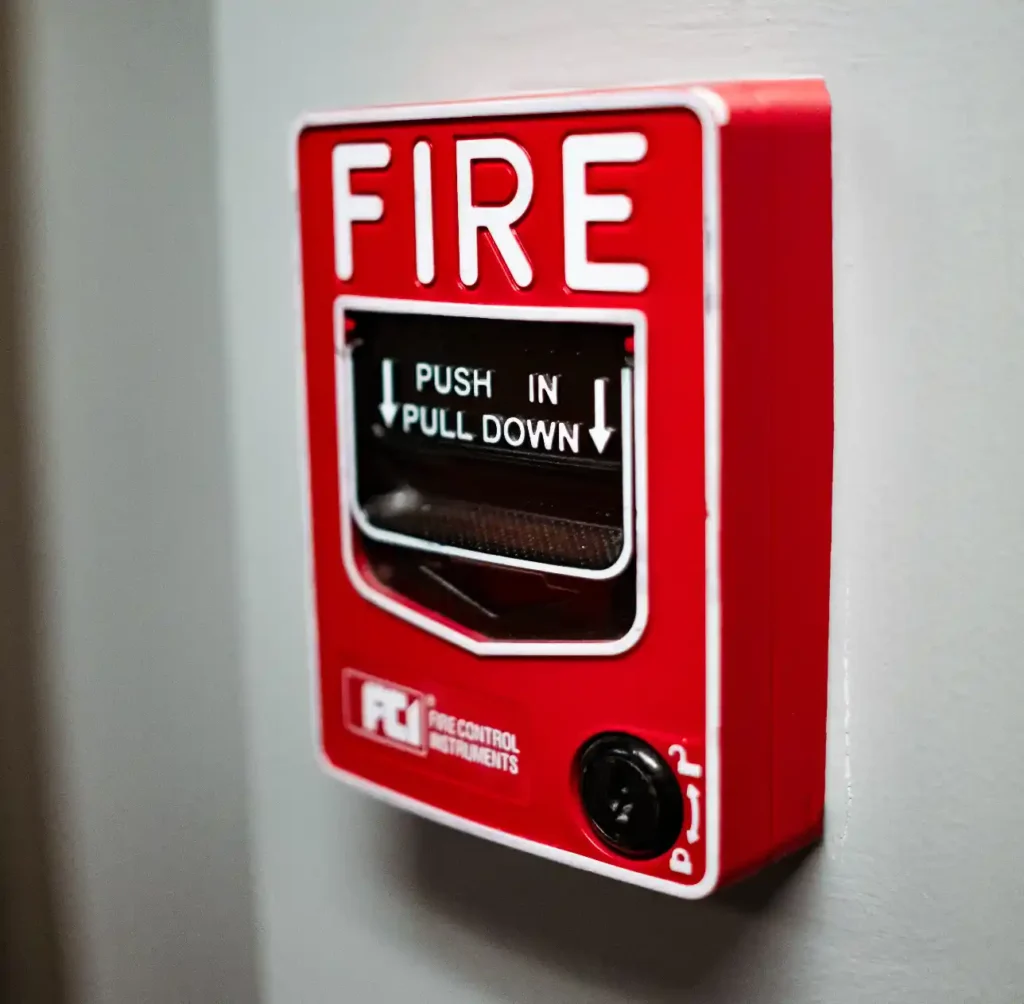
In the first place, fire alarm integration strategies in smart buildings should start with one goal: keep people safe when seconds matter. Then the design team should align detection zones, control logic, and evacuation actions with the building’s automation layer. After that, they should plan for how the system behaves during power loss, network issues, and device faults. And because no one wants their fire system to act like a confused app update, the plan must include verification, commissioning, and long term monitoring. That is exactly where kord fire protection can step in as a vital partner, helping industrial, retail, and commercial facilities turn complex integration into dependable real world performance. Near the start of that process, it also helps to review fire alarm service systems so the project team stays grounded in the practical service, inspection, and reliability needs that support every smart building strategy. For teams that want one provider across multiple system categories, full fire protection services can also fit naturally into early planning conversations.
How smart building fire risk changes with networked life safety
Smart buildings connect more than comfort systems. They also connect critical life safety functions to schedules, alarms, doors, elevators, fans, and monitoring dashboards. As a result, the project team no longer treats the fire system as a standalone box on the wall. Instead, the fire alarm becomes the central trigger for multiple building responses, which means the integration design must protect the chain of command.
For industrial sites, this matters because process areas, dust, heat, and high airflow can change how quickly hazards develop. For retail centers, it matters because large open spaces and mixed occupancies demand fast, clear notification and controlled access. Meanwhile, commercial facilities often add layered automation for HVAC, security, and tenant spaces. Therefore, the integration work must ensure that fire detection outputs still operate even when other systems slow down.
In a smart environment, the fire alarm integration strategies team should treat communication paths like sensitive equipment. The system needs redundancy where it counts, strict mapping of signals, and a clear fallback plan. Otherwise, the building may end up doing a techno dance during a real event, and that is never the choreography anyone wants.
Design the integration logic before choosing hardware
Most delays start early. Someone picks equipment first, then tries to retrofit the logic later. That approach works about as well as trying to assemble flat pack furniture after it has already been installed in the ceiling. A better method starts with the sequence of operations and the functional requirements.
Teams should define what happens when specific alarm conditions occur. For example, if a zone activates, the system should initiate alarm signaling, unlock egress routes if required, shut down relevant air handling where needed, and coordinate any smoke control strategies. Then they should decide whether outputs trigger building management events, security actions, or plant interlocks.
Next, they should map each action to the right level of reliability. Some functions must fail safe. Others can defer until the network recovers. In addition, they should document each input and output so contractors, inspectors, and operators can understand the design without guessing.
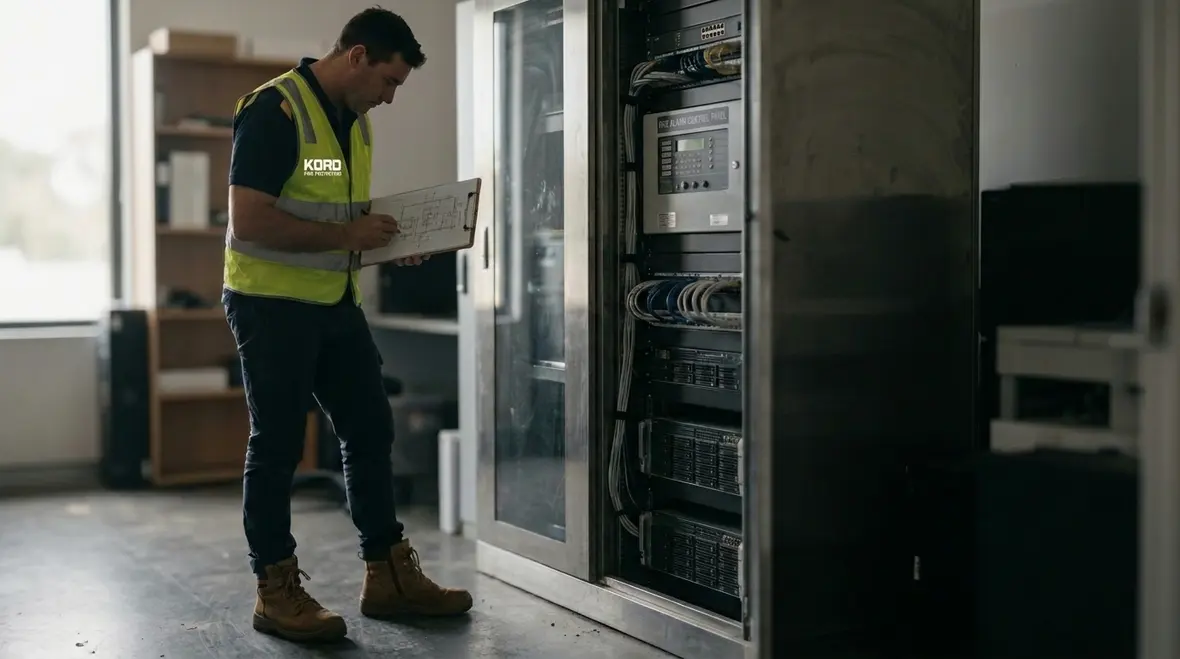
When this logic is clear, selecting panels, interfaces, and controllers becomes easier. It also reduces the risk of mismatched expectations between the fire contractor, integrator, and building automation team. And because kord fire protection works closely with projects like these, it can act as a steady bridge between life safety requirements and the smart building integration plan, especially during the messy middle when everyone wants answers yesterday.
Build the sequence of operations first
A sequence of operations gives every stakeholder the same playbook. It describes what starts the event, what the panel should do, which outputs follow, how the building responds, and what should happen if part of the communication path goes down. That level of clarity helps designers avoid clever but fragile logic that looks fine in a meeting and acts weird in the field.
It also keeps the project from drifting into scope confusion. If an automation contractor thinks an HVAC shutdown is optional while the fire contractor treats it as mandatory, the building gets stuck in the middle. Written logic prevents those awkward moments later, especially during commissioning when everyone suddenly remembers they interpreted the drawings differently.
Master zoning and signaling to avoid “false harmony”
Fire and building automation systems can create “false harmony” when zones do not align. One system may define a zone by device location, while another defines it by functional area. If the mapping is inconsistent, the building may respond too broadly or not broadly enough.
So teams should set clear zoning rules for detection, annunciation, and control actions. They should also align signaling groups with evacuation needs, not just with how the wiring was convenient. In practice, that means defining sounder patterns, alert messages, and indicator behavior by area and occupancy type.
Then the project team should consider how to handle partial faults. If a device fails, the system should still maintain clear alarm behavior for the rest of the mapped area. Additionally, the integration should flag supervisory states in a way that operators can act on before a minor issue becomes a major one.
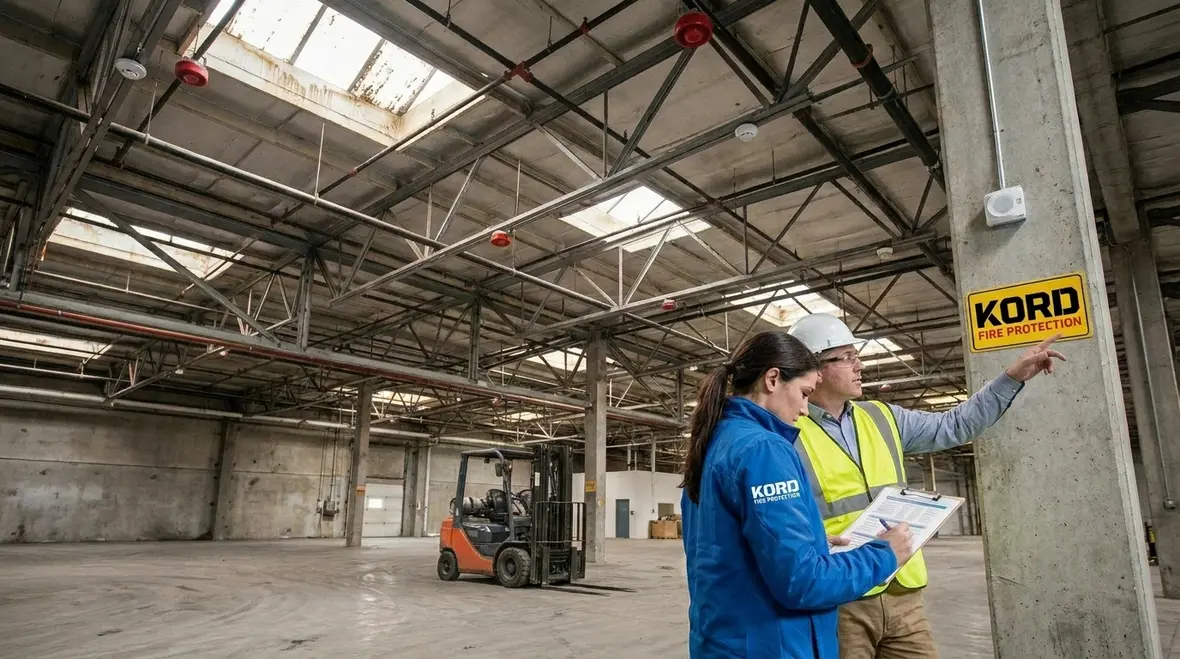
For large retail sites, zoning can be tricky due to long sight lines and multiple tenancies. For warehouses and plants, zoning must account for high bay spaces and airflow that can move smoke and heat. Therefore, well planned fire alarm integration strategies protect both the people and the workflow by making the system predictable.
Why signal naming matters more than people think
Good signal naming sounds boring until something goes wrong at 2:00 a.m. If one system labels an output “Level 2 South AHU Stop” and another calls the same point “HVAC-17 shutdown request,” confusion arrives fast. Standard names, consistent point lists, and as built records keep operators from chasing the wrong issue while the real fault sits there smirking.
This matters even more in phased upgrades. Old naming habits and new panel logic can collide unless the team cleans up the map before the switchover. Predictable naming does not just help engineers; it helps the next technician who inherits the system and wonders what exactly everyone was thinking.
Integration methods that keep life safety independent
The best smart building design separates life safety control from general network services. In other words, the building may use modern connectivity, but the fire alarm actions should not depend on the comfort layer.
Teams commonly use interface modules and supervised control links to connect the fire alarm to building systems. These links should carry only the signals required for the safety sequence. Then the building automation layer should interpret those signals without altering the core fire logic.
Key tactics include supervised inputs for alarm, trouble, and fault conditions, along with monitored outputs for door control, plant shutdown requests, and fan control. Moreover, the project team should avoid sending wide data streams into life safety. It is simpler, safer, and easier to test when the interface uses clear status signals.
In addition, the design should include a communications strategy for events. If the network fails, the system should still alarm locally and execute the pre defined safety outputs. After that, the building management platform can resume normal reporting once connectivity returns.
This is where a partner like kord fire protection becomes vital. When a project spans industrial, retail, and commercial environments, consistency and testing discipline matter. They help ensure that integration methods do not trade reliability for convenience.

Keep the fire system in charge
A smart building can collect data from everywhere, but it should not negotiate with life safety during an alarm. The fire alarm panel must remain the authority for alarm initiation and emergency outputs. Building automation can listen, react, report, and support, but it should not get creative with the safety sequence. That is how teams avoid situations where the dashboard looks polished while the real response path is hanging by a thread.
Simple interfaces also make testing far more honest. Instead of sorting through a maze of custom rules buried in multiple platforms, the team can verify a focused set of supervised signals and known responses. Fewer mysteries usually mean fewer commissioning headaches, and nobody misses those.
Testing, commissioning, and training for real event conditions
Integration succeeds in the field or it does not. That is why commissioning must verify not only that devices work, but also that the full sequence of operations behaves correctly. Fire alarm integration strategies should include end to end tests that prove detection, signaling, and control actions with the building automation layer in the loop.
During commissioning, the team should test alarm states, supervisory states, and trouble conditions. They should also test how the building responds to power loss and restore. If smoke control actions depend on fan state feedback, the tests should confirm the correct behavior during transitions.
Then the facility team needs training that is practical. Operators should know what alarms mean, which screens show the status, and what steps to take during an event. Also, they should understand how the interface reports faults so they can schedule maintenance before problems grow teeth.
One playful reminder for the project: do not assume the building automation engineer will “figure it out” during a drill. During a drill, humans should practice the plan, not debug the plan. That is a lot less exciting than it sounds, unless you enjoy watching grown professionals stare at a laptop like it owes them money.
Commissioning should mirror real incidents
A proper test sequence should follow the order an actual event might take: detection, panel response, notification, control outputs, feedback confirmation, fault handling, and recovery. That approach catches timing problems and logic gaps that a simple checkbox test can miss. A panel light turning on is not the same thing as a building responding correctly under stress.
Training should follow the same principle. Staff need more than a tour of the graphics screen. They need scenario based practice that shows what normal looks like, what degraded operation looks like, and what to do when the system tells them something is wrong. Confidence comes from repetition, not from a binder that lives untouched in a cabinet.
Common pitfalls in smart fire alarm integration and how to avoid them
Several issues repeat across projects. First, teams sometimes integrate too many building actions at once. When everything triggers everything, troubleshooting becomes slow. Second, they may skip clear signal labeling and documentation. Then operators struggle to identify which field change caused a behavior shift. Third, they may rely on uncontrolled dependencies between systems, which creates unpredictable results under fault conditions.
Another pitfall involves “silent failure.” If the interface fails and the building management system does not clearly report the fault, staff may not realize that the integration is degraded. Finally, some teams treat testing as a checklist instead of a proof of operation.
To avoid these issues, the project team should limit interface signals to what is required for the safety sequence. They should enforce strong naming conventions, maintain as built diagrams, and plan commissioning tests that mirror the operational timeline during an incident. In addition, the integration should include monitoring so facility staff can see when it drifts out of normal performance.
Again, kord fire protection can support this approach with a structured mindset toward safety, documentation, and coordination, which helps facilities keep upgrades from turning into surprise liabilities.
How facilities can plan upgrades without shutting down operations
Industrial, retail, and commercial buildings often require staged work to limit disruption. Therefore, fire alarm integration strategies for upgrades should include a phased approach: isolate sections, test sequences, then expand. This reduces risk and keeps staff informed. It also helps tenants and operations continue while the team improves system coverage.
Teams should plan temporary measures for during testing and ensure the fire alarm continues to meet safety needs at all times. They should also coordinate with operations for access, downtime windows, and any changes to HVAC or access control that could affect normal flow.
Additionally, upgrade planning should address how new interfaces interact with existing systems. If the building automation layer uses older logic or inconsistent zone naming, the team should clean up the mapping so new outputs land in the correct control points.
With the right partner and disciplined commissioning, the upgrade can improve integration without turning daily operations into a live experiment. That balance is the real win. The building stays useful, occupants stay protected, and the project team gets to finish without collecting a new set of avoidable problems.
FAQ
CTA: choose the partner that keeps integration safe
Smart buildings move fast, but life safety should move with certainty. Facilities can implement fire alarm integration strategies that stay reliable through testing, clear zoning, and independent control logic. For the coordination and safety discipline this work demands, kord fire protection can become a vital partner to help your project plan, commission, and operate with confidence.
If you are upgrading now or planning next quarter, start with a clear sequence of operations and the right support team behind it. When the interfaces are simple, the zoning is disciplined, and the testing is real, the whole building responds better when it matters most. That is the kind of smart that actually earns the name.

Join Our Newsletter!
Get the latest fire safety tips delivered straight to your inbox From our Newsletter.