Choosing Warehouse Fire Protection Systems for Logistics Centers Australia
Quick Answer: Choosing fire protection systems for logistics centers starts with understanding hazards, building risks, and local compliance in Australia. A strong design matches early detection with the right suppression method, then proves performance with testing and training. Partnering with Kord Fire Protection helps sites move from “plans on paper” to reliable protection in the real world.
For logistics centers, choosing warehouse fire protection systems is not a box to tick. It is a business decision that protects people, stock, operations, and cash flow. When a facility stores high piled goods, runs forklifts all day, and ships through the night, fire risk does not take a day off just because managers do. Therefore, this guide walks through how facilities teams can choose the right approach, validate it, and sustain it. Along the way, Kord Fire Protection can become a vital partner, helping teams turn compliance, design, and maintenance into a smoother, safer operation.
Early in the planning process, it also helps to review a related warehouse fire safety regulations guide so the project starts with practical expectations instead of last minute surprises. That kind of groundwork makes later design choices less guesswork and more strategy, which is a much nicer place for everyone involved to be.
1) Start with the risk map, not the product shelf
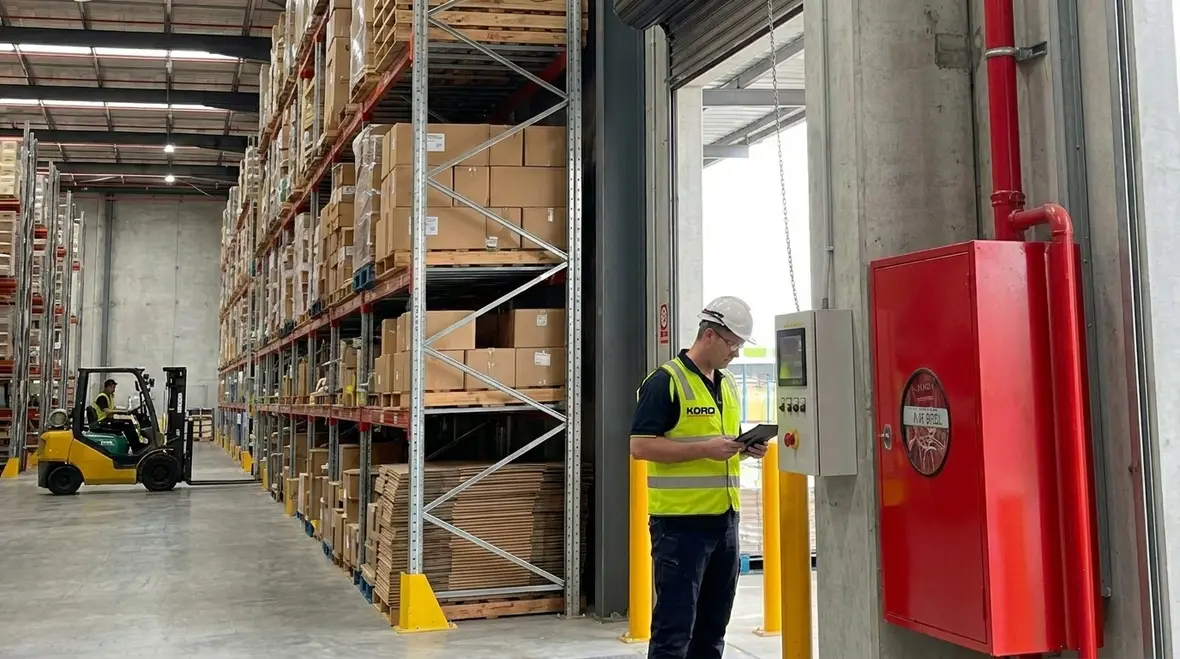
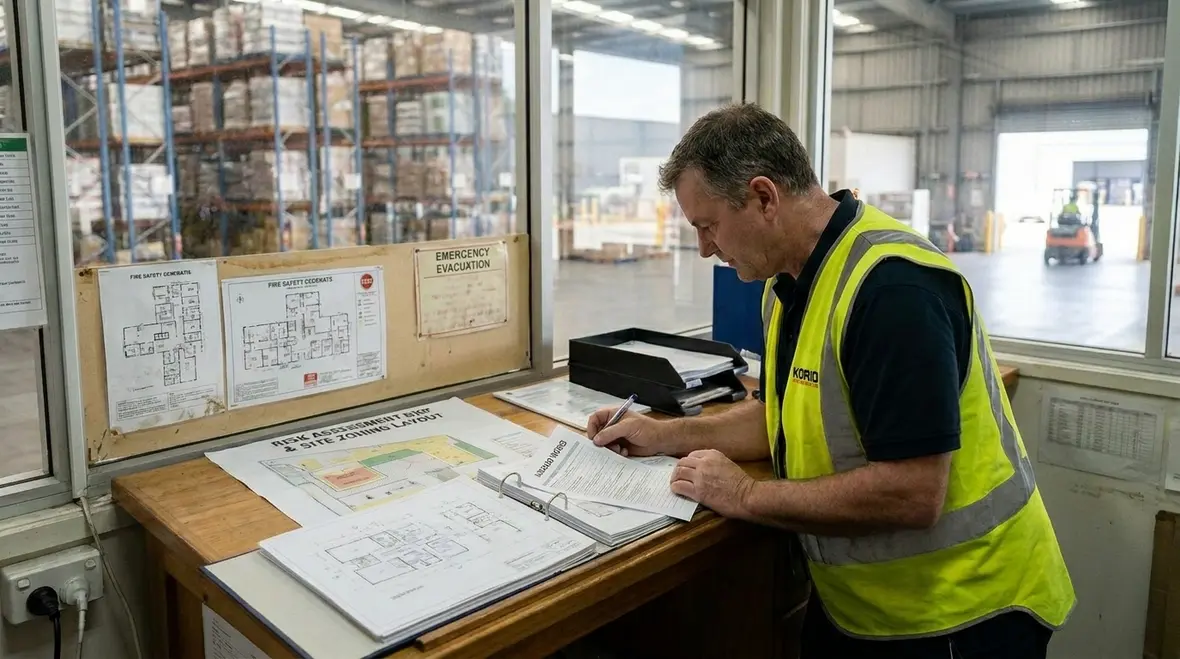
Before anyone selects equipment, the best teams build a risk map. They break the site into practical zones such as storage racks, picking areas, loading bays, plant rooms, and any spaces with high fire load materials. Then they evaluate ignition sources like electrical panels, battery charging, heaters, welding activities, and forklift travel paths. After that, they examine fuel loads, ceiling heights, ventilation patterns, and how quickly smoke spreads.
In Australia, this step matters because logistics sites often combine multiple hazards in one location. For example, a palletized warehouse may look “standard,” yet it could include plastics, solvents, packaging films, or aerosols. Consequently, system performance must match real conditions, not assumptions. This is where many projects drift, and where a steady professional partner can prevent expensive surprises later.
Why zoning matters before design begins
A risk map is useful because it forces the team to stop thinking in broad labels and start thinking in actual fire behavior. A loading dock has different exposures than a battery charging corner. A high rack storage aisle behaves differently from a plant room with electrical equipment. Once those differences are visible, the design conversation gets much sharper. That tends to save time later, and more importantly, it saves the project from the classic “we thought it was covered” problem that nobody enjoys discovering during commissioning.
2) How to match detection and suppression to warehouse activities
Detection and suppression work best as a matched set. First, detection must see the fire early enough for the chosen suppression method to act effectively. Next, suppression must control or extinguish the fire without causing unacceptable disruption or damage to goods.
Common warehouse realities shape the decision. High rack storage can challenge sprinkler water distribution, while dense packaging can create fast smoke and high heat release. Meanwhile, loading docks may experience fires from vehicles, dock seals, or temporary materials stored during peak periods. Therefore, facilities often need zoning, thoughtful layout, and protection strategies tailored to the way operations actually run.
In some cases, early warning systems support a faster response, while suppression handles the fire. In others, suppression must lead because detection may lag behind early flame development. Kord Fire Protection can help logistics teams think through the sequence, so the system does not just exist, but performs in the timeline that matters.
Think about timelines, not just equipment names
This is the part where teams sometimes get seduced by product categories instead of outcomes. A detector is not valuable because it has a nice brochure. A suppression system is not valuable because it sounds impressive in a meeting. They are valuable if they act fast enough, reach the hazard correctly, and support safe response in the real building. That is the standard that matters when the smoke is no longer hypothetical and the shift supervisor is having a very bad afternoon.
3) Choosing warehouse fire protection systems for different building layouts
Warehouses vary. Some feature open bays and clear spans, while others split into office segments, workshops, and freezer areas. Each layout changes how smoke moves and how suppression distributes. Thus, the selection process should address specific engineering factors such as ceiling height, obstructions, rack configuration, and compartment boundaries.
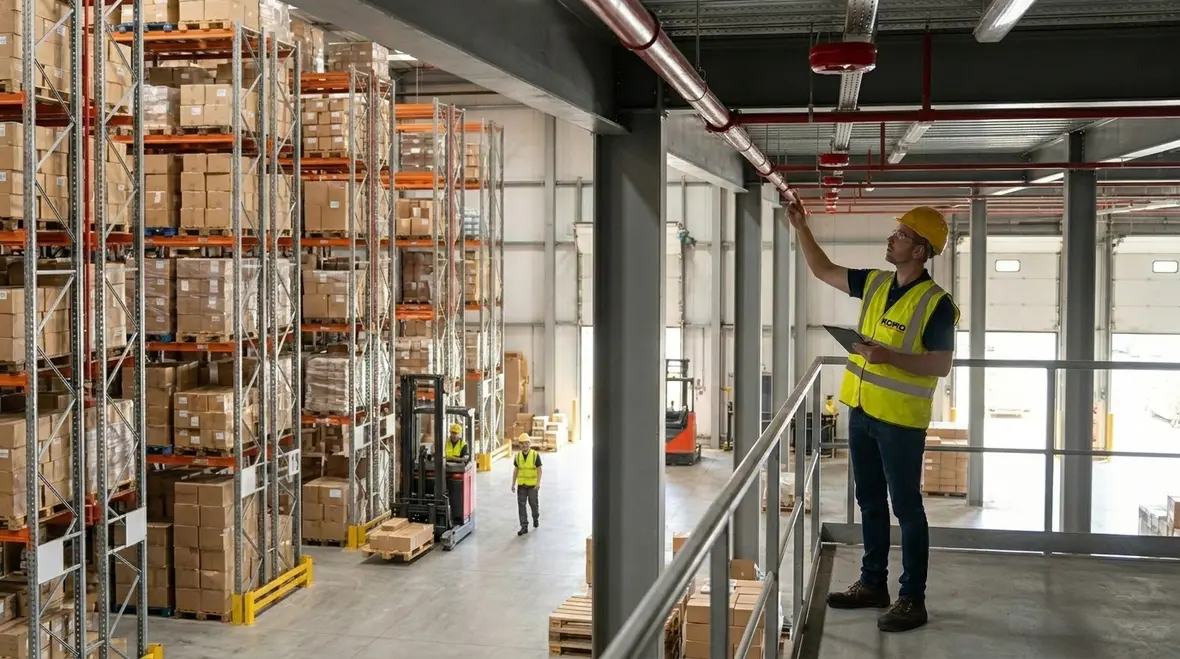
Design choices also depend on how people move through the facility. Warehouses with multiple floors need clear fire strategy for stairwells, lifts, and plant rooms. Facilities with mezzanines often require targeted coverage to avoid blind spots. Also, loading and dispatch zones may need fast actuation coverage because fire can start and spread rapidly around traffic patterns.
For logistics centers across Australia, these differences can be significant even between sites that seem similar on a map. That is why choosing warehouse fire protection systems should never be “copy and paste.” Kord Fire Protection can support the site by aligning protection design to actual layout and operational workflows, not marketing diagrams.
Layout details that quietly change performance
Ceiling height, obstructions, racking depth, and compartment lines may sound like dry technical details, but they decide how a system actually performs. Smoke can stratify. Water distribution can be interrupted. Access for emergency response can narrow at exactly the wrong point. Good design respects those realities early. Bad design discovers them after installation, which is a bit like buying running shoes and then learning they are made of bricks.
4) Compliance and documentation that keeps projects moving
Fire protection projects can stall when documentation is unclear or missing. Therefore, an effective approach includes planning for compliance evidence early. Teams should confirm which standards apply to the asset, then ensure the fire system design, installation, and commissioning align with those requirements. After installation, proper records, test results, and maintenance schedules should follow the system like a well trained forklift operator: consistently, on time, and without drama.
For logistics operators, the key is reducing downtime during installation and verification. So, teams should coordinate commissioning schedules with operations. They should also decide how they will manage temporary protection measures during fit-out or rack changes.
Kord Fire Protection can serve as a partner in this stage by helping clients maintain a clear trail of evidence. In the real world, that reduces risk for audits and tends to shorten the “we need that in writing” email chain that everyone secretly dreads.
Interlinking design, proof, and handover
Documentation is not glamourous, but it is the thing that keeps a project from wobbling when someone asks for design intent, commissioning proof, service history, or change records. It also supports better handover to operations teams. If the paperwork is scattered, the site inherits uncertainty. If it is organized, the site inherits confidence. That is a much better asset to receive than a mystery binder and a shrug.
For teams focused on long term upkeep, it is also smart to review Kord Fire Protection’s perspective on the full lifecycle of fire protection servicing. It fits naturally with warehouse projects because choosing a system is only the opening chapter. The harder part is keeping performance aligned as the facility evolves.
5) Maintenance and testing: the part people forget until it is urgent
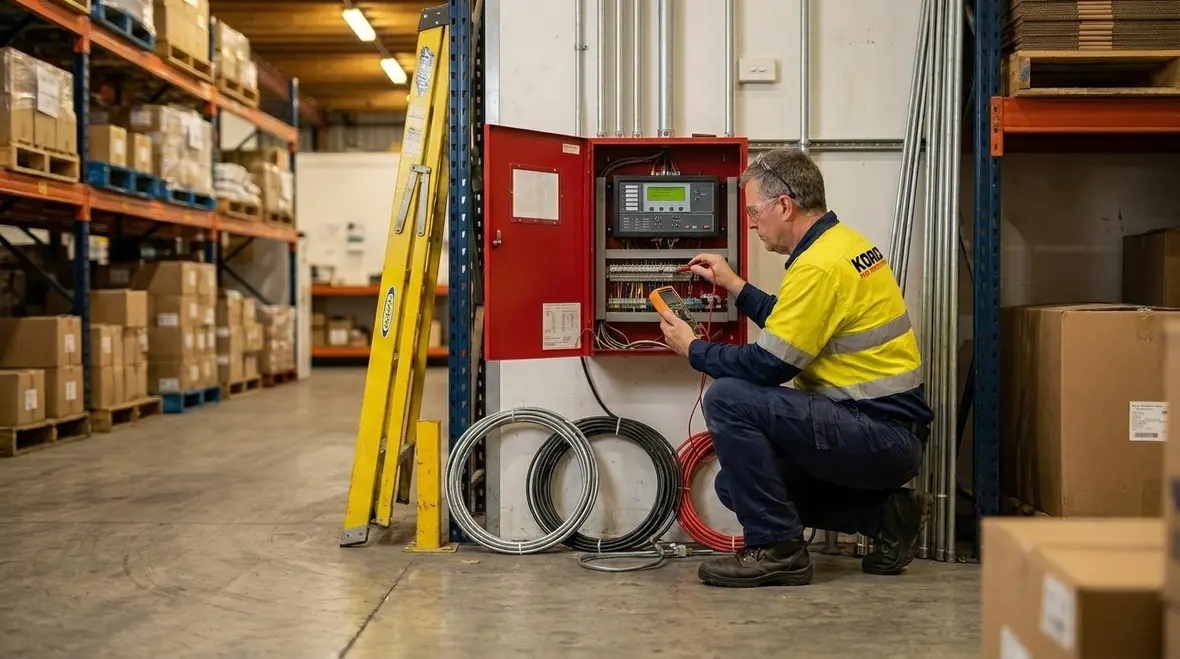
A fire protection system is only as reliable as the maintenance behind it. Over time, dust, minor damage, shifting storage loads, and wear can affect performance. Therefore, logistics centers should set a maintenance plan that matches their usage and environment. This includes periodic inspections, functional testing, and checks of detectors, pumps, valves, alarms, and any control panels.
Additionally, facilities should manage change. When rack layouts shift, new product lines arrive, or battery charging zones expand, the risk profile changes. If the system design no longer matches the current operation, performance can drop. Thus, teams should schedule reviews after major operational changes, not only during annual compliance cycles.
Here, Kord Fire Protection can act as a vital partner by helping logistics operators keep systems healthy with disciplined testing and clear reporting. In other words, it keeps the system from turning into a decorative mural that only looks good during inspections.
Why changes on the floor should trigger system review
Warehouses are living environments. Inventory shifts, aisles move, charging areas grow, and temporary storage has a suspicious habit of becoming permanent. Each change can alter fire load, access, and detection performance. A disciplined review process catches those shifts before they turn into hidden gaps. That is much preferable to finding out later that the system was designed for the warehouse you used to have, not the one you have now.
6) Integrate training and response planning with real site behavior
Even the best equipment fails if people do not know how to respond. Therefore, logistics centers should build response planning around the site. They should confirm alarm audibility across zones, ensure staff understand evacuation paths, and run drills that reflect actual shift patterns. Night operations often require extra attention because fewer people are present and key holders may arrive slower.
Training also supports safer operations around equipment. For example, staff should know what to do when alarms activate and which manual actions are permitted. They should also learn the boundaries of safe operation, including what not to attempt during a growing fire.
Kord Fire Protection can help facilities align the system design with practical response steps. As a result, the site can reduce confusion under stress and improve the odds that early intervention happens when it should.
7) Budgeting the full lifecycle, not just the initial quote
Cost matters, but the cheapest option can become expensive when maintenance, downtime, and product damage show up. Therefore, logistics teams should budget for lifecycle costs, including inspection, testing, parts, call outs, and upgrades tied to operational change.
They should also consider risk reduction value. A system that limits smoke spread can protect inventory and reduce cleanup. Faster detection and response can reduce fire growth and downtime. Additionally, good documentation and steady maintenance can reduce compliance friction and reduce the “surprise cost” effect that hits at the worst time, usually right before peak season.
In this stage, Kord Fire Protection can help clients evaluate the real tradeoffs, so spending matches the risk level and operational reality.
8) Where Kord Fire Protection fits as a partner for logistics centers
Many vendors deliver equipment. Fewer deliver clarity, coordination, and ongoing support. Kord Fire Protection can help by bringing a service mindset to the full journey: planning support, design alignment, installation coordination, commissioning checks, and continued maintenance discipline.
That partnership matters in logistics because systems must adapt to real operations. Racks change. Workflows expand. New storage zones open. When fire protection stays aligned to the current site, the facility protects itself better. And honestly, that is the goal. The only thing that should be scaling up in a logistics center is shipping volume, not emergency response chaos.
FAQ
Conclusion
Choosing fire protection systems for logistics centers demands more than picking equipment. Teams should map risk, match detection to suppression, design for the actual layout, and maintain performance through disciplined testing. That approach gives the facility a stronger chance of controlling fire before it turns into a shutdown, a stock loss event, or a paperwork avalanche with flashing lights.
When facilities in Australia want a steady partner that helps them stay aligned with real operations, Kord Fire Protection can help them move from compliance paperwork to dependable protection. Start planning early, contact Kord Fire Protection for support tailored to your site, and give your logistics center the kind of fire strategy that works in the real world, not just on a very confident drawing set.

Join Our Newsletter!
Get the latest fire safety tips delivered straight to your inbox From our Newsletter.