Fire Alarm Panel Replacement Benefits in Australia
Quick Answer: Upgrading a commercial fire alarm panel improves reliability, reduces nuisance alarms, supports modern devices, and helps facilities meet updated codes. It also strengthens response times by giving the system clearer control and smarter monitoring. When a trusted partner like Kord Fire Protection is involved, the upgrade runs smoother from planning to commissioning.
Commercial facilities rarely have time for surprises, especially when the building’s life safety systems are involved. And while a fire alarm panel might look like a piece of “set it and forget it” equipment, old panels can quietly increase risk, cost, and downtime. That is why Fire alarm panel replacement benefits matter so much for industrial sites, retail centers, and facilities across Australia. In this article, third person guidance is given on the essential advantages of upgrading, what drives the decision, and how Kord Fire Protection can become a vital partner throughout the job.
Near the top of the planning process, many facility teams also review broader fire protection services so the panel upgrade fits naturally within the rest of the building’s life safety strategy. When alarm performance, inspections, repairs, and future system growth are considered together, the project usually becomes cleaner, faster, and much less painful for everyone involved.
Why upgrading a panel protects people and operations
Fire alarm systems sit at the center of a facility’s emergency readiness. When the panel ages, the system’s performance can drift in ways that no one notices until there is a problem. Therefore, upgrading supports clearer supervision, more dependable signalling, and better control over device behavior.
In practical terms, newer panels typically handle loops and devices more efficiently. As a result, they can manage added detectors, updated sounders, and changes to building layouts without forcing a patchwork solution. Meanwhile, facilities avoid the classic “the system works… until it doesn’t” scenario, which is like trusting an old shopping trolley with a full weekly load. It might roll. It might squeak. But it is not worth testing the limits.
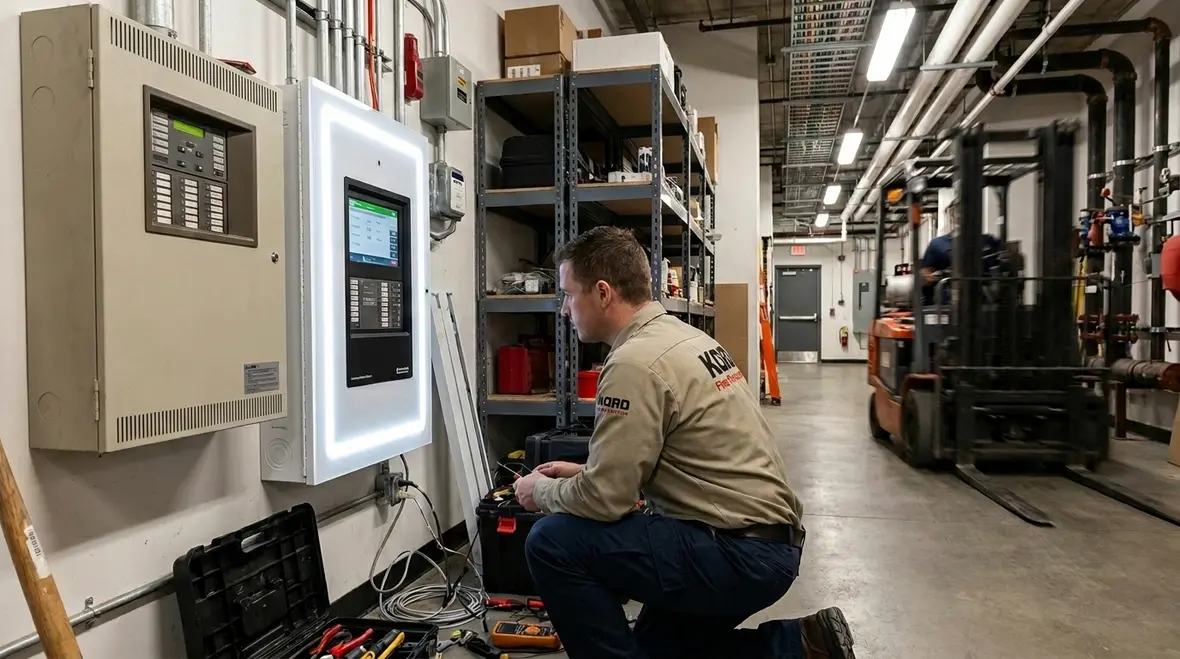
Additionally, modern panels often support improved diagnostics. That means technicians can find issues faster, then restore normal operation sooner. Consequently, less downtime occurs during troubleshooting, testing, and routine inspections. Teams that already rely on dedicated fire alarm service systems often find the value of the upgrade becomes even more obvious once clearer diagnostics and stronger control are in place.
The hidden risk of “good enough” panels
A panel does not need to fail dramatically to become a problem. Sometimes the issue shows up as recurring faults, awkward workarounds, slow maintenance, or confusion during testing. None of those signs are as dramatic as a siren blaring at the wrong time, but all of them chip away at system confidence. That confidence matters because when an alarm event happens, no one wants to wonder whether the panel is having “one of its days.”
Better reliability, fewer false alarms, calmer incident response
Commercial environments move fast. Forklifts, forklit traffic, deliveries, and plant modifications constantly change the reality inside the walls. So when a panel becomes outdated, it may struggle to interpret signals reliably, or it may treat certain conditions in ways that trigger nuisance alarms.
Upgraded equipment can reduce those false events by providing steadier supervision and more accurate reporting. Then the response team can focus on real incidents instead of running around like a team in a bad horror movie where the “monster” is just a faulty sensor behaving badly.
Also, improved annunciation helps staff understand what happened and where it happened. That clarity supports quicker evacuation decisions and more effective coordination with emergency services. At the same time, the panel’s structured logic can make testing and maintenance more predictable, which strengthens day to day confidence across the site.
Why clearer information changes the whole response
When staff can instantly identify the source of an alarm, the response becomes more organized and less chaotic. Supervisors can direct people away from the affected zone, maintenance teams can isolate the issue faster, and emergency services receive better information on arrival. In other words, a modern panel does not just make noise. It tells a more useful story, and in emergencies that story needs to make sense immediately.
Compliance readiness across Australian commercial settings
Building regulations and fire safety expectations do not stand still. Even if a facility currently passes inspections, outdated control equipment can make future compliance harder to prove. Therefore, planning for updates helps facilities stay aligned as requirements evolve.
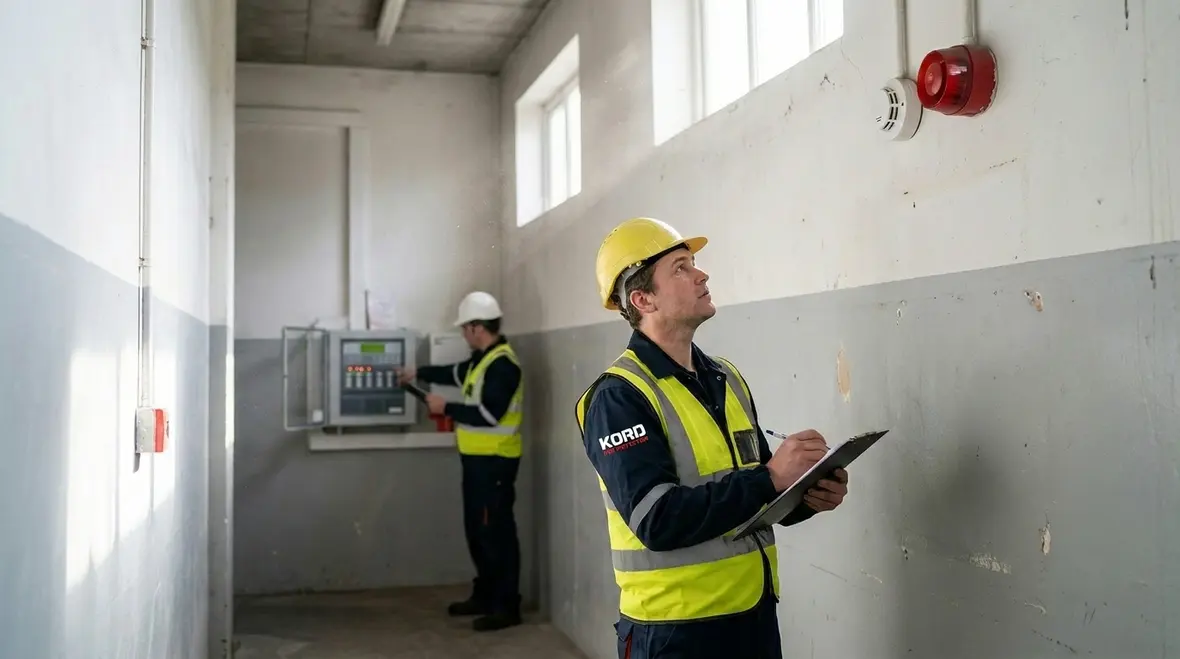
During an upgrade, a qualified service provider verifies the design against current standards and ensures the panel integrates correctly with existing devices. Then documentation can be built around the installed configuration. This matters because compliance is not just about the panel itself; it is about the whole system behaving as intended.
Furthermore, Kord Fire Protection can support the compliance workflow with a focus on practical outcomes. That means they help facilities avoid last minute scrambling by coordinating inspection readiness, commissioning evidence, and clean handover documentation. It is the difference between being prepared and being “prepared-ish,” which is a popular corporate illusion and a terrible fire strategy.
Upgrade planning that fits industrial, retail, and multi site operations
Commercial owners often operate across multiple facets: industrial plants, retail networks, warehousing, and facilities with shared management. Each location has different risks, service schedules, and operational constraints. So the upgrade cannot be treated like a simple swap on a quiet street.
Instead, a good plan starts with an honest assessment of the current system. That typically includes device count, loop structure, wiring condition, fault history, and whether the panel’s capacity matches current and future needs. Then the upgrade path can be chosen to limit disruption.
In many cases, Fire alarm panel replacement benefits appear most clearly when planning avoids downtime. Upgrades can be staged, tested loop by loop, and validated in real conditions before the building returns fully to normal operations. As a result, the facility maintains safety coverage while works progress.
For facilities with tenants or active trading hours, scheduling matters. Technicians may coordinate with shift leads, security teams, and maintenance planners. Then the work happens in controlled windows, so operations stay steady.
Staged delivery beats disruptive chaos
Nobody wants a panel replacement to feel like a surprise renovation dropped into the busiest week of the quarter. The most effective projects are usually the ones that break the work into manageable phases, verify temporary coverage, and communicate every step in advance. That approach protects people, protects operations, and protects everyone’s blood pressure.
What facilities gain from modern system intelligence
Modern fire panels do more than control inputs and outputs. They bring stronger system intelligence that supports better oversight. For example, advanced device supervision and improved reporting can help teams understand trends and recurring faults.
Also, modern panels can support expanded device options. So if a facility plans to adjust spaces, add new stores, or refit production lines, the fire system can evolve with the business. This reduces the need for repeated emergency modifications later.
Additionally, better human machine interface design improves everyday use. Technicians and trained staff can find relevant alarms and system states faster, which reduces confusion during incidents. Then response actions become more disciplined, because the system communicates clearly instead of speaking in cryptic blinking codes.
Finally, Kord Fire Protection can treat the upgrade as a system project rather than a parts replacement. That means integration checks, testing, and commissioning steps stay consistent across sites, so performance is not left to luck.
Costs, downtime, and project delivery in a real world upgrade
No one enjoys paying for upgrades. Yet, facilities benefit when they understand the cost drivers behind the work. The key factors usually include panel capacity, loop and wiring scope, integration with existing devices, testing requirements, and commissioning time.
Downtime planning drives much of the schedule too. Therefore, the best projects prepare for temporary conditions, confirm alarm routing, and document safe shutdown and restart steps where required. Then the facility avoids extended periods where systems remain partially unavailable.
To keep delivery smooth, a reliable contractor handles the full lifecycle. That includes site survey, parts selection, installation, testing, commissioning, and final documentation. As a result, stakeholders receive a clean handover package that supports ongoing inspections.
And yes, occasionally a joke is appropriate here. People often call maintenance “future problems.” But a fire panel upgrade is more like preventative service. It is the annual check that keeps the system from turning into an expensive surprise party.
Key upgrade outcomes
- Improved supervision for detectors and signalling devices
- Reduced nuisance alarms through steadier panel behavior
- Clearer incident indications for faster decision making
- Better diagnostics for quicker fault finding
- System capacity that supports planned building changes
How Kord Fire Protection helps
- On site assessment and upgrade pathway planning
- Commissioning and testing aligned to real device layouts
- Documentation and handover support for compliance
- Coordination for industrial, retail, and multi site schedules
- Long term partnership mindset for maintenance continuity
FAQ
Ready to upgrade the fire alarm panel with confidence?
Upgrading delivers Fire alarm panel replacement benefits through better reliability, clearer response, reduced nuisance alarms, and smoother compliance readiness. For industrial, retail, and commercial facilities across Australia, the smartest move is choosing a partner who plans carefully and commissions thoroughly.
Kord Fire Protection can help. Reach out to discuss your site, timeline, and device layout, then build a safe, staged upgrade plan that keeps operations steady.

Join Our Newsletter!
Get the latest fire safety tips delivered straight to your inbox From our Newsletter.