Fire Alarm Wiring Integrity for Reliable Performance
Quick Answer: Reliable fire alarm performance starts with dependable electrical paths, correct wiring, and real protection against damage and interference. To maintain fire alarm wiring integrity, teams verify zoning, wiring methods, labeling, testing, and continuity. For facilities looking for broader support with inspection-ready systems, full fire protection services can help tie alarms, sprinklers, extinguishers, and compliance planning together. When issues appear, Kord Fire Protection can step in as a vital partner to keep systems compliant and trustworthy across Australia.
When a fire alarm system is expected to react in seconds, the weakest link is rarely the panel. Instead, it is often the electrical route itself. That is where fire alarm wiring integrity becomes more than a phrase. It becomes the difference between timely notification and an avoidable delay. In industrial, retail, and commercial facilities across Australia, the electrical path must stay stable through harsh conditions like vibration, dust, moisture, and frequent maintenance activity.
In this article, the third-person approach stays focused on what professionals do, why they do it, and how Kord Fire Protection supports the job when reliability matters. And yes, the system has to work every time. No one wants their alarm system performing like a Wi-Fi signal in a concrete basement.
How a reliable electrical path keeps alarms truthful
Fire alarm circuits need steady power, clean signal transmission, and predictable behavior under alarm conditions. Therefore, ensuring a reliable electrical path means planning the entire route from the control panel to every initiating device, then keeping that route protected, tested, and documented.
When fire alarm wiring integrity holds, the system can detect fault states early and still communicate correctly. As a result, building managers gain confidence during inspections and operations. Additionally, reliable electrical paths reduce nuisance trouble signals, which can otherwise train staff to ignore alerts. And ignoring alarms is a habit no one should practice, even on “casual Fridays.”
A strong electrical route also supports the bigger story of system reliability. Panels, detectors, modules, and notification appliances all depend on the circuit behaving exactly as expected. When the path is stable, technicians can trust their readings, occupants can trust the signals, and managers can trust that a trouble condition actually means something worth investigating.
Why stable circuits matter during real events
During an emergency, the system does not get the luxury of a second attempt. It must detect, process, and notify without hesitation. That makes dependable wiring more than a technical detail. It is part of the chain of trust that allows a facility to react quickly. If the circuit drops out, drifts into fault, or produces confused behavior, the system may still look impressive on paper while acting very differently in the moment that counts.
Where electrical path failures usually start
Electrical path issues rarely arrive as a dramatic movie villain. Usually, they creep in from everyday conditions and bad timing. Common starting points include
- Corrosion or moisture intrusion at junction boxes, conduits, or device terminals
- Broken conductors from vibration, poor support spacing, or repeated access to cable trays
- Loose terminations that look fine today and fail tomorrow during system load
- Incorrect wire routing near electrical noise sources like variable frequency drives
- Damage from renovations, plant movement, or cable management changes after installation
- Inadequate segregation between fire alarm circuits and power circuits
Consequently, the system may show trouble conditions, drop signals, or lose supervision. Moreover, the longer these issues remain hidden, the harder they become to trace. A good job plan prevents this by using clear installation practices and planned verification steps, not guesswork.
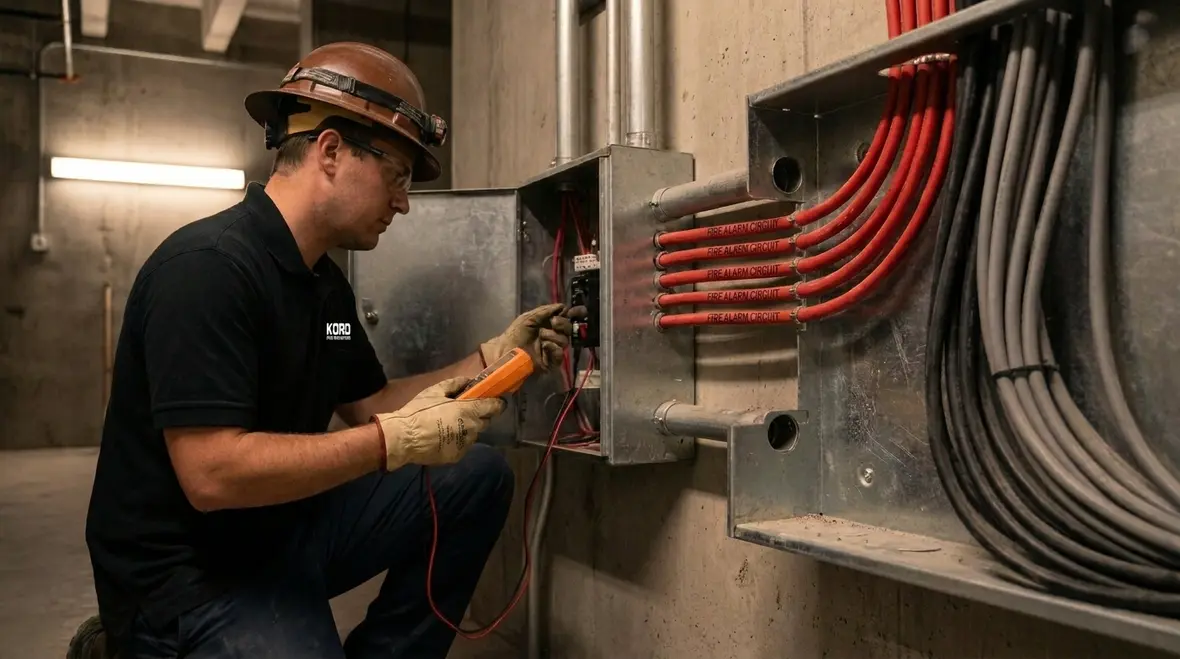
Some failures are physical, some are environmental, and some are simply procedural. A conductor might be nicked during unrelated works. A terminal may loosen over time because vibration never takes a day off. A tray route may get crowded after later upgrades, leaving the fire alarm circuit to share space it should never have shared in the first place. None of these problems sound glamorous, but they are exactly the kind that create long afternoons for maintenance teams.
Hidden faults tend to grow louder over time
One annoying trouble signal may seem minor. However, repeated faults in the same area often tell a bigger story about the route, the environment, or the workmanship. Facilities that track those patterns usually solve problems faster because they stop treating each alert like a random event. Instead, they start seeing a map of circuit stress points.
Design choices that protect the circuit from real world abuse
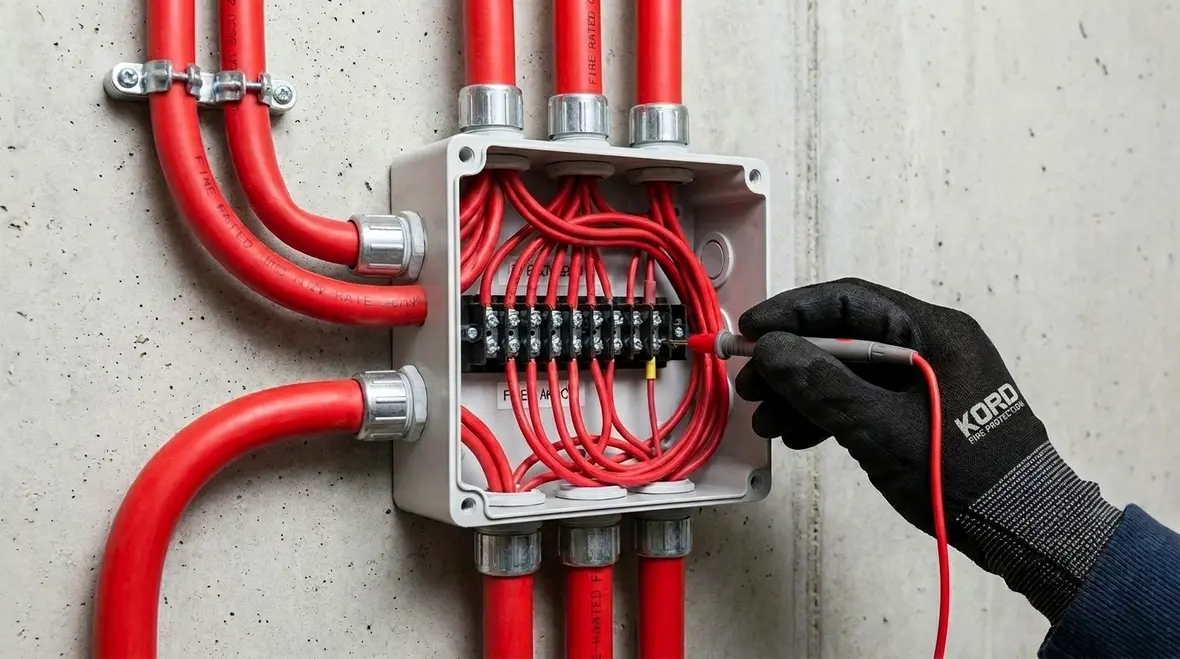
Ensuring a stable electrical route begins before any wire gets pulled. Designers and installers choose wiring methods, cable types, and pathway layouts that match the facility’s environment. Then they build in stability through sound supports, proper fill, and correct separation from higher risk services.
For Australian facilities, these design choices often include
- Using suitable cable types and ratings for the location, including heat and moisture exposure
- Securing cables in cable trays and conduits with correct spacing and supports
- Maintaining segregation from mains power, ensuring signals do not get drowned by interference
- Using correct segregation and pathway protection where forklifts, pallet movement, or plant access can cause abrasion
- Planning access so inspection and testing remain practical during ongoing operations
In other words, the route must survive daily life, not just the initial commissioning moment. If the installation team designs for endurance, the later checks feel like prevention instead of emergency firefighting.
This is also where documentation earns its keep. Good drawings, clear labels, and consistent circuit identification make it easier to inspect the route and much easier to troubleshoot it later. Facilities that care about reliability often pair sound installation practices with strong records, because no one wants to open a panel and begin a guessing game with live systems. For teams improving documentation standards, Kord Fire’s article on fire safety system documentation for compliance fits naturally with this same reliability mindset.
Routing decisions affect future maintenance
A pathway that is technically acceptable but miserable to access can still become a practical problem. If technicians struggle to inspect supports, trace zones, or reach terminations, routine checks become slower and shortcuts become more tempting. Good design makes the right work easier to perform, which is exactly what a reliable system needs over the long haul.

Testing methods that confirm fire alarm wiring integrity
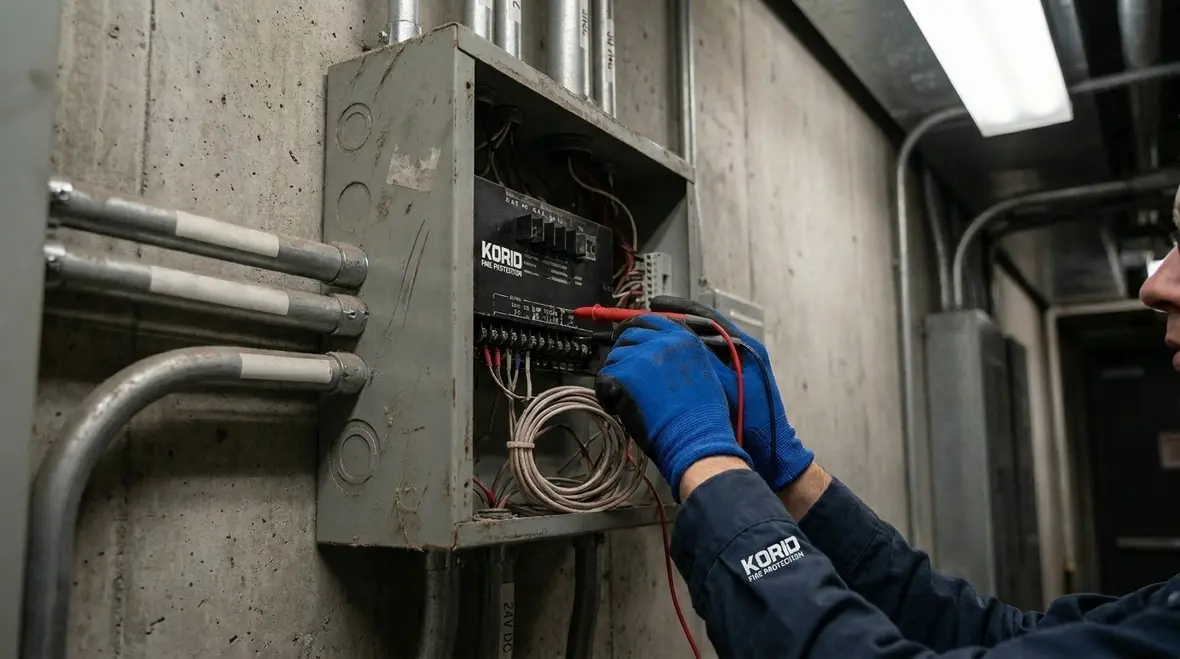
After installation, testing must do more than confirm “it powers up.” Technicians verify that the system behaves as designed, including supervision and response. Therefore, testing focuses on electrical continuity, insulation conditions, and the performance of circuits under fault logic.
In practice, teams typically
- Check circuit continuity and end of line supervision where applicable
- Verify polarity and correct termination at every device location
- Inspect labeling and documentation against the actual device layout
- Perform functional checks that confirm the correct zone or address triggers reliably
- Test for fault response behavior, so the system signals troubles rather than staying silent
Next, technicians review test results and ensure records align with the facility’s compliance expectations. This matters because later troubleshooting depends on accurate as built information. If documentation is sloppy, the system may work, but the next person will still chase the ghost. And ghosts are fun in movies, not in compliance audits.
Testing also helps separate wiring issues from device issues. If a detector or module appears unreliable, the problem may still live in the circuit serving it. By checking continuity, polarity, supervision, and response logic together, technicians build a clearer picture of whether the fault belongs to the device, the termination, or the pathway itself. That clarity saves time, avoids unnecessary replacements, and helps facilities spend effort where it actually matters.
Verification should continue after any disruption
A circuit that passed last quarter can still be compromised this week if nearby works disturb a tray, ceiling space, or enclosure. That is why good teams verify after change, not only after installation. Even small disturbances can alter terminations, routing, or separation enough to create trouble later.
Retrofits, maintenance, and third party changes
Many electrical path problems happen after the original installation, during renovations or routine works. When contractors add new services, move equipment, or re-route cables, they can unknowingly compromise the fire alarm route.
To prevent this, facilities should use controlled change processes. Additionally, maintenance and installation teams should coordinate planned works, update drawings, and verify any affected circuits before systems return to normal operation.
Common risk moments include
- Warehouse fit outs where new partitions affect cable routes
- Ceiling modifications where conduit or trunking is disturbed
- Equipment upgrades like motor control changes that raise electrical noise
- Temporary power works that increase the chance of accidental cross connection
- Replacement of devices without matching the correct compatibility and wiring method
With strong management, these changes become routine. Without it, the fire alarm system can act like a sensitive instrument that hears every small problem. That is helpful, but only when the faults are real and the response is accurate.
Why Kord Fire Protection can be a vital partner
Fire alarm reliability is not a single trade skill. It is a mix of design awareness, installation discipline, testing capability, and ongoing compliance support. That is where Kord Fire Protection can become a vital partner with the job. They support facilities that need reliable execution, clear documentation, and practical guidance across industrial, retail, and commercial environments in Australia.
Instead of treating fire alarm electrical work as “just wiring,” Kord Fire Protection brings a service mindset that focuses on circuit behavior, supervision, and verification through sensible procedures. As a result, the team helps customers maintain trustworthy fire alarm wiring integrity, especially when projects involve upgrades, fault history, or complex site access. Facilities with pump-driven protection systems may also benefit from reviewing fire pump support and testing services as part of a broader reliability strategy.
Ultimately, when the electrical path stays dependable, the system performs when it must. And when performance stays consistent, audits become less stressful and operations run smoother. The goal is simple: dependable alarms, not drama.
Practical steps facilities can implement immediately
Facilities that want stability should act now, even before a major upgrade. Therefore, the focus should land on clear responsibilities and repeatable checks that catch problems early.
- Confirm the latest device map and zoning match current site layout, and update it when changes occur
- Require supervised verification after any works that could disturb cable pathways or terminals
- Use a structured labeling approach so troubleshooting becomes fast, not chaotic
- Track trouble log history to spot repeating circuit locations that need investigation
- Plan testing intervals that align with the facility’s risk profile and usage intensity
- Keep inspection access clear so technicians can check the electrical path without cutting corners
These steps improve reliability because they reduce hidden failures and shorten the time between an early warning and corrective action.
FAQ
Conclusion
Reliable fire alarm performance starts with a dependable electrical path and consistent verification. When teams protect routes, confirm supervision, and control changes, the system stays truthful when it matters most. Good wiring integrity keeps the entire system honest, from the control panel to the last field device.
Kord Fire Protection can help as a vital partner for industrial, retail, and commercial facilities across Australia, especially during upgrades, fault investigations, and ongoing compliance support. Contact Kord Fire Protection today to strengthen your alarm system’s reliability and keep downtime low.

Join Our Newsletter!
Get the latest fire safety tips delivered straight to your inbox From our Newsletter.