Commercial Fire Suppression System Integration With Electrical Controls
When facilities need to protect people and assets, the commercial fire suppression system integration should not feel like an afterthought. Instead, it should work as one clean plan with facility electrical controls, from panels to power monitoring to emergency logic. In practice, the work depends on how the fire suppression equipment talks to the rest of the building systems, and how electricians and Kord fire protection technicians coordinate on wiring, testing, and fail safe behavior.
And yes, this can get complicated. But it does not have to be confusing. With the right best practices, teams can prevent nuisance trips, avoid unsafe states, and keep the facility running with confidence. After all, nobody wants their building control system acting like a confused DJ during a power event.

Plan the Integration with Electrical Controls First
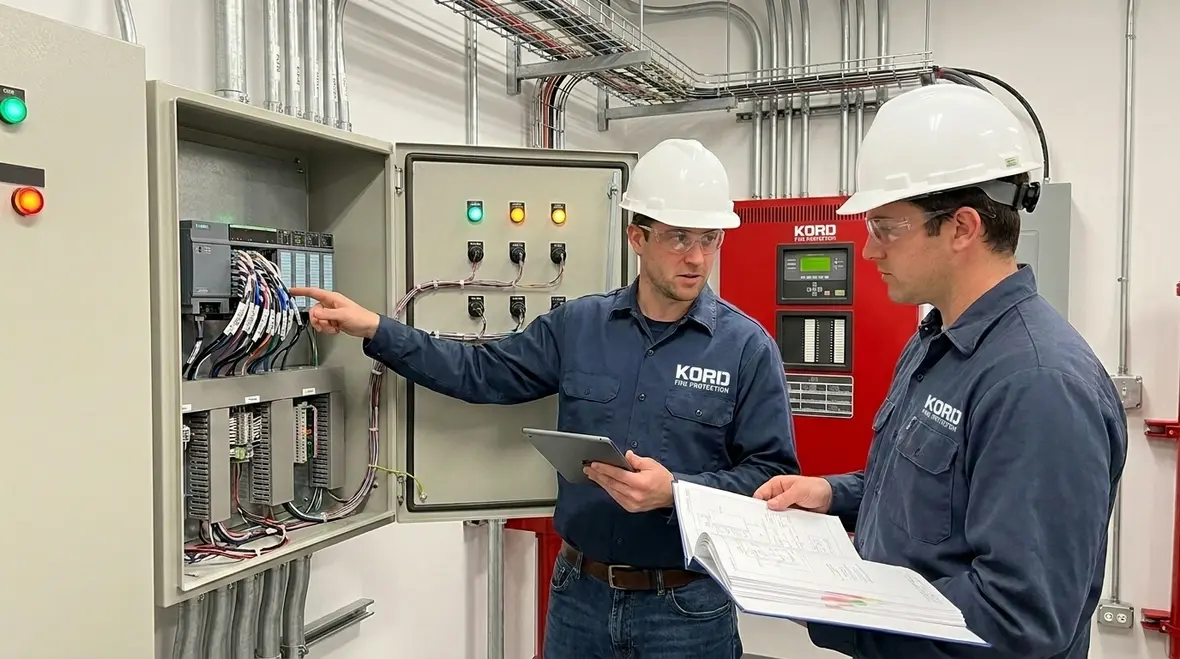
Kord fire protection technicians typically start by mapping the facility electrical controls before any devices are installed or programmed. That means reviewing one line diagrams, control power sources, battery backup plans, and the logic that governs alarms and shutdowns. Then they align the suppression system control requirements with the electrical architecture already in place.
Next, they define what signals will cross between systems. For example, they confirm which inputs will come from fire alarm outputs, which outputs will drive damper operations or fan shutdowns, and which events must trigger immediate suppression or pre action sequencing. By planning these paths early, the project avoids late design changes that lead to rework, reprogramming, and schedule pain.
Early coordination checklist
- Define signal types and voltage levels before pulling wire
- Confirm control power sources, transfer switches, and battery runtime
- Set clear timing rules for suppression actuation and fan shutdown
This up front planning also lines up with the broader way fire systems should function together. For a useful companion read, Kord Fire Protection’s Fire Protection Systems Components and Coordination breaks down how devices, panels, notification, and suppression work best when no piece is acting solo.
Ensure Fail Safe Operation and Supervised Status
Proper integration hinges on what happens during a fault. A best practice centers on fail safe operation, meaning the system moves to the safest state even if power, communication, or sensors fail. Kord fire protection technicians explain this as a simple rule: if the building cannot confirm normal conditions, it must assume caution and protect occupants.
To achieve that, they use supervision on critical circuits and they choose wiring methods that reduce unknown failure points. They also confirm that loss of communication triggers alarms and safe shutdown actions that match the fire plan. In other words, the controls do not guess. They respond with a predictable and tested behavior.
Also, the integration should separate alarm status from command outputs wherever possible. This approach reduces the chance that a status circuit accidentally turns into a command path. Think of it like airport security: you do not want the same badge that lets someone in also starting the plane.

Coordinate Power, Circuits, and Control Logic
Even when wiring looks correct on paper, electrical behavior can surprise a project. Therefore, Kord fire protection technicians coordinate with facility electrical teams on circuit loading, contact ratings, and motor starter logic for affected equipment. They pay close attention to any panels that supervise relays, because relay control methods can change how the suppression system interacts with fans, dampers, and exhaust controls.
To keep things stable, they confirm the suppression equipment’s input and output requirements match the facility control hardware. Then they validate control logic in a test environment before energizing in the field. During commissioning, they verify that outputs activate only when expected conditions occur, and that the system does not create backfeed paths through control devices.
What teams verify before energizing
- Verify contact ratings and coil voltage compatibility
- Confirm relay supervision and alarm mapping
- Test interlocks under normal and fault conditions
If the project involves alarm pathways or related notification logic, Kord’s Fire Alarm Services page is a practical reference for the kinds of systems and support that often intersect with suppression controls.
Integrate Alarm Notification and Building Safety Actions
Safety requires more than suppression. In a well planned commercial fire suppression system integration, alarm notification works with electrical controls to move people to safety and stop risky operations. Kord fire protection technicians typically align audible and visual outputs with suppression stages so the building reacts in the right order, not the loudest order.
Next, they coordinate building safety actions that often include fan shutdown, smoke control damper positions, elevator recall, and door holding releases when applicable. The key is timing and sequencing. For example, the facility should not shut down critical systems too early unless the fire plan requires it, and it should not delay life safety actions during pre action steps.
Then they document the entire alarm and action matrix. This makes maintenance easier and reduces confusion during future upgrades. It also helps new electricians understand what the system is supposed to do, even if they inherit the project like a mystery box with a wiring diagram inside.

Use Clear Point to Point Mapping and Labeling Standards
Successful integration depends on clarity. A best practice is strict point to point mapping between the suppression control panel and facility electrical control devices. Kord fire protection technicians treat labeling like a form of customer service, because a clear label saves hours when troubleshooting later.
They also standardize naming conventions so the same device has the same identity across the wiring diagram, programming notes, and as built documents. That reduces the risk of swapping similar relay outputs during maintenance. It also supports future testing when supervisors need to verify the system responds properly to alarm, supervisory, and trouble conditions.
Labeling habits that pay off later
- Use consistent tags for inputs, outputs, and supervised zones
- Maintain as built documents that match field wiring
- Include test points for faster commissioning and inspections
Commissioning and Testing That Proves It Works
Testing should prove the system performs under real conditions, not just in a simulation. Therefore, Kord fire protection technicians and electrical contractors plan commissioning sessions with step by step scenarios. They test signal paths, verify timing, and confirm that each output results in the intended building electrical control action.
They also check how the system behaves when power changes. For example, they test how the suppression and controls respond when control power transfers or when a supervised circuit fails. This matters because a building does not only have fires. It has storms, power dips, and the occasional equipment that decides to stop cooperating.
After testing, they capture results and update documentation. Then they train facility staff on what to expect during events and what notifications mean. That last step improves response because maintenance teams know the difference between a real trouble condition and a planned test.
How to Maintain Integration Over the Life of the Facility
A commercial fire suppression system integration is not a one time deal. Over time, facilities change. Tenants add equipment, panels get upgraded, and control sequences evolve. Best practice maintenance includes periodic verification that electrical interfaces still match the suppression logic.
Kord fire protection technicians recommend a maintenance plan that includes testing of the interface points tied to alarms and safety actions. They also recommend that electrical upgrades trigger a review of the suppression control logic and wiring maps. When facilities treat these updates as independent work, integration failures can hide until the next inspection or the next real event.
To keep risk low, the facility should require change documentation. If a contractor modifies a control relay or changes a panel power source, the facility should confirm that the suppression interface still works as intended.
That long view matters because integration problems rarely announce themselves politely. They tend to wait until a power event, a tenant improvement, or an inspection day surprise. Facilities that review interfaces regularly stay ahead of hidden mismatches, and they give both electricians and fire protection technicians a better shot at solving small issues before they become dramatic ones.
FAQ
Final Thoughts and Call to Action
Integrating fire suppression with facility electrical controls takes planning, clear wiring, and disciplined testing. When Kord fire protection technicians coordinate the electrical interface and validate fail safe behavior, the facility gains a system that responds correctly, not randomly. If the facility is preparing for a new install, a retrofit, or an electrical upgrade, it is smart to include suppression integration in the early design meetings.
For owners and managers who want a broader service partner, Kord’s Full Fire Protection Services page is a strong next step for connecting inspections, testing, repairs, and system readiness under one roof. Contact a qualified integration team now to review your controls, confirm your interface points, and set up commissioning that proves performance.

Join Our Newsletter!
Get the latest fire safety tips delivered straight to your inbox From our Newsletter.