Fire Suppression System Pressure Testing for Safety
Why fire suppression system pressure testing matters for safety
Periodic fire suppression system pressure testing is a practical way to confirm that a building’s protection plan will perform when it matters. In the real world, valves stick, components age, and small leaks form quietly, like a slow drip you notice only after the ceiling stains. Kord Fire Protection technicians explain this clearly: pressure testing is not “paperwork safety.” It is field evidence that the system still holds pressure within expected limits.
Just as a smoke alarm cannot read a crystal ball, a fire system cannot guess its own condition. Therefore, scheduled testing gives owners and managers a grounded view of reliability, helps reduce surprise downtime, and supports a safer response during emergencies. It also creates a cleaner handoff between service visits, inspections, and long term maintenance planning so nothing important gets lost in a folder nobody has opened since last spring.
That practical value is one reason facilities often pair this work with broader life safety reviews and related service coordination through Kord Fire Protection’s full fire protection services. When pressure testing is treated as part of an active safety program rather than a box to check, the entire building benefits.
A measurable check, not a hopeful shrug
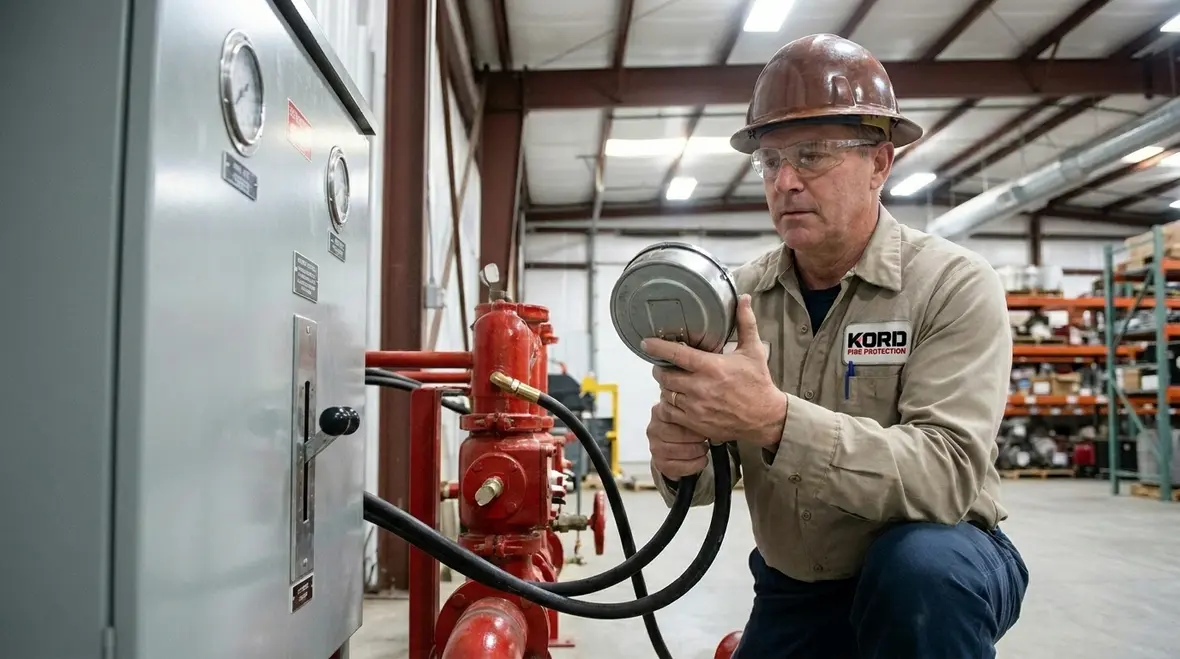
Pressure gives technicians a direct, useful signal. If the system holds where it should, that supports confidence in its condition. If readings drift, drop, or behave strangely, the test points toward a problem that deserves attention before an emergency turns it into a headline nobody wants to explain on Monday morning.
How pressure holds up after years of wear and use
Over time, fire suppression systems face heat cycling, vibration, and environmental shifts. Even when everything looks fine, seals can harden and fittings can loosen. Then, when a demand happens, the system may lose discharge performance, delay operation, or fail to distribute agent as designed. Kord Fire Protection technicians walk clients through the logic: pressure is a measurable indicator of internal integrity.
In addition, periodic checks help confirm that the system’s operating parameters stay aligned with the original engineering intent. Consequently, facilities can avoid the “it passed once, so it is fine forever” trap. That approach usually works about as well as trusting a microwave to steam a pot of rice without checking it, which is to say, not at all.
Aging does not always announce itself with dramatic failure. Sometimes it shows up as a barely noticeable drift, a slow loss, or a pattern that only makes sense when compared against earlier records. That is why repeat testing matters. It turns isolated numbers into a story about system condition over time, and that story is much more useful than a technician squinting at a gauge and saying, “Looks probably okay.”
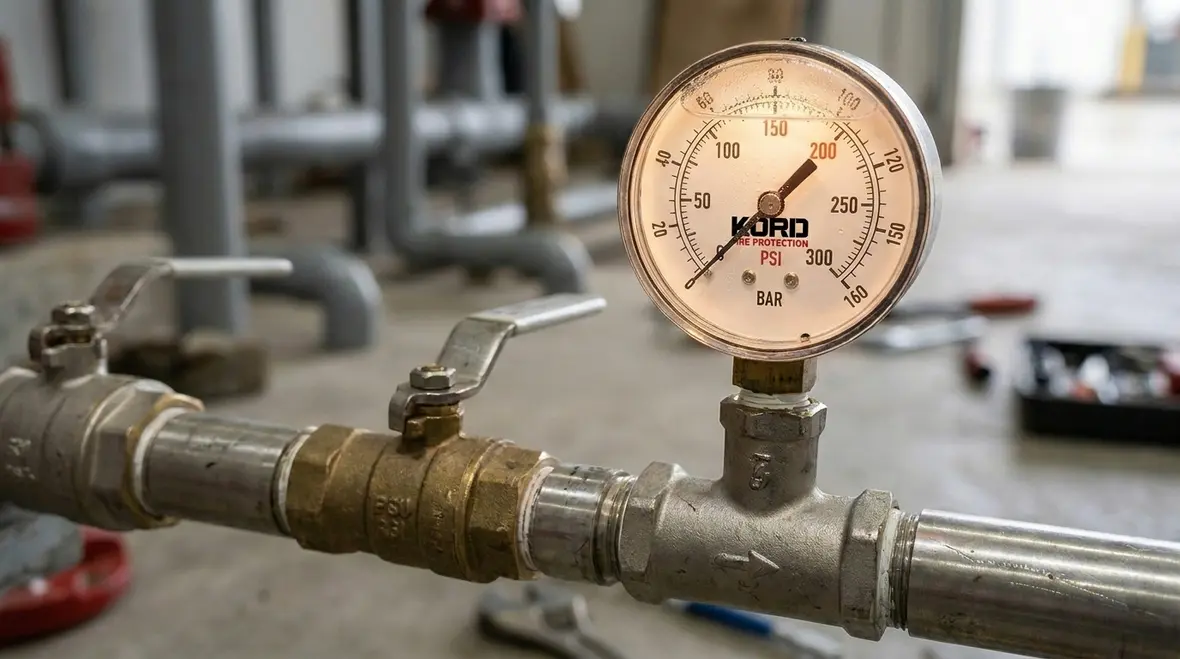
Where wear tends to hide
Wear can hide in threaded joints, valves, seals, and sections affected by vibration or temperature changes. Facilities with renovations, equipment movement, or repeated service work may also see small changes develop sooner than expected. None of this means the system is doomed. It just means assumptions are not a maintenance strategy.
What technicians verify during pressure checks
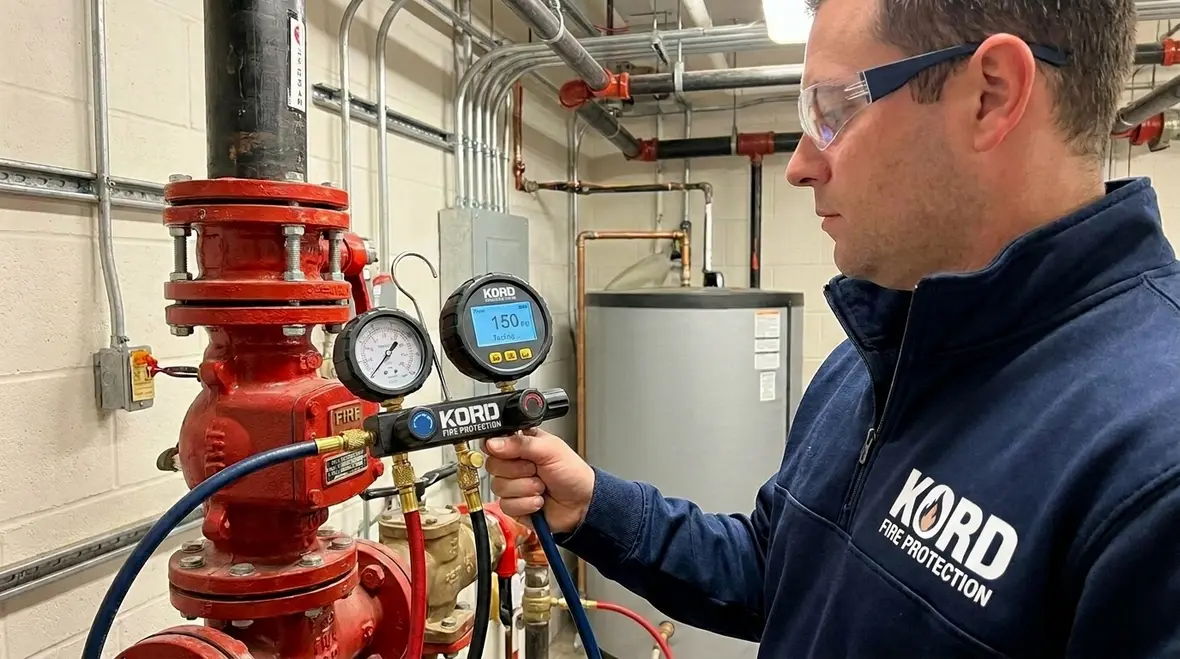
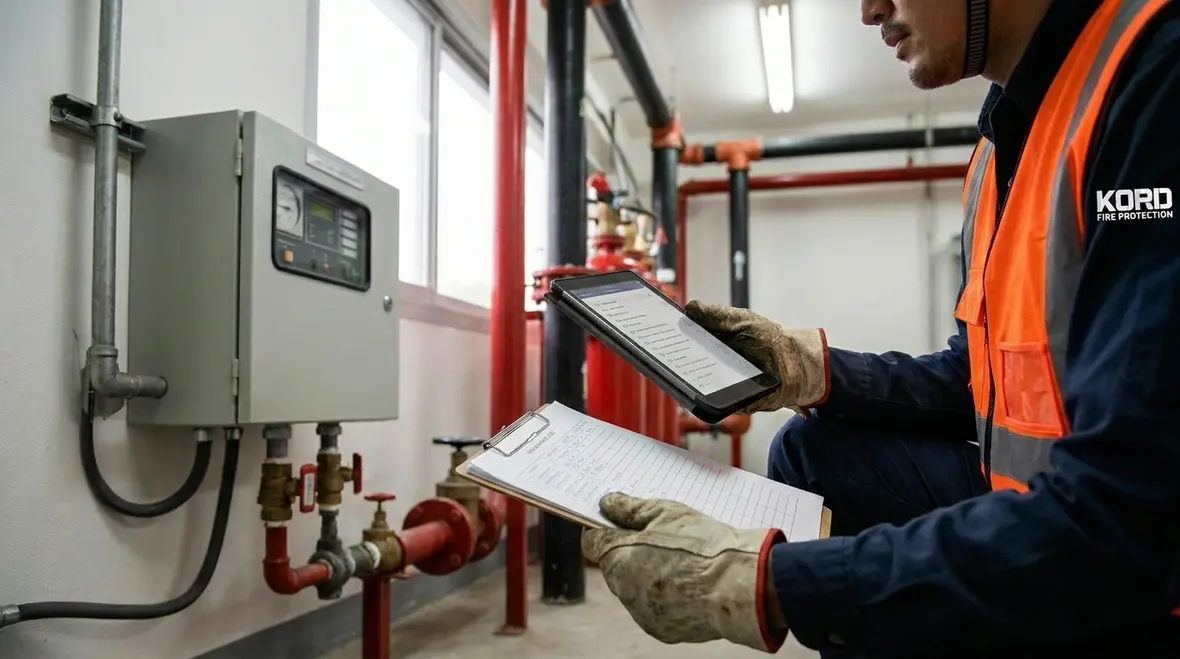
During fire suppression system pressure testing, Kord Fire Protection technicians typically confirm that the system can hold required pressure for a defined time window, using approved procedures and calibrated equipment. They also look for signs that point to potential issues, such as small pressure drops, unstable readings, or irregular behavior across sections.
To be clear, the goal is not only to record numbers. Technicians evaluate the system configuration, confirm control points are set correctly, and verify that the test method matches the equipment type and piping layout. Then they document results in a way that supports compliance needs and maintenance planning.
Because each facility differs, professionals also factor in prior modifications, recent repairs, and any unusual building conditions. After all, the pressure test is only one part of a bigger safety picture, like checking tire pressure and then driving with confidence, not ignoring the spare because “the dashboard light is off.”
What a solid test process usually includes
- Review of the system type, layout, and recent service history
- Use of calibrated tools and a method suited to the equipment involved
- Observation of pressure stability across the required time window
- Notes on irregular readings, leakage indicators, or control point concerns
- Clear documentation that can support maintenance follow up and compliance records
Benefits for owners, managers, and risk reduction
Pressure testing supports both safety and business stability. First, it reduces the likelihood of system failure during an emergency, which protects people and property. Second, it helps prevent costly last minute repairs and shutdowns that happen when problems become visible only after an incident or an audit.
Furthermore, consistent testing builds trust with insurers, auditors, and stakeholders. It also supports clear maintenance records, which can matter when questions arise about due diligence.
From a practical standpoint, many businesses discover small issues early, before they turn into “major project” problems. For example, a minor leak in a line that holds pressure poorly today might evolve into a system that will not respond properly tomorrow. So, scheduled testing acts like preventive care, not emergency surgery.
There is also a scheduling advantage. Planned testing gives facility teams more control over downtime, site access, and coordination with vendors or occupants. That beats the alternative, which is learning about a hidden issue at the least convenient moment imaginable, usually when everyone is already busy and someone is asking where the last service report went.
Compliance, documentation, and why records prevent headaches
Fire protection plans usually require testing and documentation at set intervals. However, a file with vague notes does not carry the same weight as detailed, traceable results. Kord Fire Protection technicians emphasize that good documentation shows what was tested, how it was tested, what pressure ranges were expected, and what happened during the test window.
In addition, records help teams track trends. If a system’s performance shifts gradually, the documentation can reveal that pattern early. Then, maintenance can target specific components, rather than guessing. That means less disruption and fewer repeat visits, which is a win for both safety and schedules.
Also, clear logs support continuity when responsibilities change, such as when a facility manager retires or a maintenance contract gets renewed. Because building safety does not run on wishful thinking, the history matters.
Why documentation saves time later
Good records make it easier to compare current conditions to previous test results, explain maintenance decisions, and respond quickly when questions come from auditors, insurers, or internal safety teams. They also reduce the odds of duplicate troubleshooting, because nobody enjoys paying twice to rediscover the same issue.
Common myths about pressure testing and system health
Some people believe pressure testing is unnecessary because the system “has never been used.” Yet fire suppression is designed for emergencies, not for daily practice. Others assume that a visual inspection can replace functional testing. In truth, appearance cannot confirm internal integrity.
Another myth says pressure tests “wear out” systems. When performed correctly, by trained technicians using suitable equipment and procedures, testing evaluates condition without harmful impact. Kord Fire Protection technicians routinely explain that the real risk comes from skipping checks and allowing small deterioration to grow unnoticed.
Finally, some assume that one test result means the system will always remain stable. Pressure testing measures a snapshot of current performance. Therefore, periodic fire suppression system pressure testing matters because it captures change over time. Think of it like checking your calendar. One date does not tell you the whole year, but it helps prevent chaos later.
How often should buildings schedule testing?
The right interval depends on system type, local requirements, and the facility’s risk profile. Many buildings follow manufacturer guidance and applicable code needs, which may set timeframes for various components. Kord Fire Protection technicians review the system design and recommend a schedule that fits the building’s usage and environment.
Additionally, facilities may increase testing frequency if they experience high humidity, frequent vibrations, major renovations, or repeated maintenance activity. For example, a busy industrial site that sees constant equipment movement may face more chances for small shifts in fittings.
When teams align testing timing with real-world risk, they reduce the odds of late surprises. And when the schedule fits practical operations, it becomes easier to keep commitments instead of treating testing like an annual fire drill for paperwork.
FAQ
Final word: schedule testing and protect the people who trust the system
Fire suppression system pressure testing is one of the most direct ways to protect a building and its occupants. It helps Kord Fire Protection technicians verify integrity, identify early concerns, and maintain the documentation that keeps risk under control. If a test date is approaching, or if the last report feels incomplete, now is the moment to act. Safety should not be a guess, it should be measured.
For facilities that want a related service tied closely to water supply readiness and pressure performance, Kord Fire Protection also offers fire pump service. If your team is reviewing broader system readiness, you can also explore fire suppression services and schedule support that fits your building, risk profile, and operating schedule.

Join Our Newsletter!
Get the latest fire safety tips delivered straight to your inbox From our Newsletter.